
20 Recession-Proof Dividend Stocks for the Next Downturn
The most recession-proof dividend stocks today are businesses like Johnson & Johnson, American States Water, Chevron, and Procter & Gamble. Each kept paying, and usually raising, its dividend through the 2007-09 financial crisis. Each beat the S&P 500's 55% plunge during that bear market. And each earns a Very Safe Dividend Safety Score today.
Our updated list holds 20 stocks. All 20 earn a Safe or Very Safe Dividend Safety Score, have paid uninterrupted dividends for at least 20 years, and did not cut during the last major recession. Seven of them have paid dividends for more than 100 years.
Why bother now? Economists in the Wall Street Journal's October survey put the odds of a U.S. recession in the next year at 24%, according to Economic Greenfield's summary of the survey. Unemployment stood at 4.2% in September, per the Bureau of Labor Statistics. And the 10-year Treasury yield sits above 5%, which raises borrowing costs for every company with debt to refinance.
Nobody can time a recession. But you can own businesses whose dividends have already survived one and look poised to do it again.
Prefer to watch? Check out our YouTube video, 3 Stocks That Deliver Big Dividends and Hold Up in a Crash.
What Makes a Dividend Stock Recession-Proof?
No stock is truly recession-proof. Prices fall in a bear market, and almost everything fell in 2008.
What can be recession-proof is the dividend. That comes down to three things: products people buy no matter what, a payout that leaves room for a bad year, and a balance sheet that does not force management's hand when credit dries up.
The last recession showed how much the dividend decision matters. Of the 866 stocks we rate for dividend safety today, 591 paid a dividend through the 2007-09 financial crisis. 293 raised it, 168 held it steady and 130 cut it.
The cutters fared far worse. Their shares fell a median 74% during the crisis, well beyond the S&P 500's 55% decline. Companies that kept raising their dividends lost a median 40%.
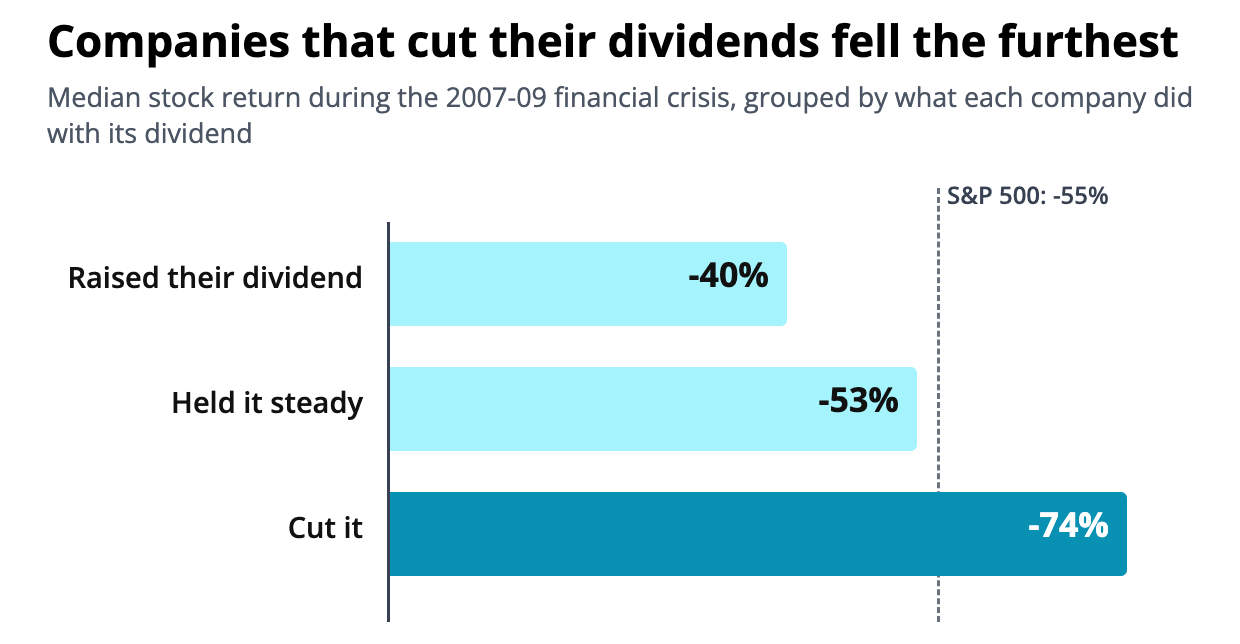
The pattern has stuck around. Today 212 of those 293 dividend raisers (72%) earn a Safe or better Dividend Safety Score. Only 30 of the 130 companies that cut (23%) do. Durable businesses tend to stay durable.
A long dividend record is no guarantee, though. Even the S&P 500 Dividend Aristocrats, companies that had raised their dividends for at least 25 straight years, were not immune.
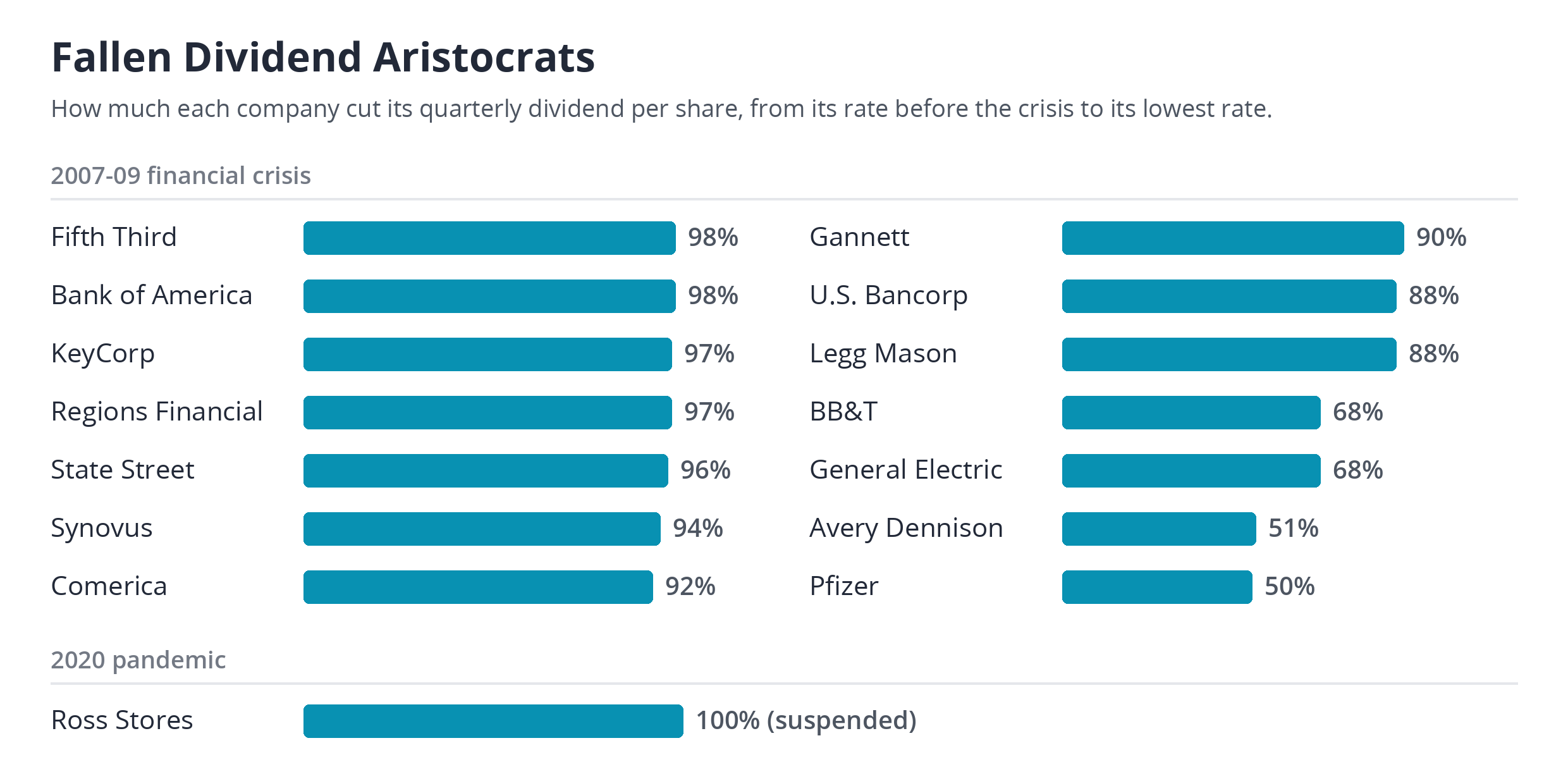
In 2007, there were 60 Dividend Aristocrats. But 16 of these stocks cut or suspended their dividends during the 2007-09 financial crisis.
Banks were hit hardest, and from their pre-crisis rates to their lowest, Fifth Third and Bank of America cut their quarterly dividends by 98%, KeyCorp and Regions Financial by 97%, State Street by 96%, Synovus by 94%, Comerica by 92%, U.S. Bancorp and Legg Mason by 88%, and BB&T by 68%.
Other industries were not spared. Gannett cut its dividend by 90%, General Electric by 68%, Avery Dennison by 51% and Pfizer by 50%.
The 2020 pandemic was far gentler on the group. Ross Stores was the only Aristocrat to suspend its dividend, according to S&P Dow Jones Indices.
Streaks show commitment, but they cannot protect a dividend when the business underneath it breaks. That is why this list leans on balance sheets, payout ratios and Dividend Safety Scores, not streaks alone.
Consumer Staples Are Not Automatically Safe
Consumer staples are the corner of the market most investors think of as the safest place to hide in a recession. That is no longer a given.
Shoppers worn down by years of inflation are trading down to store brands. Weight-loss drugs are changing what people eat. And private label has closed much of the quality gap with name brands. Meanwhile, advertising has become increasingly fragmented in today's digital world.
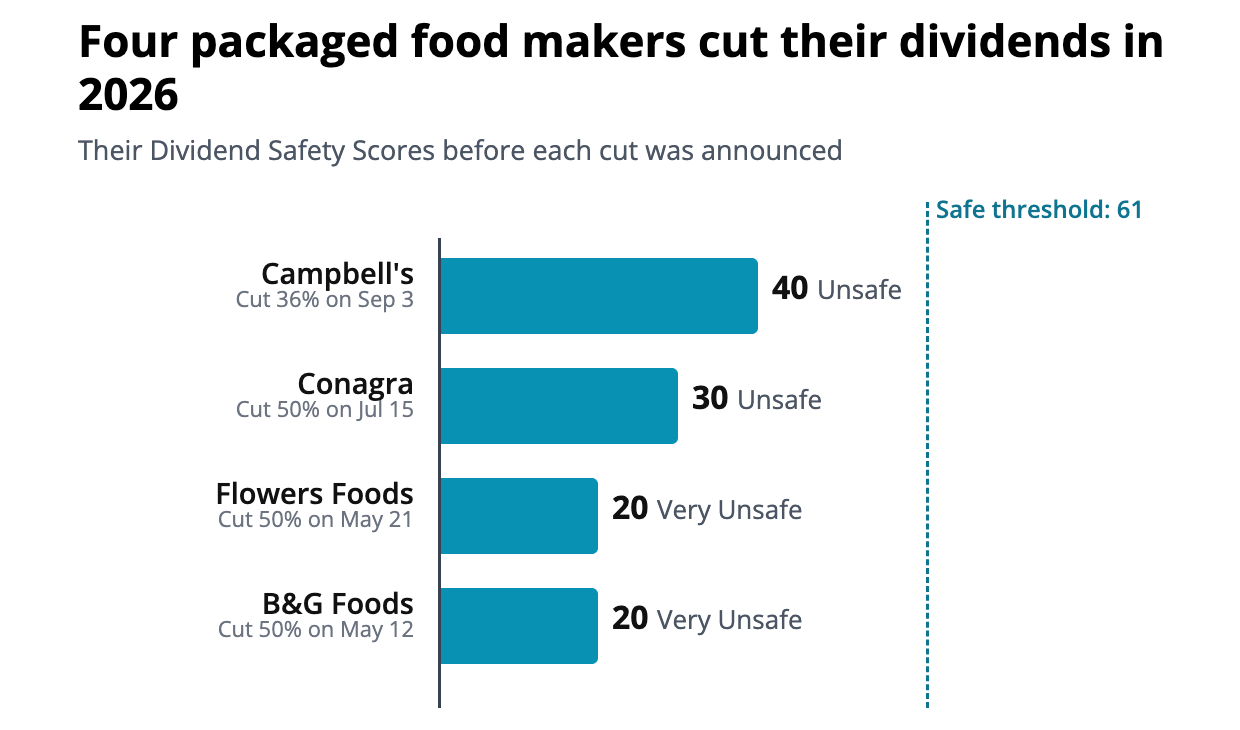
Our scores also flagged this year's casualties in advance. Four packaged food makers cut their dividends in 2026. Every one of them scored Unsafe or Very Unsafe before its announcement.
How We Picked These 20 Stocks
Every stock on this list passed four tests in our data:
- A Safe or Very Safe Dividend Safety Score (above 60)
- Paid uninterrupted dividends for at least 20 years
- Did not cut its dividend during the 2007-09 financial crisis
- Beat the S&P 500's 55% decline during that crisis
171 companies we rate clear all four bars. We picked 20 that span different industries and offer meaningful income. They are ordered by how long they have paid uninterrupted dividends, starting with the shortest streak.
Since we launched Dividend Safety Scores in 2015, investors who stuck with companies scoring above 60 would have avoided 97% of the 946 dividend cuts we have tracked, as shown in our public track record.
WEC Energy (WEC): Regulated Utility With a Steady Payout Ratio
Sector: Utilities – Multi-Utilities
Dividend Yield: 3.5%
Dividend Safety Score: Very Safe (87)
2007-09 Recession Return: -18% vs. -55% for S&P 500
Uninterrupted Dividend Streak: 24 years
Dividend Yield: 3.5%
Dividend Safety Score: Very Safe (87)
2007-09 Recession Return: -18% vs. -55% for S&P 500
Uninterrupted Dividend Streak: 24 years
WEC Energy delivers electricity and natural gas in Wisconsin, Illinois, Michigan and Minnesota. Regulated utilities rarely lose customers in a downturn, and their returns are set by state commissions rather than the business cycle.
WEC's shares fell 18% during the financial crisis, compared with a 55% drop for the S&P 500. That resilience is one reason why we featured WEC in our video 3 Stocks That Deliver Big Dividends and Hold Up in a Crash.
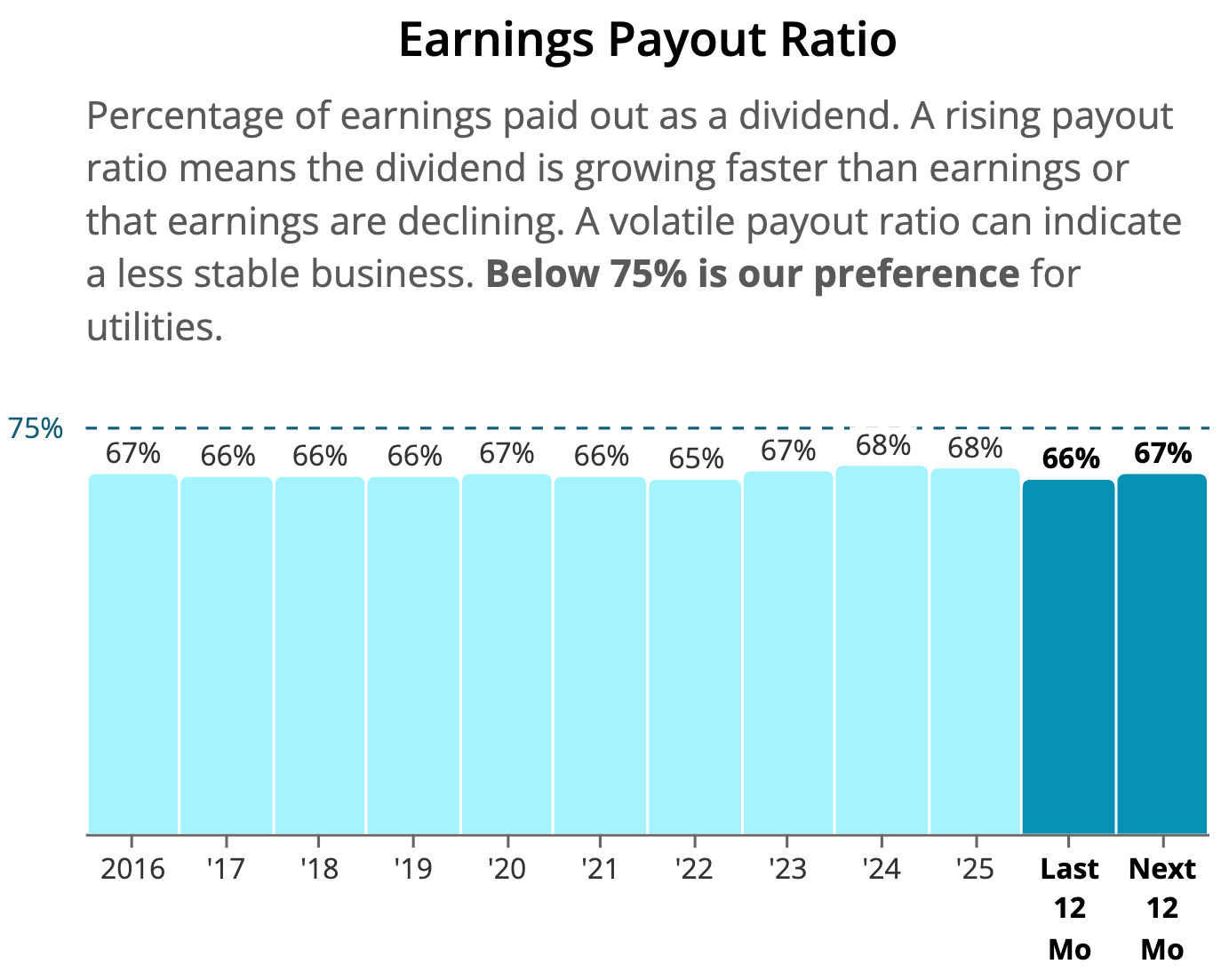
The payout ratio tells the story of consistency. It has stayed between 65% and 68% of earnings every year since 2016, below the 75% we prefer for utilities. Leverage is edging high for a utility, but an A- credit rating gives WEC room to keep funding its growth.
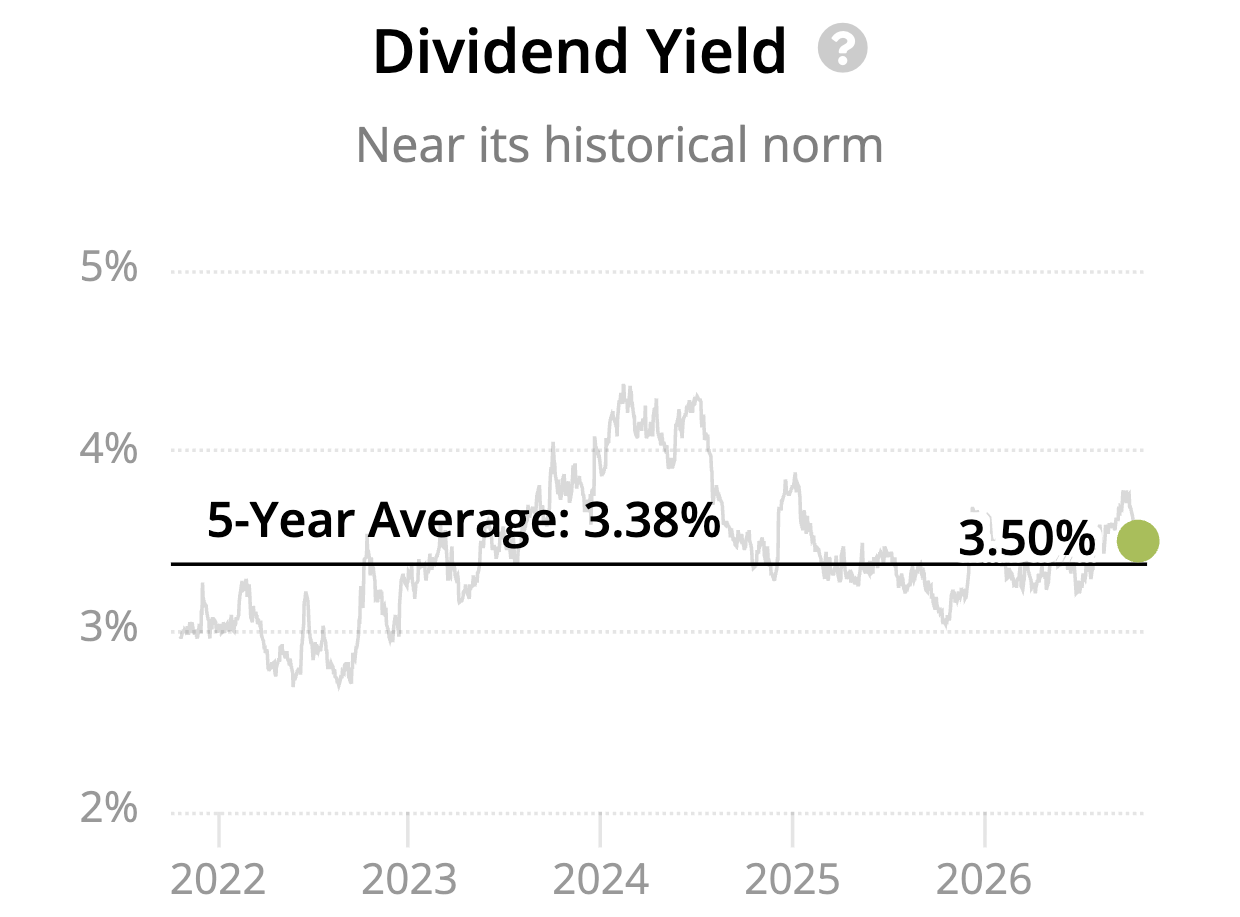
WEC's yield sits close to its five-year average of 3.38%, so the shares are priced about where they usually are.
Enterprise Products Partners (EPD): Fee-Based Pipelines With Low Leverage
Sector: Energy – Midstream Services
Dividend Yield: 6.1%
Dividend Safety Score: Safe (65)
2007-09 Recession Return: -37% vs. -55% for S&P 500
Uninterrupted Dividend Streak: 27 years
Dividend Yield: 6.1%
Dividend Safety Score: Safe (65)
2007-09 Recession Return: -37% vs. -55% for S&P 500
Uninterrupted Dividend Streak: 27 years
Enterprise Products Partners owns pipelines, storage and processing plants connected to nearly every major U.S. shale basin. Most of its cash flow comes from long-term, fee-based contracts.
Many of those contracts include minimum volume commitments or reserved capacity that customers pay for whether or not they use it. That limits Enterprise's exposure to both oil prices and the volumes customers actually ship.
The partnership has raised its distribution every year since its 1998 IPO, including through 2008 and 2020. It funds growth with cash flow and debt rather than by issuing new units, and its leverage is very low for an MLP. Its A- credit rating is one of the best in the midstream industry.
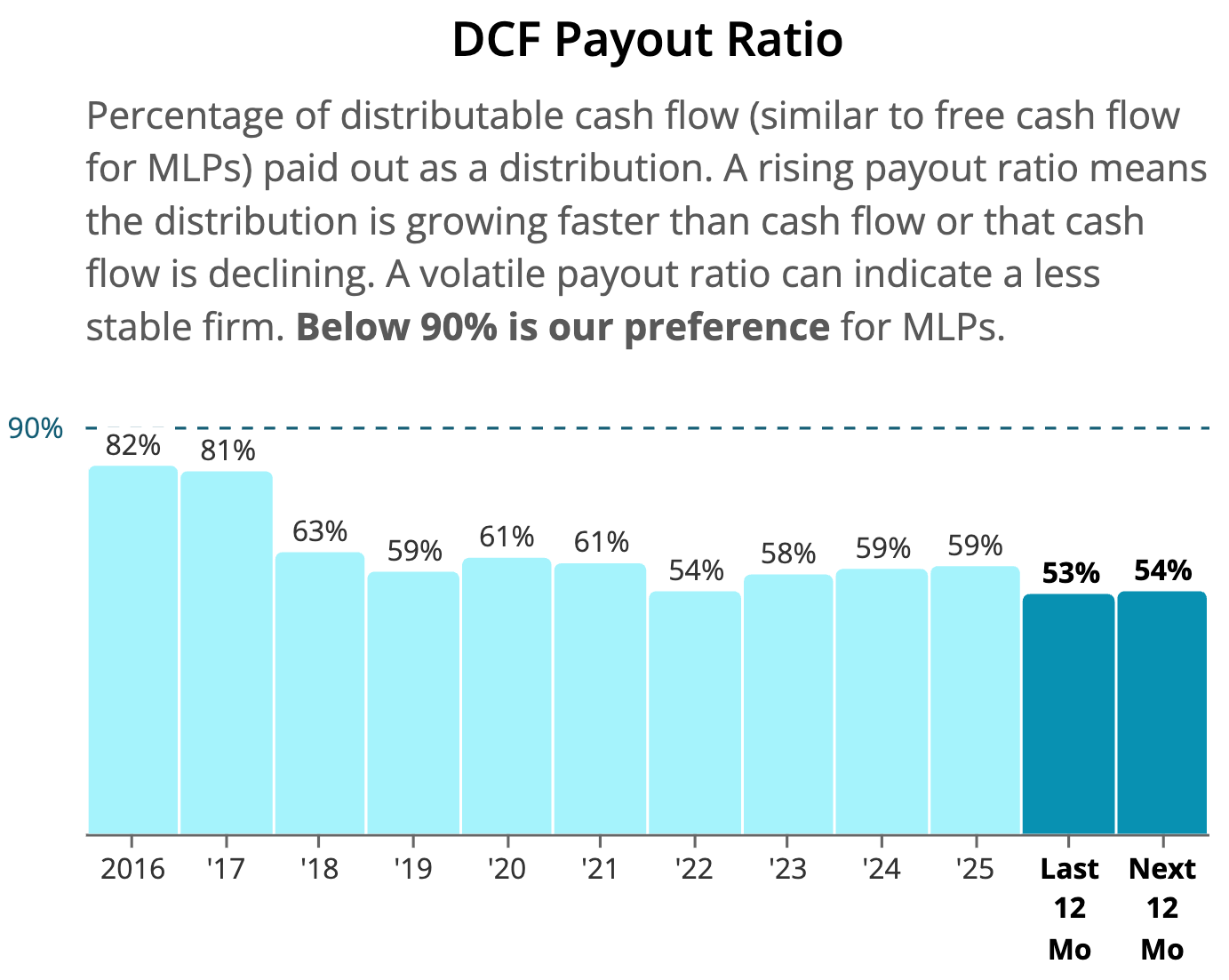
Enterprise now pays out just over half of its distributable cash flow, down from more than 80% a decade ago. Its score sits near the low end of our Safe threshold mostly because of the long-term uncertainty around fossil fuel demand and the MLP business structure, not because of anything on the balance sheet.
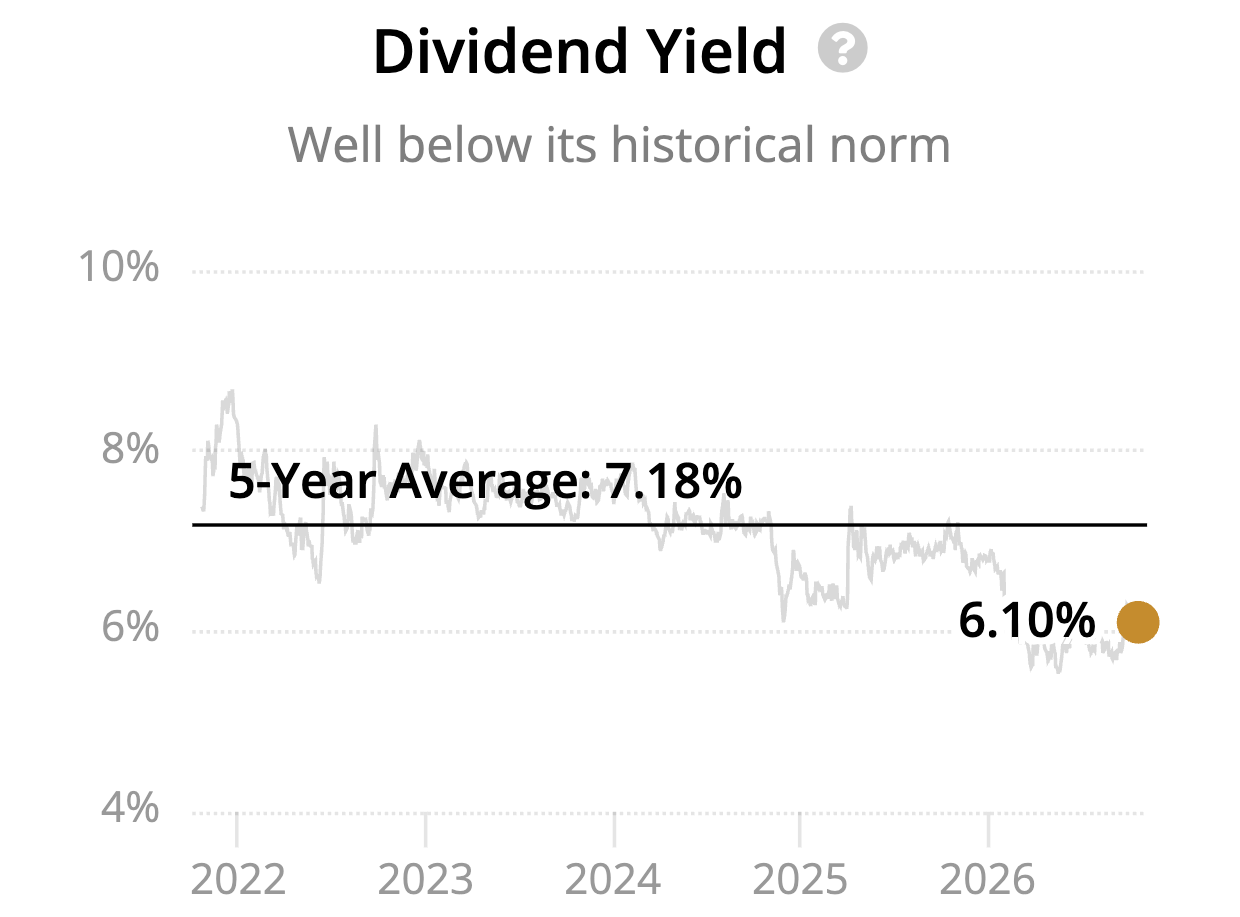
Enterprise's yield has slipped well below its five-year average of 7.18%, a sign investors are paying more for each dollar of distributions than they have in recent years as conflict in the Middle East has fueled demand for many energy stocks.
Note: Enterprise is a master limited partnership and issues a Schedule K-1 at tax time. See our list of MLP stocks for more.
Lockheed Martin (LMT): Defense Contractor Backed by Government Budgets
Sector: Industrials – Aerospace and Defense
Dividend Yield: 2.6%
Dividend Safety Score: Safe (80)
2007-09 Recession Return: -46% vs. -55% for S&P 500
Uninterrupted Dividend Streak: 33 years
Dividend Yield: 2.6%
Dividend Safety Score: Safe (80)
2007-09 Recession Return: -46% vs. -55% for S&P 500
Uninterrupted Dividend Streak: 33 years
Lockheed Martin is the world's largest defense contractor. Its main customer is the U.S. government, which does not cut a fighter jet order because consumer spending slowed.
We trimmed Lockheed's Dividend Safety Score from Very Safe to Safe in March 2025 as some allies began rethinking their reliance on American fighter jets.
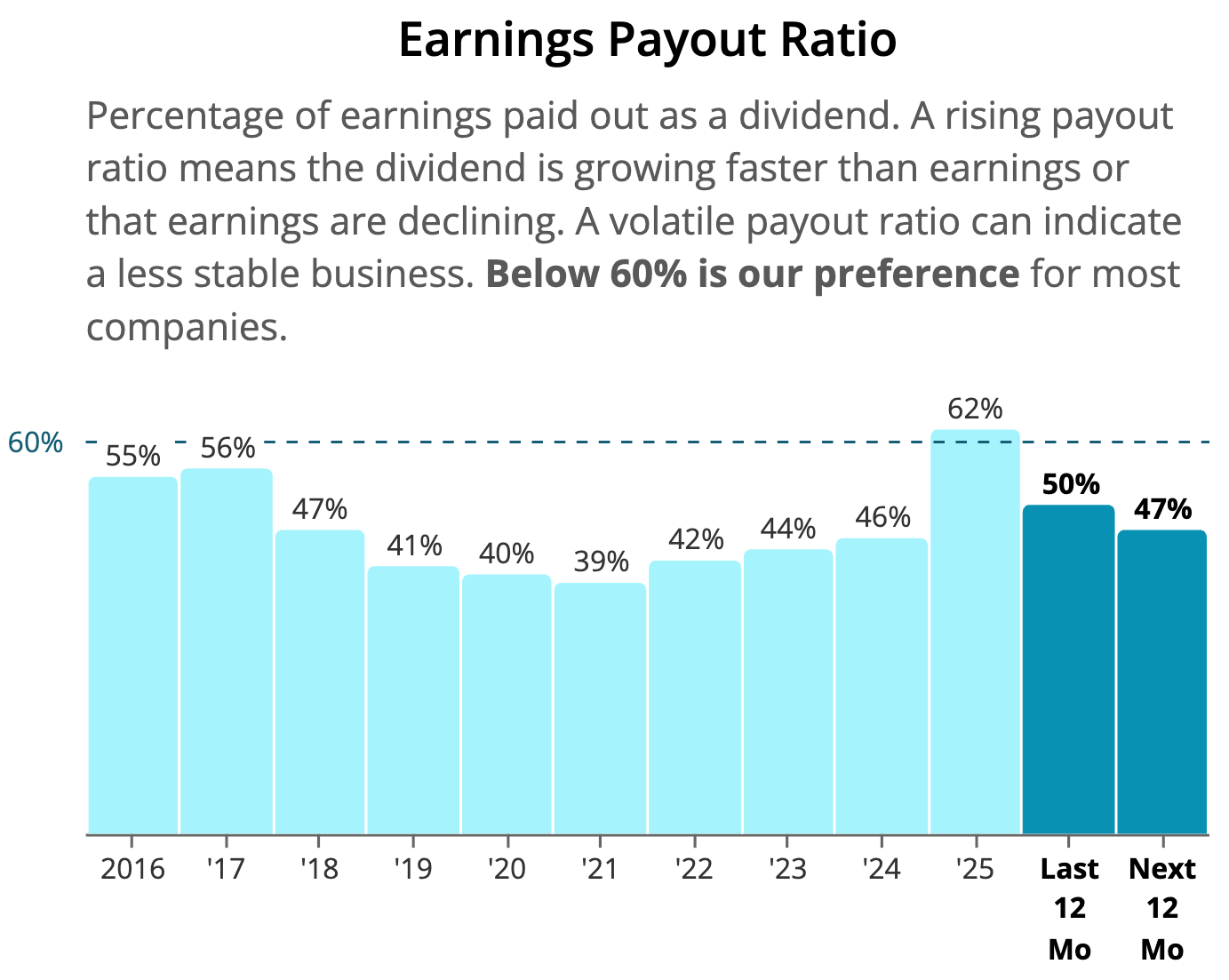
Lockheed's payout ratio jumped to 62% in 2025, above the 60% we prefer for most companies. It has since fallen back to about 50%. Leverage is low, the company holds an A- credit rating, and it has raised its dividend every year since 2003.
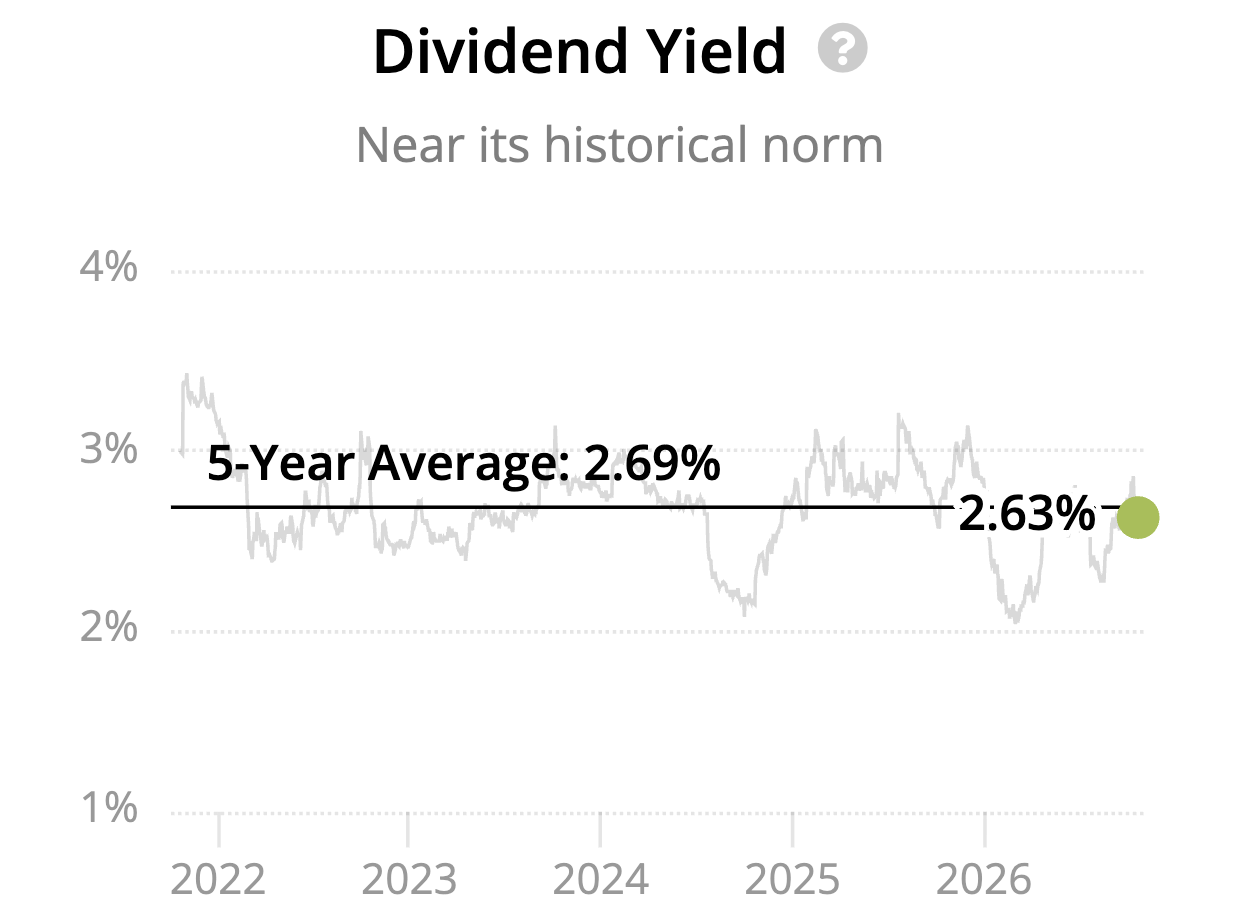
At 2.63%, Lockheed's yield is right in line with its five-year average of 2.69%, which suggests the stock is neither cheap nor expensive by its own standards.
Verizon (VZ): High-Yield Telecom Facing a New Competitor
Sector: Communications – Telecom Services
Dividend Yield: 6.5%
Dividend Safety Score: Safe (70)
2007-09 Recession Return: -39% vs. -55% for S&P 500
Uninterrupted Dividend Streak: 42 years
Dividend Yield: 6.5%
Dividend Safety Score: Safe (70)
2007-09 Recession Return: -39% vs. -55% for S&P 500
Uninterrupted Dividend Streak: 42 years
Verizon is one of three companies that collect almost all of America's wireless revenue. Households cancel many things in a recession, but a phone plan is rarely first on the list.
The new worry is SpaceX. Verizon's shares fell 9% in one day this October after SpaceX agreed to buy a block of wireless spectrum. In our October 14 research note we estimated SpaceX would hold about 79 megahertz of the most useful spectrum after that deal, against roughly 280 at Verizon. We think it needs a lot more to effectively compete nationwide.
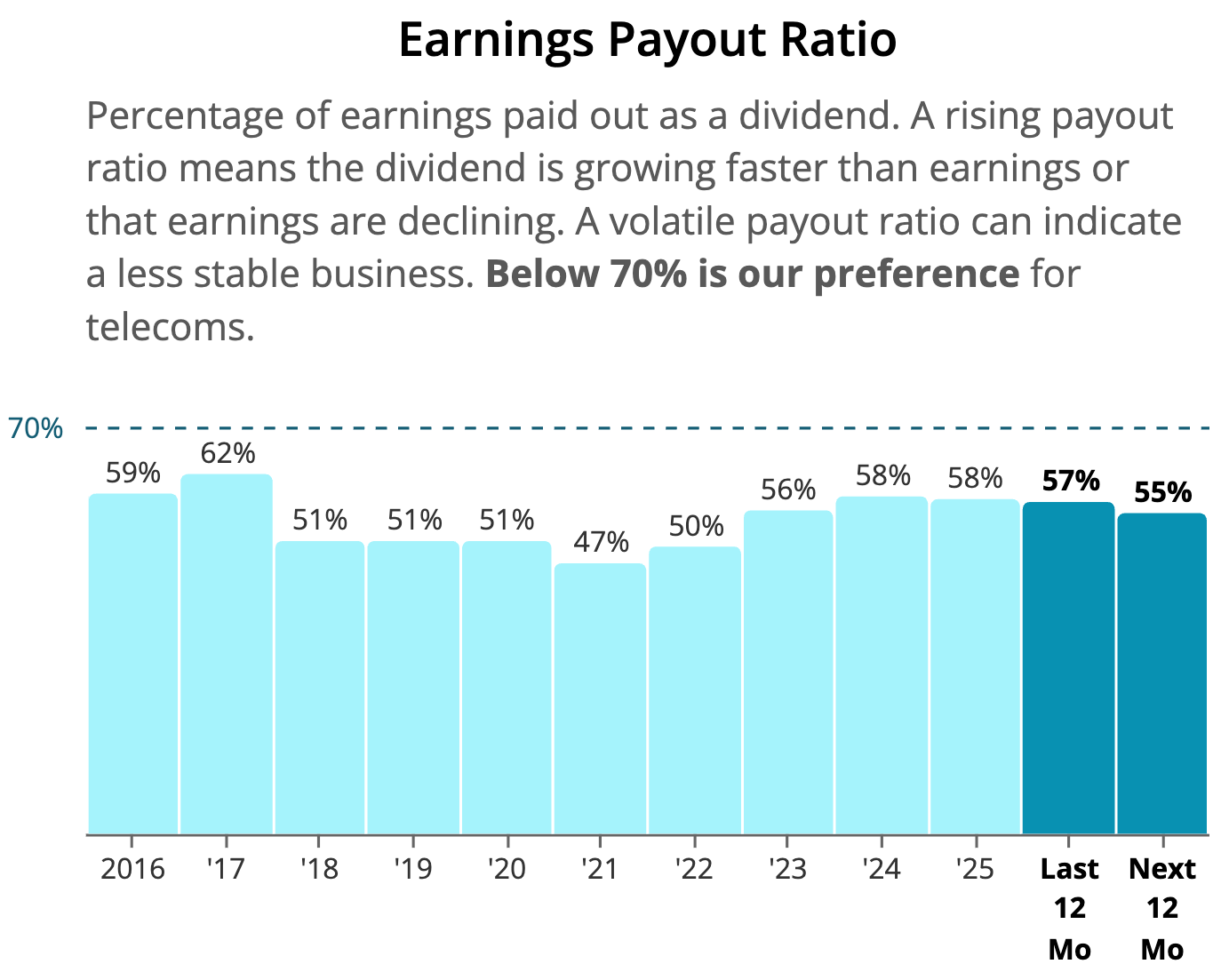
That threat is real but slow-moving. For now, Verizon pays out 57% of its earnings, below the 70% we prefer for telecoms. It holds a BBB+ credit rating and has raised its dividend every year since 2007. Its leverage is edging high for a telecom, which is the main reason its score is Safe rather than Very Safe.
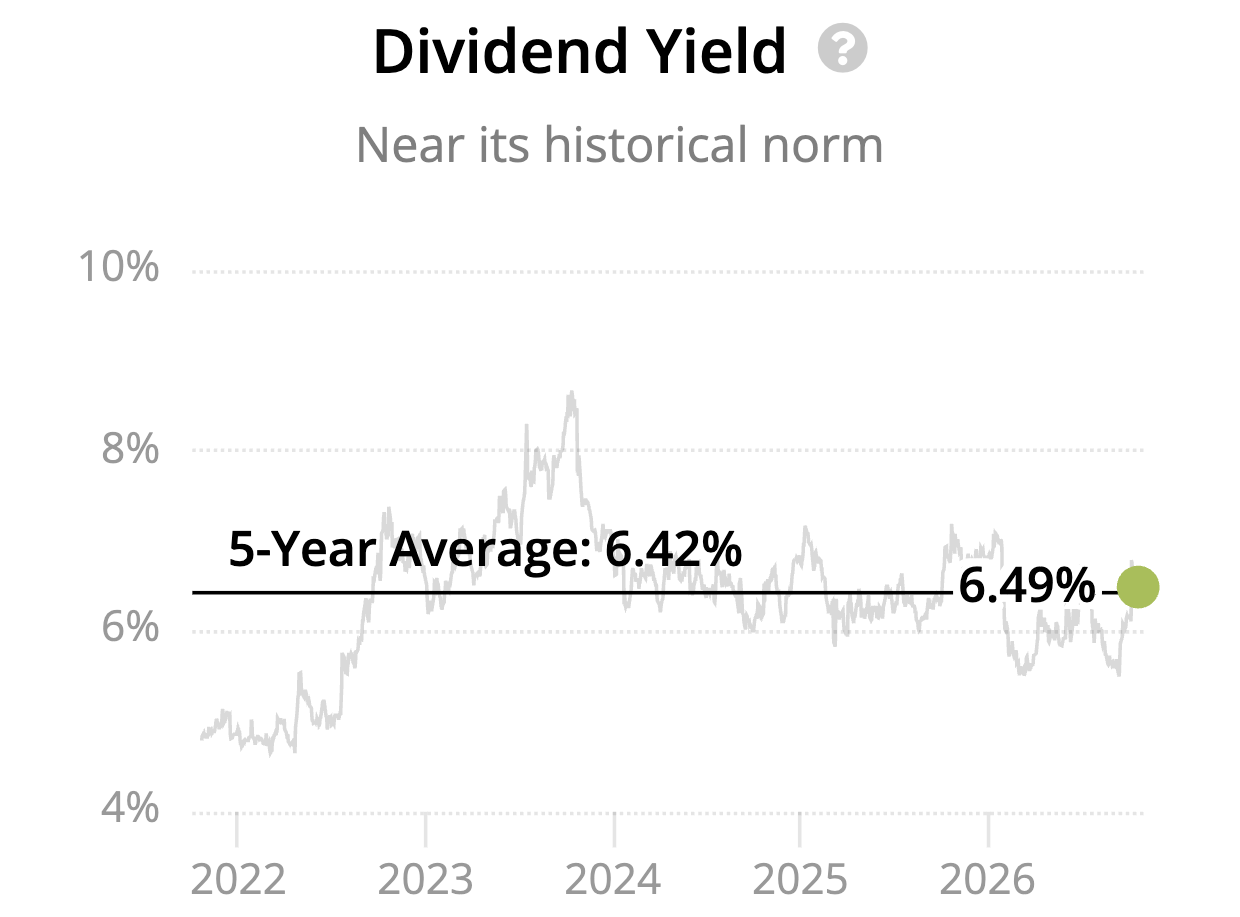
Despite the SpaceX scare, Verizon's yield is only a touch above its five-year average of 6.42%, so the shares look fairly valued against their own history.
Public Storage (PSA): Self-Storage Leader With an A Credit Rating
Sector: Real Estate – Self-Storage REITs
Dividend Yield: 4.0%
Dividend Safety Score: Very Safe (90)
2007-09 Recession Return: -38% vs. -55% for S&P 500
Uninterrupted Dividend Streak: 45 years
Dividend Yield: 4.0%
Dividend Safety Score: Very Safe (90)
2007-09 Recession Return: -38% vs. -55% for S&P 500
Uninterrupted Dividend Streak: 45 years
Public Storage is the largest self-storage landlord in the country. People need a place for their things during a move, a divorce or a downsizing, and few will haul everything across town to save $10 a month. The industry's free cash flow per share fell less than 5% during the financial crisis, according to a Bank of America Merrill Lynch report cited in our research.
We lowered Public Storage's Dividend Safety Score from 96 to 90, still Very Safe, in March. The REIT agreed to buy National Storage for $10.5 billion, occupancy has slipped to 92% from a pandemic peak near 96%, and a new CEO took over in April. The dividend has been frozen since its 50% increase in 2023.
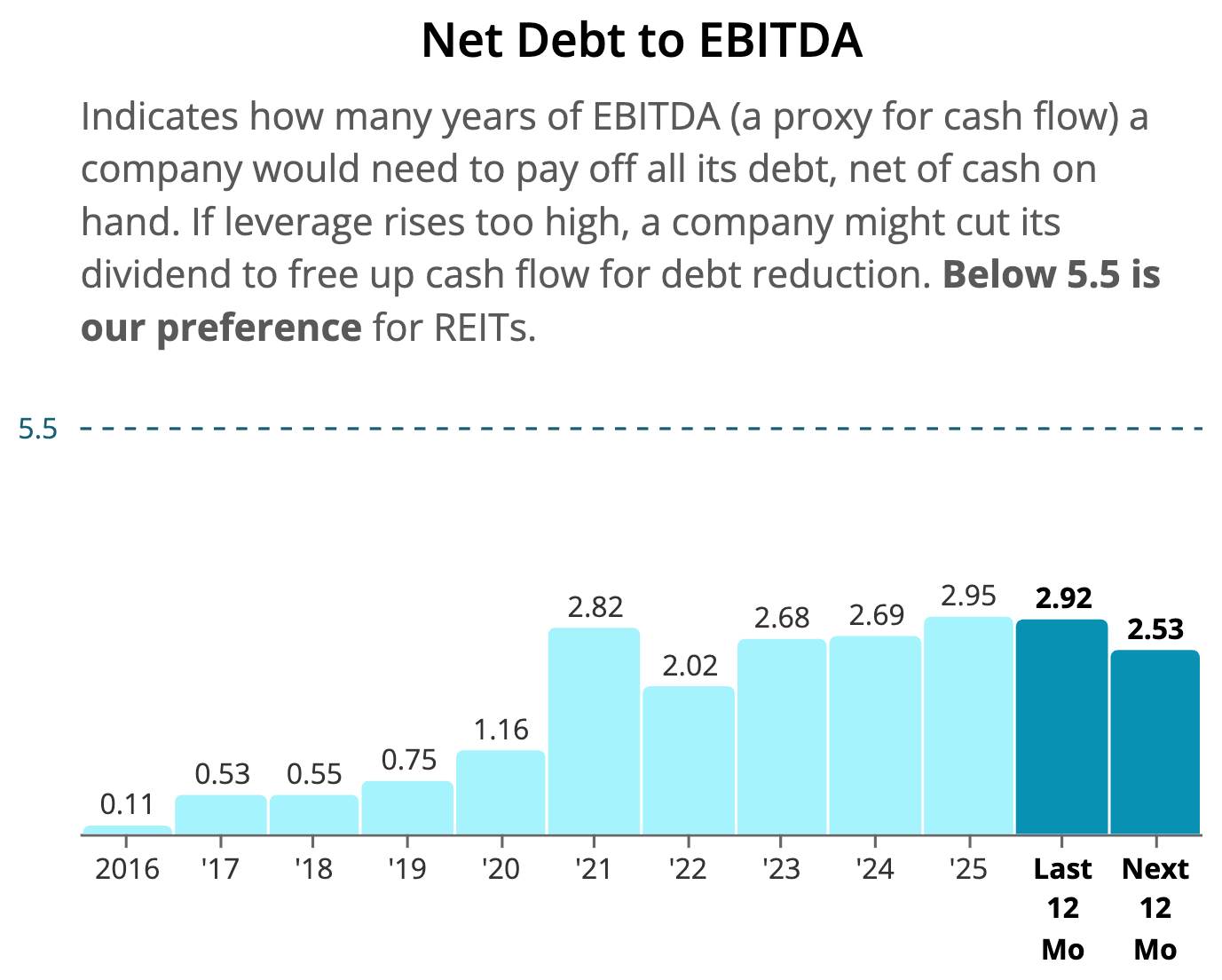
Leverage has risen but remains very low for a REIT. S&P reaffirmed Public Storage's A credit rating after reviewing the deal.
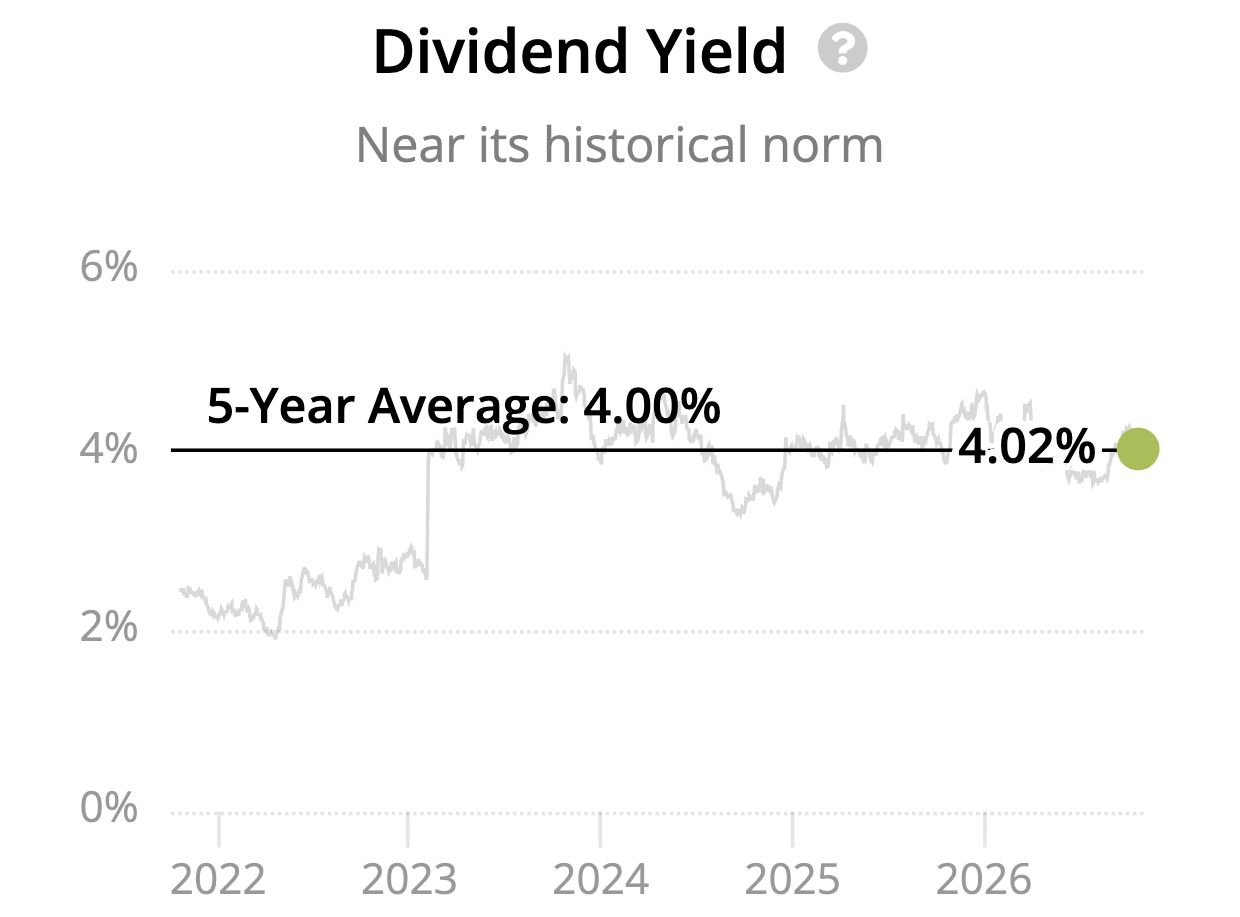
Public Storage yields almost exactly its five-year average of 4.00%, a sign the market is pricing the shares about where it usually does.
Read More: Guide to Investing in REITs for Income
McDonald's (MCD): Shares Fell 3% in the Financial Crisis
Sector: Consumer Discretionary – Restaurants
Dividend Yield: 3.1%
Dividend Safety Score: Safe (77)
2007-09 Recession Return: -3% vs. -55% for S&P 500
Uninterrupted Dividend Streak: 49 years
Dividend Yield: 3.1%
Dividend Safety Score: Safe (77)
2007-09 Recession Return: -3% vs. -55% for S&P 500
Uninterrupted Dividend Streak: 49 years
Restaurants are usually a poor place to hide in a recession. McDonald's is the exception. Its shares lost just 3% during the financial crisis, the best result of any stock on this list.
Most of its restaurants are run by franchisees, who pay McDonald's rent and royalties based on sales. That shields the company from much of the food and labor inflation that squeezes restaurant operators.
Value is the challenge today. McDonald's raised menu prices about 40% between 2019 and 2024, and lower-income customers have pulled back. U.S. same-store sales growth slowed to 0.8% in the second quarter, as we covered in our August note.
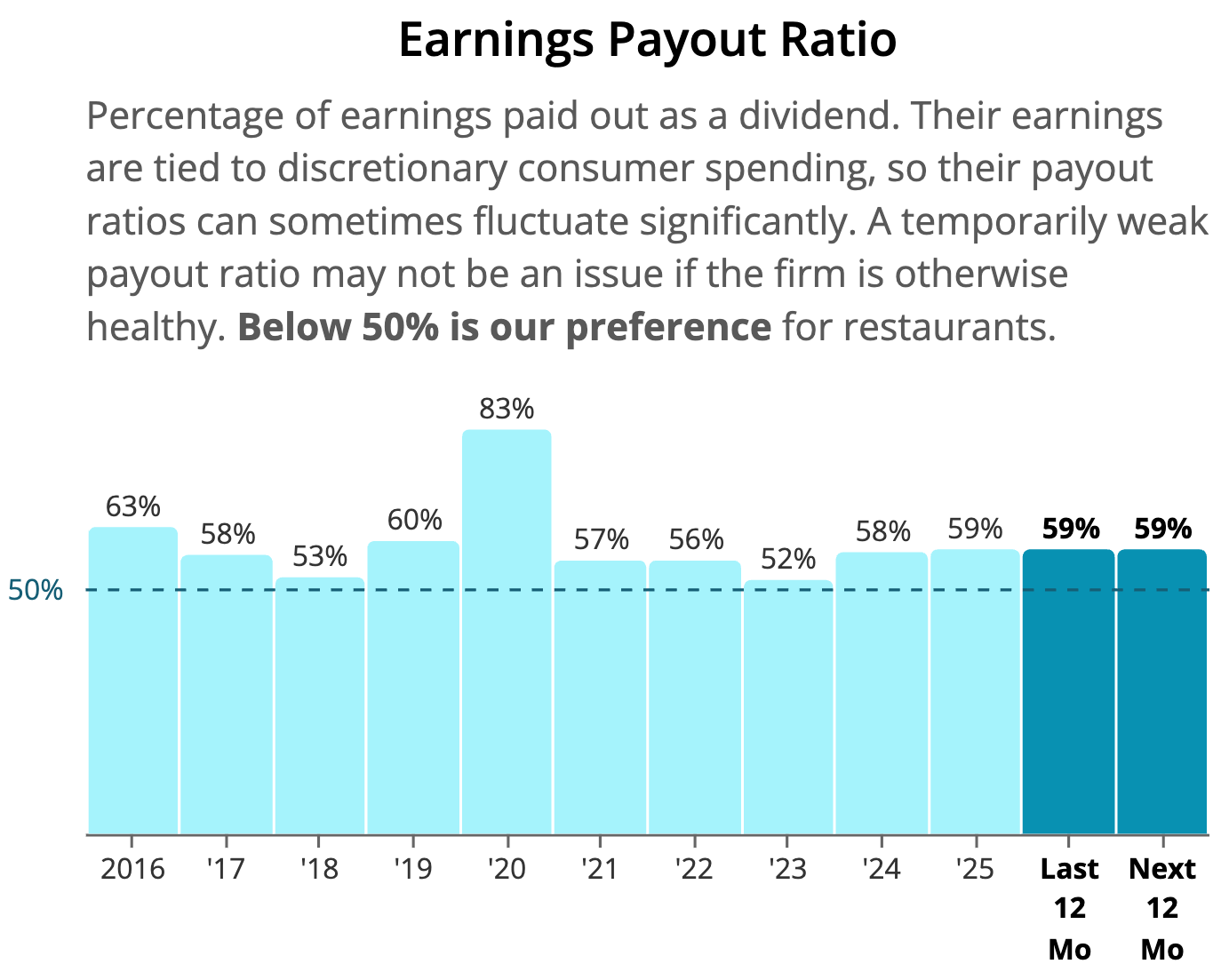
Even so, McDonald's announced its 50th consecutive annual dividend increase in September, a 4% raise, according to its dividend press release. That makes it a new Dividend King. Its payout ratio runs near 59%, above the 50% we prefer for restaurants but still a solid level given its recurring franchise fees.
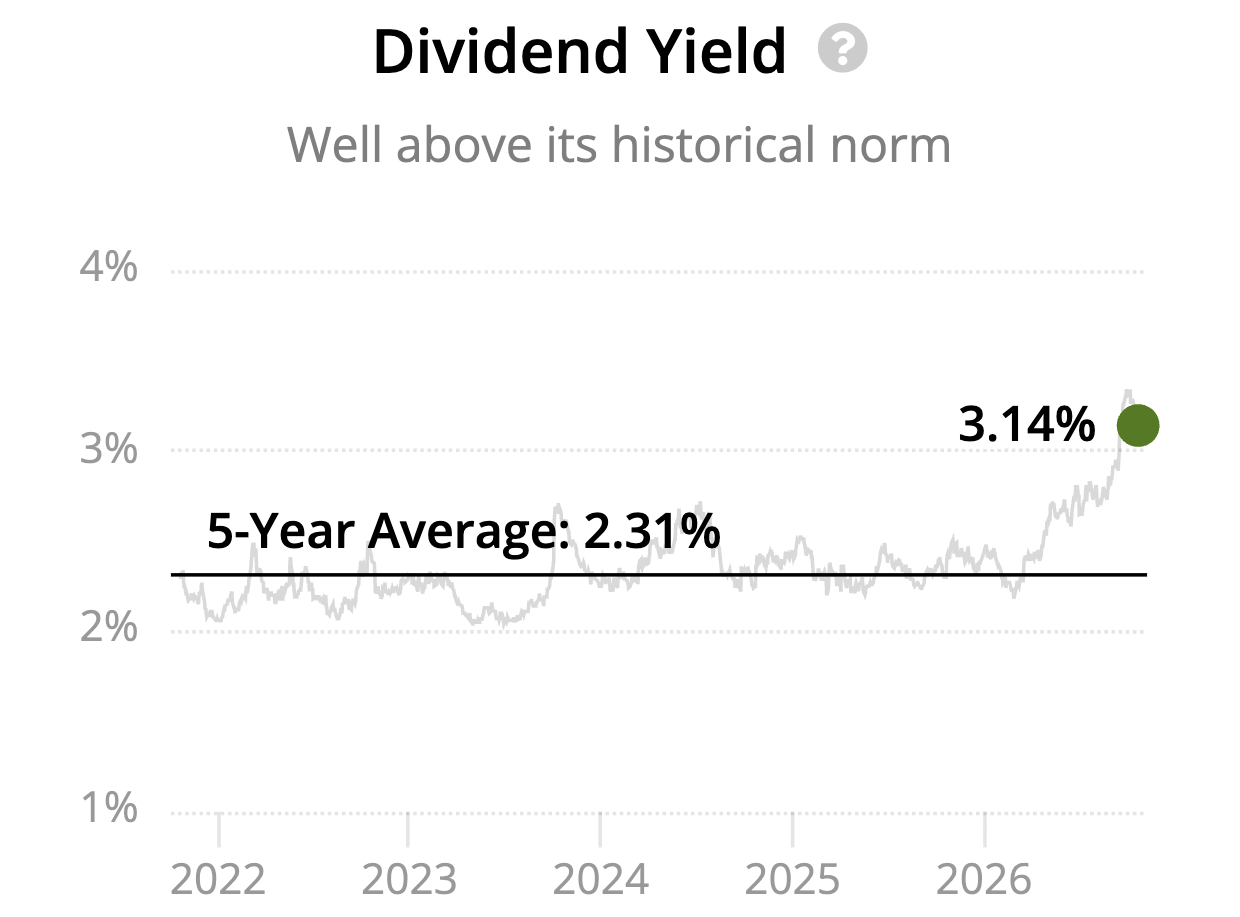
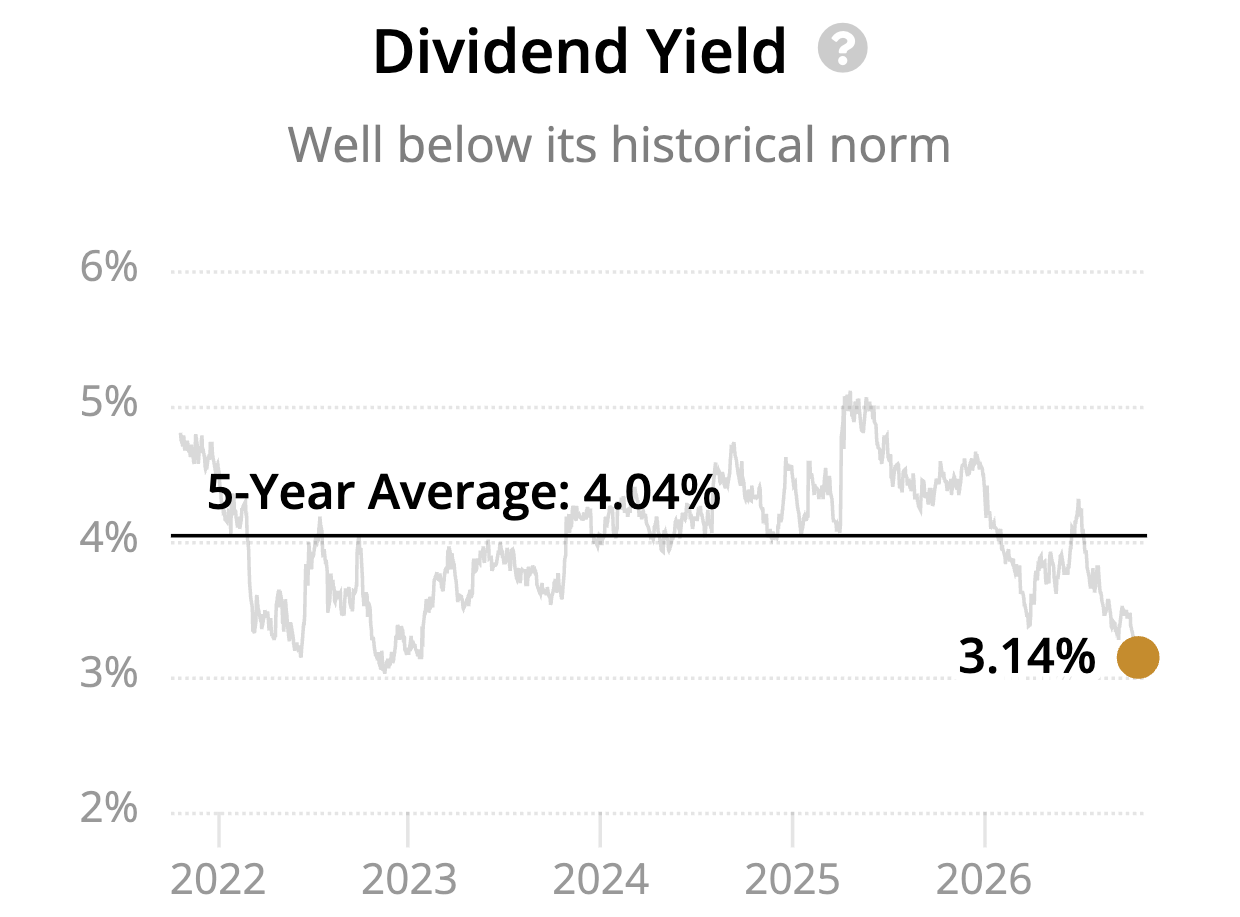
The pullback has lifted McDonald's yield to 3.14%, well above its five-year average of 2.31%, so the shares look cheaper than usual.
Consolidated Edison (ED): A Shrinking Payout Ratio
Sector: Utilities – Multi-Utilities
Dividend Yield: 3.2%
Dividend Safety Score: Very Safe (90)
2007-09 Recession Return: -26% vs. -55% for S&P 500
Uninterrupted Dividend Streak: 51 years
Dividend Yield: 3.2%
Dividend Safety Score: Very Safe (90)
2007-09 Recession Return: -26% vs. -55% for S&P 500
Uninterrupted Dividend Streak: 51 years
Con Edison supplies electricity and gas to about 10 million people in and around New York City. Nearly all of its earnings come from regulated businesses, and it has raised its dividend every year since 1975.
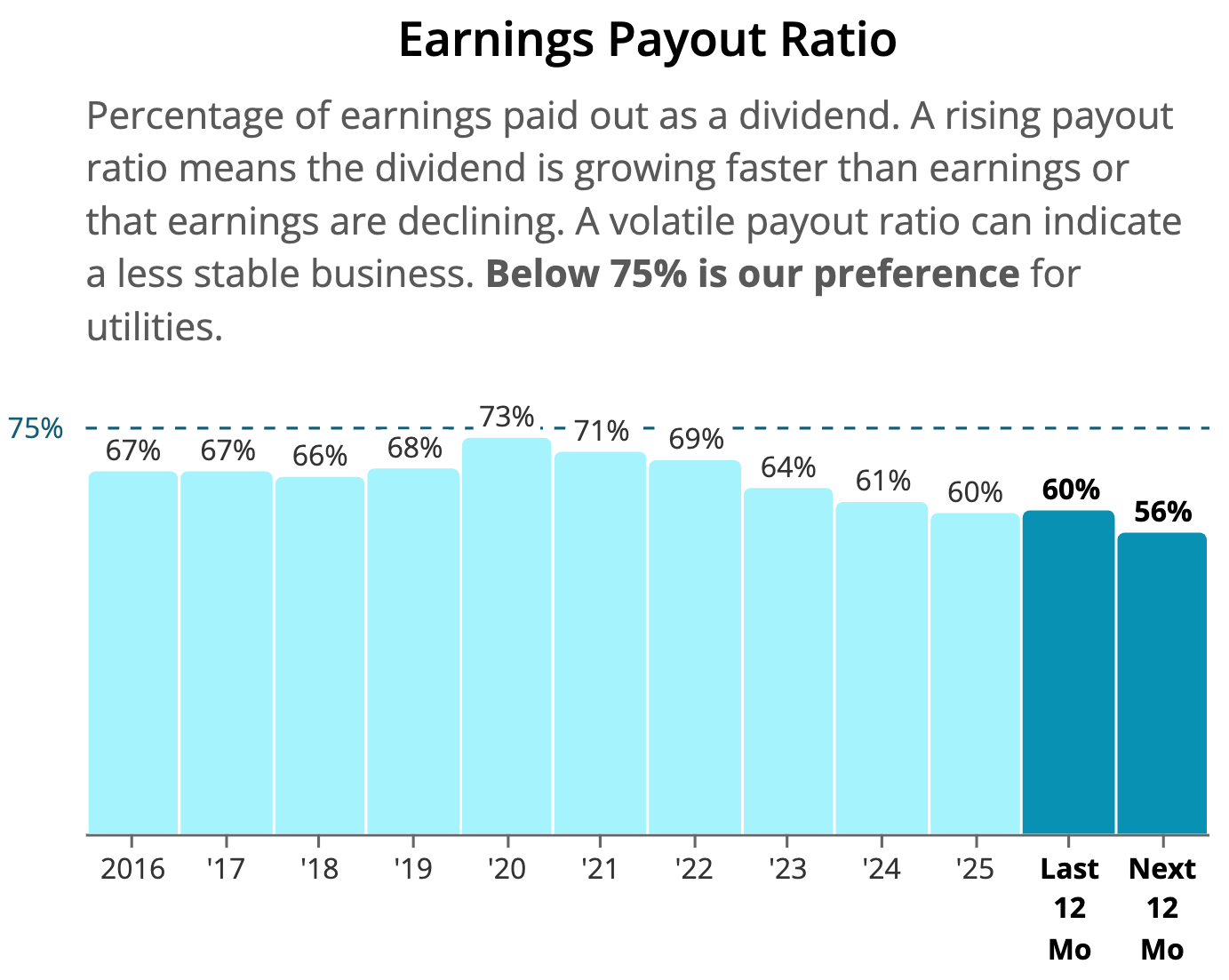
New York regulators can be tough on rate increases given the city's high cost of living. But Con Ed's financial cushion has grown. Its payout ratio has fallen from 73% in 2020 to 60% over the last 12 months, well below the 75% we prefer for utilities. Leverage is low for a utility, and the company holds an A- credit rating.
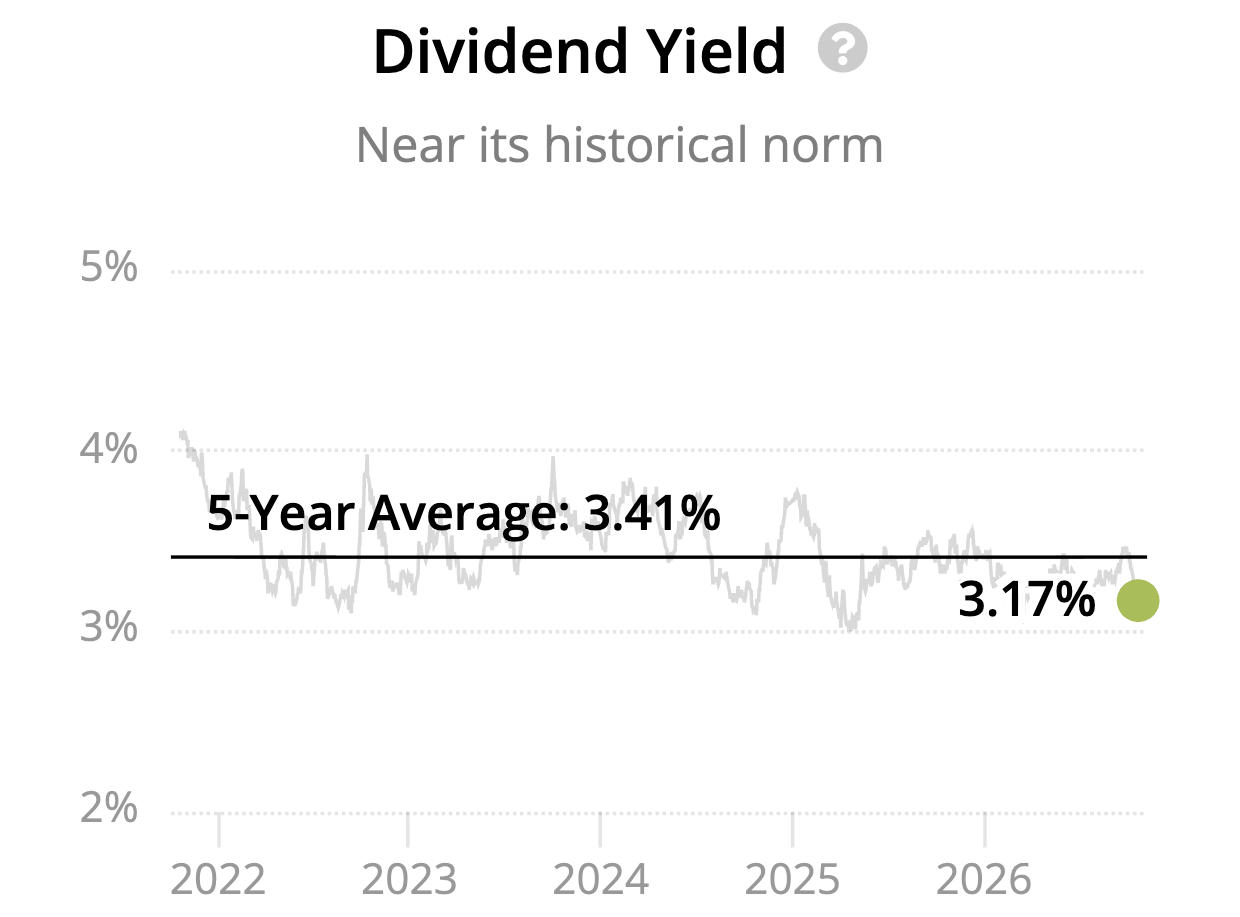
Con Ed yields a little less than its five-year average of 3.41%, which points to shares priced at or slightly above their usual level.
Bristol-Myers Squibb (BMY): Essential Drugs, With Patent Expirations Ahead
Sector: Healthcare – Pharmaceuticals
Dividend Yield: 4.1%
Dividend Safety Score: Safe (70)
2007-09 Recession Return: -32% vs. -55% for S&P 500
Uninterrupted Dividend Streak: 55 years
Dividend Yield: 4.1%
Dividend Safety Score: Safe (70)
2007-09 Recession Return: -32% vs. -55% for S&P 500
Uninterrupted Dividend Streak: 55 years
Patients need cancer, heart and immunology drugs whatever the economy is doing. That made Bristol-Myers one of the steadier stocks of the financial crisis, and it held its dividend through that period.
Its challenge is patents rather than recessions. Several of its biggest drugs lose exclusivity this decade, so Bristol has been buying its way into new ones, including Karuna Therapeutics in 2024 and a cancer partnership with BioNTech in 2025.
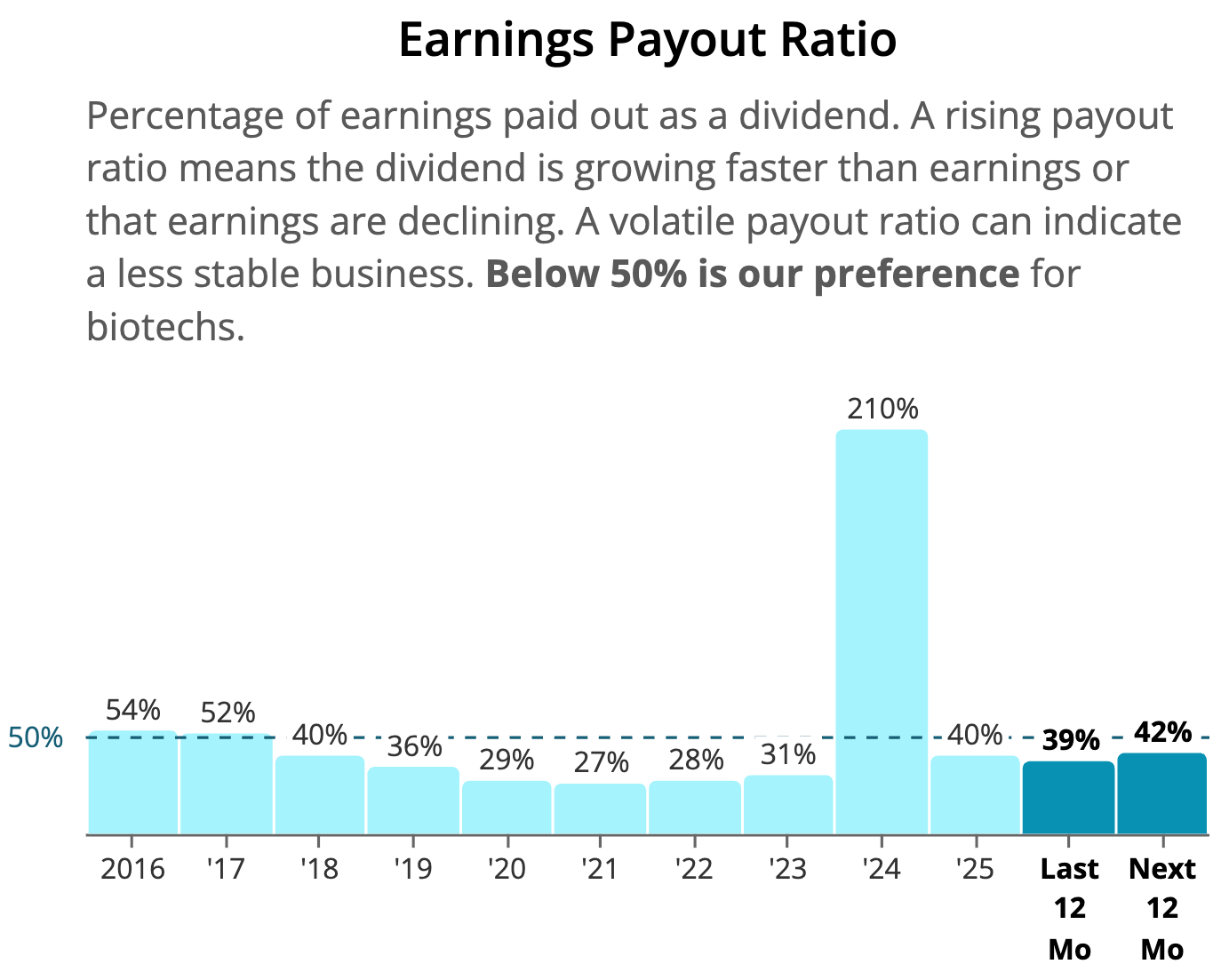
The 210% payout ratio in 2024 reflects a large one-time charge tied to the Karuna deal, not a cash shortfall. Over the last 12 months Bristol paid out 39% of earnings, below the 50% we prefer for drugmakers. It also holds an A credit rating, providing flexibility for future M&A.
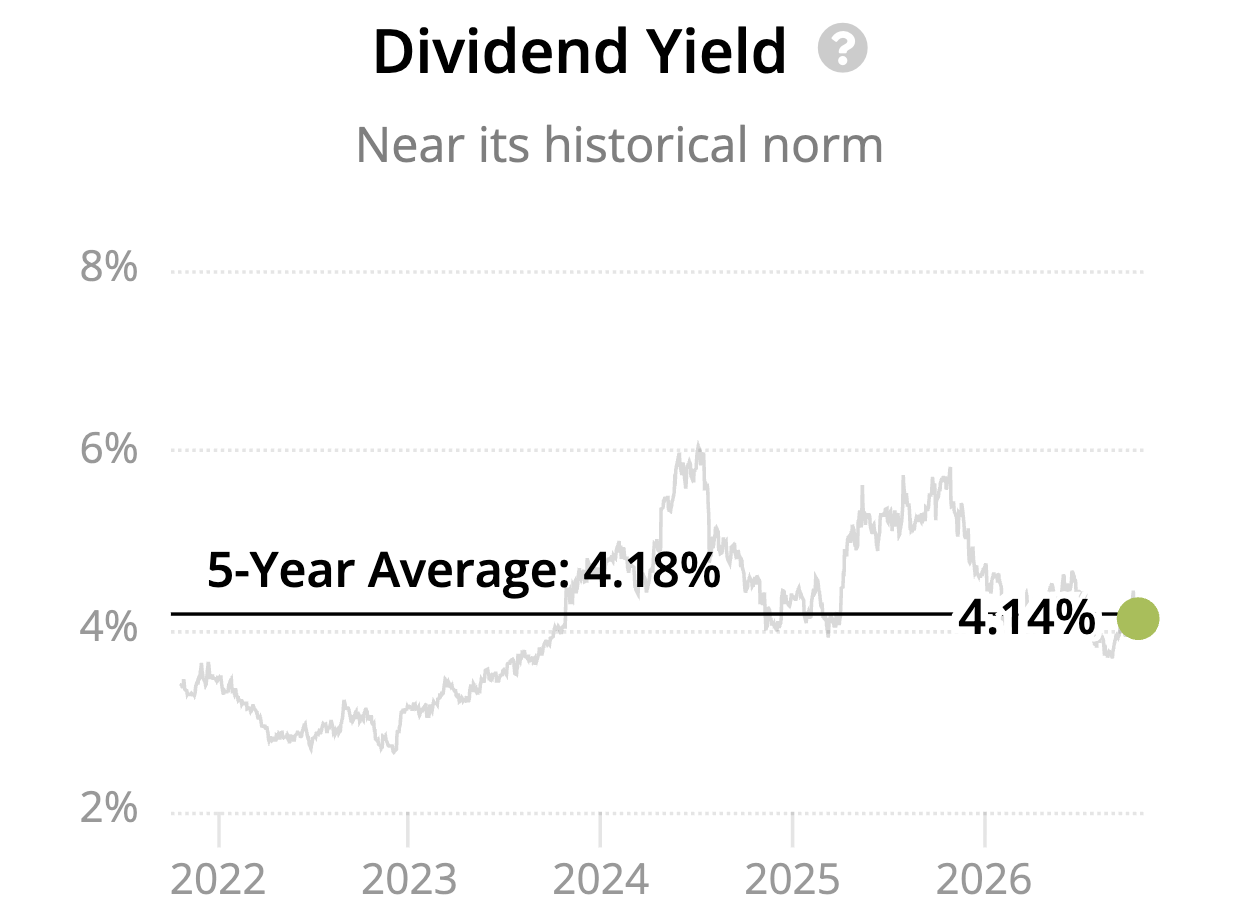
Bristol's yield matches its five-year average of 4.18% almost exactly, so the stock trades about where it normally does.
Realty Income (O): Monthly Rent From Necessity Retailers
Sector: Real Estate – Retail REITs
Dividend Yield: 5.9%
Dividend Safety Score: Safe (80)
2007-09 Recession Return: -43% vs. -55% for S&P 500
Uninterrupted Dividend Streak: 57 years
Dividend Yield: 5.9%
Dividend Safety Score: Safe (80)
2007-09 Recession Return: -43% vs. -55% for S&P 500
Uninterrupted Dividend Streak: 57 years
Realty Income has paid monthly dividends since its founding in 1969. Its biggest tenants include Dollar General, Walgreens and 7-Eleven, and its largest industries are grocery, convenience, dollar and home improvement stores. Its properties are roughly 99% occupied.
The bigger risk today is interest rates, not tenants. Many investors own Realty Income for its steady monthly income, much like a bond, so the stock is sensitive to rates. It can lag or sell off when Treasury yields rise, and the 10-year Treasury now yields above 5%.
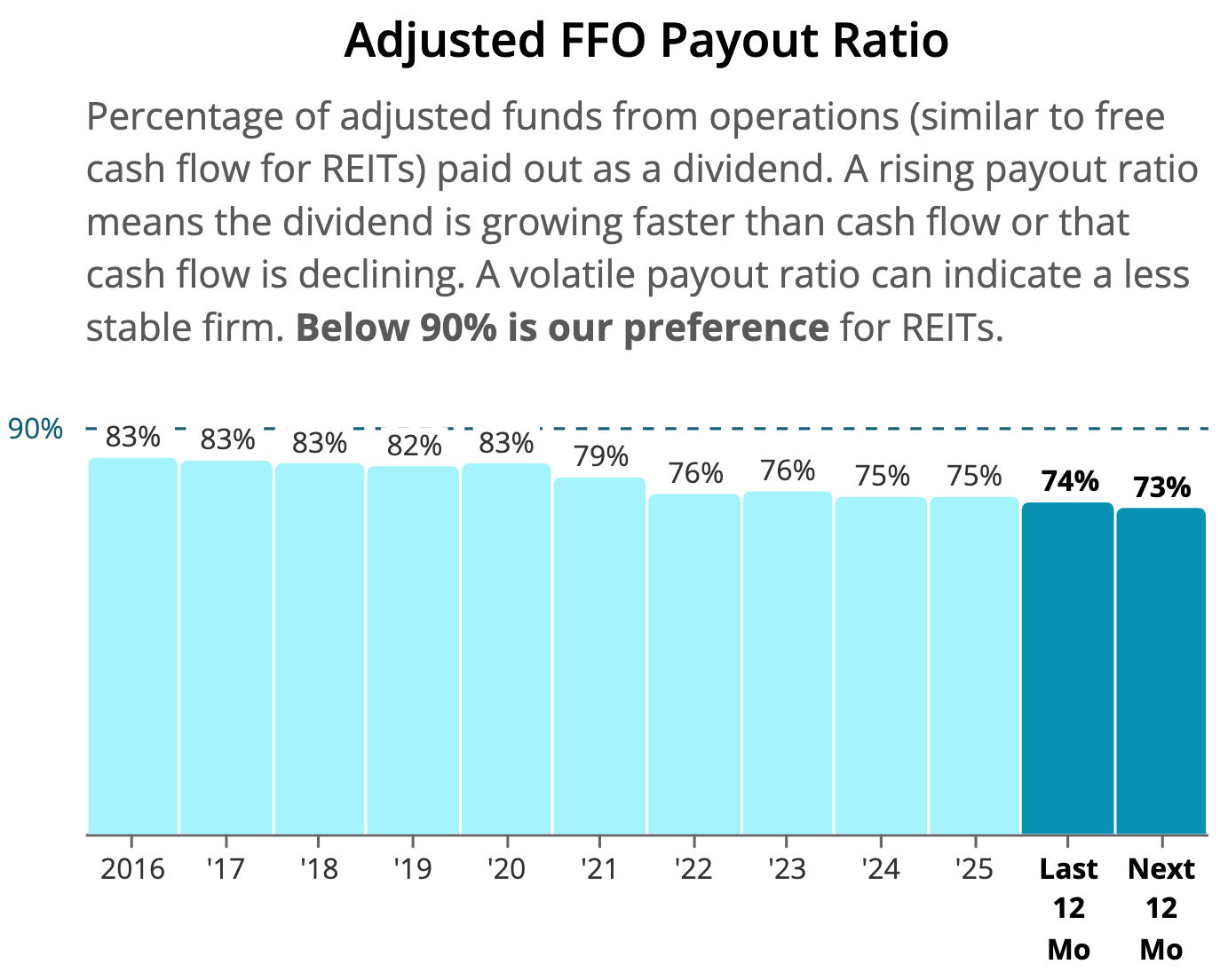
The dividend itself looks solid. Realty Income pays out 74% of its adjusted funds from operations, below the 90% we prefer for REITs, and holds an A- credit rating.
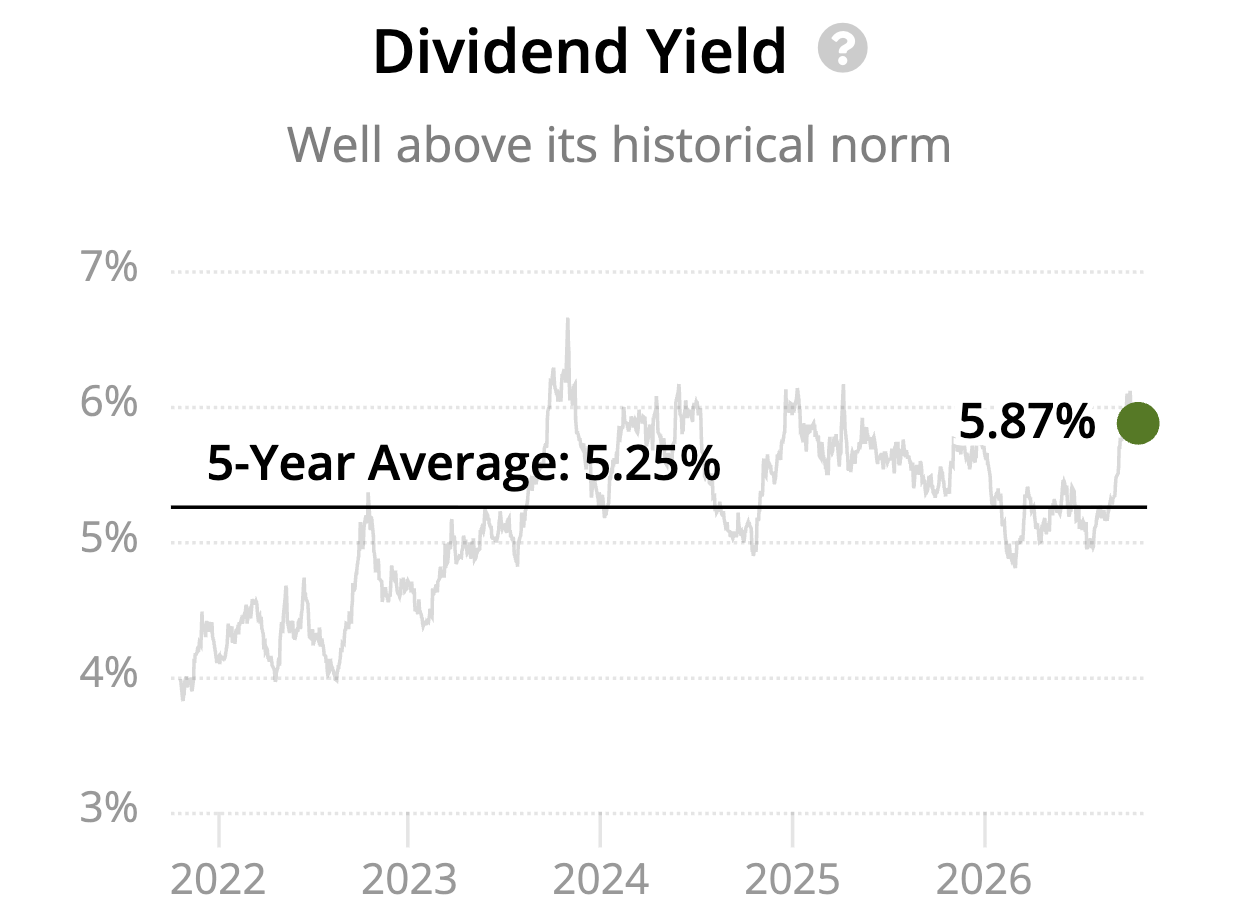
Realty Income now yields 5.87%, well above its five-year average of 5.25%, a sign the shares are cheaper than usual after the rise in bond yields.
PepsiCo (PEP): Still Safe, but No Longer Very Safe
Sector: Consumer Staples – Soft Drinks and Beverages
Dividend Yield: 4.4%
Dividend Safety Score: Safe (80)
2007-09 Recession Return: -35% vs. -55% for S&P 500
Uninterrupted Dividend Streak: 61 years
Dividend Yield: 4.4%
Dividend Safety Score: Safe (80)
2007-09 Recession Return: -35% vs. -55% for S&P 500
Uninterrupted Dividend Streak: 61 years
People keep buying chips and soda in a recession. PepsiCo held up well in 2008, and its brands, from Lay's and Doritos to Gatorade and Quaker, still command premium shelf space.
But we downgraded PepsiCo's Dividend Safety Score from Very Safe to Safe in April. North America brings in about 60% of revenue, and shoppers there are trading down to cheaper brands and choosing simpler, healthier foods. Weight-loss drugs add another unknown. This now looks like a lasting shift rather than a soft patch.
The dividend still looks well protected. PepsiCo has an A+ credit rating and a reasonable payout ratio, and it raised its dividend 4% in June, extending a growth streak of more than 50 years.
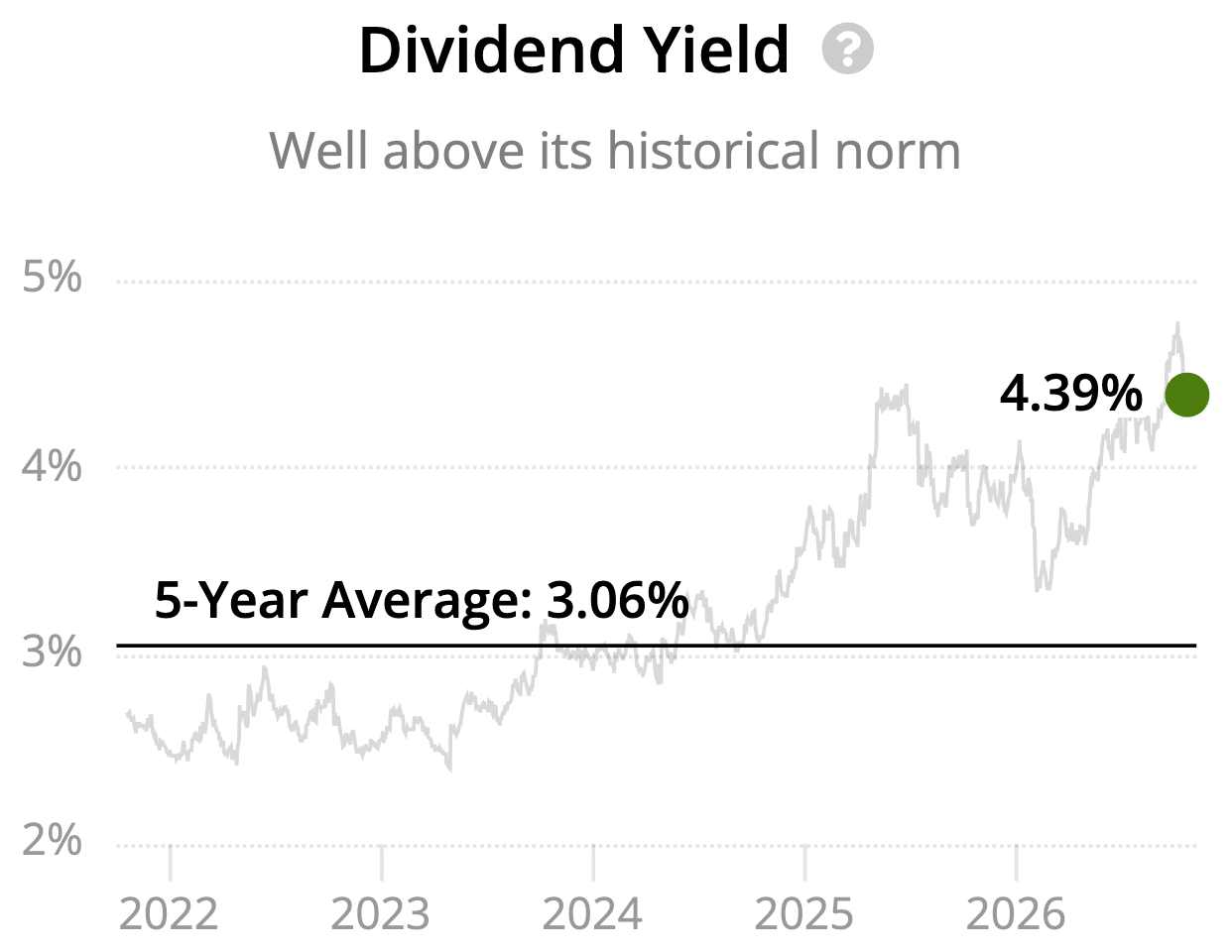
The stock's yield now sits well above its five-year average, which reflects how far investor sentiment has fallen.
Kimberly-Clark (KMB): Household Staples, Plus the Kenvue Acquisition
Sector: Consumer Staples – Household Products
Dividend Yield: 4.8%
Dividend Safety Score: Safe (70)
2007-09 Recession Return: -34% vs. -55% for S&P 500
Uninterrupted Dividend Streak: 91 years
Dividend Yield: 4.8%
Dividend Safety Score: Safe (70)
2007-09 Recession Return: -34% vs. -55% for S&P 500
Uninterrupted Dividend Streak: 91 years
Few purchases are less discretionary than diapers and toilet paper. Brands like Huggies, Kleenex, and Cottonelle helped Kimberly-Clark keep raising its dividend through the financial crisis.
That said, we downgraded Kimberly-Clark's Dividend Safety Score from Very Safe to Safe in November 2025 after it agreed to buy Kenvue, the maker of Tylenol, Band-Aid and Listerine, in a deal valued at nearly $50 billion.
The acquisition was set to push leverage toward 3 times EBITDA, above management's 2 times target, and to pause buybacks until the debt comes down. The company retains a strong A credit rating, though.
We expect the combined company's payout ratio to land around 70% to 75%. That is close to Kimberly-Clark's history but leaves less margin for error with more debt. A cut still looks unlikely, but dividend growth will probably stay slow.
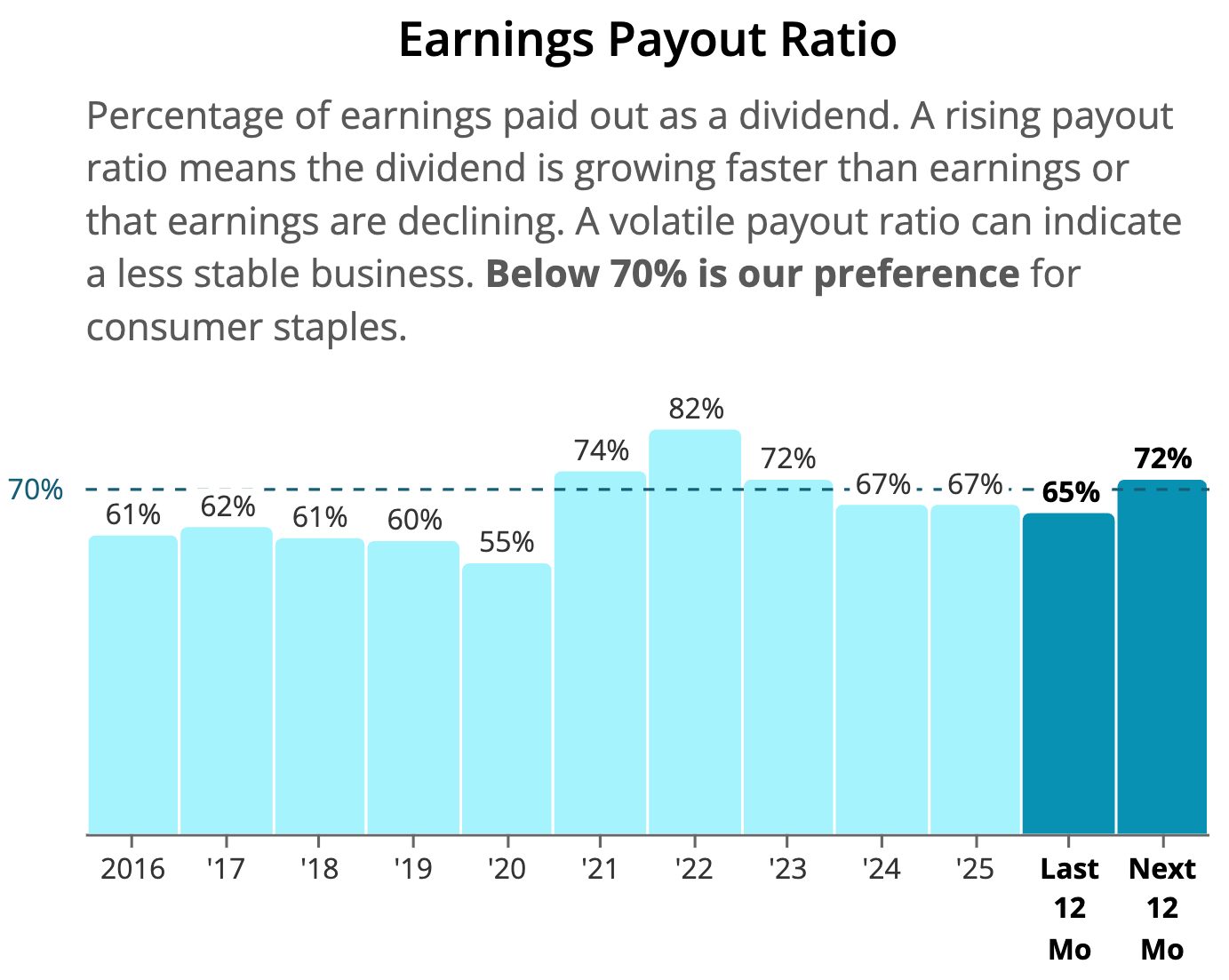
With its yield at 4.80% against a five-year average of 3.73%, Kimberly-Clark's shares are priced well below their usual level as investors digest the surprising acquisition and slower growth.
American States Water (AWR): 72 Straight Years of Raises
Sector: Utilities – Water Utilities
Dividend Yield: 2.6%
Dividend Safety Score: Very Safe (98)
2007-09 Recession Return: -30% vs. -55% for S&P 500
Uninterrupted Dividend Streak: 95 years
Dividend Yield: 2.6%
Dividend Safety Score: Very Safe (98)
2007-09 Recession Return: -30% vs. -55% for S&P 500
Uninterrupted Dividend Streak: 95 years
American States Water supplies regulated water and electricity in California and runs water and wastewater systems on U.S. military bases under long-term government contracts. Water is about as essential as a service gets.
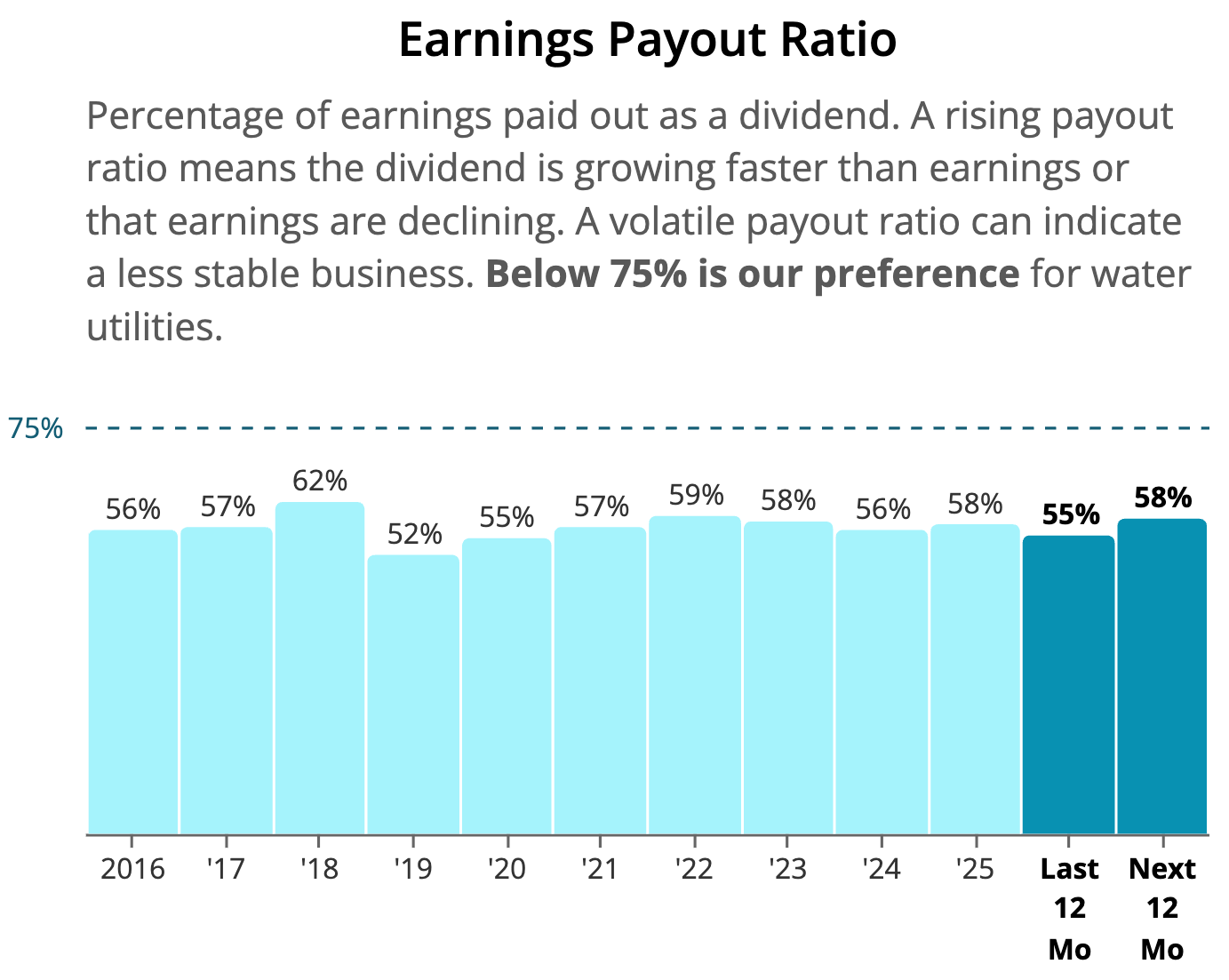
The company raised its dividend 8.2% in July, its 72nd consecutive annual increase, and has paid a safe dividend every year since 1931, according to its dividend press release. Its payout ratio has stayed between 52% and 62% for a decade, below the 75% we prefer for water utilities. Leverage is very low for a water utility, and the company holds an A credit rating.
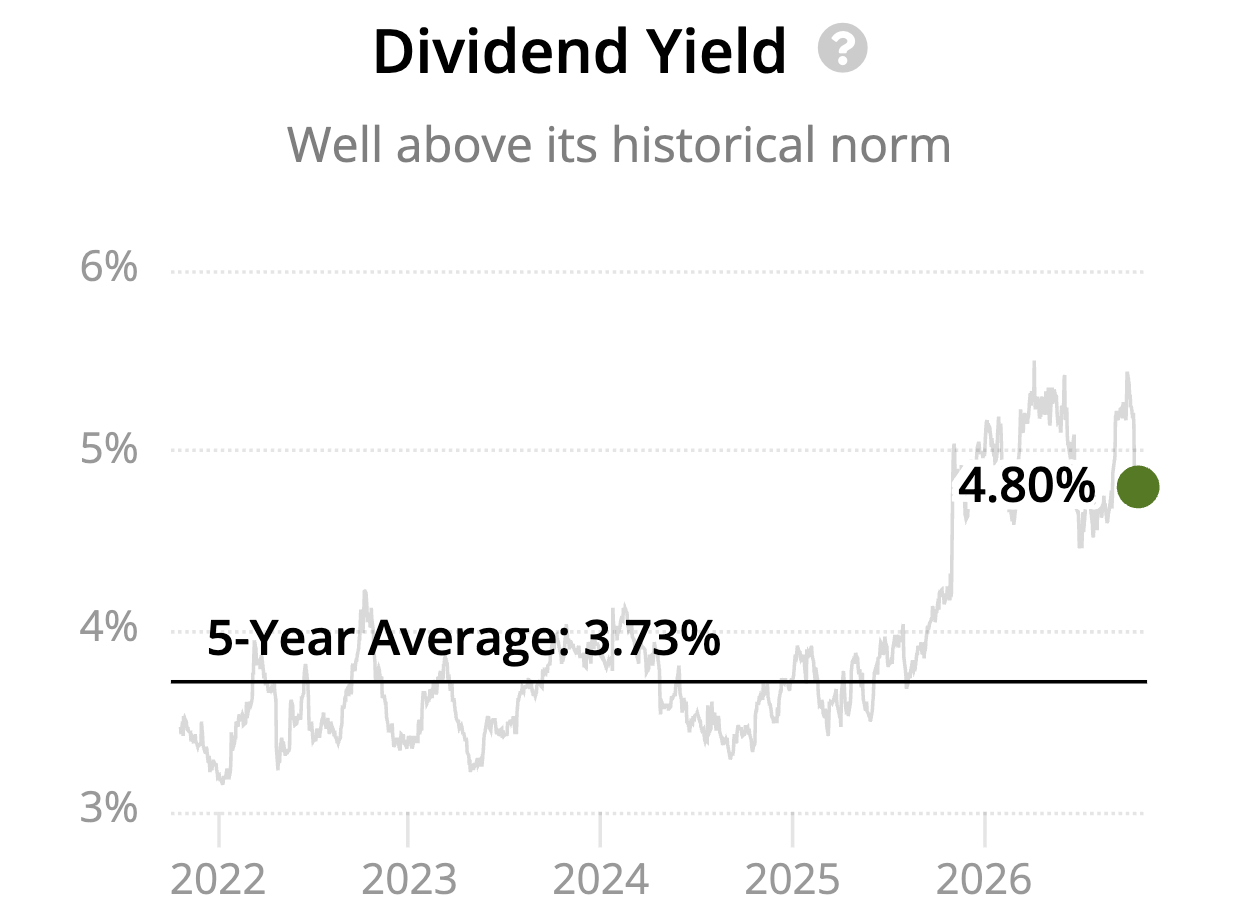
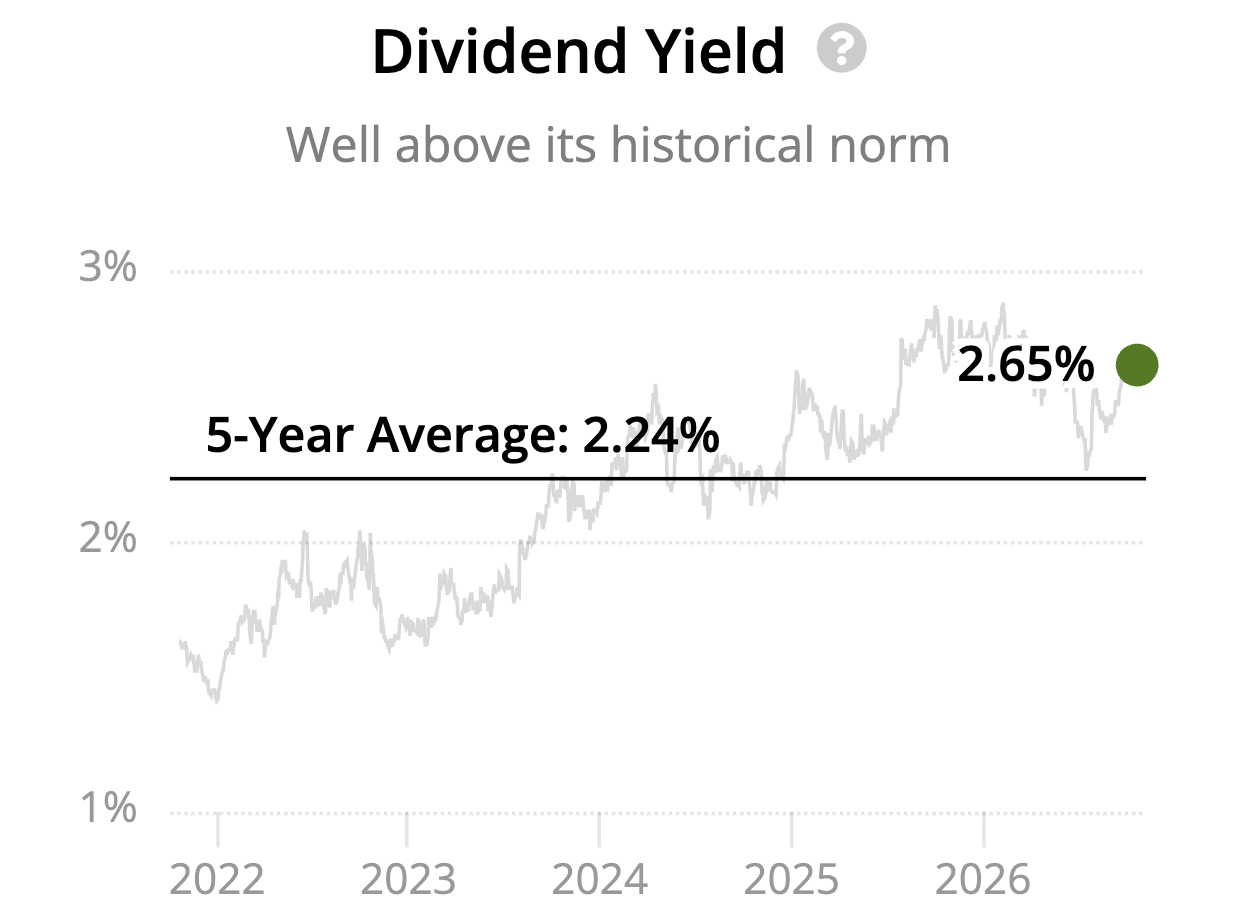
American States Water's yield now sits well above its five-year average of 2.24%, which suggests the shares are cheaper than they have typically been. The yield is still modest, though. What you are buying is one of the most dependable dividend growth records in the market, which is why it earns one of the highest Dividend Safety Scores we give.
Duke Energy (DUK): Regulated Power Across the Southeast
Sector: Utilities – Electric Utilities
Dividend Yield: 3.6%
Dividend Safety Score: Safe (80)
2007-09 Recession Return: -34% vs. -55% for S&P 500
Uninterrupted Dividend Streak: 99 years
Dividend Yield: 3.6%
Dividend Safety Score: Safe (80)
2007-09 Recession Return: -34% vs. -55% for S&P 500
Uninterrupted Dividend Streak: 99 years
Duke Energy is one of the largest regulated utilities in America, serving customers across the Southeast and Midwest. In most of its territories it is the only provider, and regulators set the returns it earns on new investment.
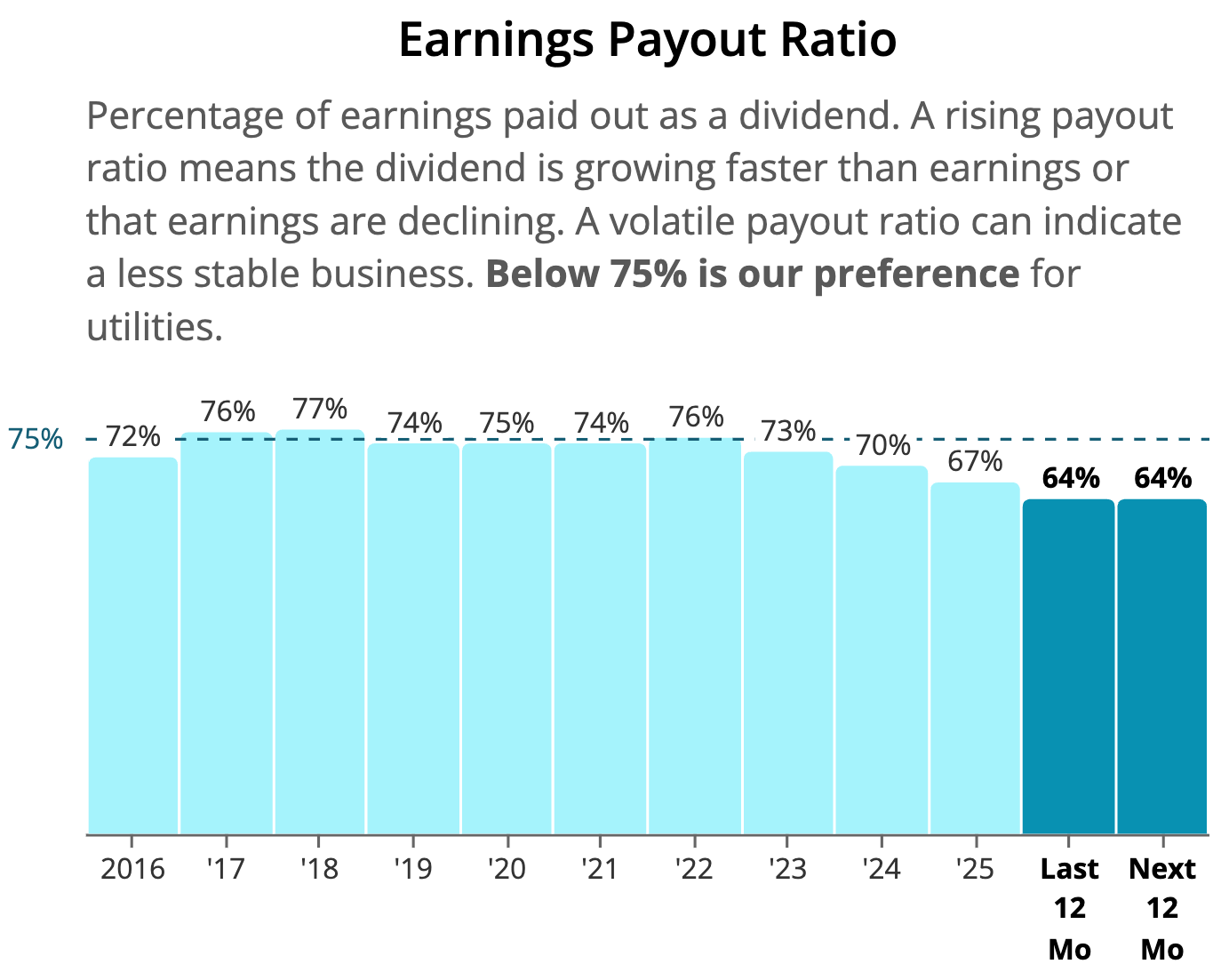
Duke's payout ratio has come down from 77% in 2018 to 64% today, comfortably below the 75% we prefer for utilities and nearing a level that should result in stronger dividend growth going forward. Leverage is edging high for a utility, and the company holds a BBB+ credit rating, so its score is Safe rather than Very Safe.
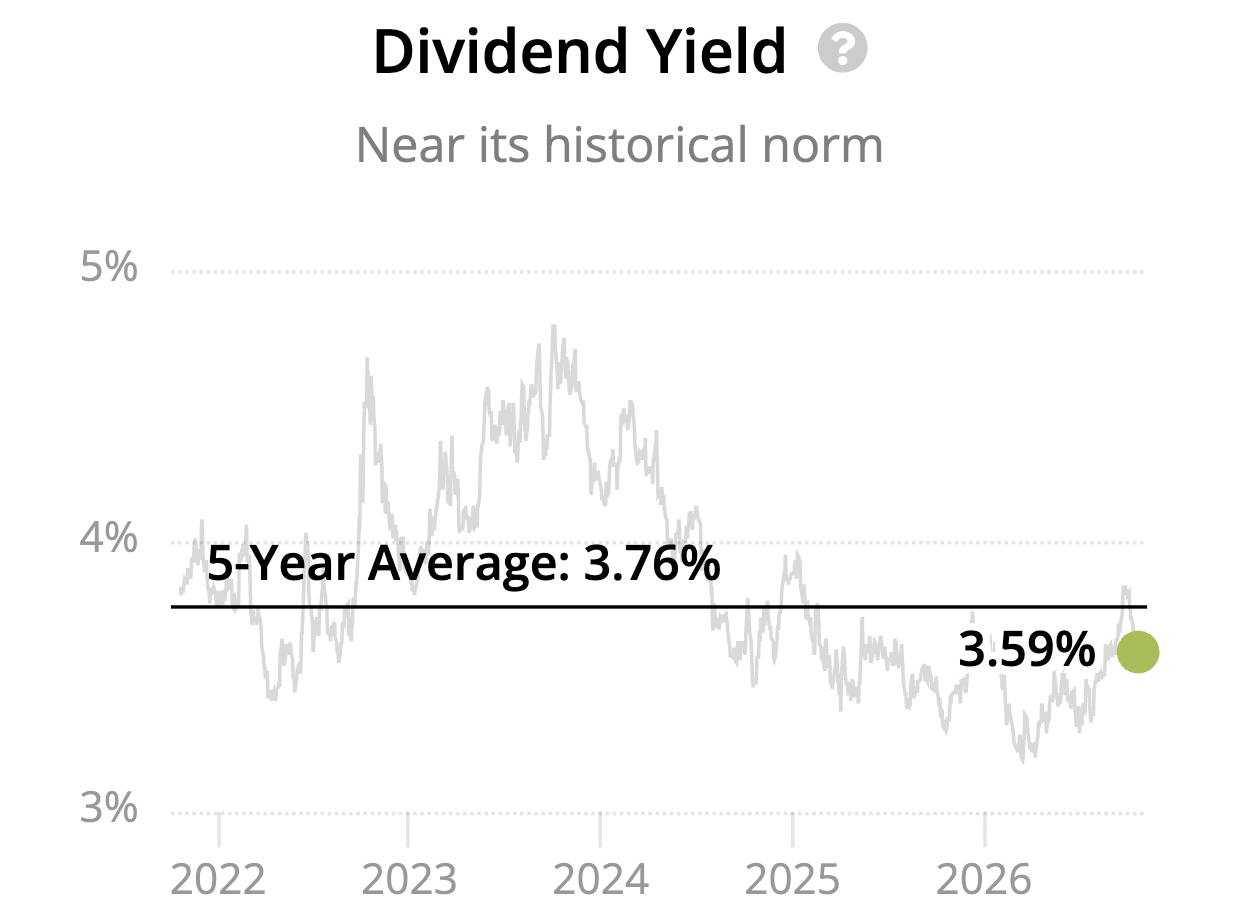
Duke's yield is a little below its five-year average of 3.76%, so the shares are roughly fairly priced against their own history.
Abbott Laboratories (ABT): Medical Devices and Diagnostics With a Low Payout Ratio
Sector: Healthcare – Health Care Equipment
Dividend Yield: 2.6%
Dividend Safety Score: Very Safe (90)
2007-09 Recession Return: -13% vs. -55% for S&P 500
Uninterrupted Dividend Streak: 102 years
Dividend Yield: 2.6%
Dividend Safety Score: Very Safe (90)
2007-09 Recession Return: -13% vs. -55% for S&P 500
Uninterrupted Dividend Streak: 102 years
Abbott's shares fell just 13% during the financial crisis, second only to McDonald's on this list. Diabetes monitors, heart devices, and diagnostic tests are not purchases people put off.
We lowered Abbott's Dividend Safety Score from 99 to 90, still Very Safe, in November 2025 after it agreed to buy Exact Sciences for $23 billion. Then in January the stock suffered its worst one-day drop since 2002 on weak results in its nutrition business, which it is now separating.
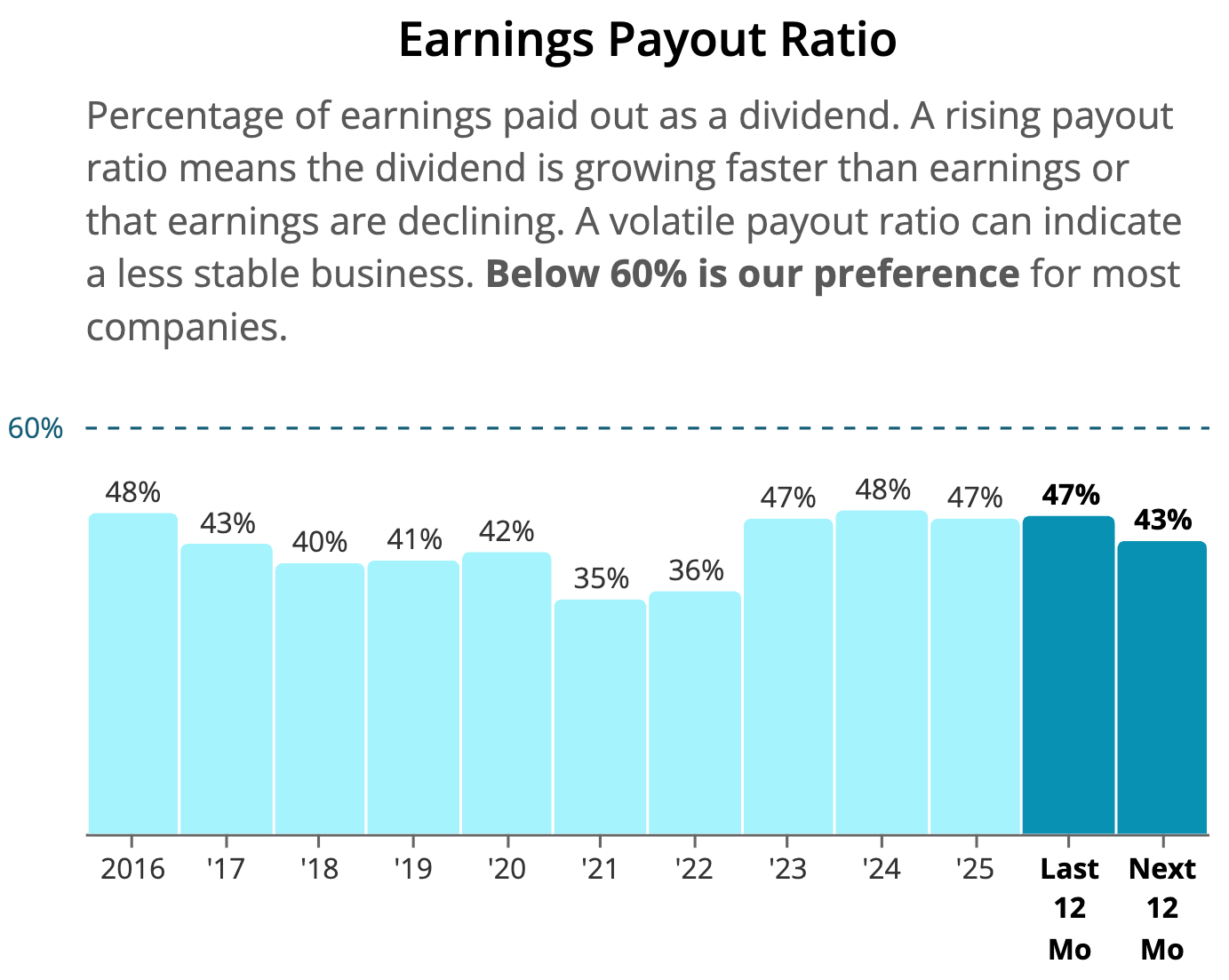
Abbott pays out 47% of its earnings, solidly below the 60% we prefer for most companies. It raised its dividend 6.8% in December 2025, its 54th consecutive annual increase, and has paid dividends since 1924, according to its dividend press release.
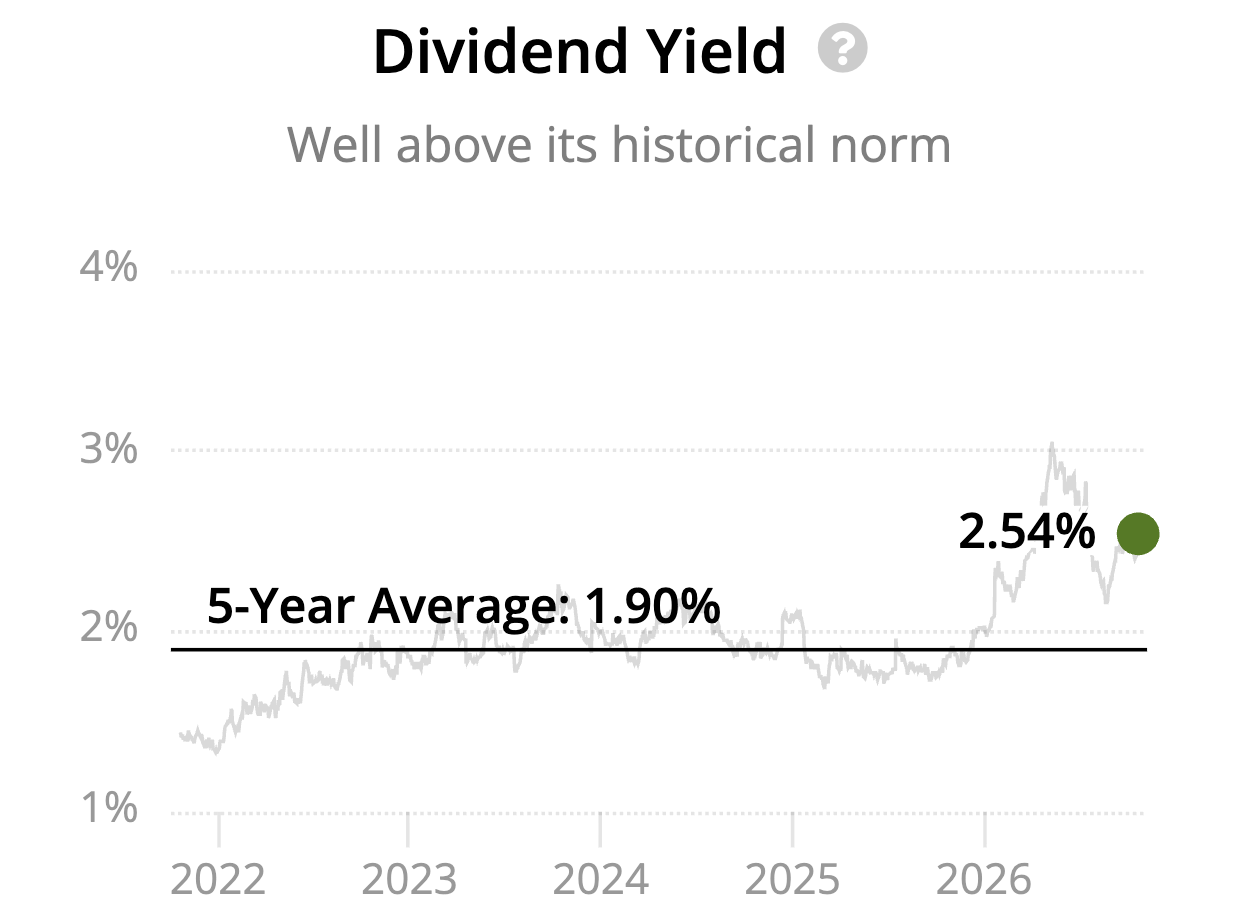
Abbott's yield is now well above its five-year average of 1.90%, an unusual sight for a stock that has rarely looked cheap by this measure.
Coca-Cola (KO): Global Brands, Falling Payout Ratio
Sector: Consumer Staples – Soft Drinks and Beverages
Dividend Yield: 2.3%
Dividend Safety Score: Safe (80)
2007-09 Recession Return: -31% vs. -55% for S&P 500
Uninterrupted Dividend Streak: 106 years
Dividend Yield: 2.3%
Dividend Safety Score: Safe (80)
2007-09 Recession Return: -31% vs. -55% for S&P 500
Uninterrupted Dividend Streak: 106 years
Coca-Cola sells its drinks in more than 200 countries, so no single economy decides its results. Its brands have let it raise prices roughly in line with inflation for decades, and separating its bottling operations results in a high-margin, capital-light business.
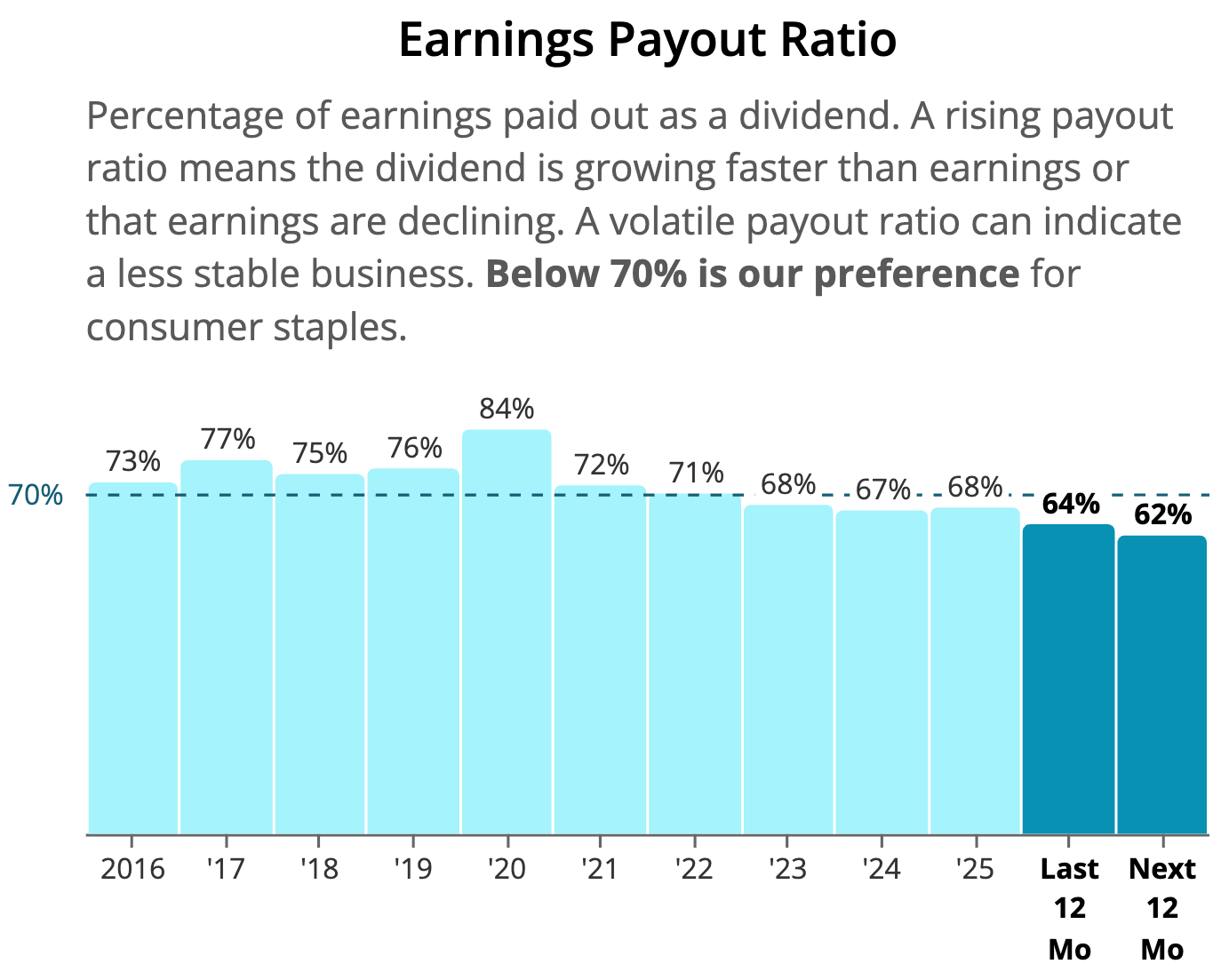
Coke has also consistently grown into its dividend. Its payout ratio peaked at 84% in 2020 and has fallen to 64% over the last 12 months, below the 70% we prefer for consumer staples. Leverage is very low, the company holds an A+ credit rating, and it has raised its dividend for more than 60 consecutive years.
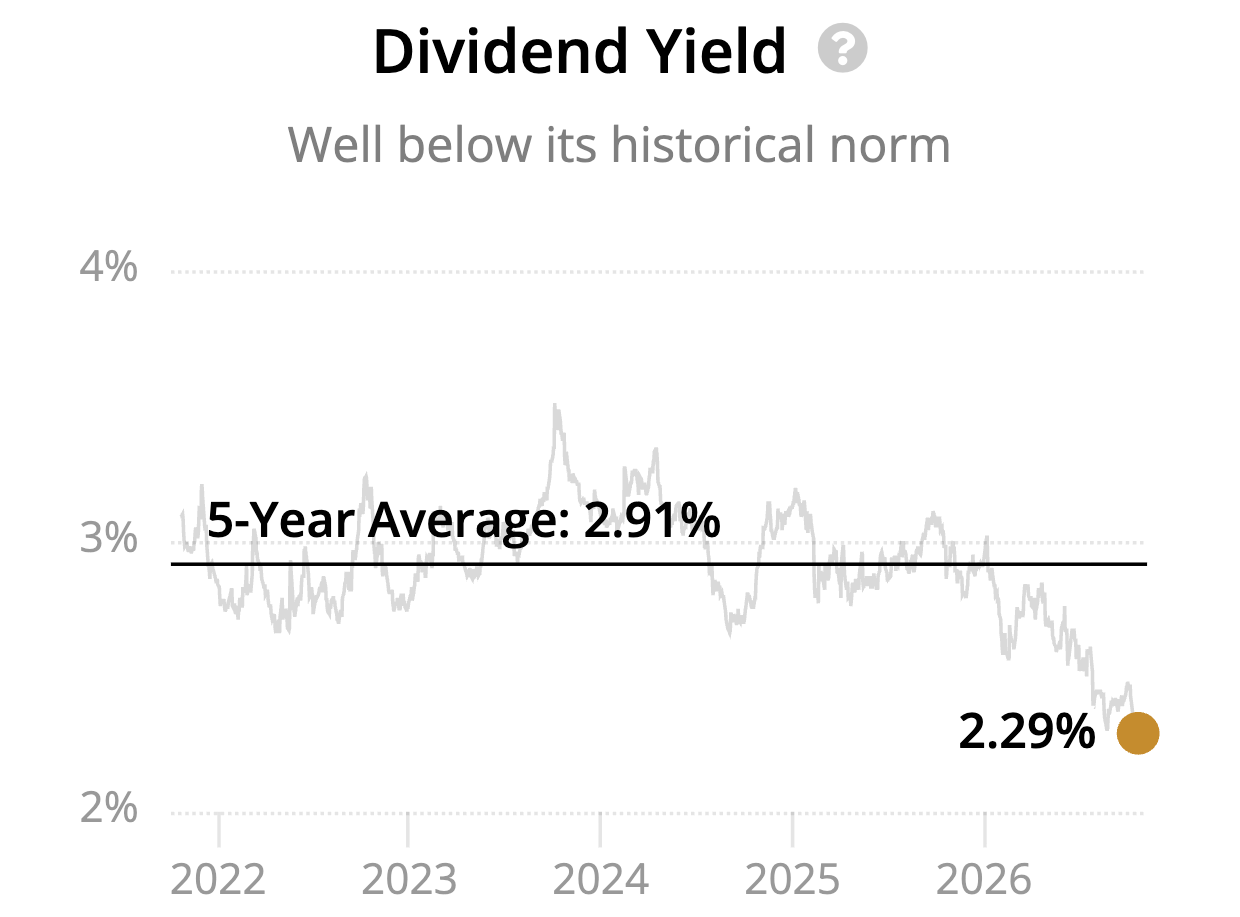
Coca-Cola's yield sits well below its five-year average of 2.91%, so investors are paying a premium for its steadiness and solid execution right now.
Johnson & Johnson (JNJ): A Rock Solid Balance Sheet
Sector: Healthcare – Pharmaceuticals
Dividend Yield: 2.1%
Dividend Safety Score: Very Safe (99)
2007-09 Recession Return: -27% vs. -55% for S&P 500
Uninterrupted Dividend Streak: 110 years
Dividend Yield: 2.1%
Dividend Safety Score: Very Safe (99)
2007-09 Recession Return: -27% vs. -55% for S&P 500
Uninterrupted Dividend Streak: 110 years
Johnson & Johnson earns a Very Safe score of 99, the highest on this list. It is one of very few companies with a AAA credit rating, and leverage is very low.
The company has simplified itself in recent years. It spun off its consumer health business as Kenvue in 2023, and last October announced plans to separate its orthopedics division. What remains is mostly prescription drugs and medical devices, two businesses patients rely on in any economy.
Talc litigation, long an overhang, may finally be nearing an end as well. In July J&J proposed a $5.5 billion settlement of roughly 76,000 remaining ovarian cancer claims, after earlier settling about 95% of filed mesothelioma lawsuits.
The deal still needs at least 95% of claimants to sign on, and the first payment, capped at $3 billion, is not due until 2027. Either way, the litigation has never threatened the dividend or the firm's balance sheet strength.
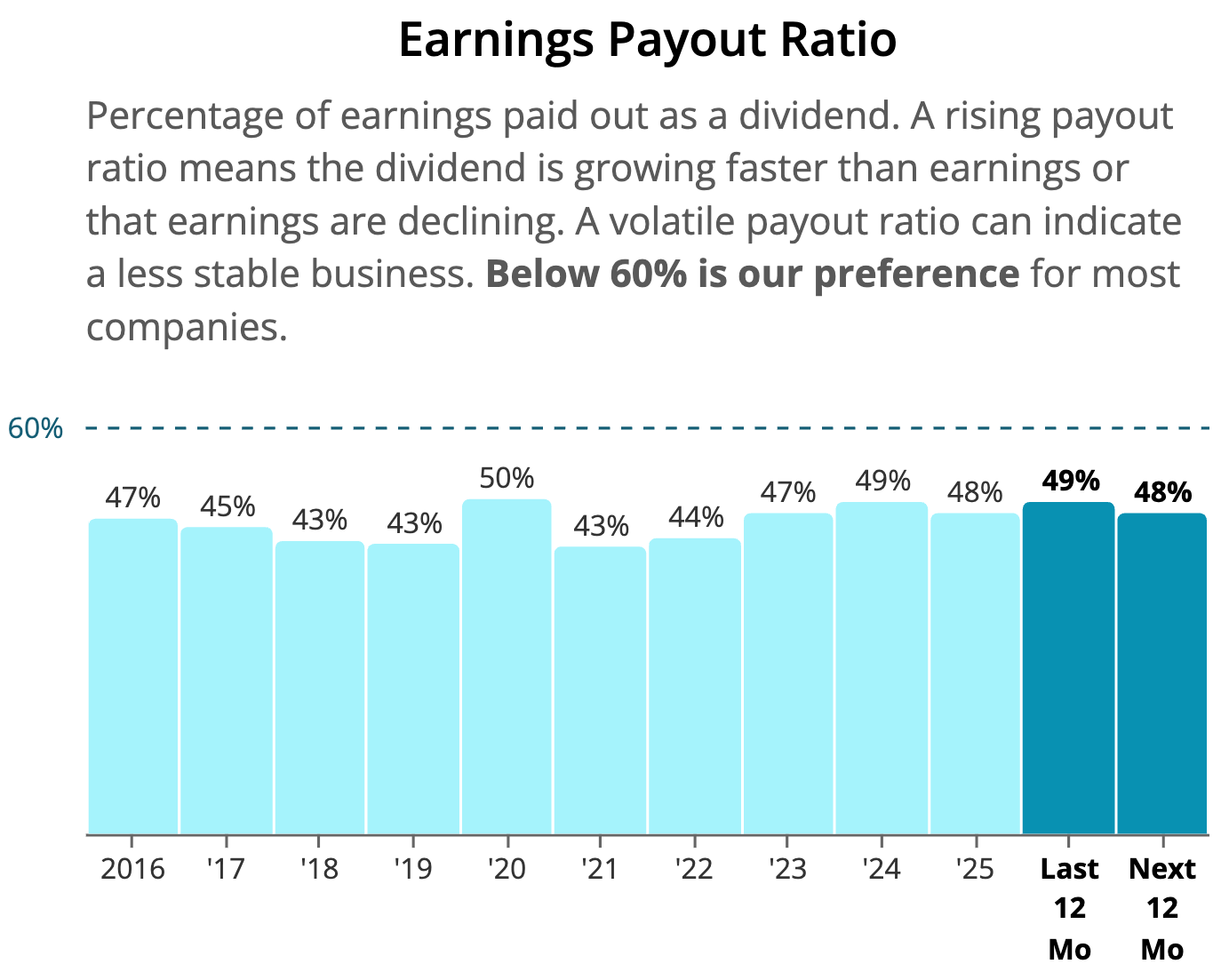
J&J pays out 49% of its earnings, below the 60% we prefer for most companies, and has raised its dividend for more than 60 consecutive years.
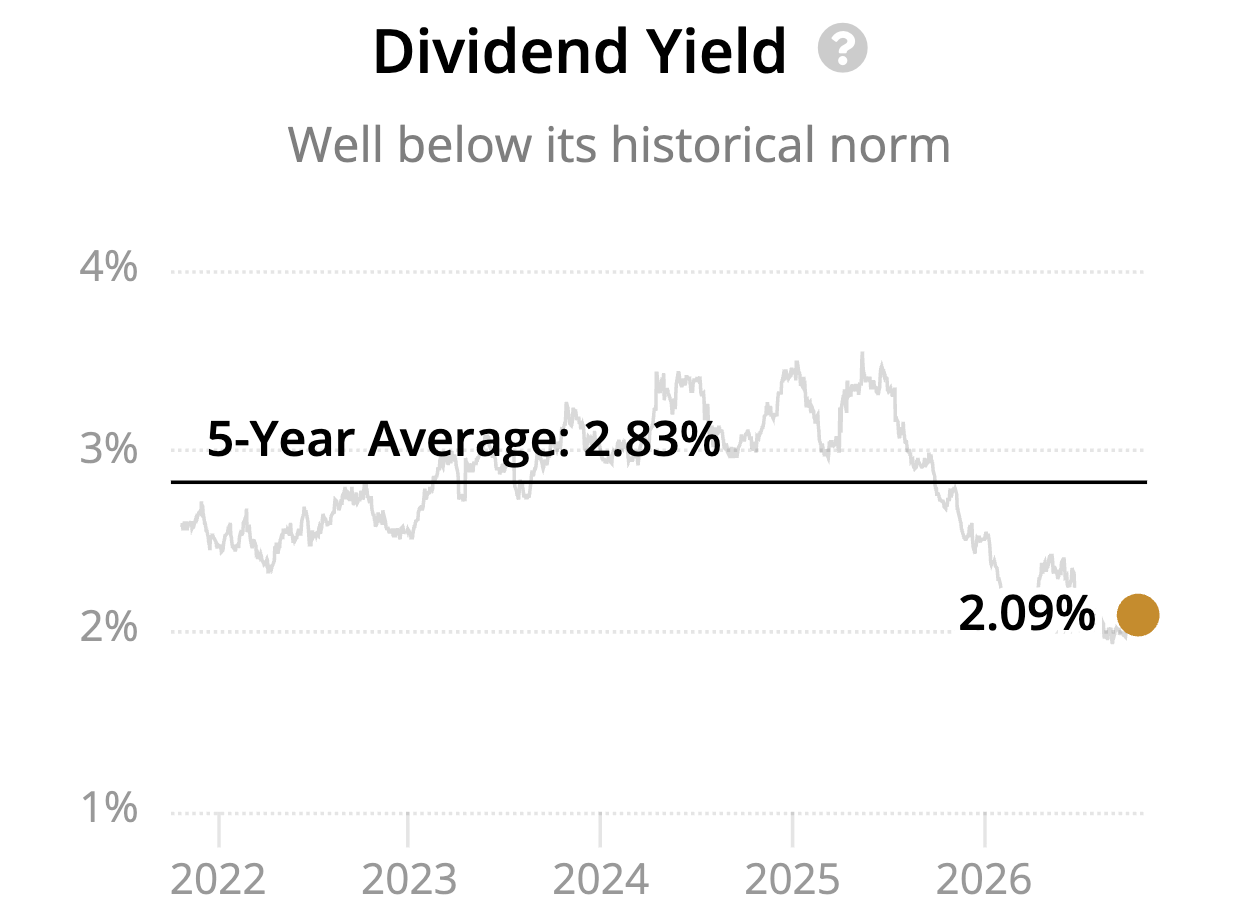
Johnson & Johnson's strong run has pushed its yield well below its five-year average of 2.83%, which means new buyers are paying up compared with recent years.
Chevron (CVX): Low Debt to Get Through Weak Oil Prices
Sector: Energy – Integrated Oil and Gas
Dividend Yield: 3.1%
Dividend Safety Score: Very Safe (90)
2007-09 Recession Return: -34% vs. -55% for S&P 500
Uninterrupted Dividend Streak: 114 years
Dividend Yield: 3.1%
Dividend Safety Score: Very Safe (90)
2007-09 Recession Return: -34% vs. -55% for S&P 500
Uninterrupted Dividend Streak: 114 years
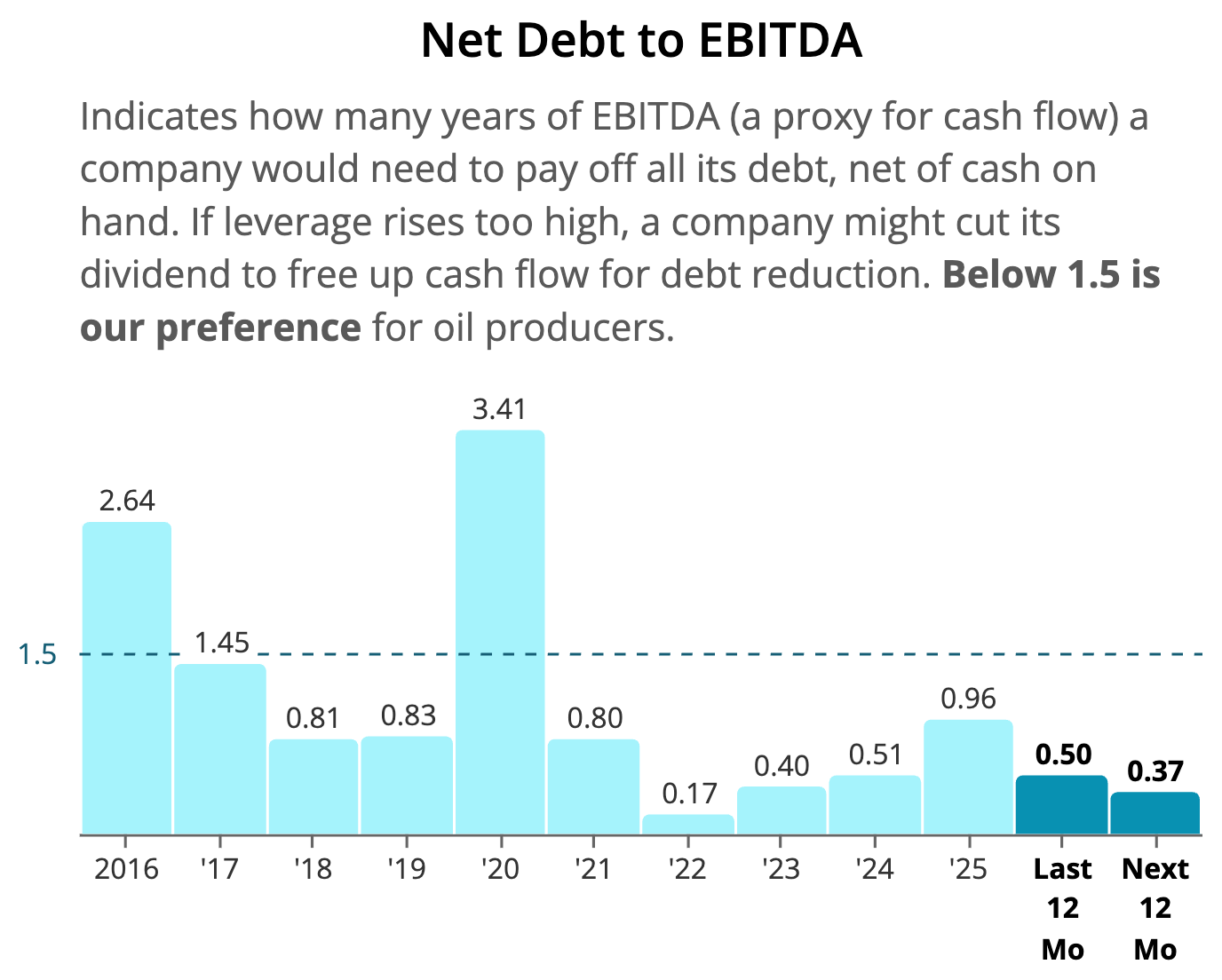
Oil prices fall in most recessions, which makes energy an unusual entry here. Chevron belongs because of its balance sheet.
The energy giant intentionally maintains low debt levels when times are good, leaving room to borrow and keep paying the dividend through a stretch of low prices. Recognizing this conservatism, along with the firm's scale and diversified resource base, Chevron holds an AA- credit rating and has paid dividends without interruption since 1912.
Chevron yields well below its five-year average of 4.04% as it has benefited from the Iran war disrupting the global energy supply chain.
Colgate-Palmolive (CL): Oral Care Leader With an A+ Credit Rating
Sector: Consumer Staples – Household Products
Dividend Yield: 2.3%
Dividend Safety Score: Very Safe (90)
2007-09 Recession Return: -22% vs. -55% for S&P 500
Uninterrupted Dividend Streak: 131 years
Dividend Yield: 2.3%
Dividend Safety Score: Very Safe (90)
2007-09 Recession Return: -22% vs. -55% for S&P 500
Uninterrupted Dividend Streak: 131 years
Toothpaste, soap and pet food are among the last things families cut back on. Colgate's shares fell 22% during the financial crisis, less than half the market's decline.
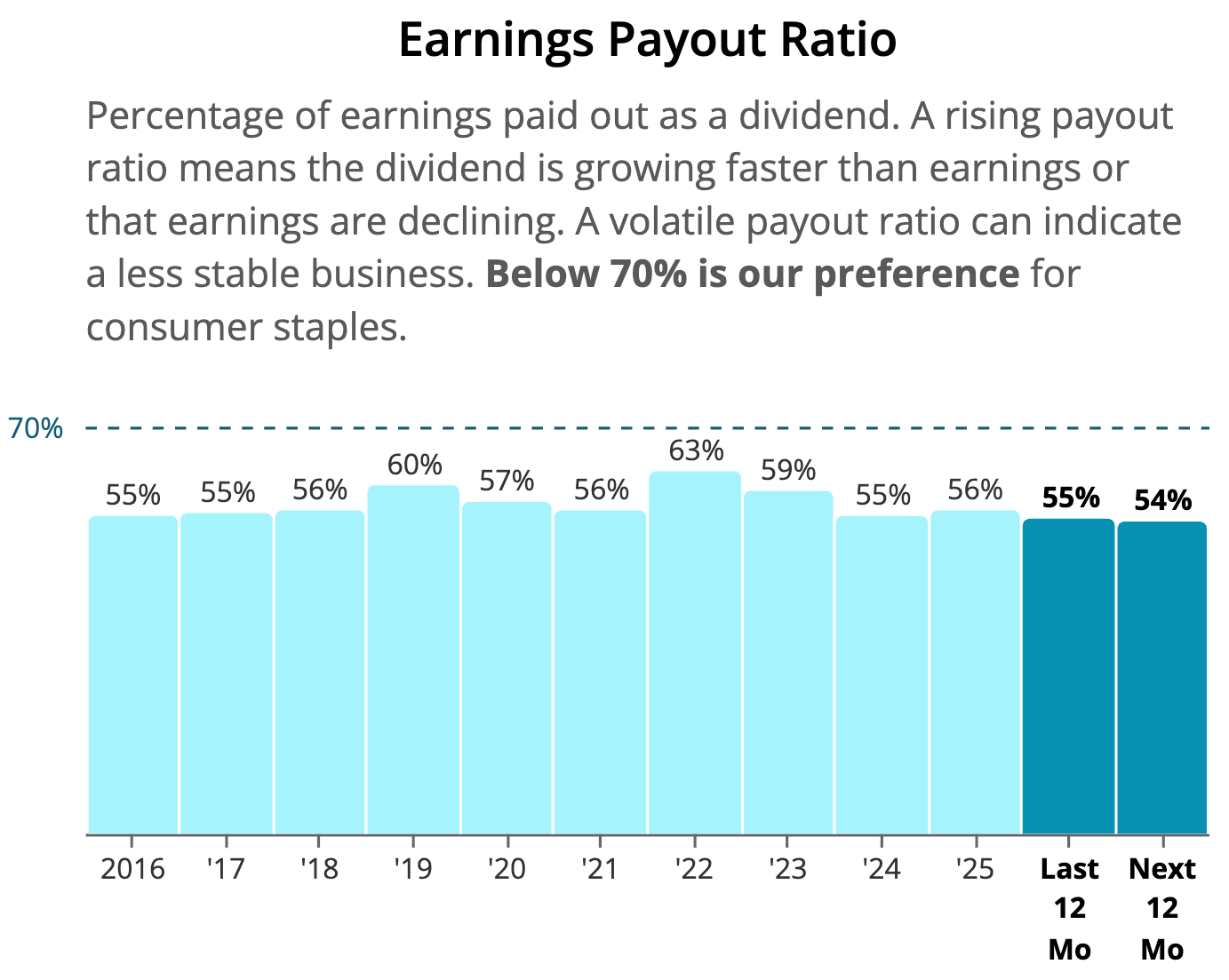
Oral care also faces less pressure from store brands than many staples since dentist recommendations still matter to shoppers. Colgate has kept its payout ratio between 55% and 63% for a decade, below our 70% preference, and holds an A+ credit rating.
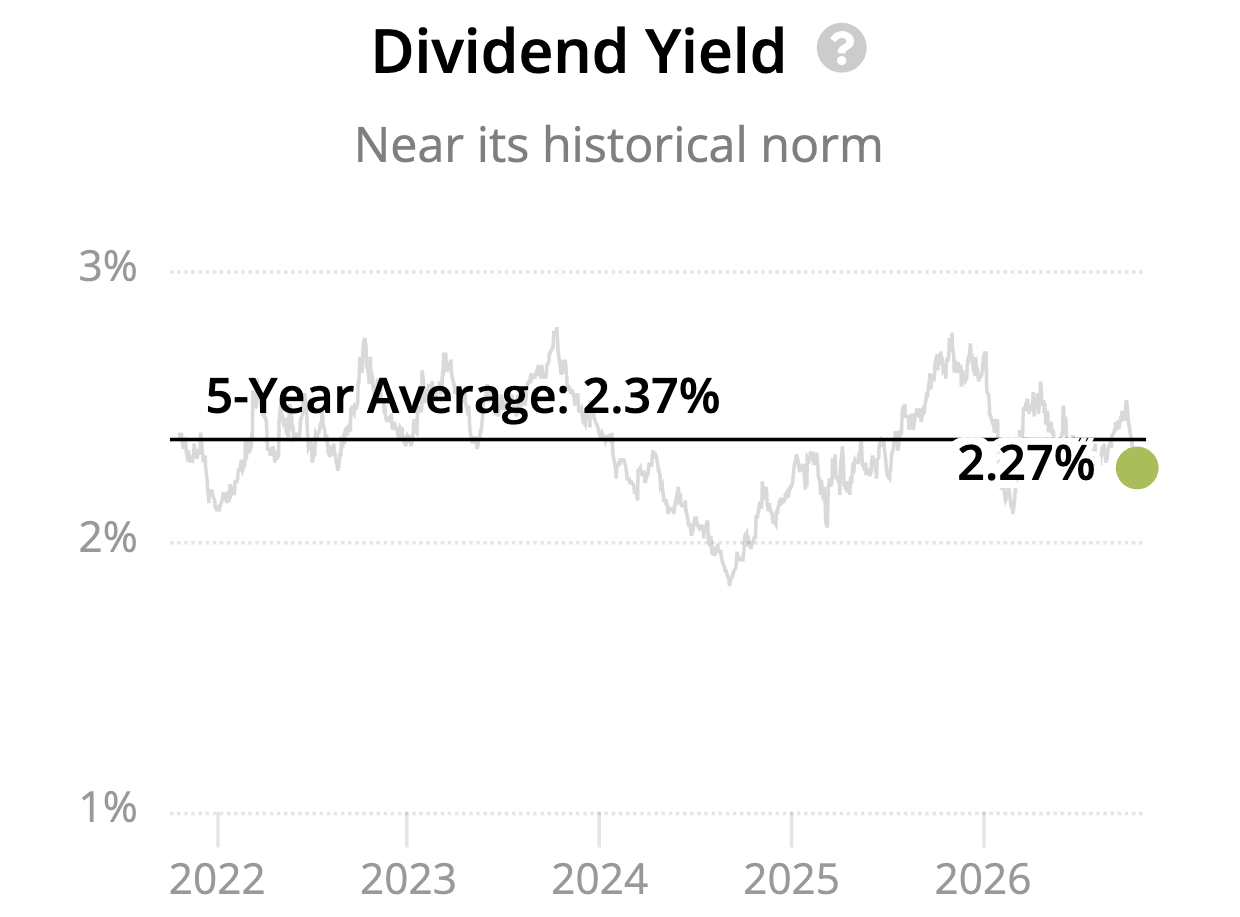
Colgate yields slightly less than its five-year average of 2.37%, a sign the shares trade close to their usual valuation.
Procter & Gamble (PG): Category-Leading Brands and Heavy R&D Spending
Sector: Consumer Staples – Household Products
Dividend Yield: 2.8%
Dividend Safety Score: Very Safe (90)
2007-09 Recession Return: -36% vs. -55% for S&P 500
Uninterrupted Dividend Streak: 136 years
Dividend Yield: 2.8%
Dividend Safety Score: Very Safe (90)
2007-09 Recession Return: -36% vs. -55% for S&P 500
Uninterrupted Dividend Streak: 136 years
Procter & Gamble owns more than 20 brands with over $1 billion in annual sales, including Tide, Pampers and Bounty. Most rank first or second in their categories.
We lowered P&G's Dividend Safety Score from 99 to 90, still Very Safe, in September. Store brands have closed much of the quality gap in categories like paper towels, and P&G has had to adjust prices just to compete.
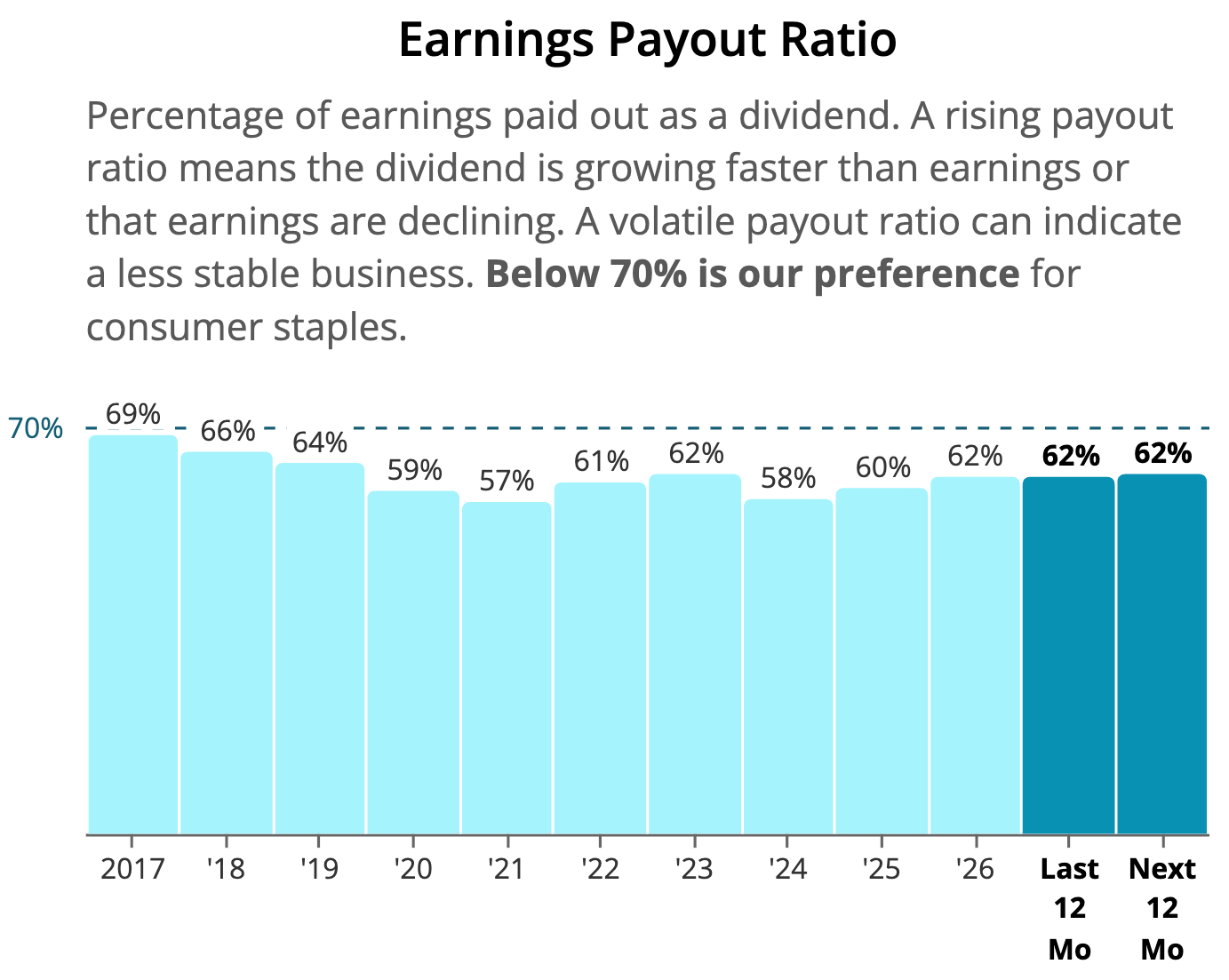
Its answer is innovation. P&G spends about $2 billion a year on research and holds more than 35,000 active patents. A store brand can only copy a product once its patents expire. When P&G reformulated Tide liquid at the same price, declining sales reversed. With an AA- credit rating and a payout ratio near 62%, P&G can keep funding that work.
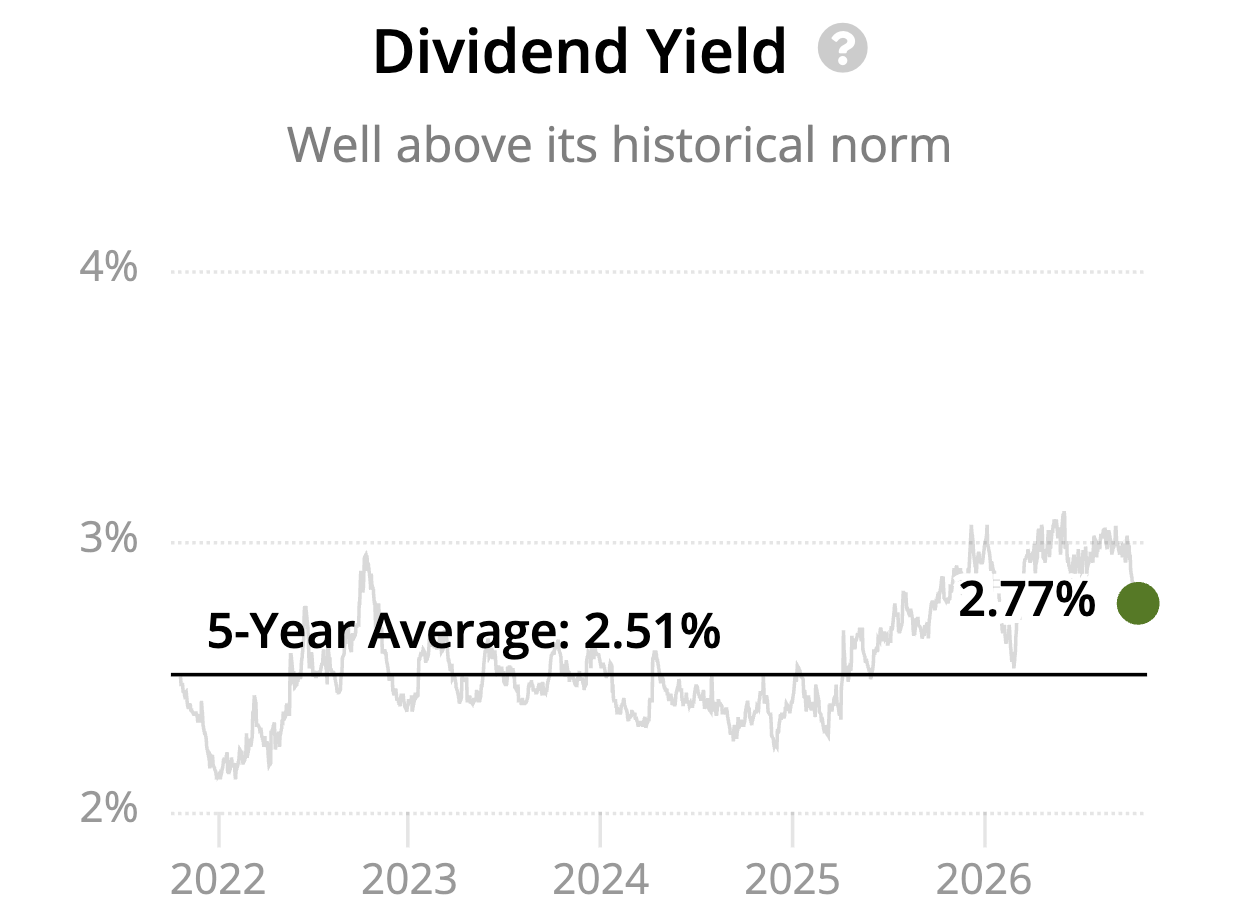
At 2.77%, P&G's yield sits well above its five-year average of 2.51%, a sign the shares are cheaper than they usually are as sentiment remains weak across most of the consumer staples sector.
Exxon Mobil (XOM): The Longest Streak on the List
Sector: Energy – Integrated Oil and Gas
Dividend Yield: 2.3%
Dividend Safety Score: Safe (80)
2007-09 Recession Return: -28% vs. -55% for S&P 500
Uninterrupted Dividend Streak: 144 years
Dividend Yield: 2.3%
Dividend Safety Score: Safe (80)
2007-09 Recession Return: -28% vs. -55% for S&P 500
Uninterrupted Dividend Streak: 144 years
Exxon Mobil and its predecessors have paid dividends without interruption since 1882. That streak survived the Great Depression, two world wars and every oil crash since.
Exxon's integrated model helps. When oil prices fall, its production arm earns less but its refining and chemicals businesses pay less for raw materials, which typically helps their margins and cash flow.
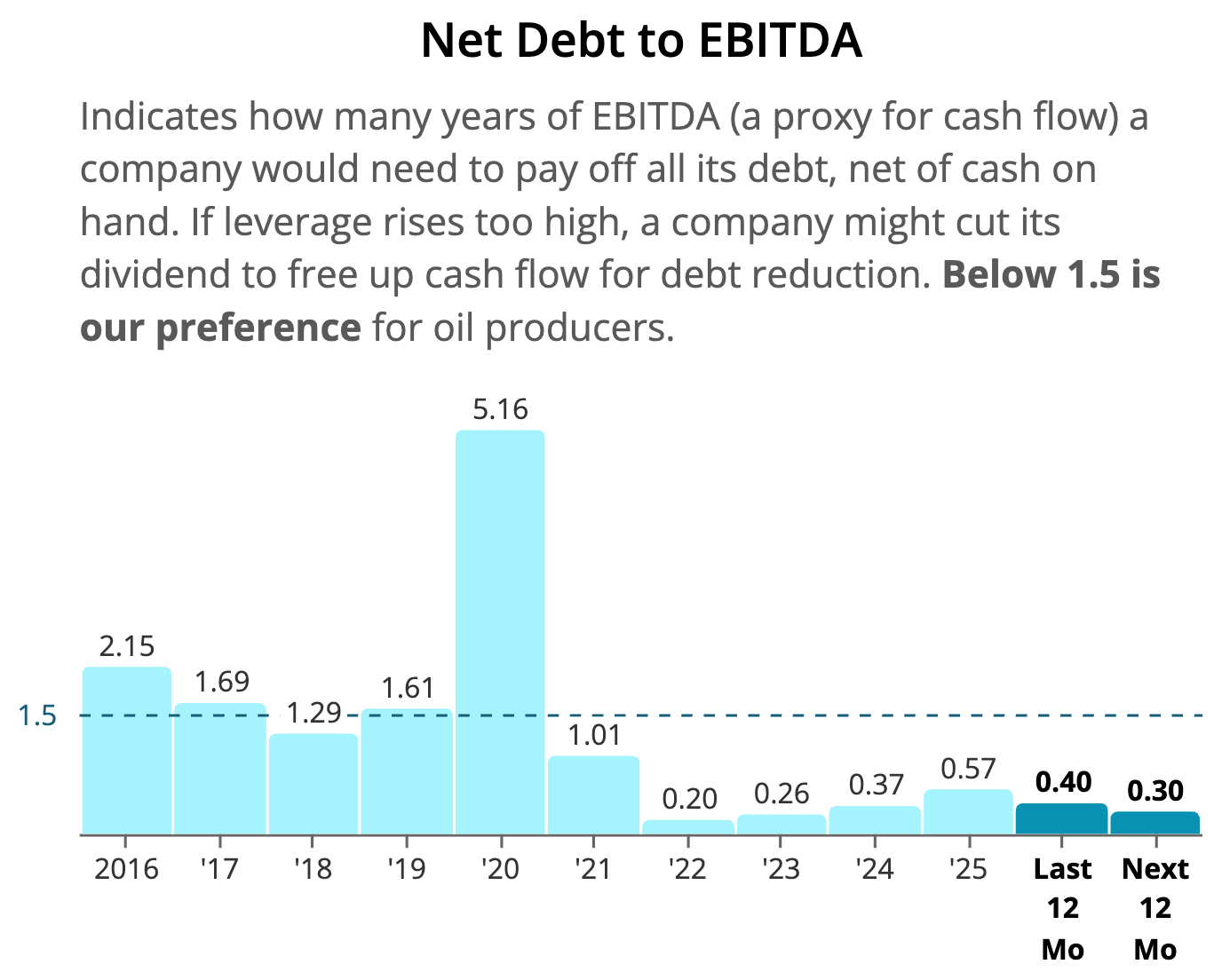
The balance sheet does the rest. Exxon has cut net debt to well under half of one year's EBITDA, down from more than 5 times in 2020, when it borrowed to protect the dividend. With an AA- credit rating, Exxon has ample capacity to do that again whenever the tide goes out next.
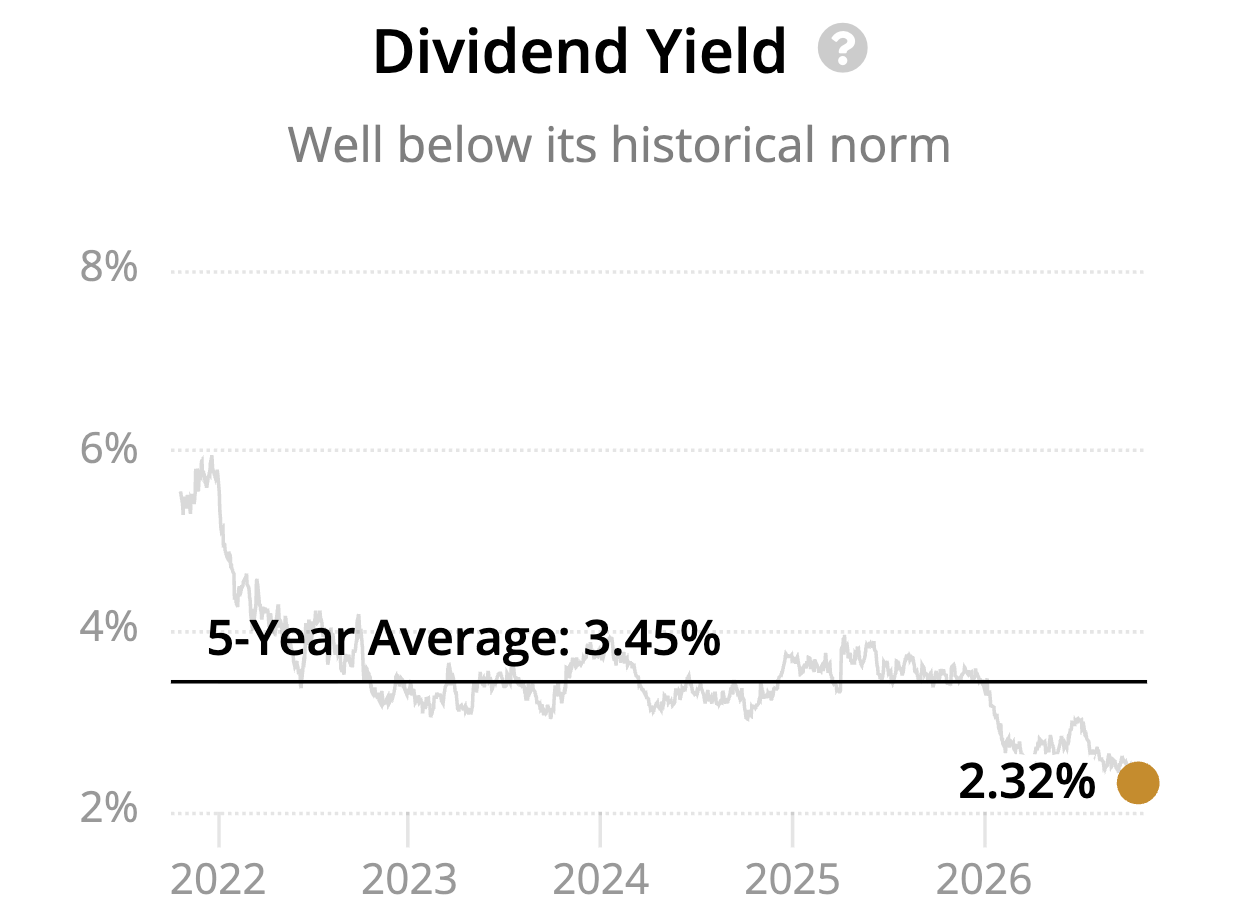
Exxon's yield is well below its five-year average of 3.45%, reflecting the jump in oil prices that has lifted many energy stocks this year.
How to Protect Your Dividend Income Before the Next Recession
A list is a starting point, not a portfolio. A few habits matter more than any single stock.
- Check safety, not just yield. The highest yields often belong to the riskiest names, so check the Dividend Safety Score before you buy.
- Diversify across industries. Even consumer staples can stumble, as four packaged food makers showed with dividend cuts in 2026.
- Watch the payout ratio and leverage. Too much debt is what usually forces a cut when the economy turns.
- Keep a cash cushion. Holding a year or two of spending in cash means you never have to sell stocks at the bottom.
Our guides on how to build a dividend portfolio, how to live off dividends and how to prepare your retirement portfolio for a recession cover these ideas in more depth.
Frequently Asked Questions
What are recession-proof stocks?
Recession-proof stocks are companies whose earnings and dividends hold up when the economy shrinks. No stock price is truly recession-proof, but of the 591 companies we rate that paid dividends through 2007-09, 461 kept their dividends intact.
Recession-proof stocks are companies whose earnings and dividends hold up when the economy shrinks. No stock price is truly recession-proof, but of the 591 companies we rate that paid dividends through 2007-09, 461 kept their dividends intact.
What stocks do well in a recession?
Utilities, healthcare and consumer staples have historically held up best because demand for their products barely changes. In 2007-09, McDonald's lost just 3% and Abbott Laboratories 13%, while the S&P 500 fell 55%.
Utilities, healthcare and consumer staples have historically held up best because demand for their products barely changes. In 2007-09, McDonald's lost just 3% and Abbott Laboratories 13%, while the S&P 500 fell 55%.
Do dividend stocks do well in a recession?
Dividend stocks that keep paying tend to fall less. Companies we rate that raised their dividends in 2007-09 lost a median 40%, while those that cut lost a median 74%.
Dividend stocks that keep paying tend to fall less. Companies we rate that raised their dividends in 2007-09 lost a median 40%, while those that cut lost a median 74%.
Are consumer staples still recession-proof?
Less than they used to be. Four packaged food makers, Campbell's, Conagra, Flowers Foods and B&G Foods, cut their dividends in 2026 as shoppers traded down to store brands. Staples with strong brands, low debt and moderate payout ratios still hold up best.
Less than they used to be. Four packaged food makers, Campbell's, Conagra, Flowers Foods and B&G Foods, cut their dividends in 2026 as shoppers traded down to store brands. Staples with strong brands, low debt and moderate payout ratios still hold up best.
What are the best stocks for inflation and a recession?
Companies with pricing power and low debt handle both. Johnson & Johnson, with a AAA credit rating and a 49% payout ratio, and Chevron, with net debt at half of one year's EBITDA, are two examples on our list.
Companies with pricing power and low debt handle both. Johnson & Johnson, with a AAA credit rating and a 49% payout ratio, and Chevron, with net debt at half of one year's EBITDA, are two examples on our list.
How likely is a recession in the next year?
Economists surveyed by the Wall Street Journal in October 2026 put the odds at 24%. U.S. unemployment was 4.2% in September 2026.
Economists surveyed by the Wall Street Journal in October 2026 put the odds at 24%. U.S. unemployment was 4.2% in September 2026.
Did any Dividend Aristocrats cut their dividends in a recession?
Yes. 16 of the 60 S&P 500 Dividend Aristocrats that existed in 2007 cut their dividends during the 2007-09 financial crisis, including Bank of America, General Electric and Pfizer. During the 2020 pandemic, Ross Stores was the only member to suspend its dividend.
Yes. 16 of the 60 S&P 500 Dividend Aristocrats that existed in 2007 cut their dividends during the 2007-09 financial crisis, including Bank of America, General Electric and Pfizer. During the 2020 pandemic, Ross Stores was the only member to suspend its dividend.
Closing Thoughts on Recession-Proof Dividend Stocks
The best recession-proof dividend stocks combine essential products, conservative payout ratios and strong balance sheets. History helps you find them. But businesses change, so past performance in one recession is no guarantee for the next.
That is why we track every score in real time, with real analysts publishing notes whenever we upgrade or downgrade a company's score. Many investors interested in recession-resistant stocks are retirees who depend on their dividend income.
If that sounds like you, you might like our online tools, which show the Dividend Safety Score of every stock you own and alert you when one changes. You can see how it works here. Thanks for reading!