2026 Monthly Dividend Stocks: The Complete List, Ranked by Dividend Safety
By our count, 51 stocks listed on U.S. exchanges pay monthly dividends, and we track 40 more that trade over the counter, most of them Canadian.
We rate 35 of the 91 for dividend safety since most are too small to be seriously considered by many investors.
Only five of those 35 earn a SafeDividend Safety Score: Realty Income (5.9% yield), Main Street Capital (5.8%), UDR (5.1%), Agree Realty (4.8%), and Phillips Edison (3.7%). None scores Very Safe.
The rest carry more risk. Seven rate Borderline Safe, and 23 score Unsafe or Very Unsafe. Twenty of the 35 yield 8% or more, and not one of those earns a Safe score.
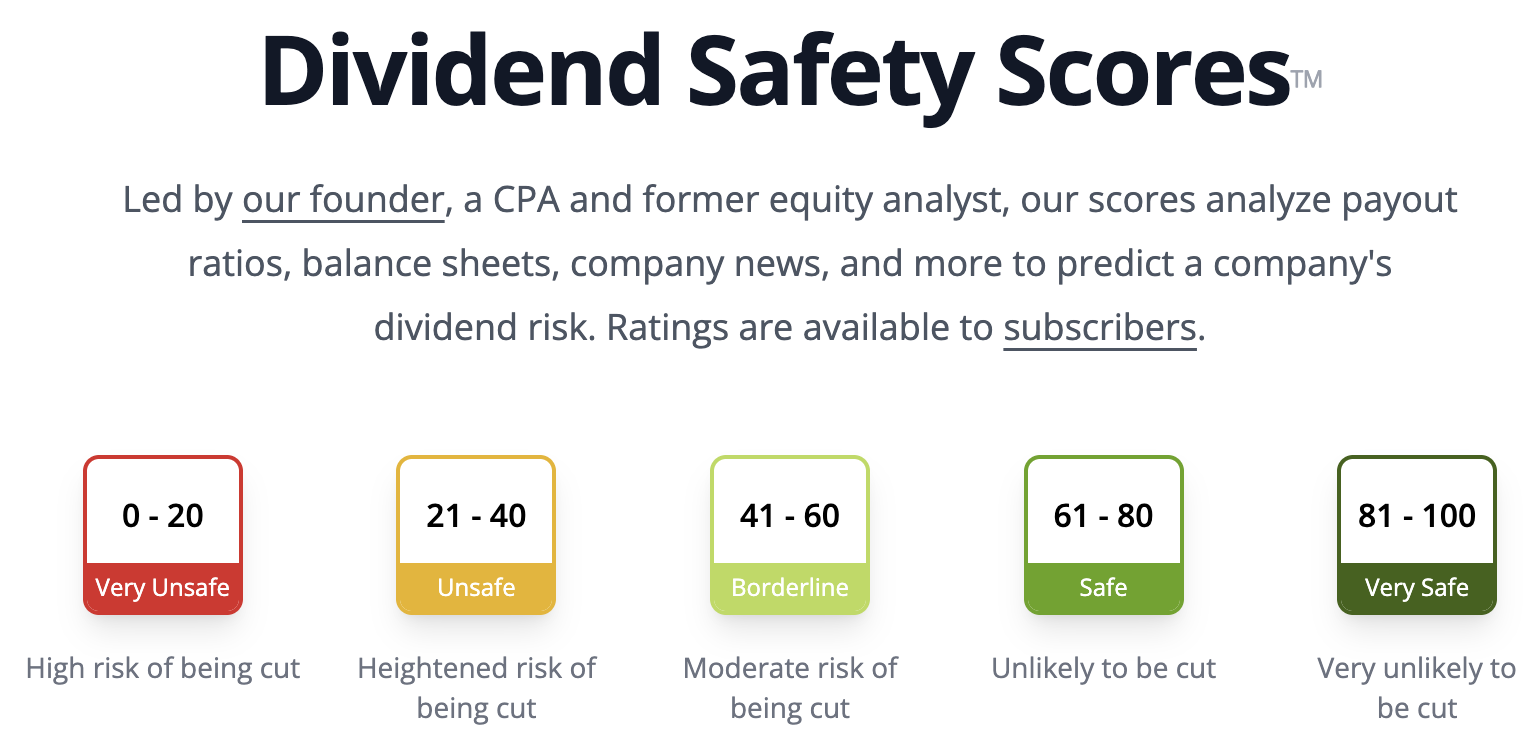
Dividend Safety Scores range from 0 to 100. Source: Simply Safe Dividends
The past year shows why that matters. Eight of today's monthly payers cut their dividends nine times over the last 12 months, and every one scored Unsafe or Very Unsafe before its cut.
Here are all 91 monthly dividend stocks we track, with their current yields and Dividend Safety Scores. The 56 we do not rate have no score and are described in the section on unrated stocks near the end.
Yields change daily, and we update this list as our ratings change.
Below, we analyze all 35 monthly dividend stocks we rate, ranked from safest to riskiest by Dividend Safety Score. Ties are broken by the length of each company's uninterrupted dividend streak, then by yield. How we score dividend safety is explained below the list.
Realty Income's monthly dividend looks safe. The REIT has raised its payout every year since going public in 1994 and holds an A- credit rating, the strongest among the 35 monthly payers we rate.
Realty Income (O) got its start in 1969 with a single Taco Bell. Today it owns thousands of properties across the U.S., the U.K., and continental Europe, mostly retail, with industrial buildings and gaming venues making up the rest.
Long-term, triple-net leases push property taxes, insurance, and maintenance onto tenants. That structure produces the predictable cash flow behind a dividend paid every month, and our guide to investing in REITs explains how it works.
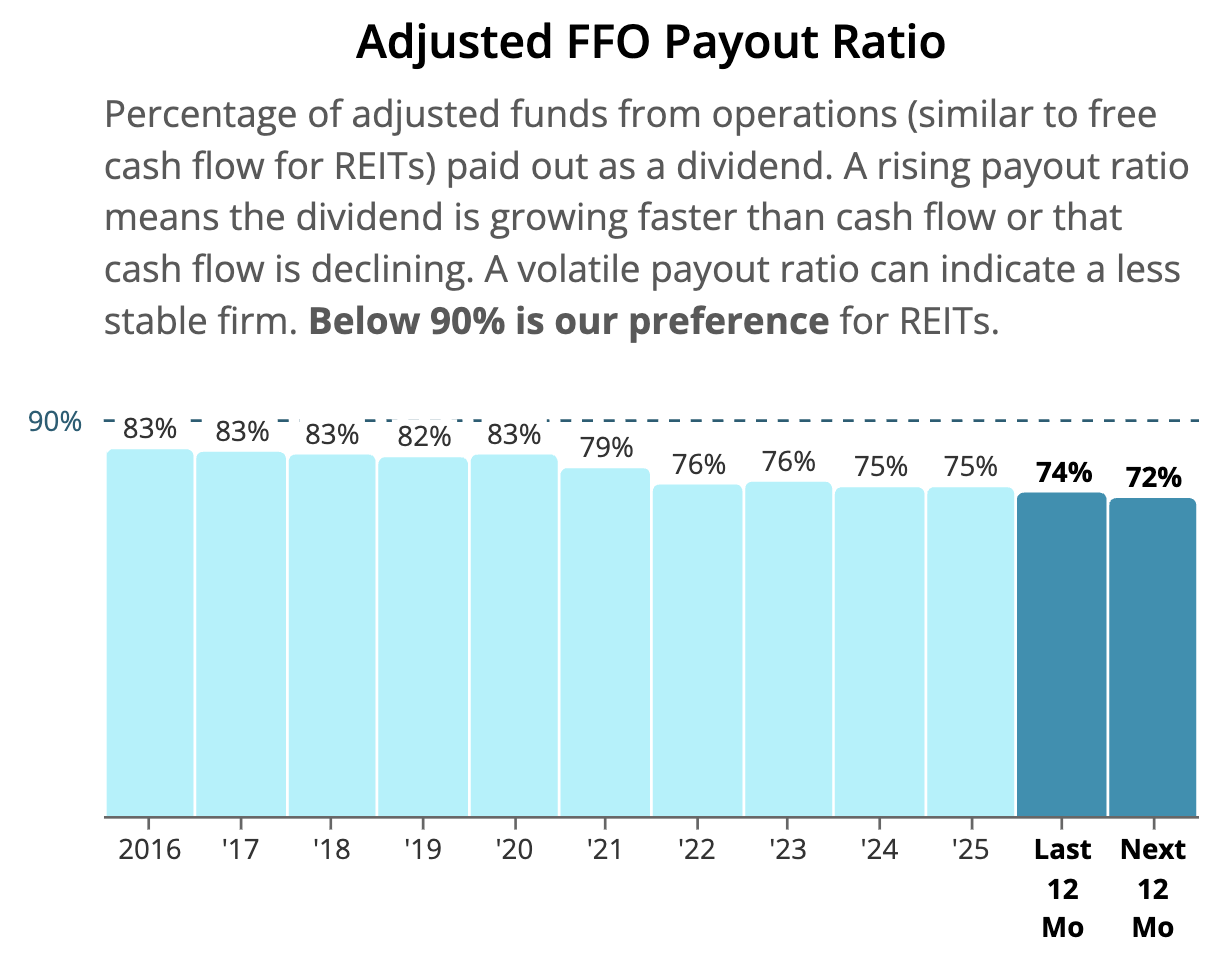
Realty Income's payout ratio has fallen from 83% in 2016 to 74% and is expected to reach 72%, well inside our 90% preference for REITs. Source: Simply Safe Dividends.
The tradeoff is slow growth. The dividend has grown by about 3% a year over the past five years, and because many investors treat the stock like a bond, its price tends to sag when interest rates rise.
Location is what makes the model work. Retailers rarely move a profitable store to save a little on rent, which is one reason Realty Income's occupancy has never fallen below 96%, even in the financial crisis and the pandemic. Most of its rent comes from tenants with a service, non-discretionary, or low-price element to their business, which gives it some protection from online shopping.
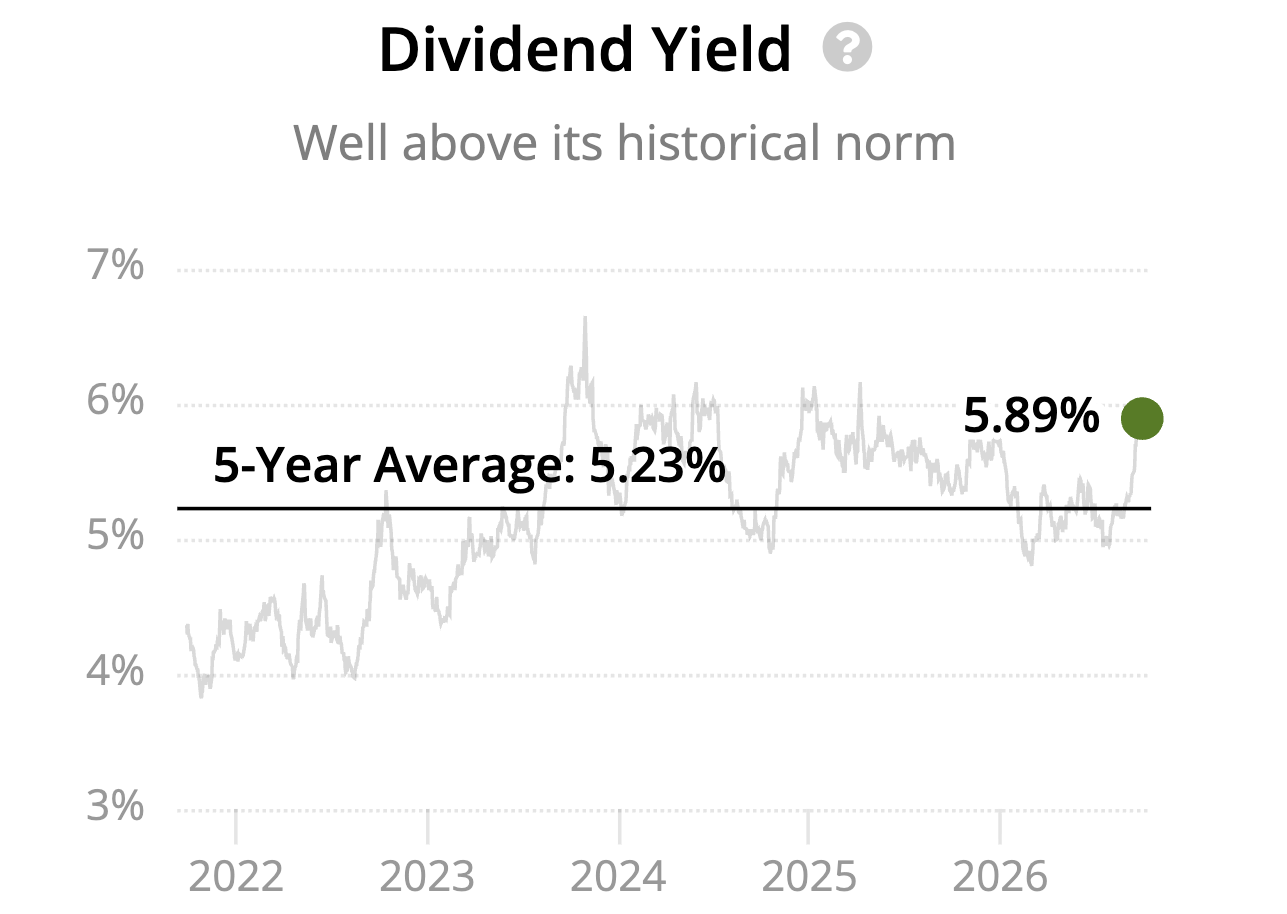
Realty Income yields 5.89% against a five-year average of 5.23%. Source: Simply Safe Dividends.
UDR's dividend looks safe, and it is the newest monthly payer on this list. The apartment REIT switched from quarterly to monthly payments in July 2026 without changing the annual amount.
Founded in 1972, UDR (UDR) owns apartment communities on the West Coast, in the Sunbelt, and in the Northeast, with rent split between higher-end properties and more moderately priced ones.
UDR pays out 78% of its cash flow today and maintains a solid balance sheet with a BBB+ credit rating. While the firm cut its dividend during the 2008 financial crisis and has been working through soft market conditions, its dividend appears to be on solid ground.
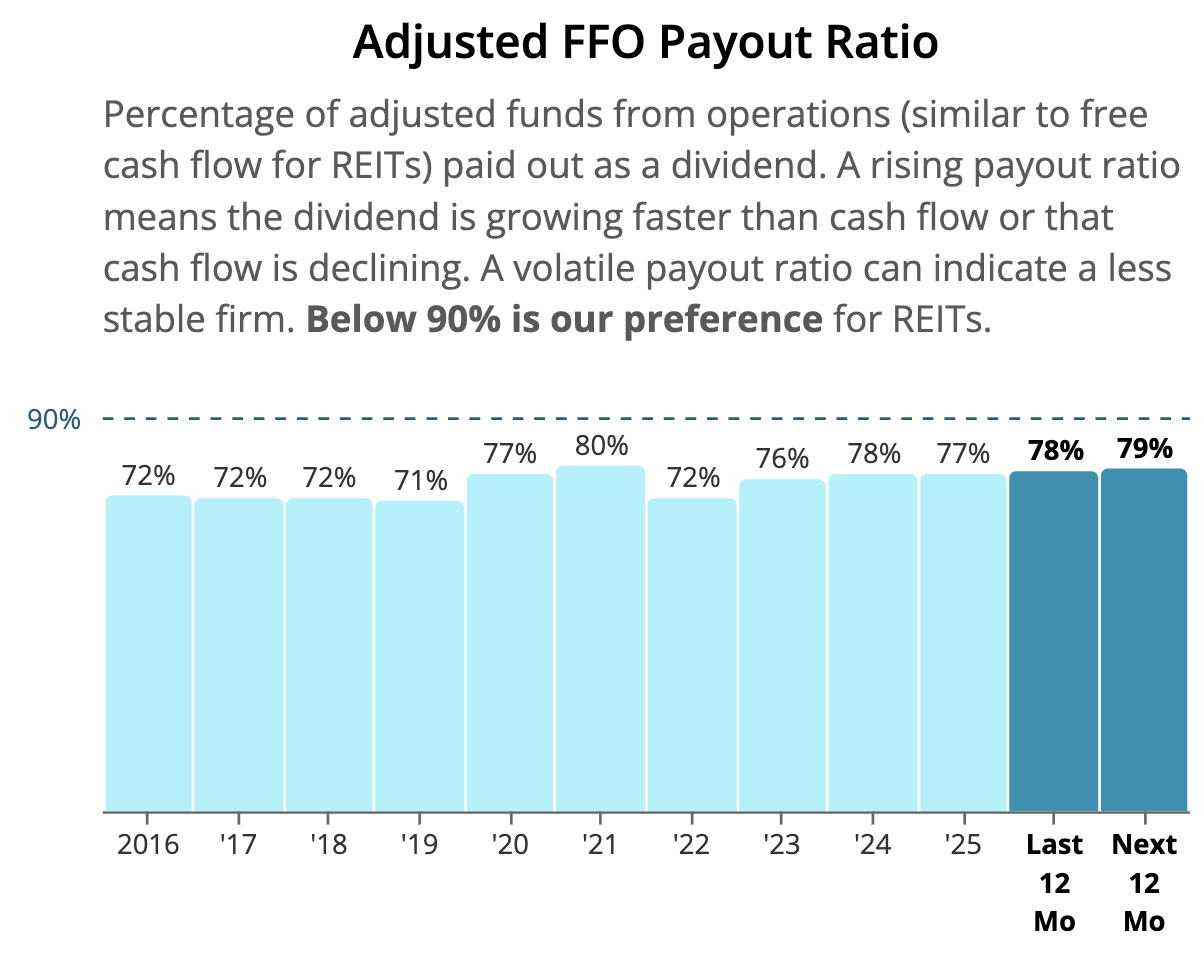
UDR has paid out between 71% and 80% of its adjusted funds from operations every year since 2016, inside our 90% preference for REITs. Source: Simply Safe Dividends.
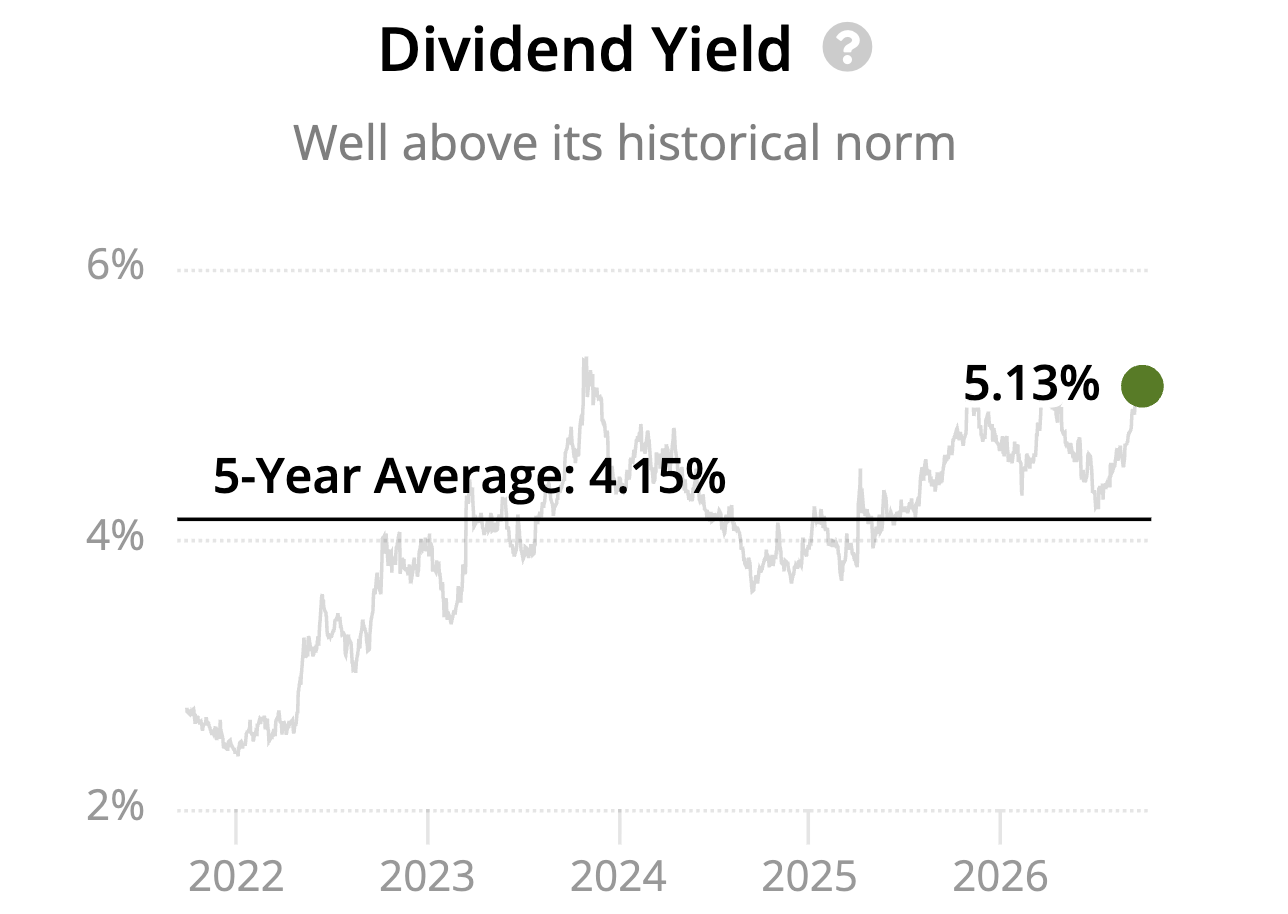
UDR yields 5.13% against a five-year average of 4.15%, well above its historical norm. Source: Simply Safe Dividends.
Agree Realty's dividend looks safe and has grown faster than most on this list. The REIT has raised its payout 5.1% a year over the past five years while keeping its payout ratio near 70%.
Founded in 1971, Agree Realty (ADC) owns freestanding stores and shopping centers net leased to national chains such as Walmart, Lowe's, and Dollar General. Its tenants are mostly grocers, pharmacies, home improvement chains, and other essential retailers.
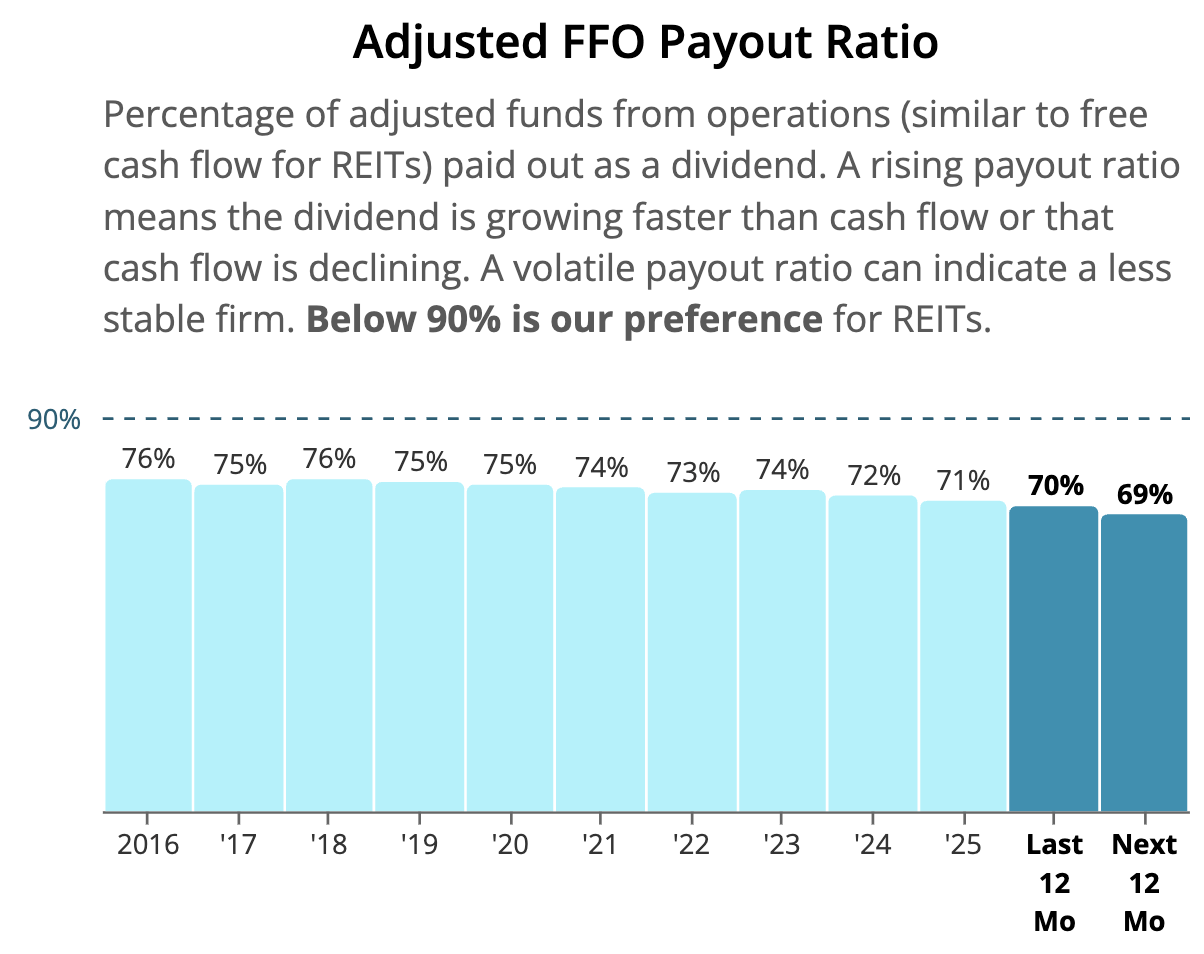
Agree Realty's payout ratio has drifted down from 76% in 2016 to 70% and is expected to reach 69%. Source: Simply Safe Dividends.
We upgraded Agree's Dividend Safety Score in March 2023 as leverage fell and its tenant base improved. Its leverage is low for a REIT.
Agree did cut its dividend during the 2007 to 2009 recession, but that largely reflected its greater dependence on Borders, a bookstore chain which went bankrupt. The business is far more diversified today.
Tenant quality is Agree's edge. Most of its rent comes from investment-grade national retailers in necessity-based categories such as grocery, auto service, and home improvement, which helped it collect nearly 90% of rent during the worst of the pandemic, one of the best records of any retail REIT.
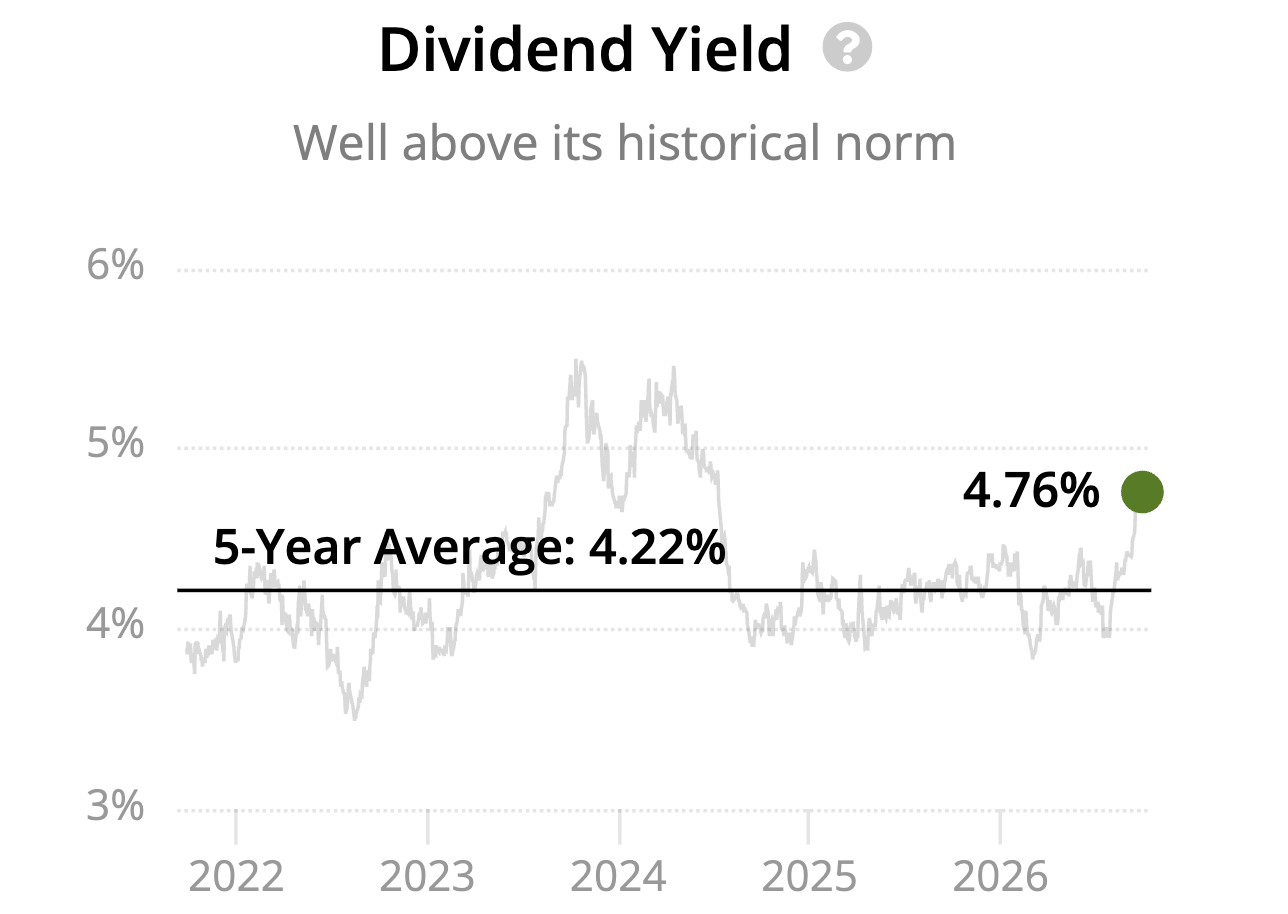
Agree Realty yields 4.76% against a five-year average of 4.22%. Source: Simply Safe Dividends.
Phillips Edison has the lowest yield on this list and one of the lowest payout ratios of any REIT on it. The grocery-anchored landlord pays out 58% of its cash flow and raised its dividend 6.2% in September 2026.
Founded in 1991, Phillips Edison (PECO) owns grocery-anchored shopping centers across the U.S. Its top tenants include Kroger, Publix, Albertsons, and Ahold Delhaize, and regular grocery trips bring steady traffic to the smaller shops around them.
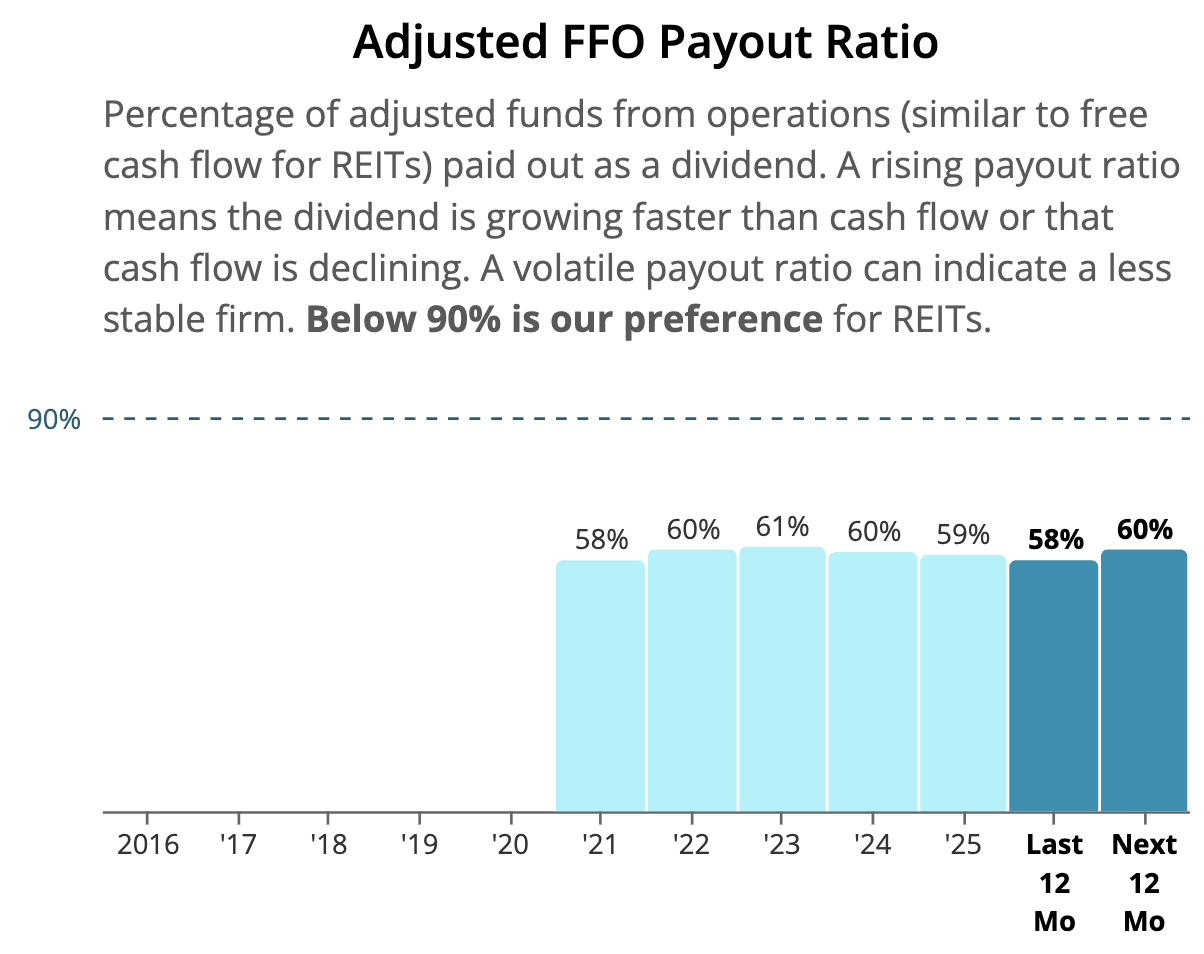
Phillips Edison has paid out around 60% of its adjusted funds from operations every year since 2021, far below our 90% preference for REITs. Source: Simply Safe Dividends.
The main limitation is a short public record. Phillips Edison listed its shares in 2021, so its dividend has not been tested by a recession as a public company.
Grocery anchors are what make the model work. A supermarket gives shoppers a reason to visit every week, which keeps traffic flowing to the smaller tenants around it, and most of Phillips Edison's rent comes from tenants selling necessities. Its net operating income fell just 4% in 2020, the first year of the pandemic.
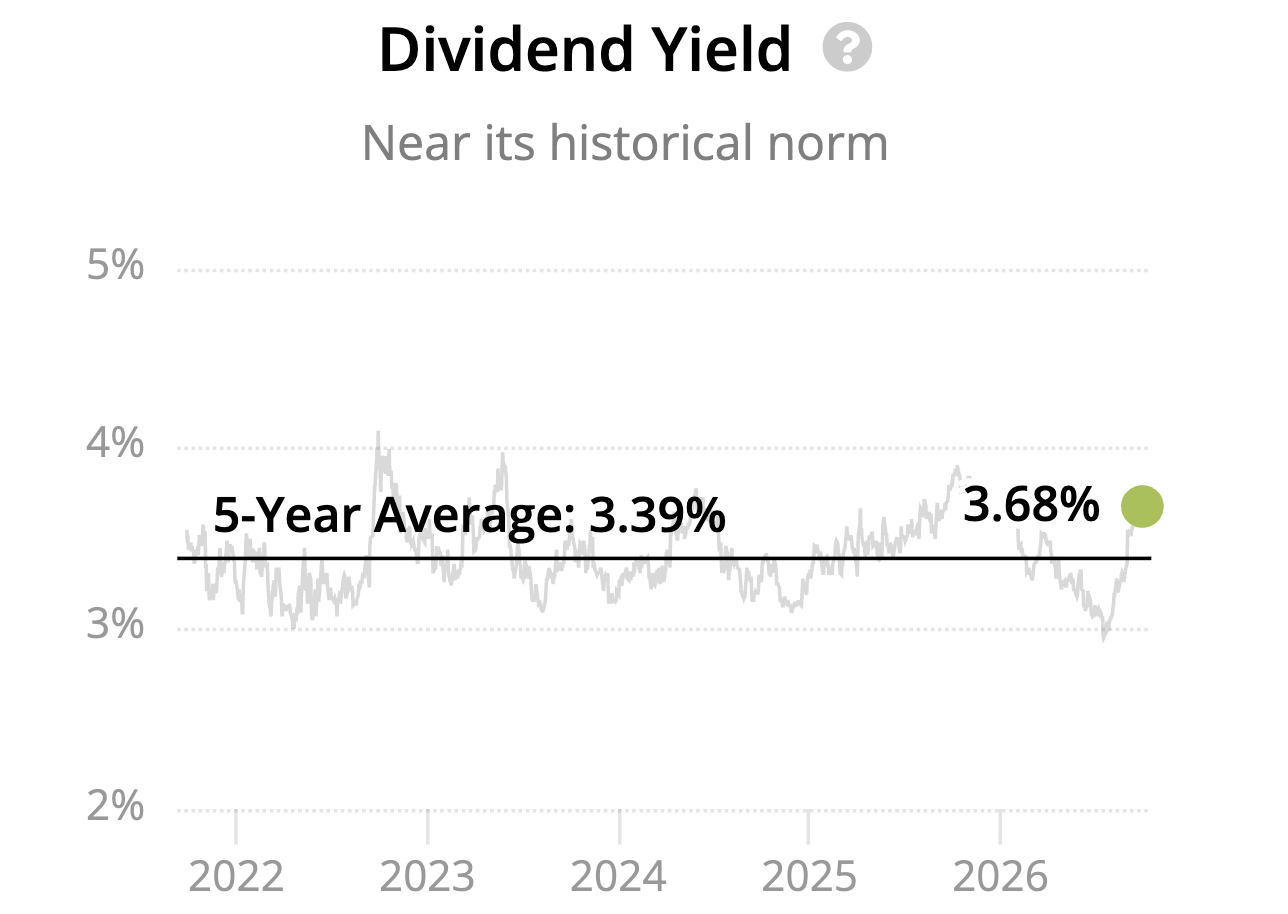
Phillips Edison yields 3.68%, near its five-year average of 3.39%. Source: Simply Safe Dividends.
Main Street Capital is the only business development company among the monthly payers we rate that earns a Safe Dividend Safety Score, though at 62 it sits just two points above that threshold.
Founded in 2007, Main Street (MAIN) lends to and invests in small, private companies. Unlike most business development companies (BDCs), it manages itself rather than paying an outside adviser, which keeps costs down. Our guide to BDCs covers how these lenders work.
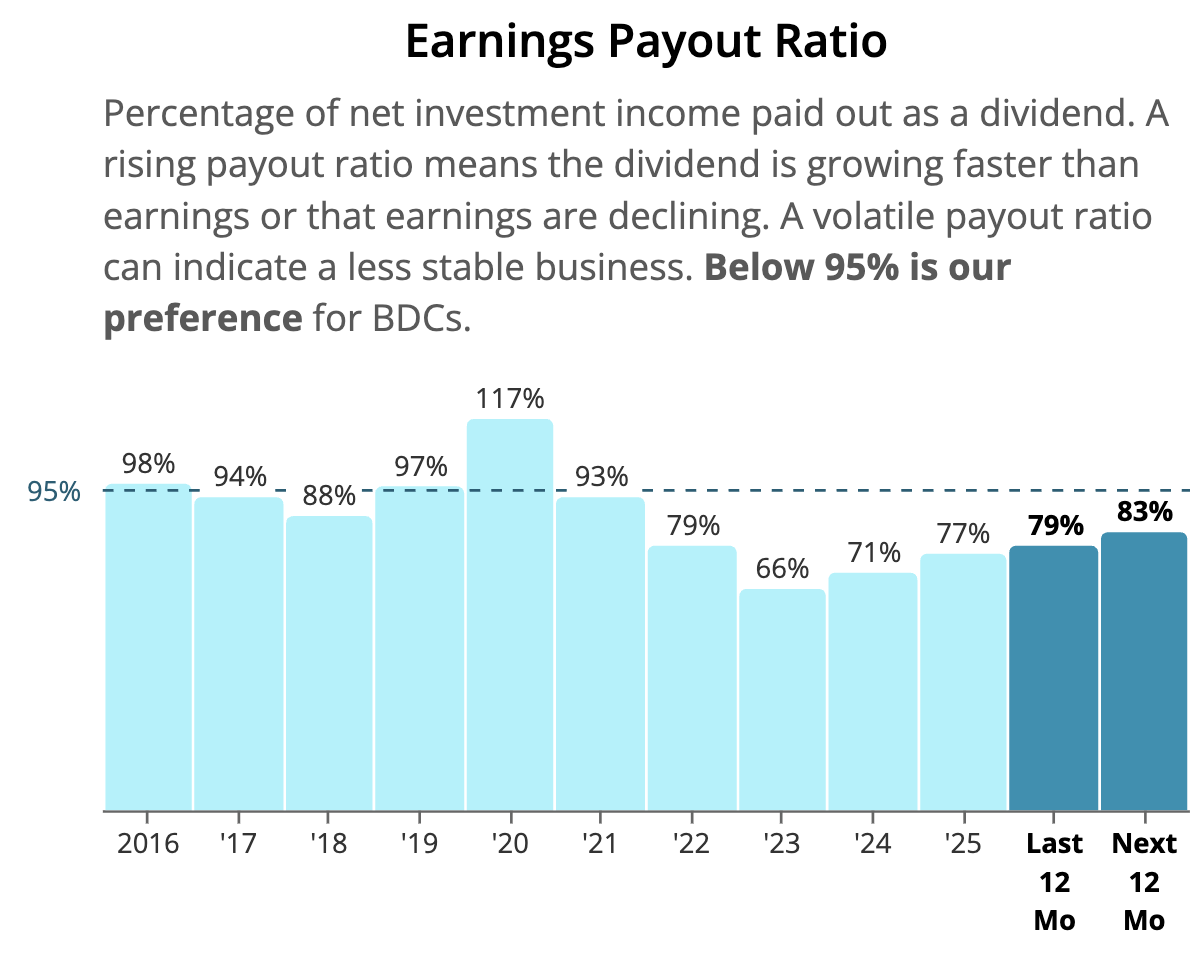
Main Street pays out 79% of its net investment income, expected to rise to 83%, inside our 95% preference for BDCs. Source: Simply Safe Dividends.
More than a dozen BDCs cut their dividends in early 2026 as falling interest rates shrank the income on their floating-rate loans. Main Street held steady because it often pairs a loan with an equity stake, so it earns interest and also shares in the gain when a business grows or is sold.
Most of its loans are first-lien, no single company is more than about 3% of the portfolio, and less than 3% of its loans have gone bad in any year since 2008. The stock can still fall hard with its peers in a downturn, though.
Main Street has never reduced its regular monthly dividend since its first payout in 2007, a stretch that includes two recessions. It borrows far less than regulators allow, and it keeps spillover income from successful exits as a buffer against the credit losses that come with lending to smaller companies.
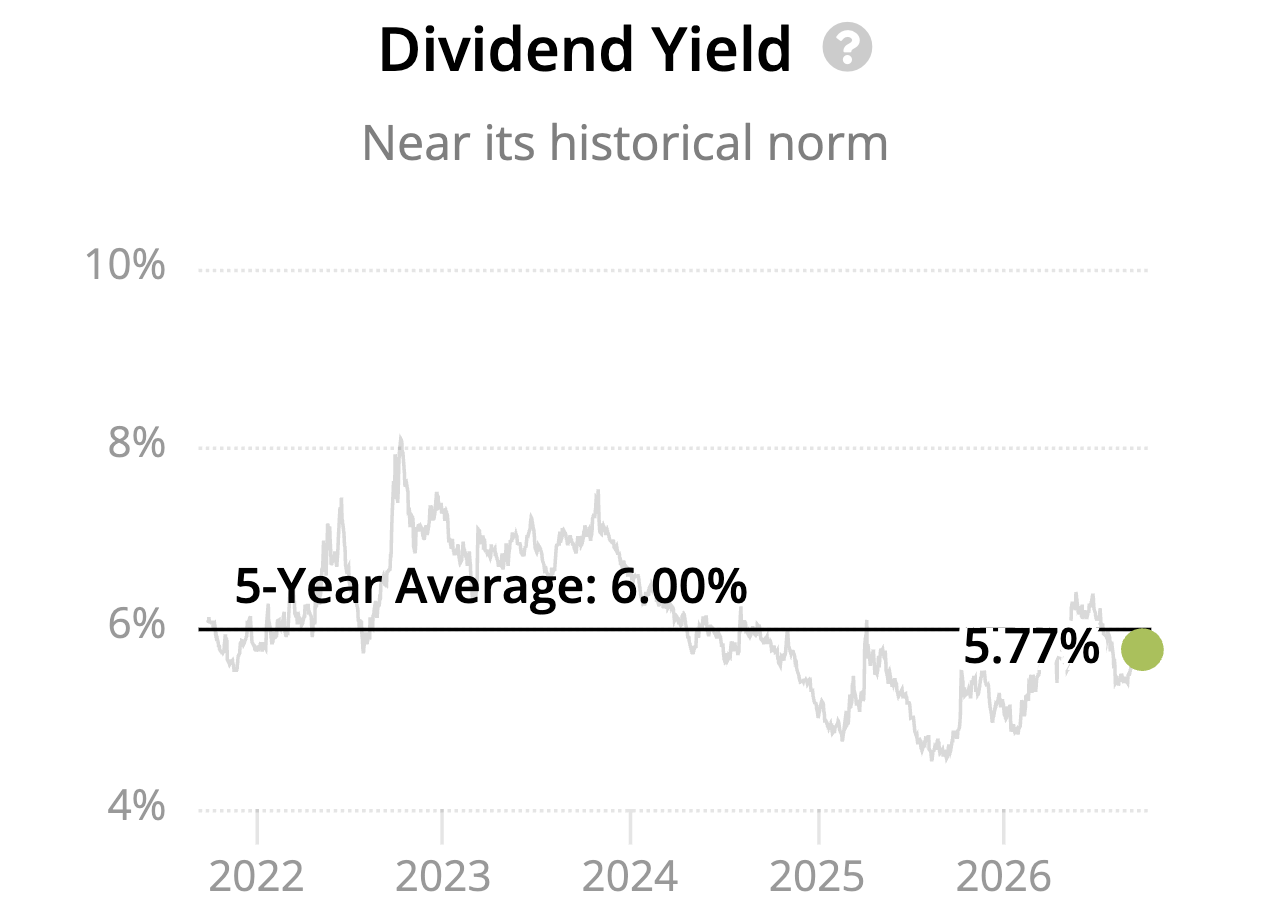
Main Street yields 5.77%, near its five-year average of 6.00%. Source: Simply Safe Dividends.
Healthpeak Properties (DOC)
Sector: Real Estate – Health Care REITs Dividend Yield: 6.1% Dividend Safety Score: Borderline Safe (60) Uninterrupted Dividend Streak: 4 years Credit Rating: BBB+
Healthpeak's dividend is covered, but a slump in lab leasing cost it a Safe rating. We lowered its Dividend Safety Score from Safe to Borderline Safe in January 2026, and at 60 it sits just below the Safe threshold.
Healthpeak Properties (DOC) owns outpatient medical buildings near hospital campuses and lab space leased to life sciences firms. It switched from quarterly to monthly dividends in early 2025, and in March 2026 it moved its senior housing business into Janus Living (JAN), a separately listed REIT, through an initial public offering.
Lab space, about 30% of revenue, is the challenge. Developers built too much of it after the pandemic just as biotech funding cooled, and several tenants moved out after failing to raise money.
Medical office buildings, about half of revenue, remain steady as care shifts out of hospitals. We estimated in January that the dividend would stay covered even if lab revenue fell 30%, but growth will likely stay on hold until the lab market recovers.
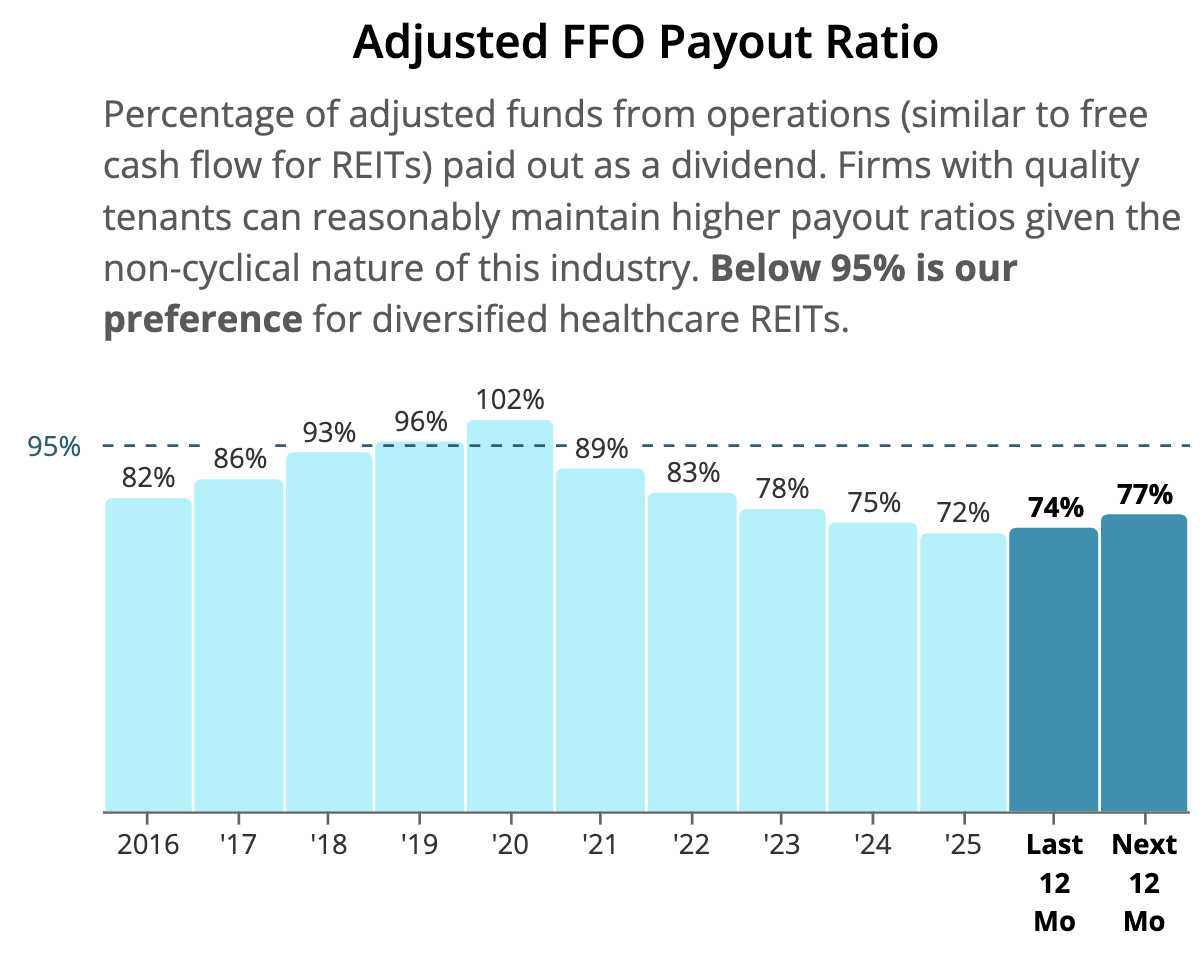
Healthpeak pays out 74% of its adjusted funds from operations, expected to reach 77%, well inside our 95% preference for diversified healthcare REITs. Source: Simply Safe Dividends.
The long-term case for its properties still holds. Drug development requires specialized lab space, and hospitals keep moving procedures into lower-cost outpatient settings.
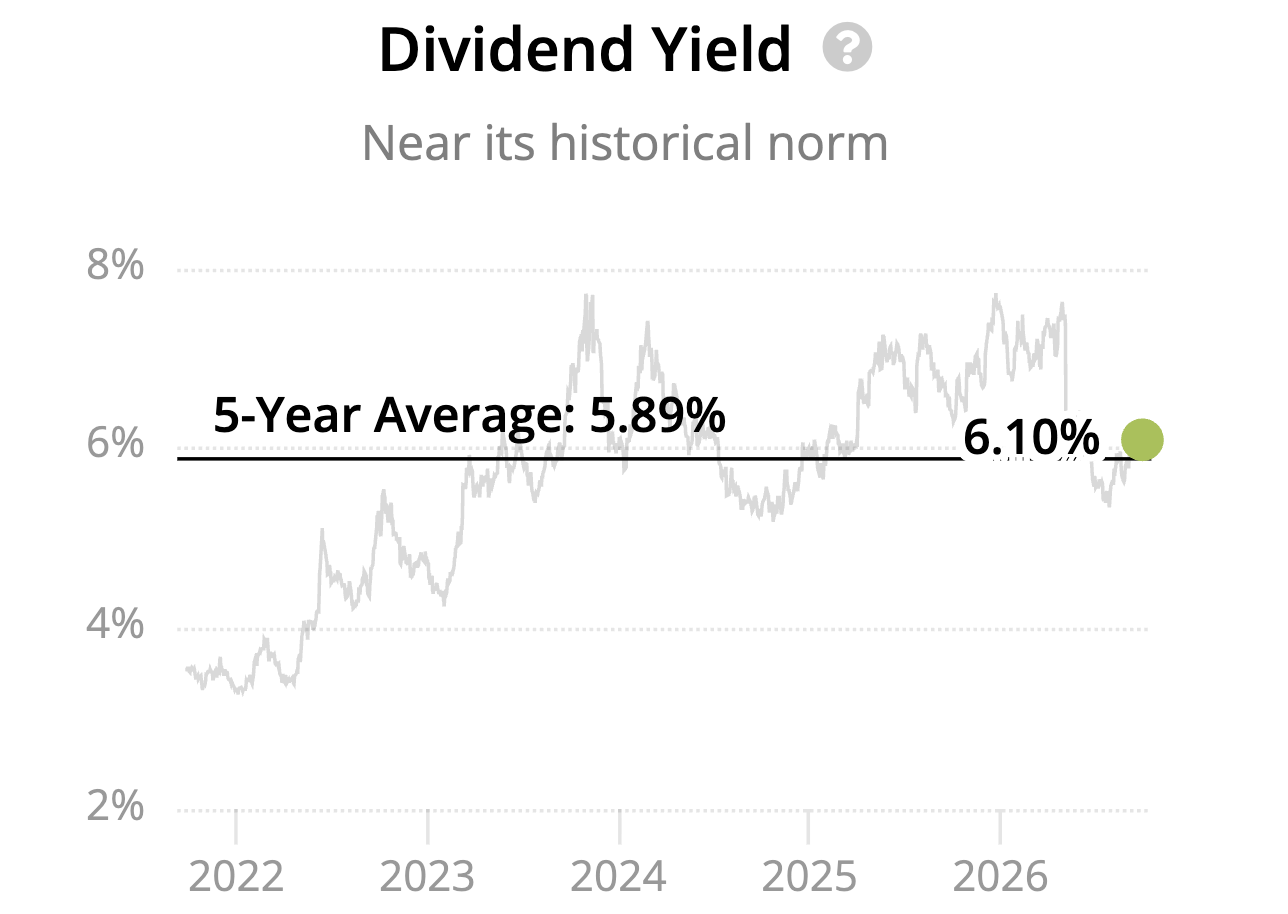
Healthpeak yields 6.10%, near its five-year average of 5.89%. Source: Simply Safe Dividends.
RioCan (RIOCF)
Sector: Real Estate – Retail REITs Dividend Yield: 5.7% Dividend Safety Score: Borderline Safe (60) Uninterrupted Dividend Streak: 4 years Credit Rating: Not rated by S&P
RioCan is the only Canadian company among the monthly payers we rate, and its dividend is better supported than it was before its pandemic cut. The retail REIT also sits just short of a Safe score.
Founded in 1993, RioCan (RIOCF) owns shopping centers, grocery-anchored retail, and mixed-use developments in Canada's major urban markets. It cut its dividend in 2020, and we upgraded its Dividend Safety Score in January 2021 once the smaller payout was better covered by cash flow.
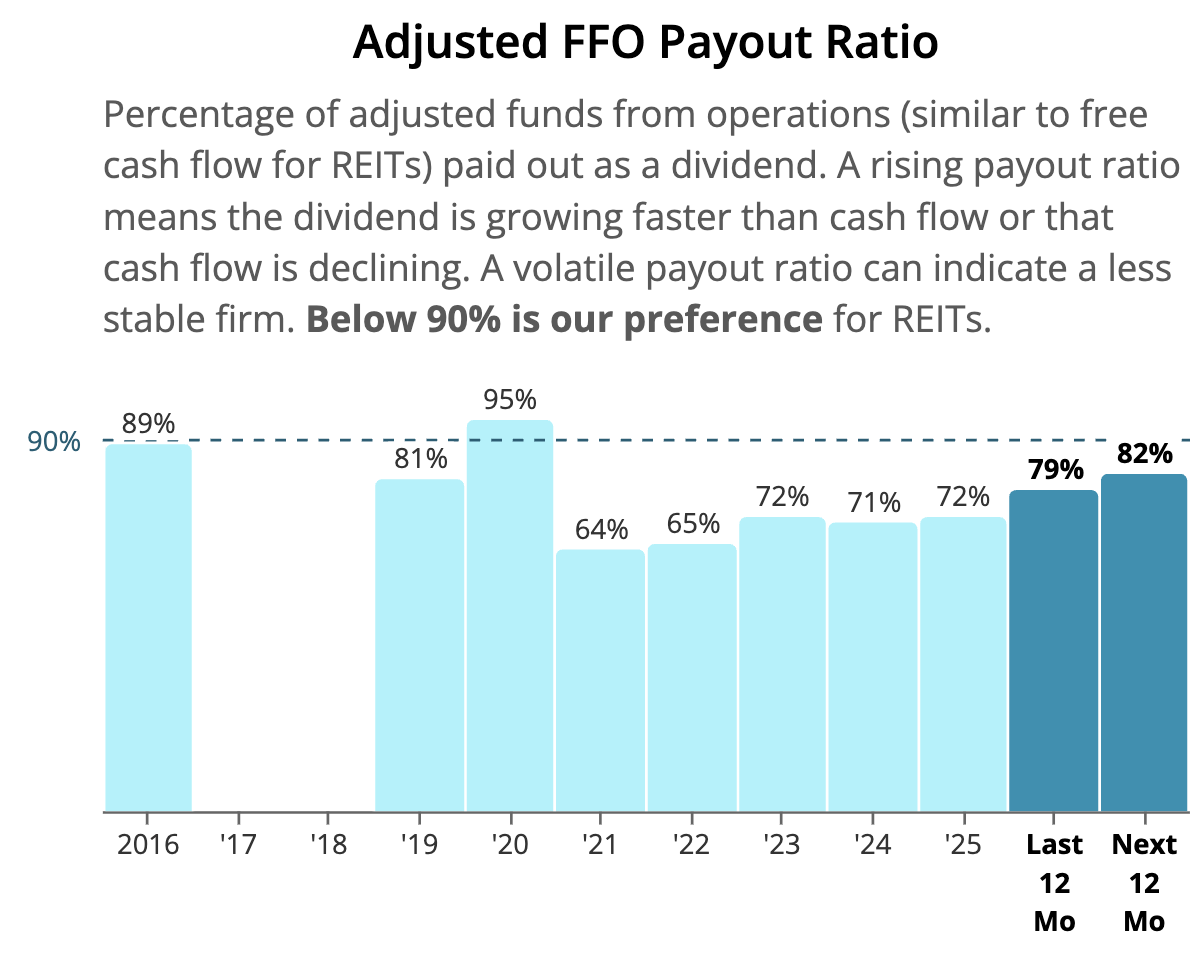
RioCan pays out 79% of its adjusted funds from operations, expected to rise to 82%, inside our 90% preference for REITs. Source: Simply Safe Dividends.
Leverage is the weak spot. Net debt runs somewhat high for a REIT, and the dividend has not grown since February 2025.
Canadian companies' dividends paid to U.S. investors are subject to a 15% withholding tax.
Holding RioCan in a retirement account avoids it, and in a taxable account you can generally claim a foreign tax credit. Our guide to foreign tax withholding explains how.
Its 2020 cut carries a lesson about dividend promises. In May 2020, management assured investors the payout was safe, then cut it by a third months later as the pandemic dragged on. Grocery-anchored centers, which draw steady traffic in good times and bad, now make up a large share of its revenue.
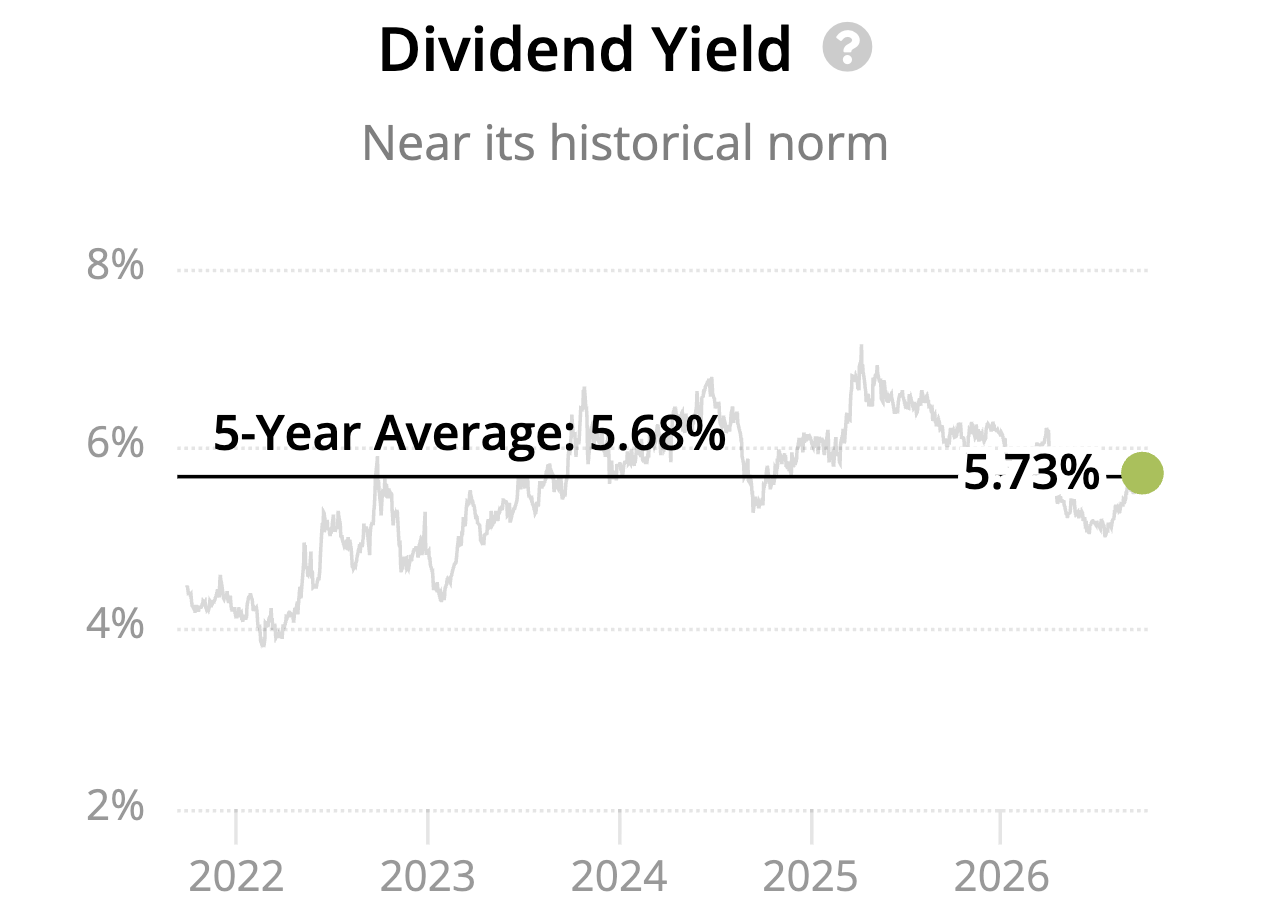
RioCan yields 5.73%, in line with its five-year average of 5.68%. Source: Simply Safe Dividends.
Capital Southwest (CSWC)
Sector: Financials – Asset Management and Custody Banks Dividend Yield: 10.1% Dividend Safety Score: Borderline Safe (50) Uninterrupted Dividend Streak: 10 years Credit Rating: Not rated by S&P
Capital Southwest is the only monthly payer yielding more than 8% that scores better than Unsafe, but its payout ratio is now running near 100%.
Founded in 1961, Capital Southwest (CSWC) is an internally managed BDC that lends to lower middle-market companies, mostly through first-lien loans that are repaid first if a borrower struggles. It switched to monthly dividends in July 2025 with no change to the annual payout.
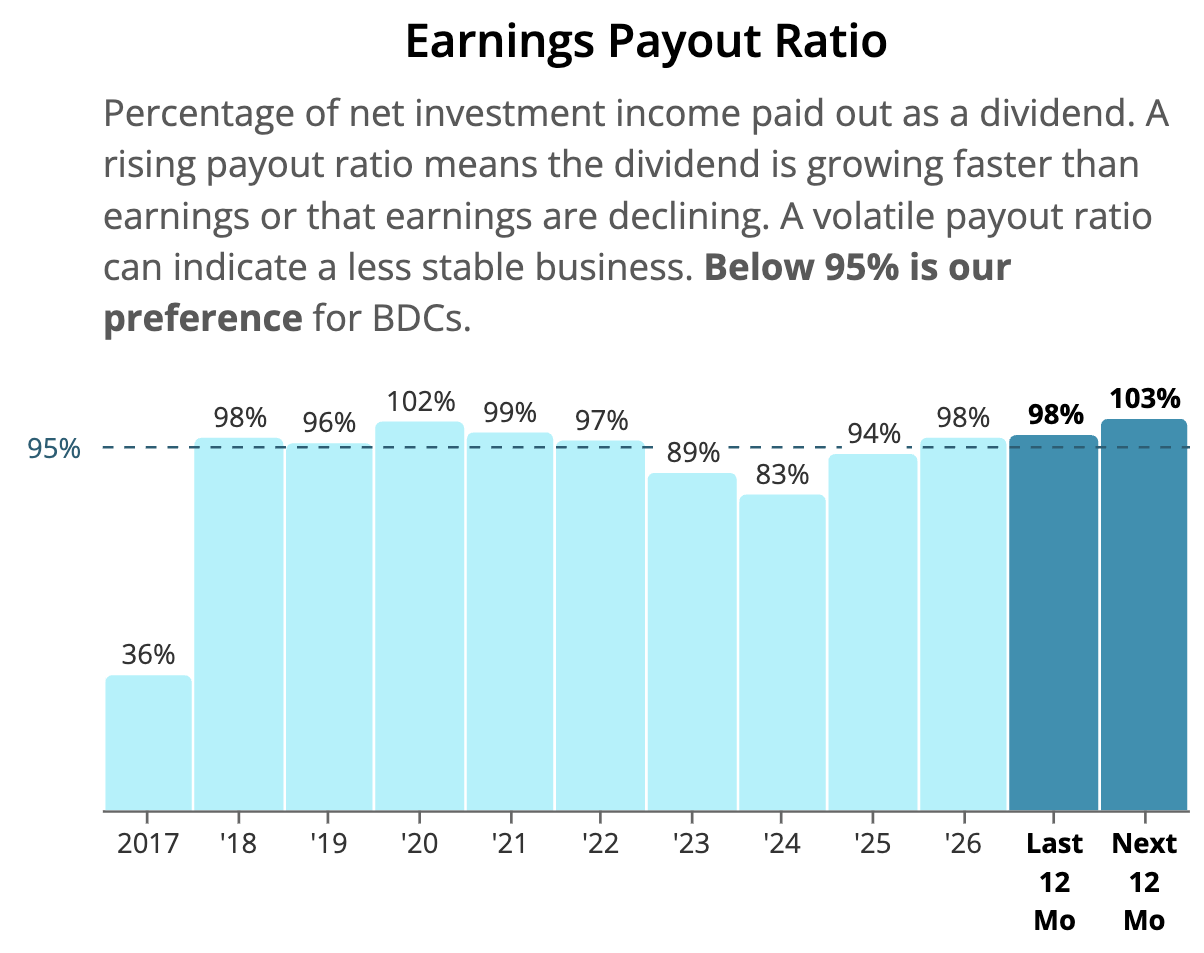
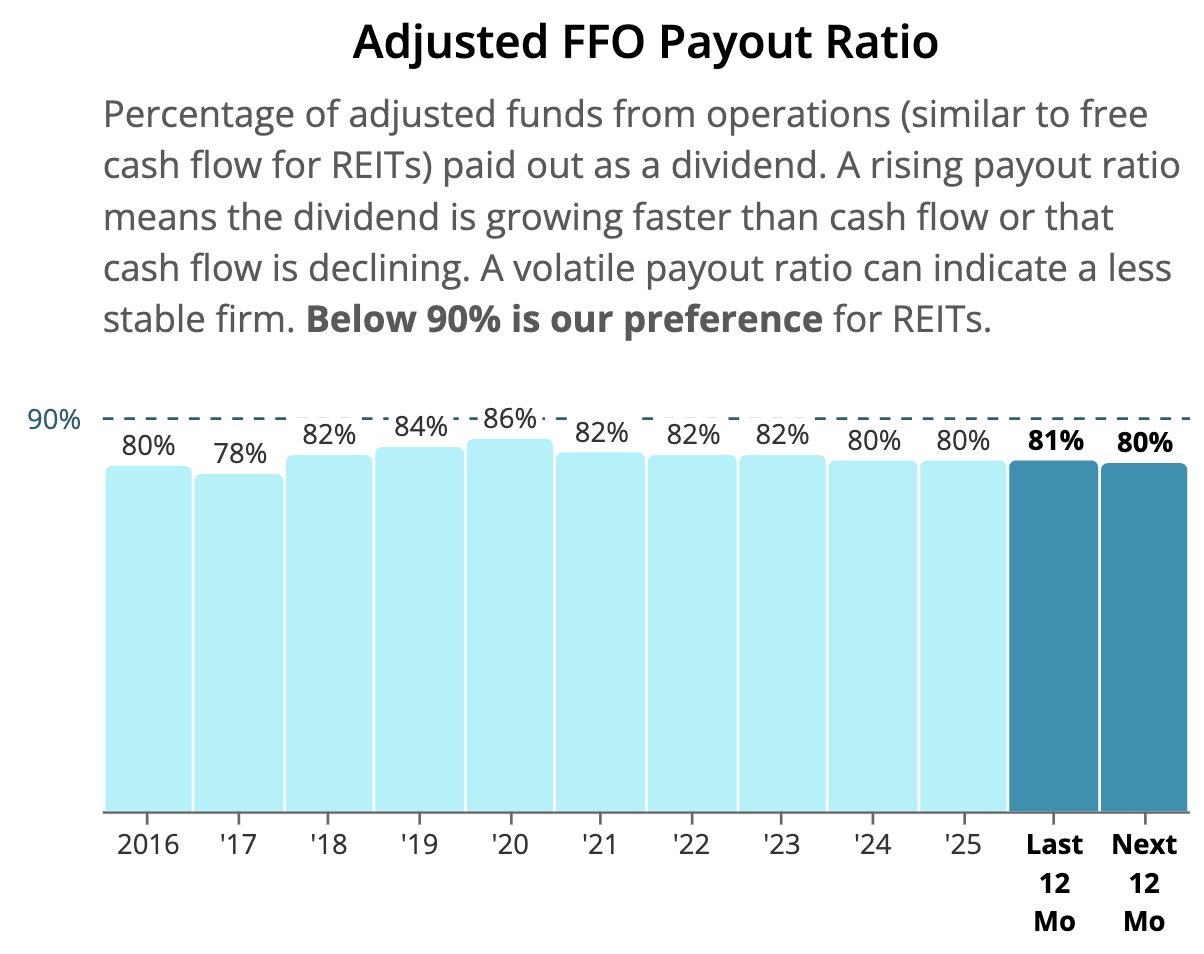
Capital Southwest pays out 98% of its net investment income, expected to reach 103%, above our 95% preference for BDCs. Source: Simply Safe Dividends.
Falling interest rates are shrinking the income on its floating-rate loans faster than its largely fixed funding costs. Its cushion is spillover, taxable income retained from past investment exits, which can temporarily help cover the regular payout if needed.
Internal management also keeps its costs down and aligns management with shareholders, and it borrows well below the regulatory limit for BDCs.
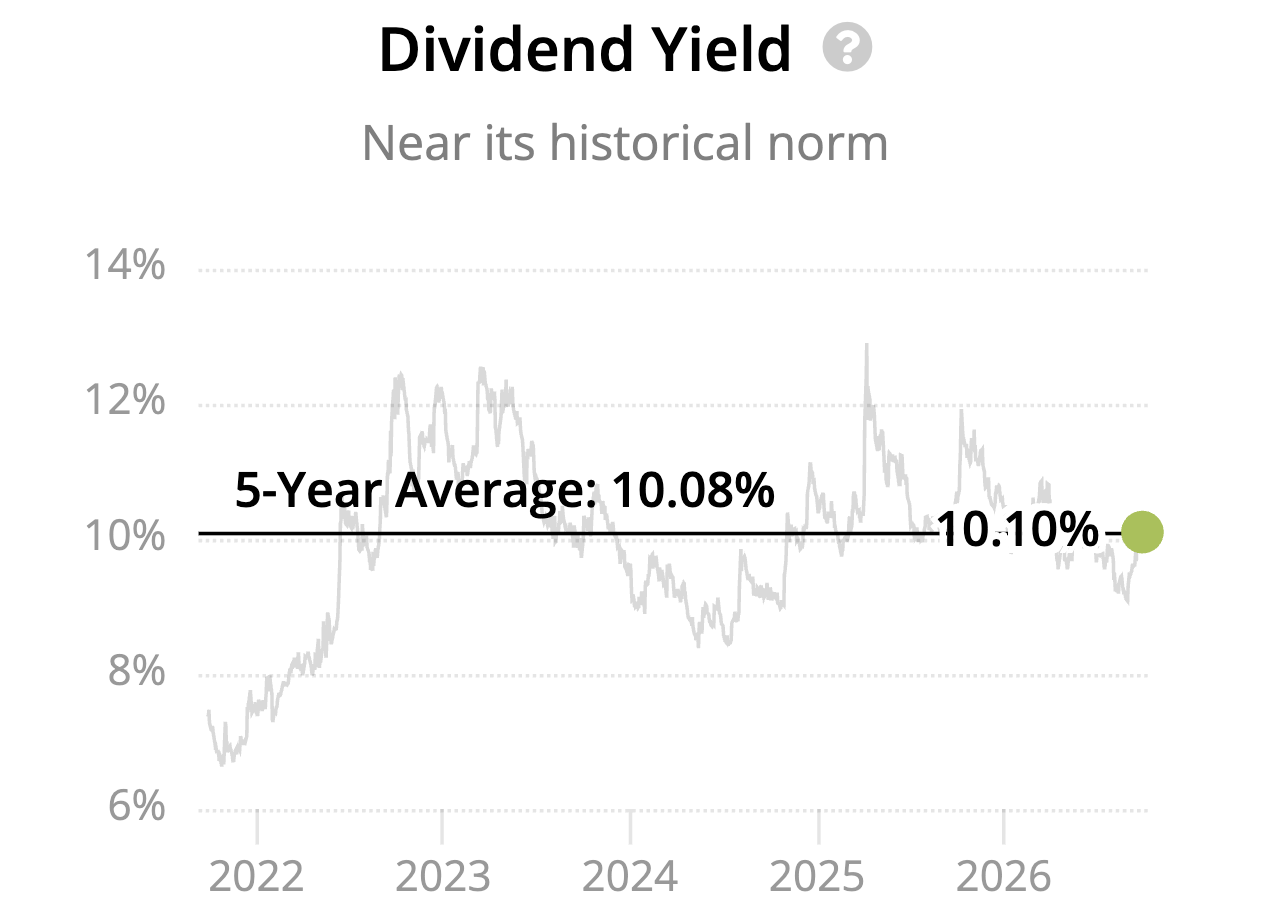
Capital Southwest yields 10.10%, right at its five-year average of 10.08%. Source: Simply Safe Dividends.
Four Corners Property Trust (FCPT)
Sector: Real Estate – Other Specialized REITs Dividend Yield: 6.9% Dividend Safety Score: Borderline Safe (50) Uninterrupted Dividend Streak: 10 years Credit Rating: Not rated by S&P
Four Corners Property Trust switched to monthly dividends in 2026, and its payout is getting safer. We upgraded its Dividend Safety Score from 46 to 50, higher inside the Borderline Safe range, in June 2026.
Darden Restaurants spun out its real estate as Four Corners (FCPT) in 2015. The REIT has grown from just over 400 properties to more than 1,300, but Darden still pays nearly half of the rent and restaurants make up about 75% of it.
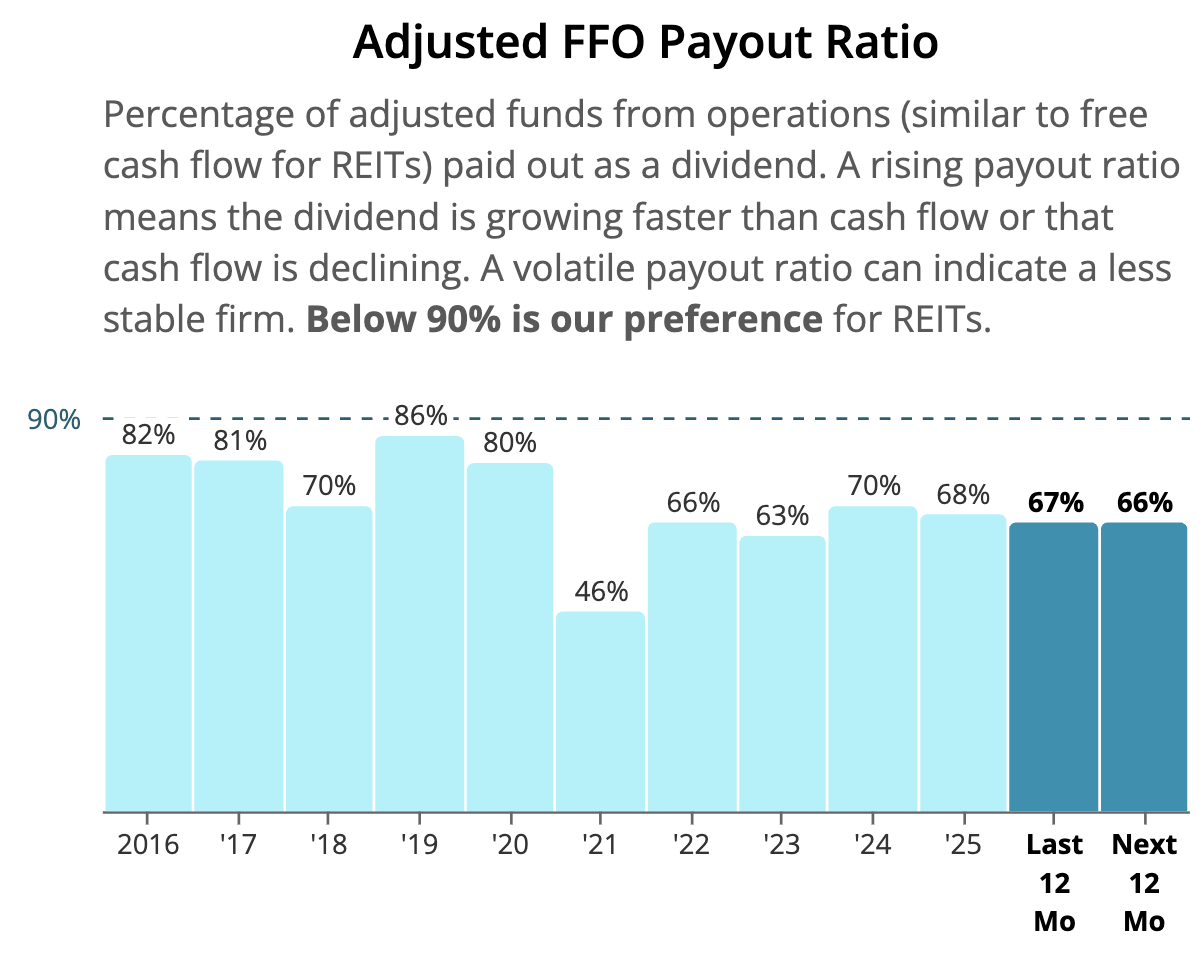
Four Corners has paid out around 80% of its adjusted funds from operations for a decade, inside our 90% preference for REITs. Source: Simply Safe Dividends.
Its buildings are small, stand-alone sites in busy retail corridors that are easier to re-lease, occupancy is above 99%, and it has collected around 99% of rent since it was formed, including through COVID. Tenant concentration is what keeps the score below Safe.
Tenant coverage is strong, too. As of June 2026, the restaurants and shops in its buildings generated about five dollars of earnings for every dollar of rent they owed.
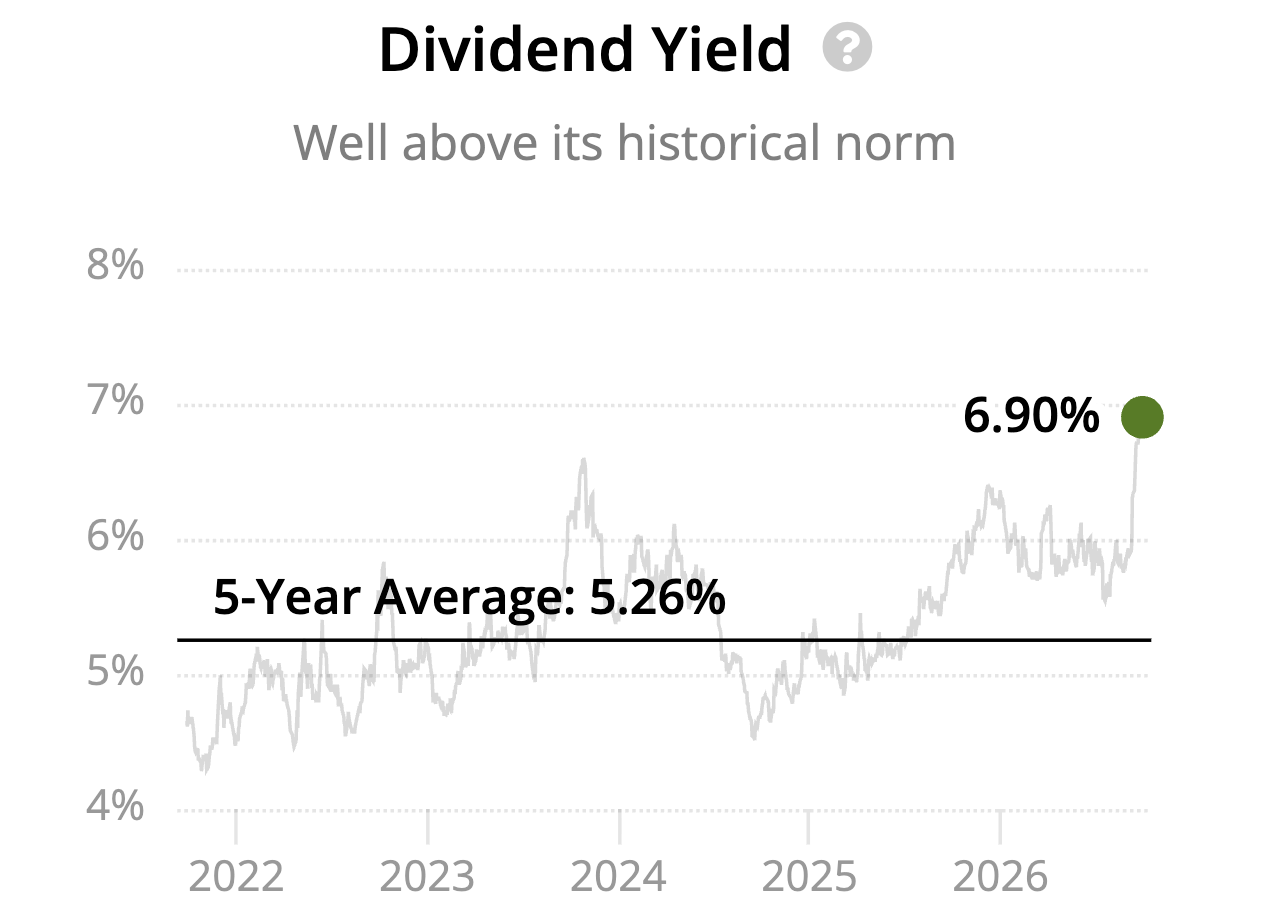
Four Corners yields 6.90% against a five-year average of 5.26%, well above its historical norm. Source: Simply Safe Dividends.
EPR Properties (EPR)
Sector: Real Estate – Other Specialized REITs Dividend Yield: 6.5% Dividend Safety Score: Borderline Safe (50) Uninterrupted Dividend Streak: 4 years Credit Rating: BB+
EPR's dividend is well covered today, but its tenants depend on leisure spending that shrinks in a recession. The REIT cut its dividend in the 2008 financial crisis and suspended it for most of a year during the 2020 pandemic.
Formed in 1997, EPR Properties (EPR) owns movie theaters, eat-and-play venues such as Topgolf and Andretti Indoor Karting, ski areas, attractions, and other places people spend their leisure time.
EPR's low payout ratio provides some margin of safety but it carries a lot of debt even for a REIT, and theaters face a long-term challenge from streaming.
EPR pays out 67% of its adjusted funds from operations, expected to ease to 66%, well below our 90% preference for REITs. Source: Simply Safe Dividends.
That said, its theaters have held up better than most because many serve food and drinks and sit in strong locations. Management has also been using acquisitions to shrink its reliance on theaters over time, and long-term triple-net leases keep rent steady as long as tenants stay healthy.
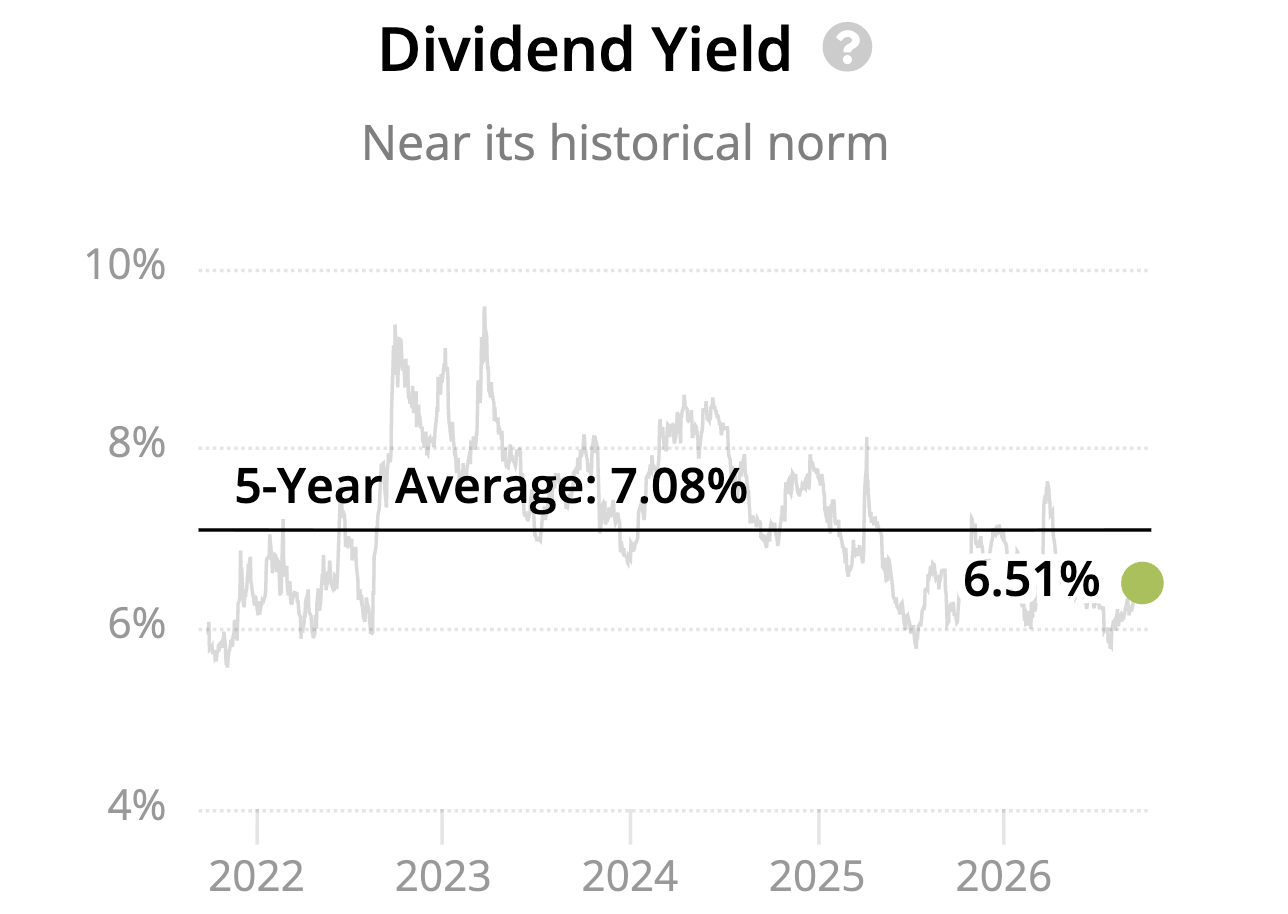
EPR yields 6.51%, near its five-year average of 7.08%. Source: Simply Safe Dividends.
Apple Hospitality (APLE)
Sector: Real Estate – Hotel and Resort REITs Dividend Yield: 5.9% Dividend Safety Score: Borderline Safe (50) Uninterrupted Dividend Streak: 4 years Credit Rating: Not rated by S&P
Apple Hospitality has one of the stronger balance sheets here, but hotel cash flow swings with the economy. The REIT suspended its dividend for nearly two years during the pandemic.
Established in 2007, Apple Hospitality (APLE) owns upscale, select-service hotels across the U.S. run under brands such as Hilton, Marriott, and Hyatt. Unlike most REITs, it collects room revenue rather than fixed rent, so occupancy and room rates flow straight to its results.
Leverage has held near a reasonable level since 2022, and the dividend has not changed since 2022 but remains sensitive to downturns in the economy.
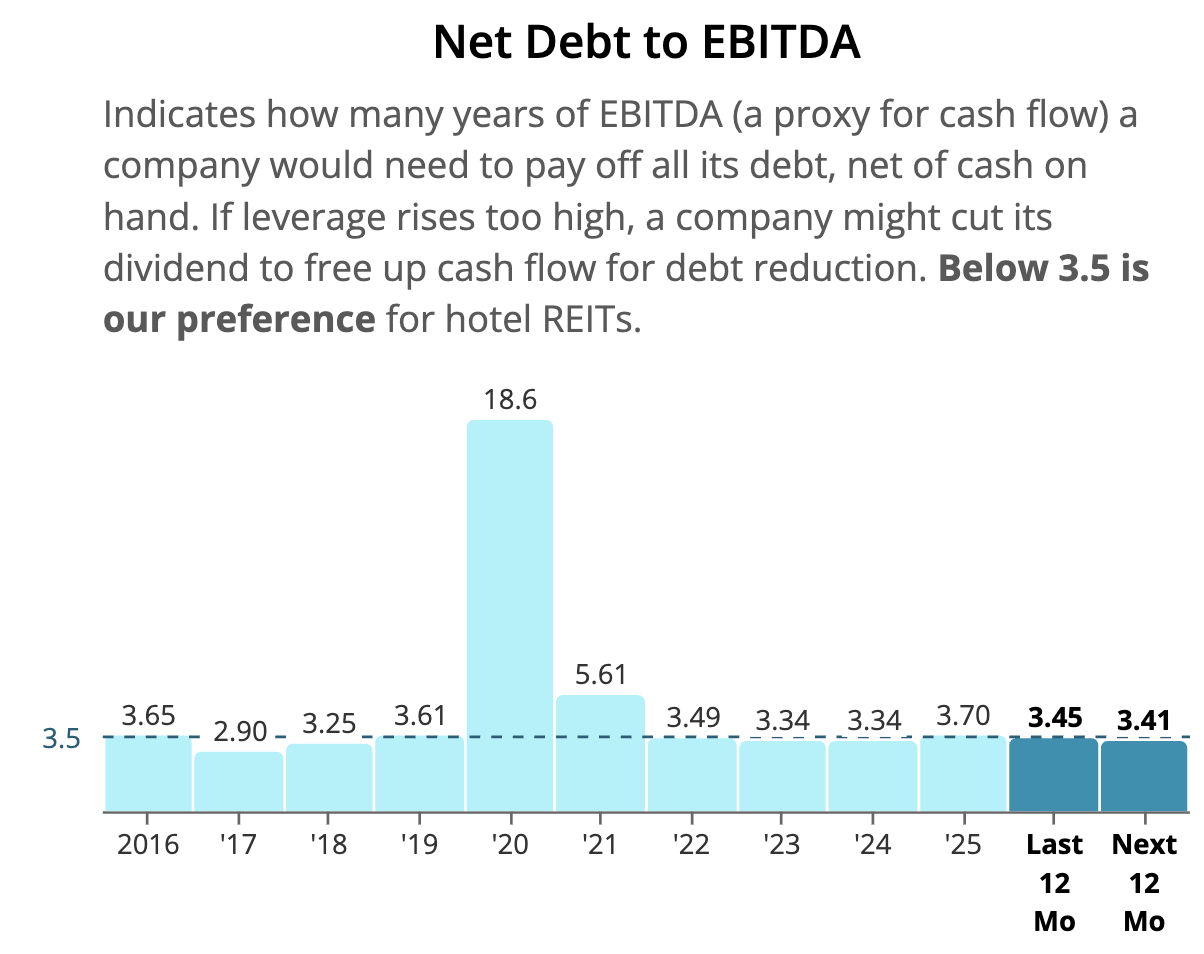
Apple Hospitality's net debt runs 3.45 times EBITDA, expected to ease to 3.41, right at our 3.5 preference for hotel REITs. Source: Simply Safe Dividends.
Hotels carry high fixed costs, so a drop in travel hits profits quickly. Among hotel REITs, Apple stands out for relatively new properties, trusted brands, and wide geographic spread.
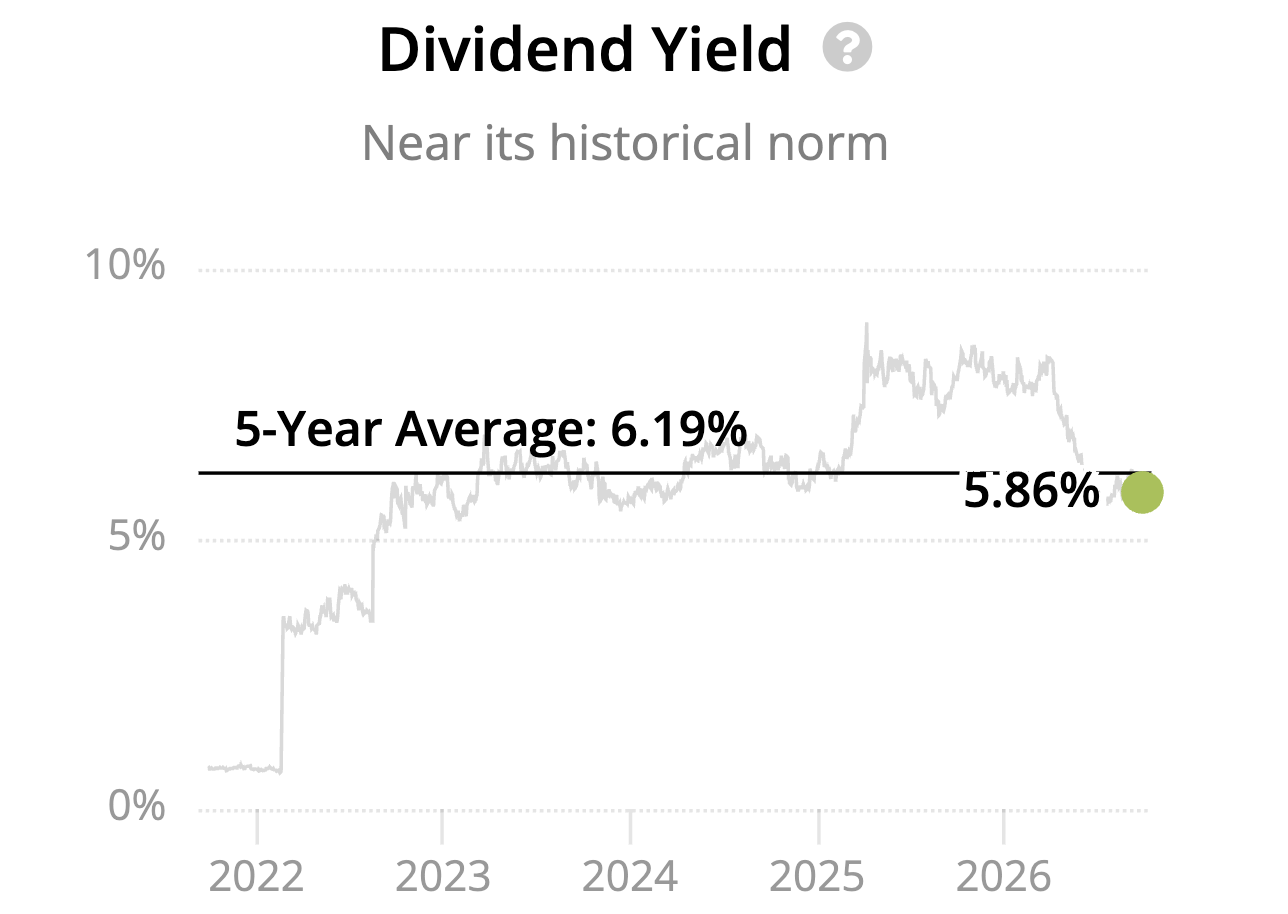
Apple Hospitality yields 5.86%, near its five-year average of 6.19%. Source: Simply Safe Dividends.
Gladstone Investment (GAIN)
Sector: Financials – Asset Management and Custody Banks Dividend Yield: 6.1% Dividend Safety Score: Borderline Safe (41) Uninterrupted Dividend Streak: 16 years Credit Rating: Not rated by S&P
Gladstone Investment's Dividend Safety Score of 41 sits one point above Unsafe. Its earnings lean on gains from selling the companies it owns, and those arrive unevenly.
Incorporated in 2005, Gladstone Investment (GAIN) is a BDC that both lends to and buys stakes in profitable lower middle-market businesses in manufacturing, distribution, and services. It earns interest on its loans and capital gains when it sells a company.
Because gains from exits arrive in lumps, its payout ratio on net investment income alone jumps around from year to year. The regular dividend has been flat since 2022, and supplemental dividends tied to exits come and go.
Gladstone pays its regular monthly dividend mainly from loan interest and uses gains from equity exits mostly for supplemental dividends. It favors established, cash-flow-positive businesses over early-stage companies, and its managers often sit on the boards of the companies it backs.
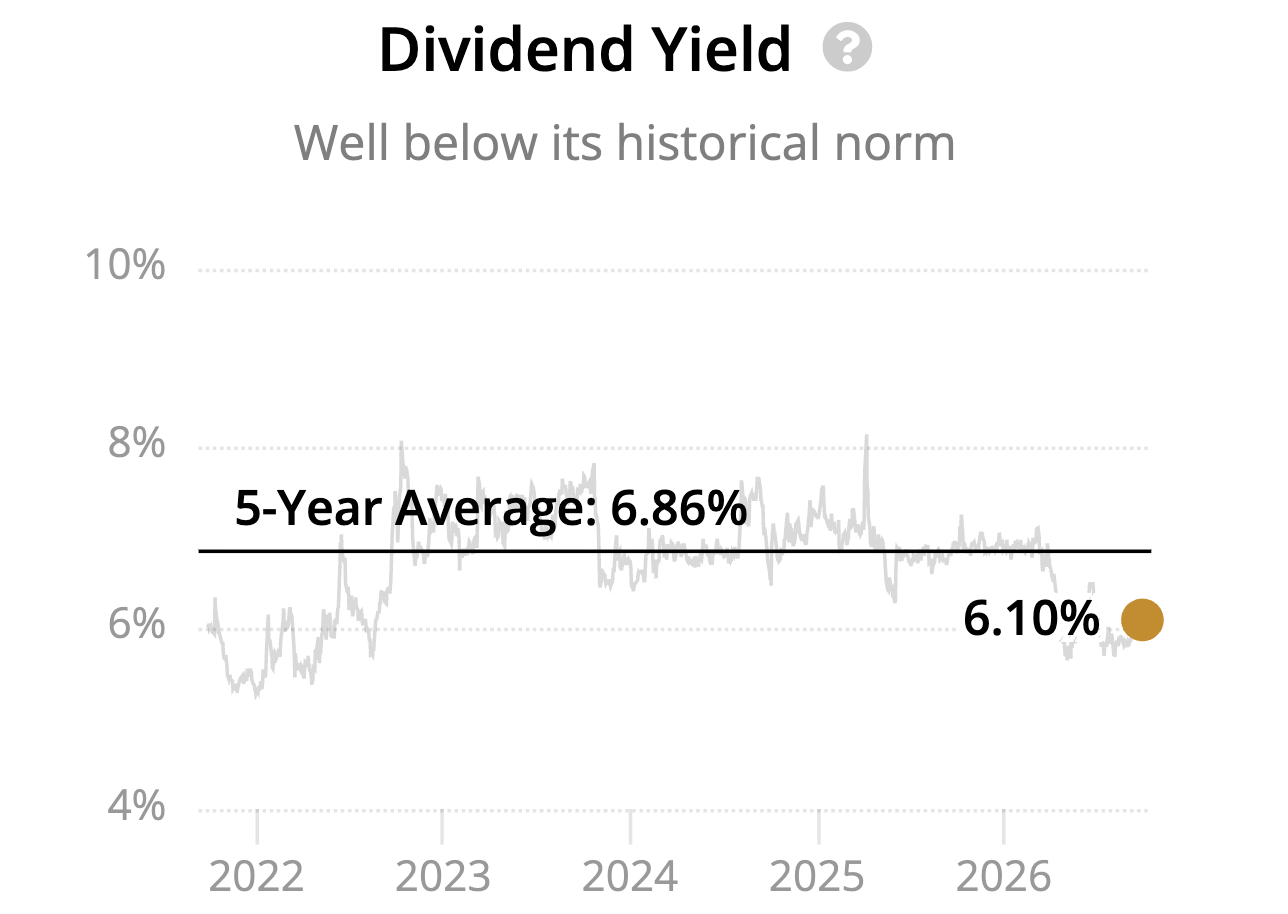
Gladstone Investment yields 6.10%, well below its five-year average of 6.86%. Source: Simply Safe Dividends.
LTC Properties (LTC)
Sector: Real Estate – Health Care REITs Dividend Yield: 5.3% Dividend Safety Score: Unsafe (40) Uninterrupted Dividend Streak: 23 years Credit Rating: Not rated by S&P
LTC Properties has the longest dividend streak among the Unsafe names here, but its tenants run on thin margins. Its Dividend Safety Score of 40 sits one point below Borderline Safe.
Incorporated in 1992, LTC Properties (LTC) owns senior housing and skilled nursing properties and lends to the operators who run them. A second group of communities is run by independent managers, so LTC keeps their operating cash flow rather than collecting fixed rent.
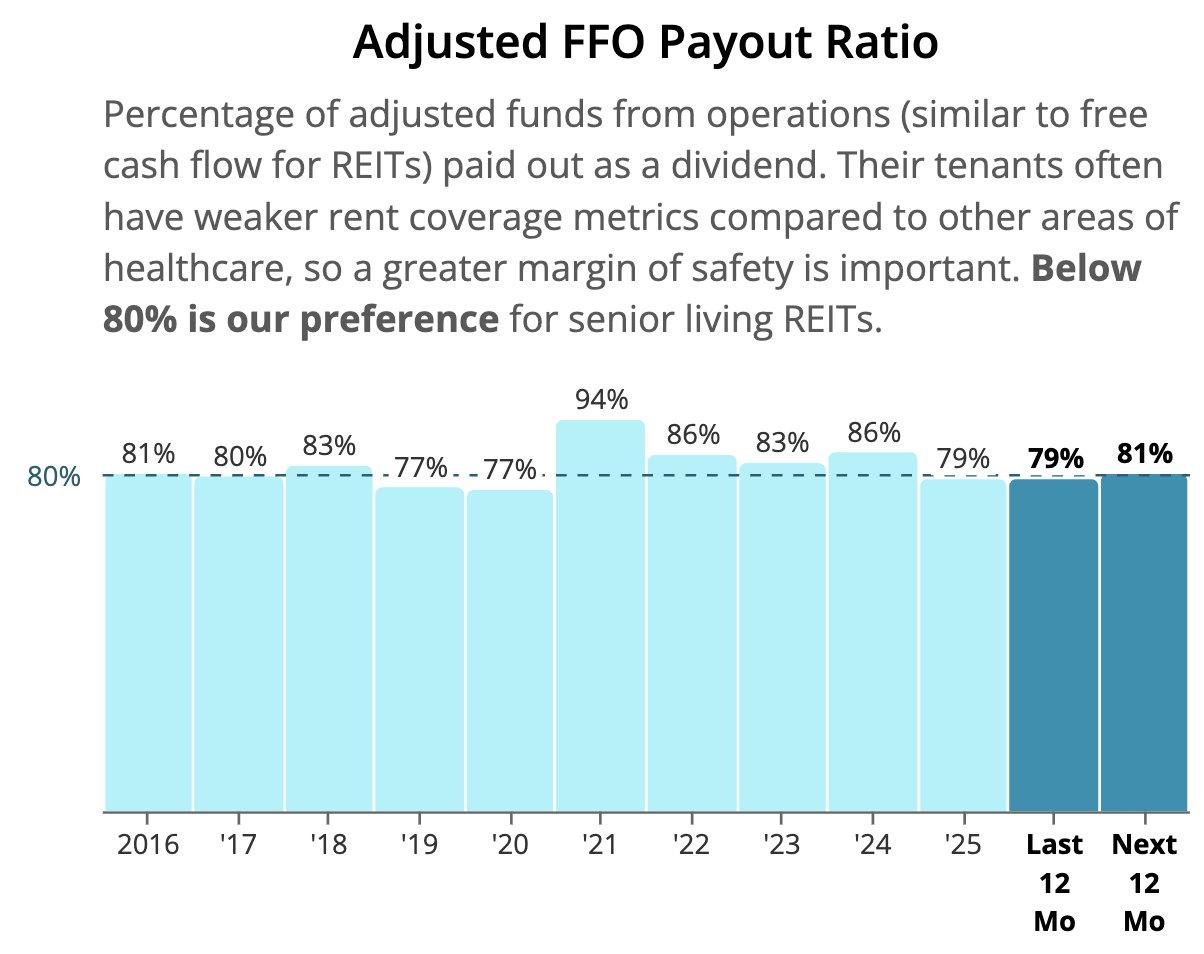
LTC pays out 79% of its adjusted funds from operations, expected to reach 81%, right at our 80% preference for senior living REITs. Source: Simply Safe Dividends.
Leverage is low at 3.7 times EBITDA, and the dividend has not grown in five years. What holds the score down is the health of the operators, whose ability to pay rent depends on occupancy and government reimbursement.
Demand is not the issue. The number of Americans over 85 is projected to grow significantly in the decade ahead. The problem is operator economics since changes in government reimbursement have shortened patient stays and squeezed margins, and a handful of large operators pay a big share of LTC's rent.
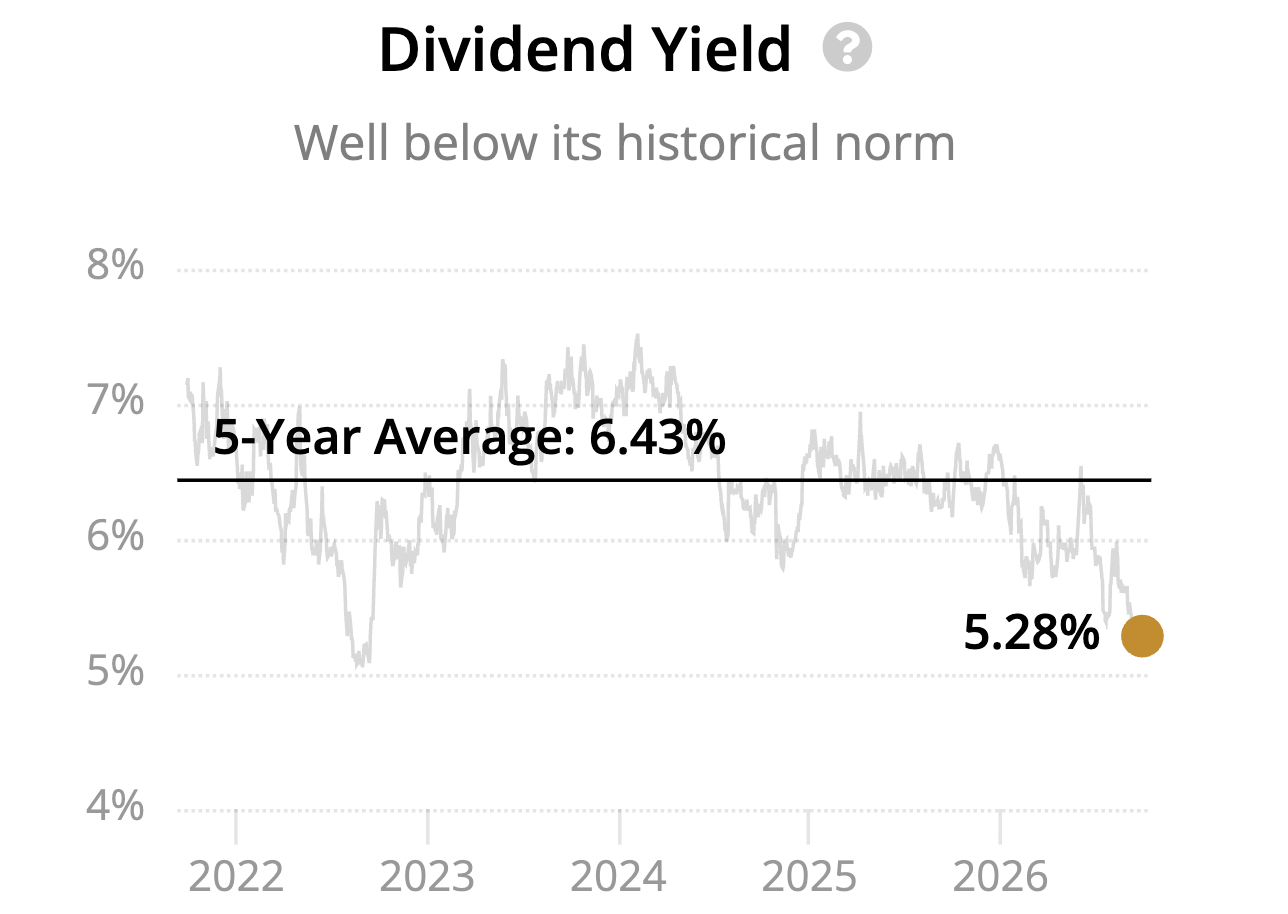
LTC yields 5.28%, well below its five-year average of 6.43%. Source: Simply Safe Dividends.
Gladstone Land (LAND)
Sector: Real Estate – Other Specialized REITs Dividend Yield: 6.0% Dividend Safety Score: Unsafe (40) Uninterrupted Dividend Streak: 11 years Credit Rating: Not rated by S&P
Gladstone Land pays out far more than it earns. We downgraded its Dividend Safety Score from Borderline Safe to Unsafe in March 2025 as struggling farmers renegotiated their leases.
Founded in 1997, Gladstone Land (LAND) owns farmland leased to growers of fresh fruits, vegetables, and nuts, and it holds water rights in California. Falling crop prices, drought, and higher costs left many tenants unable to keep up with rent, so the REIT swapped fixed rent for a share of future crop revenue on some farms.
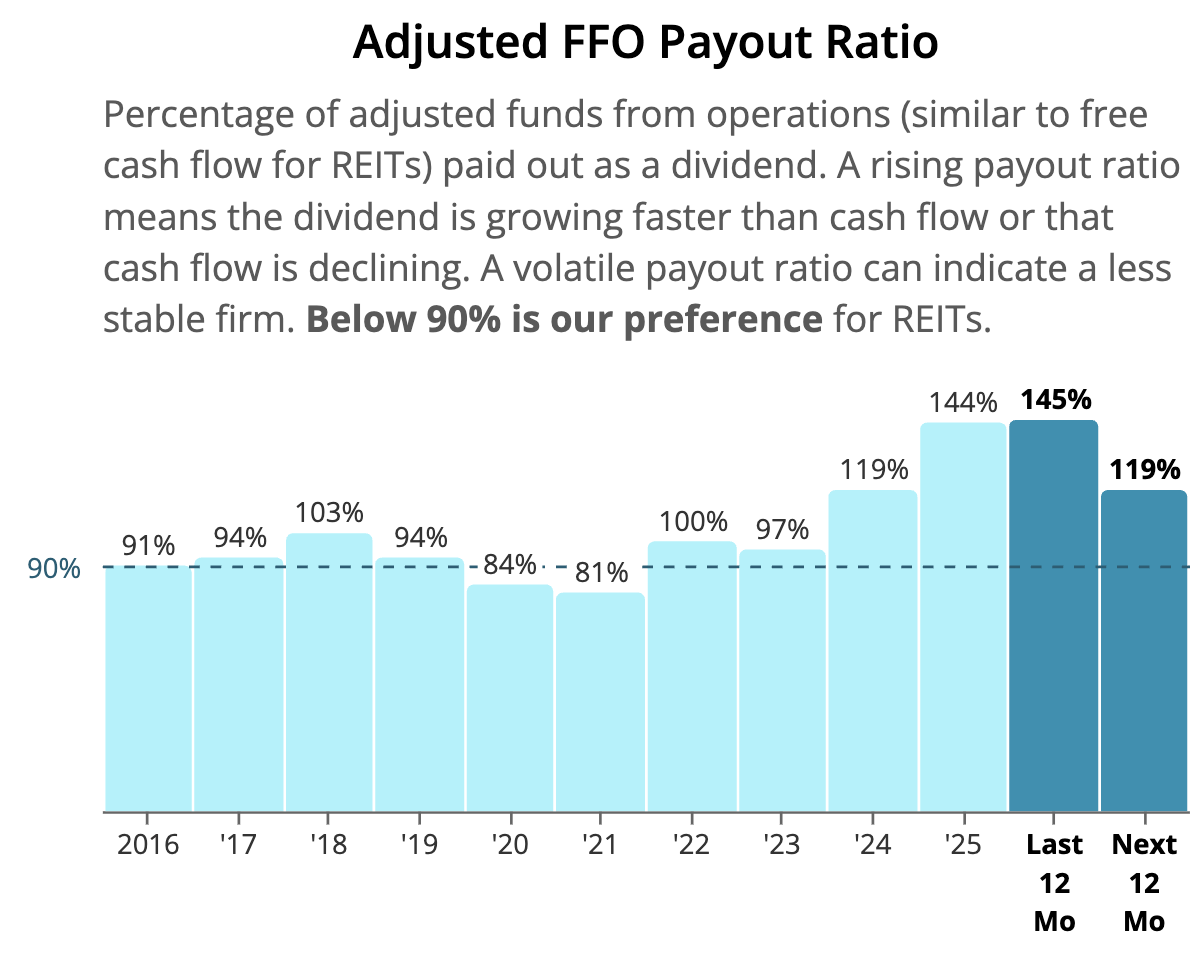
Management has called the lease changes temporary, but the payout ratio has run above 100% since 2024 and the dividend has not grown since then.
Gladstone Land pays out 145% of its adjusted funds from operations, expected to ease to 119%, far above our 90% preference for REITs. Source: Simply Safe Dividends.
Its farms grow specialty crops such as berries and nuts rather than commodities like corn and soybeans, and farmers typically pay the property taxes, insurance, and maintenance. Gladstone Land is externally managed, so it pays an adviser to run the business.
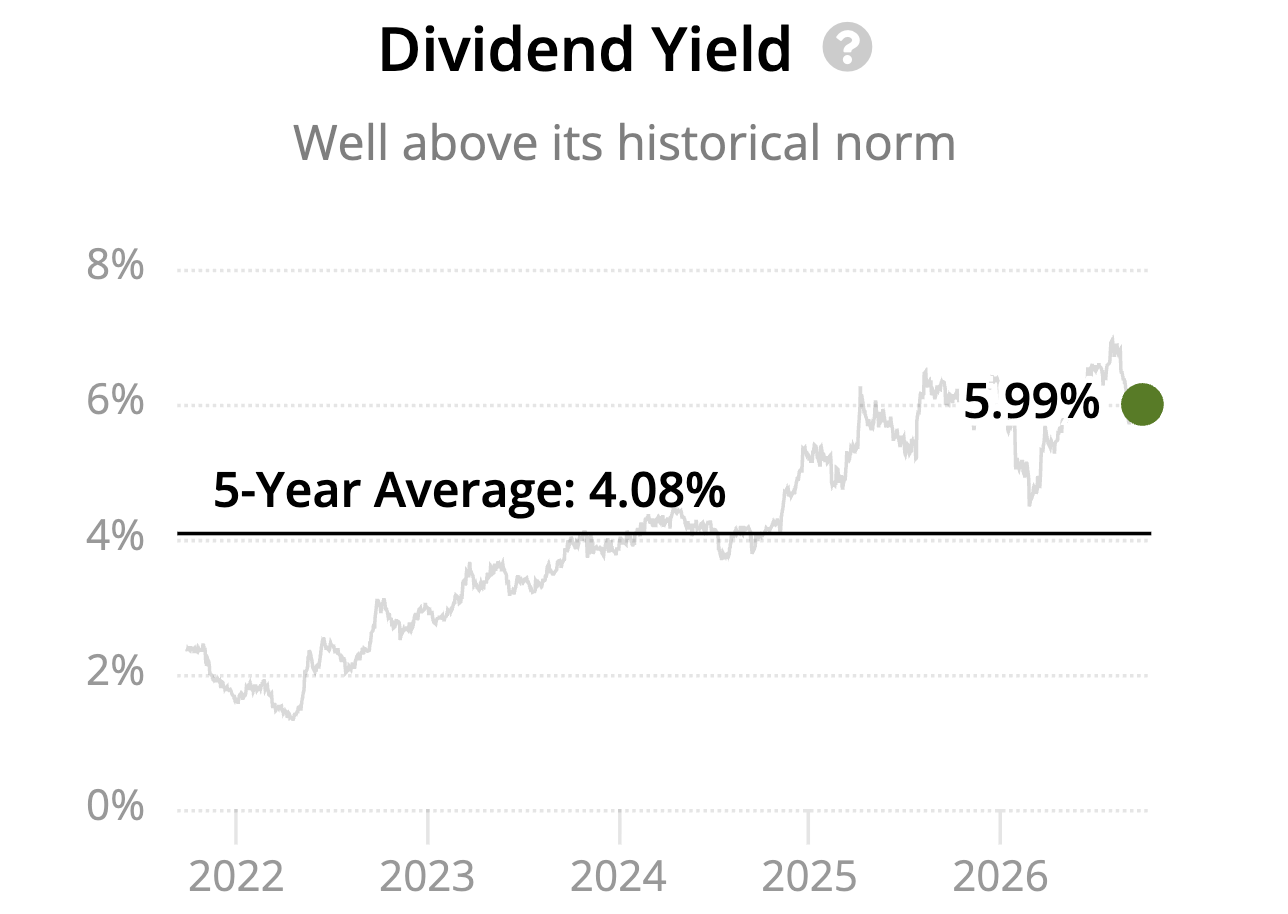
Gladstone Land yields 5.99% against a five-year average of 4.08%. Source: Simply Safe Dividends.
Saratoga Investment (SAR)
Sector: Financials – Asset Management and Custody Banks Dividend Yield: 17.8% Dividend Safety Score: Unsafe (40) Uninterrupted Dividend Streak: 5 years Credit Rating: Not rated by S&P
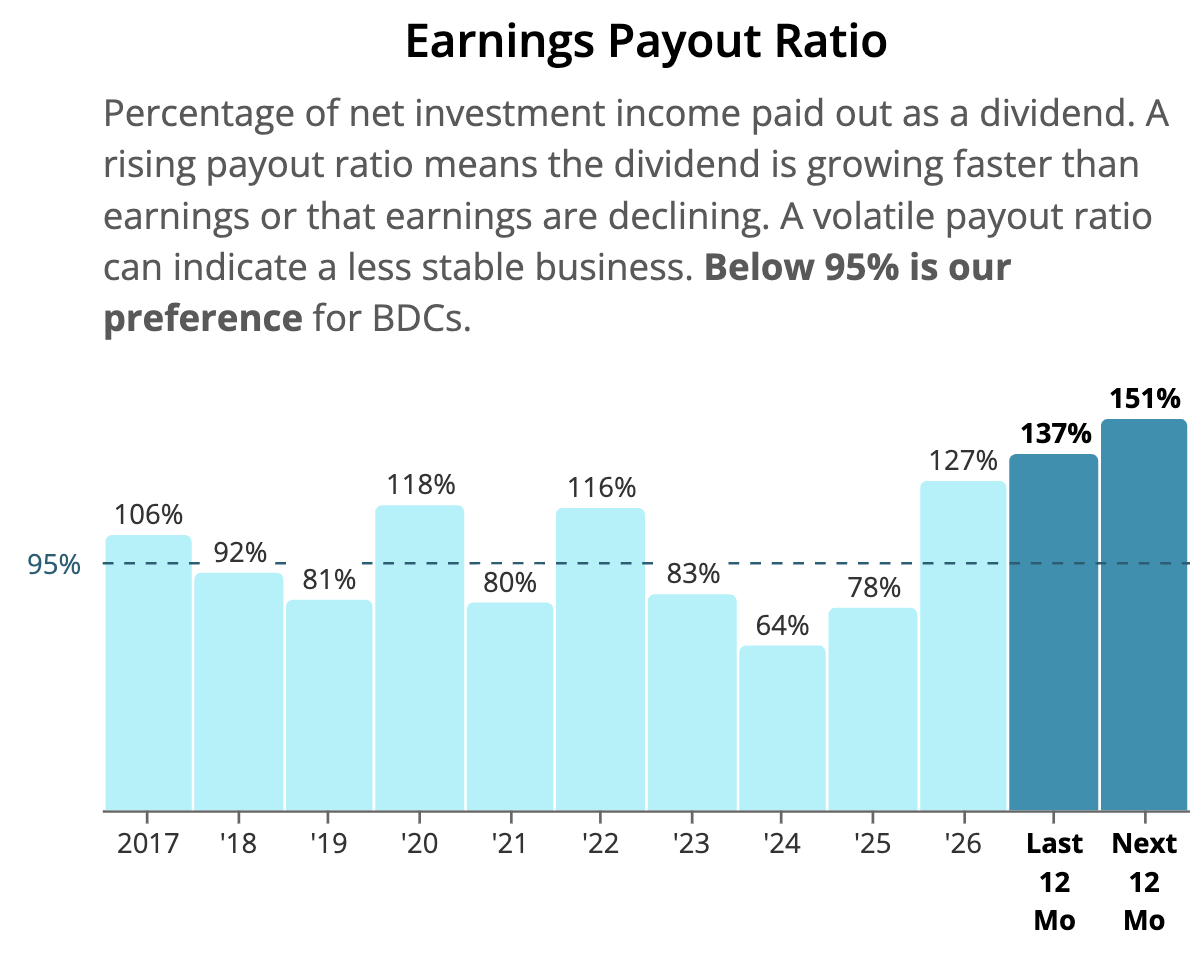
Saratoga Investment's dividend is not covered by its earnings, and it carries high debt levels for a BDC.
Established in 2007, Saratoga Investment (SAR) lends to midsize U.S. companies, mostly through first-lien and unitranche loans. It is managed externally by an affiliate of private equity firm Saratoga Partners.
Saratoga pays out 137% of its net investment income, expected to reach 151%, well above our 95% preference for BDCs. Source: Simply Safe Dividends.
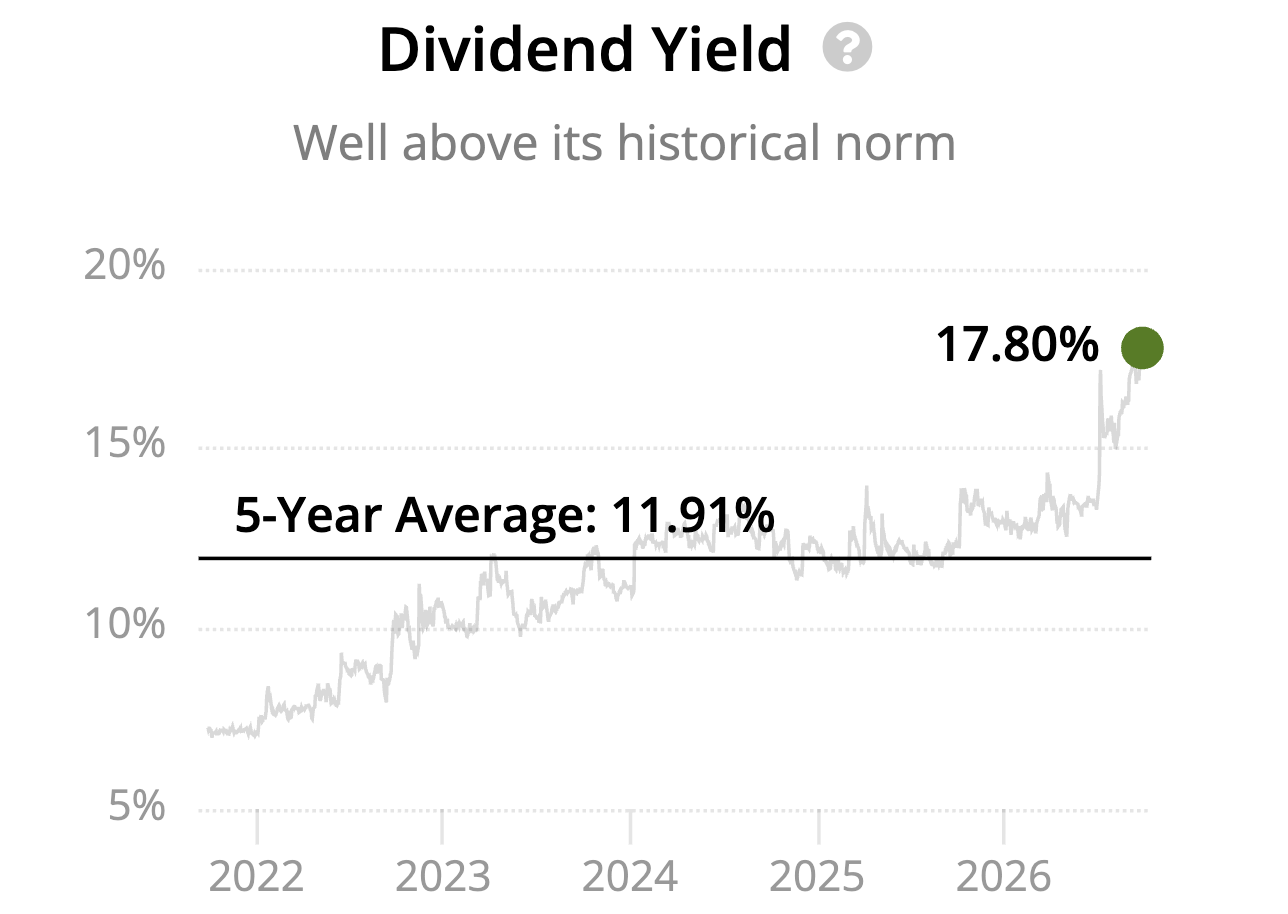
The dividend has been flat since 2024, but the yield has climbed far above its five-year average this year, a sign the market expects a cut to get the payout ratio back to a more sustainable level.
Saratoga yields 17.80% against a five-year average of 11.91%. Source: Simply Safe Dividends.
Invesco Mortgage Capital (IVR)
Sector: Financials – Mortgage REITs Dividend Yield: 22.9% Dividend Safety Score: Unsafe (40) Uninterrupted Dividend Streak: 0 years Credit Rating: Not rated by S&P
Invesco Mortgage Capital's dividend is covered today, but the mortgage REIT has cut it again and again. Its dividend has shrunk 27% a year over the past five years, including a 15% cut in March 2025.
Incorporated in 2008, Invesco Mortgage Capital (IVR) invests mostly in mortgage-backed securities guaranteed by Fannie Mae and Freddie Mac and borrows short term to amplify the income. Our guide to mortgage REITs explains the model.
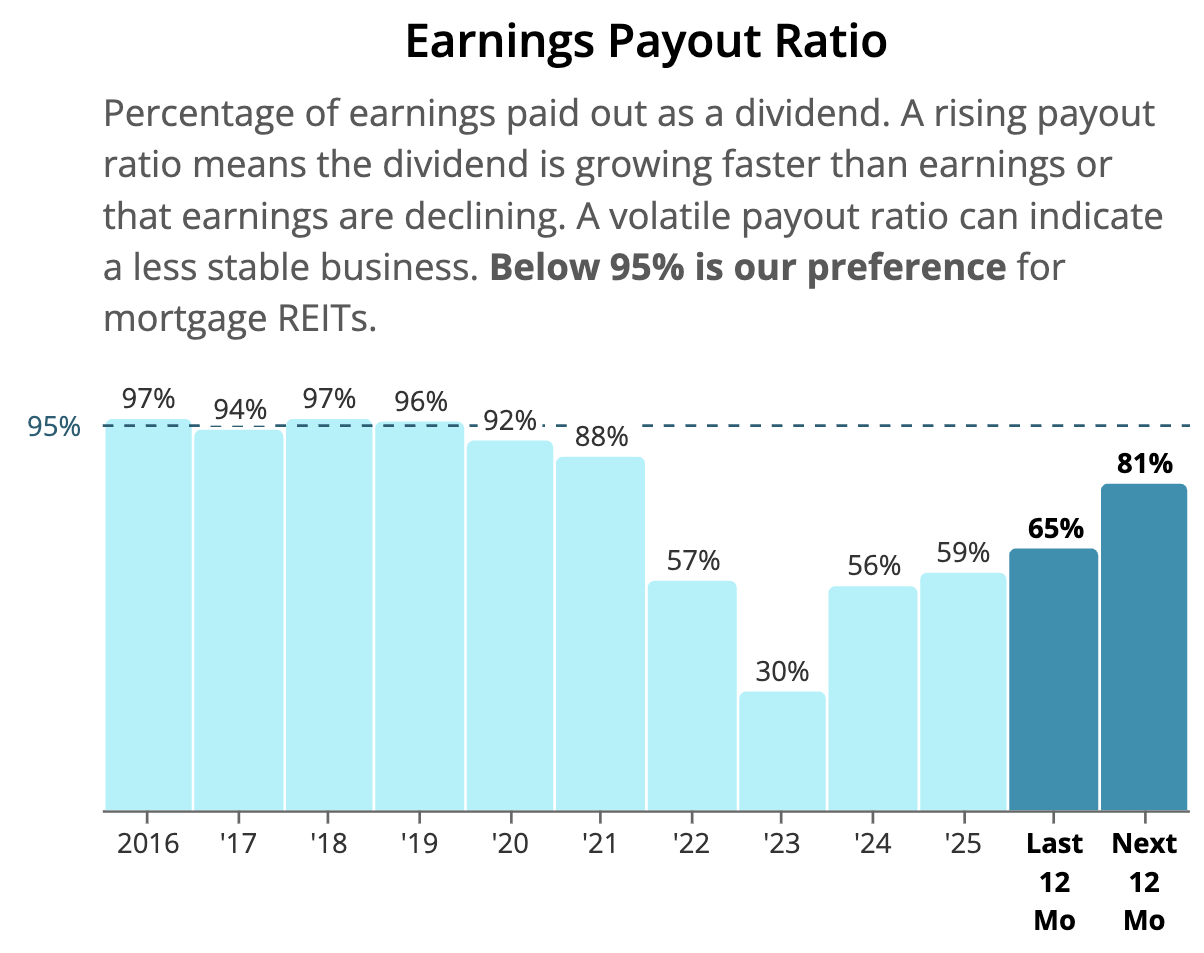
Invesco Mortgage pays out 65% of its earnings, expected to reach 81%, inside our 95% preference for mortgage REITs. Source: Simply Safe Dividends.
Mortgage REITs earn the spread between what their bonds pay and what they pay to borrow, so a move in rates can erase coverage quickly. Their high debt loads leave little room for error.
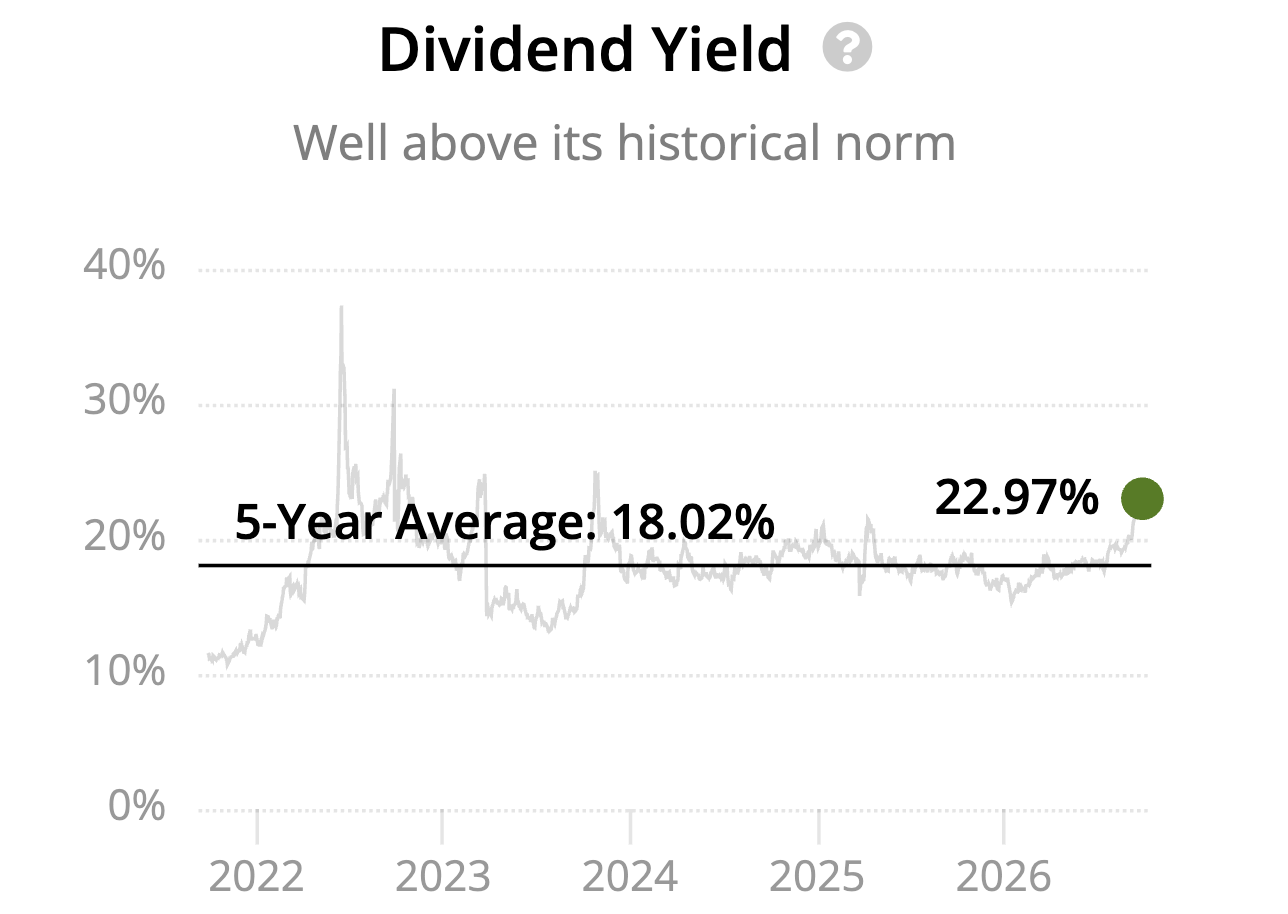
Invesco Mortgage yields 22.97% against a five-year average of 18.02%. Source: Simply Safe Dividends.
BCP Investment (BCIC)
Sector: Financials – Asset Management and Custody Banks Dividend Yield: 16.0% Dividend Safety Score: Unsafe (40) Uninterrupted Dividend Streak: 0 years Credit Rating: Not rated by S&P
BCP Investment is the newest BDC to pay monthly, and it got there by way of a dividend cut. In March 2026 it cut its payout by 43% and switched from quarterly to monthly payments. It scored Unsafe before the cut.
Founded in 2006, BCP Investment (BCIC) lends to middle-market companies through first-lien and second-lien loans and mezzanine debt, and it also holds equity stakes and collateralized loan obligation investments. An affiliate of private equity firm BC Partners manages it.
The smaller dividend is covered for now. But the firm's debt levels are very high for a BDC, and at about $86 million in market value, BCP Investment is the smallest company on this list. It also cut its dividend during the 2007 to 2009 recession.
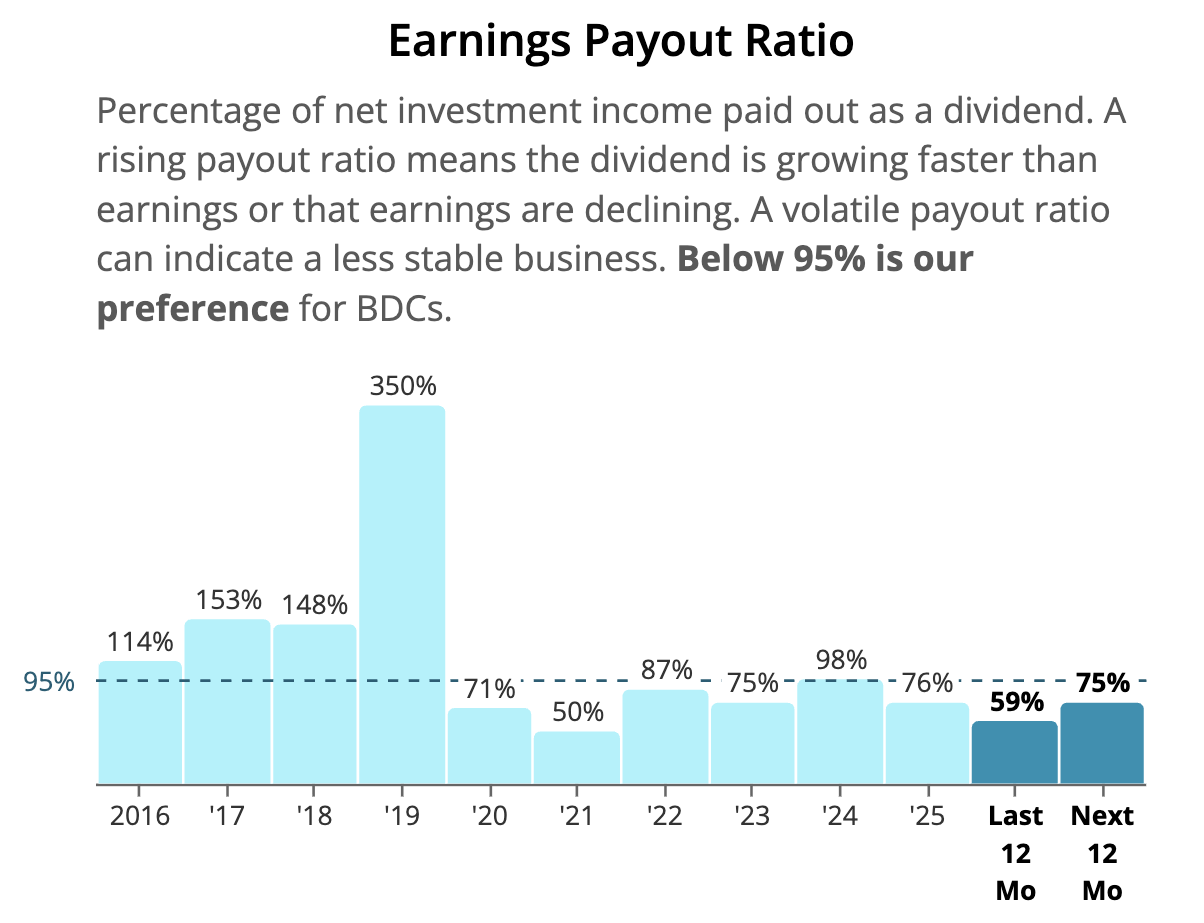
BCP Investment pays out 59% of its net investment income, expected to rise to 75%, inside our 95% preference for BDCs. Source: Simply Safe Dividends.
Most of its loans carry variable rates while much of its borrowing is fixed, so falling rates squeeze its income. Loans that had stopped paying interest also rose to 4% of the portfolio in early 2026, above average for a BDC.
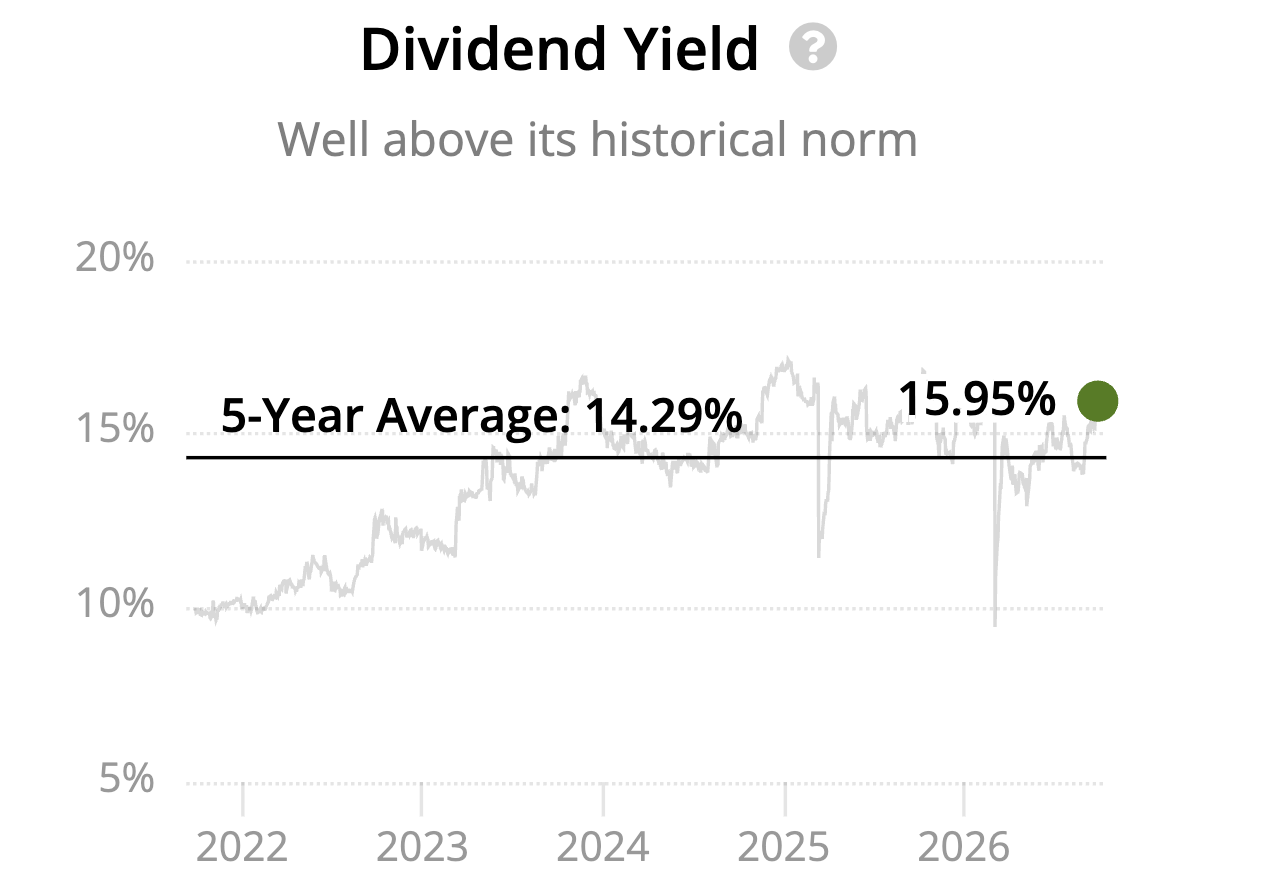
BCP Investment yields 15.95% against a five-year average of 14.29%. Source: Simply Safe Dividends.
Horizon Technology Finance (HRZN)
Sector: Financials – Asset Management and Custody Banks Dividend Yield: 15.8% Dividend Safety Score: Unsafe (40) Uninterrupted Dividend Streak: 0 years Credit Rating: Not rated by S&P
Horizon Technology Finance cut its dividend by 45% in March 2026, and it scored Unsafe before the cut.
Tracing its roots to 2008, Horizon (HRZN) makes secured loans to venture-backed companies in technology, life science, healthcare information, and sustainability. It also takes warrants that pay off when a borrower does well.
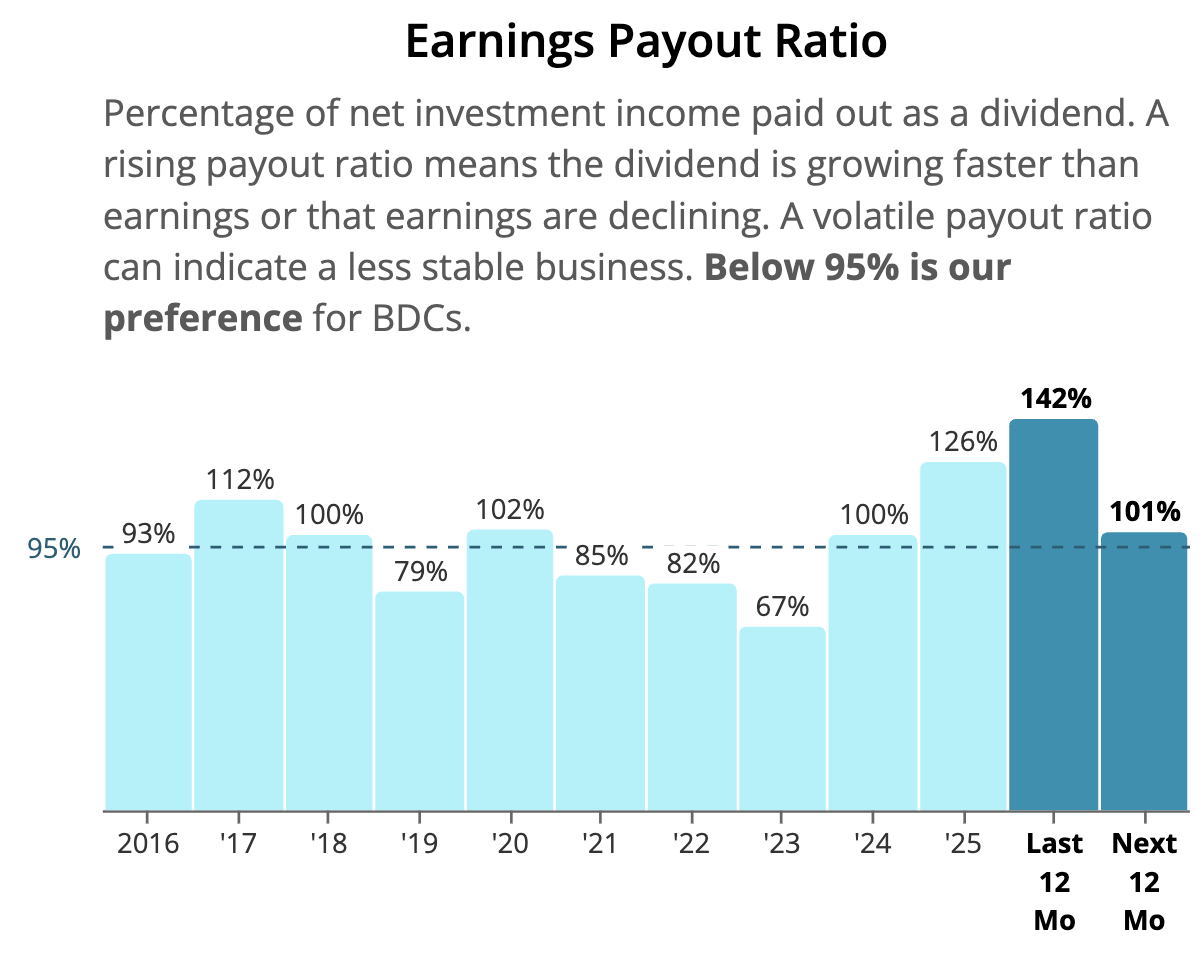
Horizon paid out 142% of its net investment income over the past year and expects to pay out 101% after its cut, still above our 95% preference for BDCs. Source: Simply Safe Dividends.
Young, cash-burning borrowers can default in bunches when venture funding dries up. At about $310 million in market value, Horizon is also one of the smaller companies on this list.
Its loans typically carry double-digit yields to compensate for the risk of lending to companies that may never turn a profit.
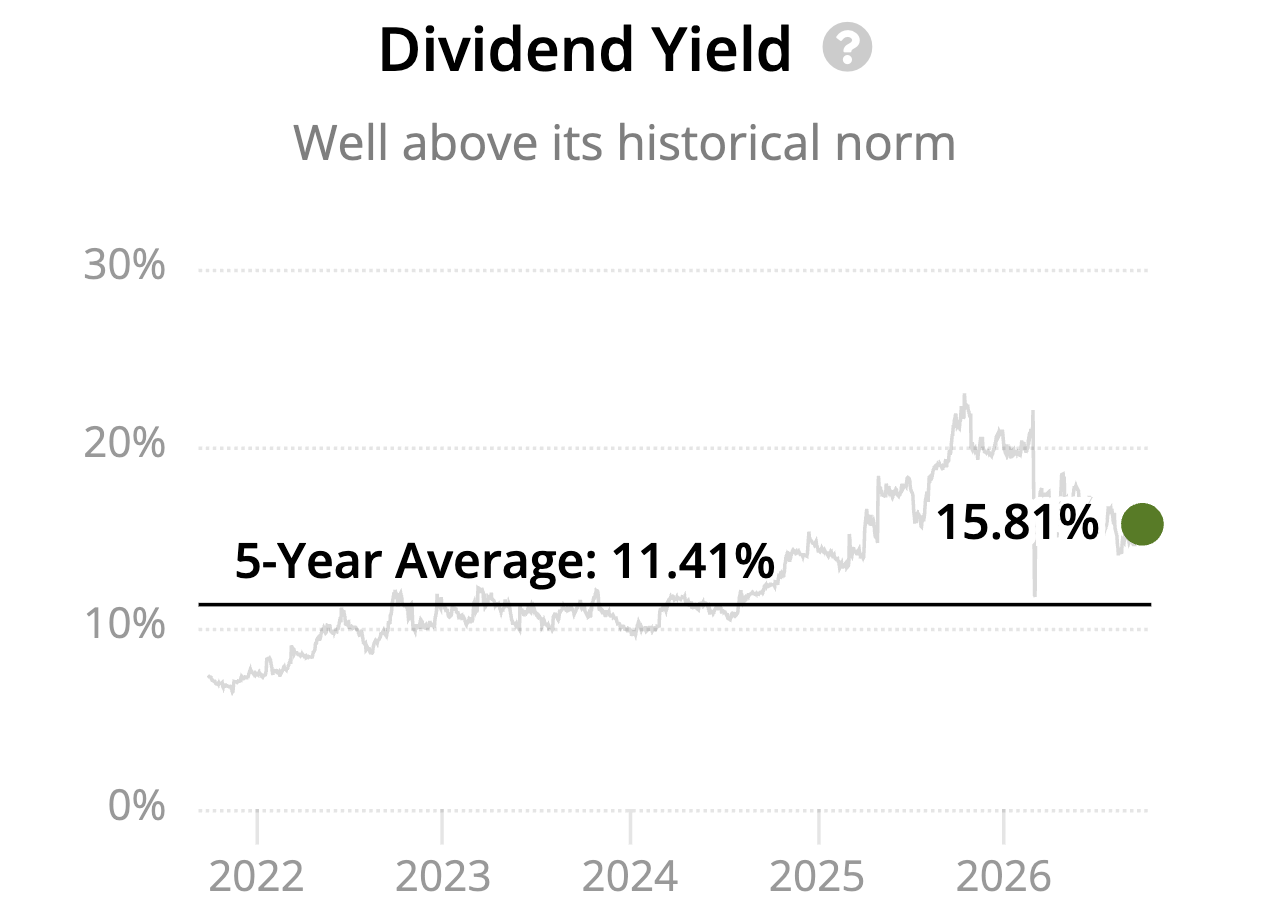
Horizon yields 15.81% against a five-year average of 11.41%. Source: Simply Safe Dividends.
Chiron Real Estate (XRN)
Sector: Real Estate – Health Care REITs Dividend Yield: 5.4% Dividend Safety Score: Unsafe (40) Uninterrupted Dividend Streak: 0 years Credit Rating: Not rated by S&P
Chiron Real Estate cut its dividend by 36% in May 2026, and it scored Unsafe before the cut. We downgraded the REIT, then called Global Medical REIT, to Unsafe in March 2025 over refinancing risk.
Established in 2011, Chiron Real Estate (XRN) owns medical office buildings, inpatient rehabilitation facilities, and surgical hospitals leased to physician groups and regional health systems under long-term, triple-net agreements.
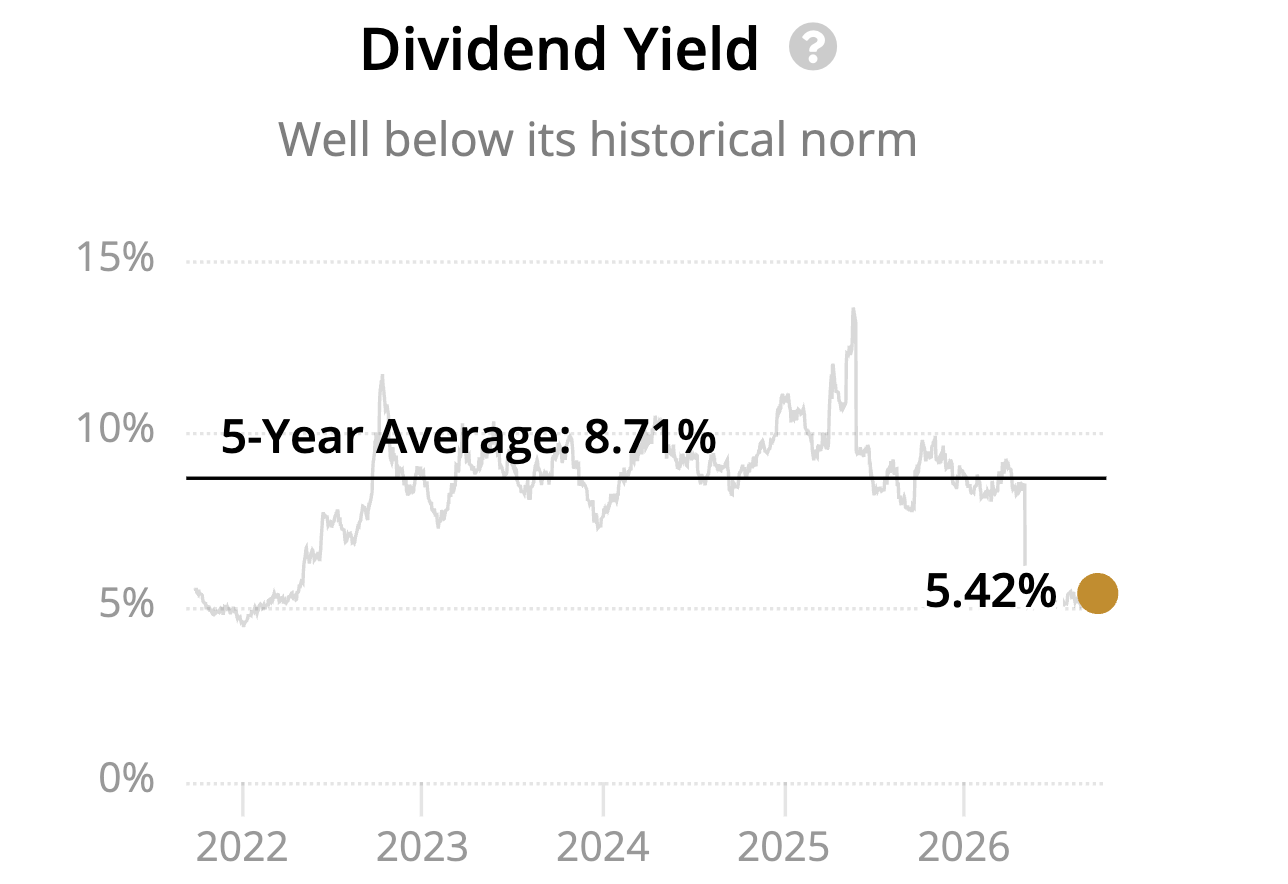
The cut brought its payout ratio down to 51% of adjusted funds from operations. Leverage is what still holds the score down, and the yield now sits well below its five-year average because the dividend is smaller.
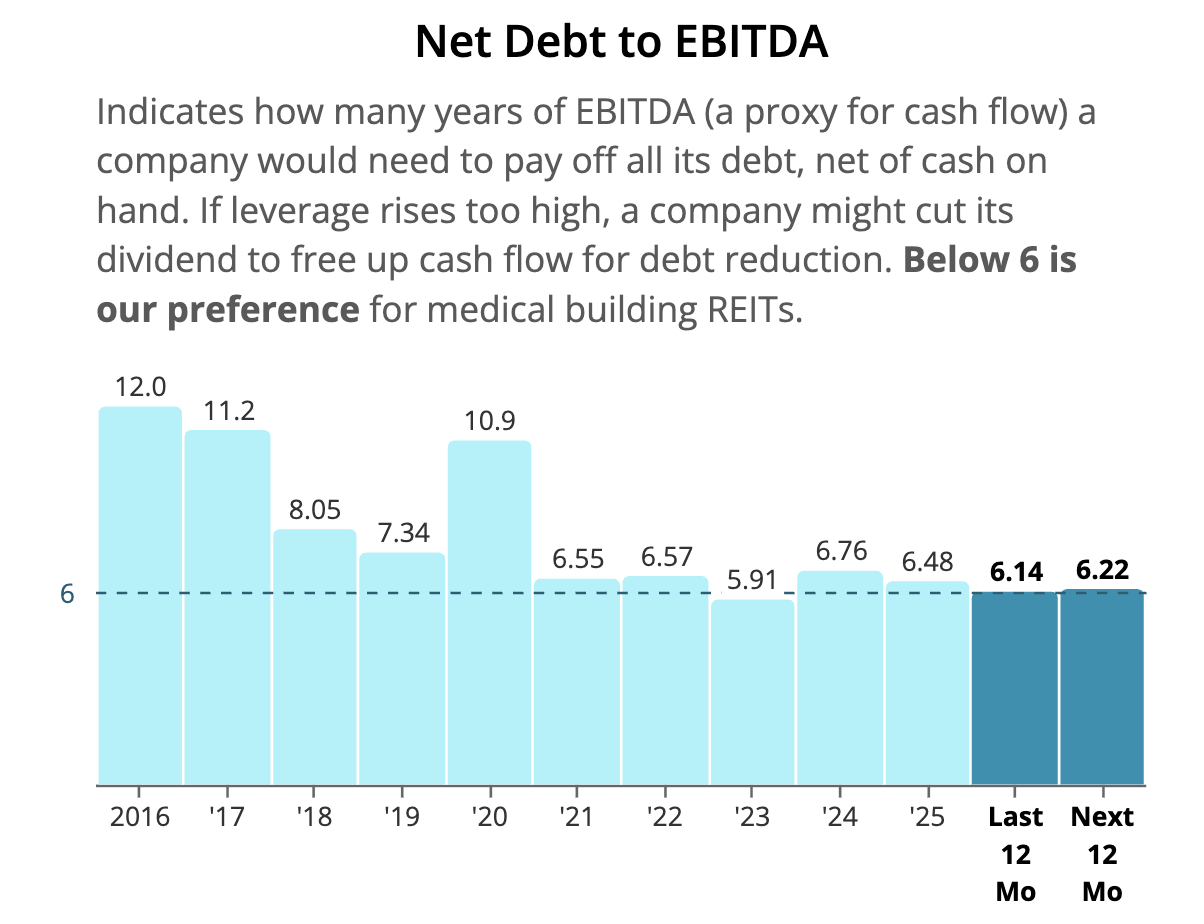
Chiron's net debt runs 6.14 times EBITDA, expected to reach 6.22, just above our 6.0 preference for medical building REITs. Source: Simply Safe Dividends.
The properties themselves have held up. As of early 2025, tenants generated about 4.5 times their rent in income, and no tenant accounted for more than 10% of rent. The balance sheet was the problem: a large, low-rate term loan came due in 2026, and refinancing at higher rates was set to push the payout ratio above 100%.
Chiron yields 5.42%, well below its five-year average of 8.71%. Source: Simply Safe Dividends.
Dynex Capital (DX)
Sector: Financials – Mortgage REITs Dividend Yield: 17.9% Dividend Safety Score: Unsafe (30) Uninterrupted Dividend Streak: 4 years Credit Rating: Not rated by S&P
Dynex Capital has not earned its dividend in years. We lowered its Dividend Safety Score from 40 to 30, deeper inside the Unsafe range, in May 2025 as volatile interest rates kept squeezing its margins.
Incorporated in 1987, Dynex (DX) invests mostly in mortgage-backed securities whose principal is guaranteed by Fannie Mae and Freddie Mac. It borrows short term to buy longer-term bonds, a strategy that works best when rates are stable.
Dynex has cut its dividend repeatedly since 2013. With coverage still weak, conservative income investors are better served elsewhere.
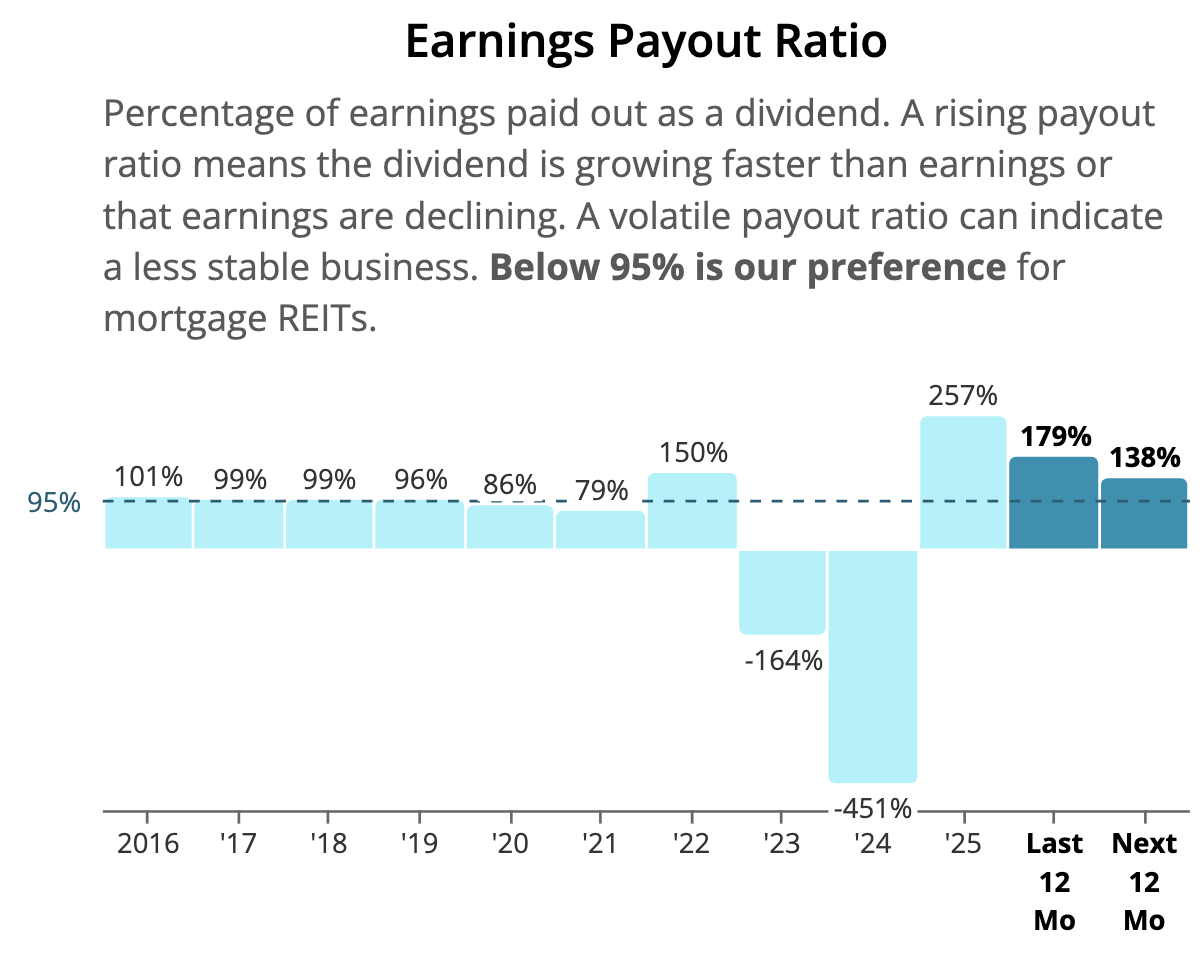
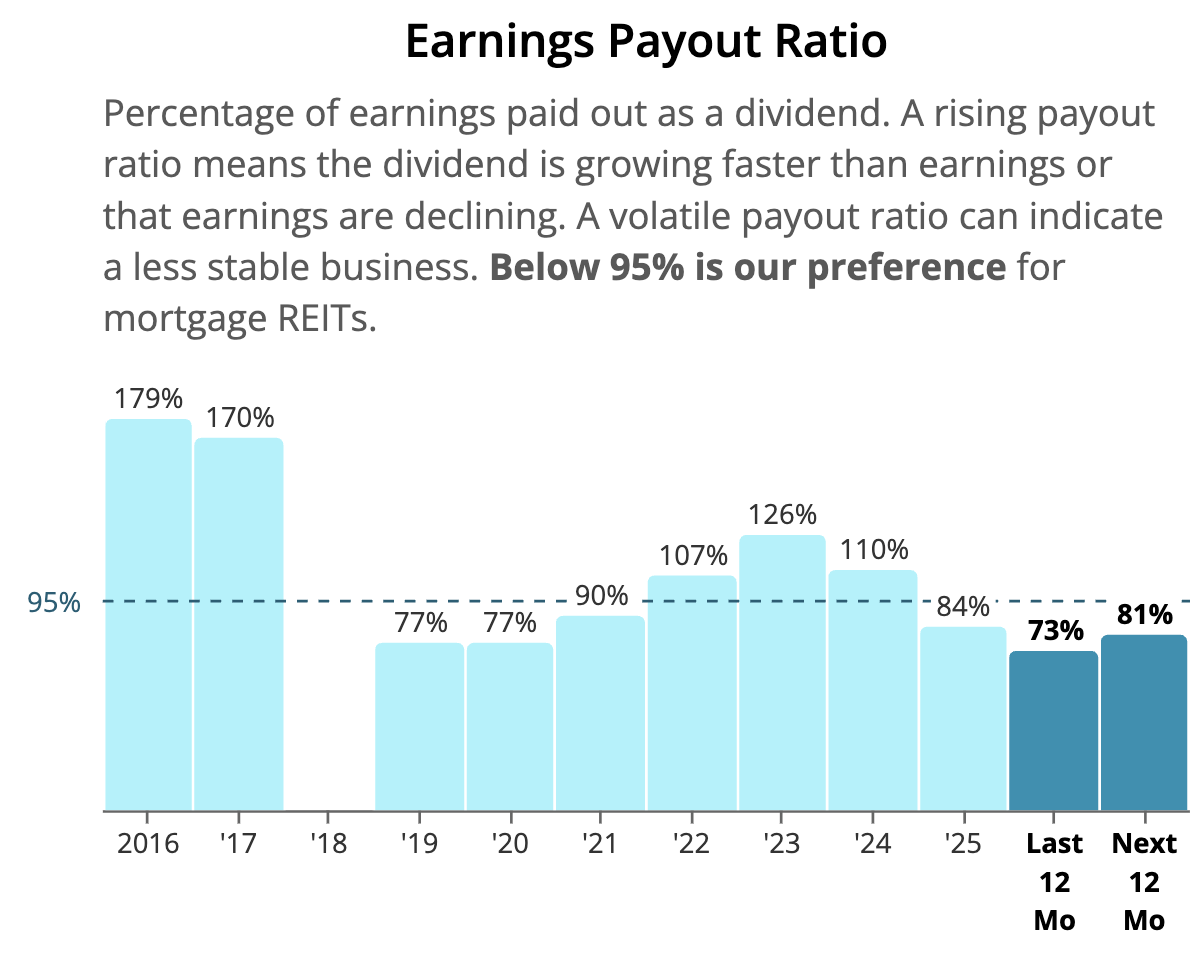
Dynex paid out 179% of its earnings over the past year, and that is expected to ease to 138%, well above our 95% preference for mortgage REITs. Source: Simply Safe Dividends.
Its reliance on short-term repo funding adds risk in downturns, when the value of the bonds it pledges as collateral falls and lenders demand more. That can force sales at the worst possible time.
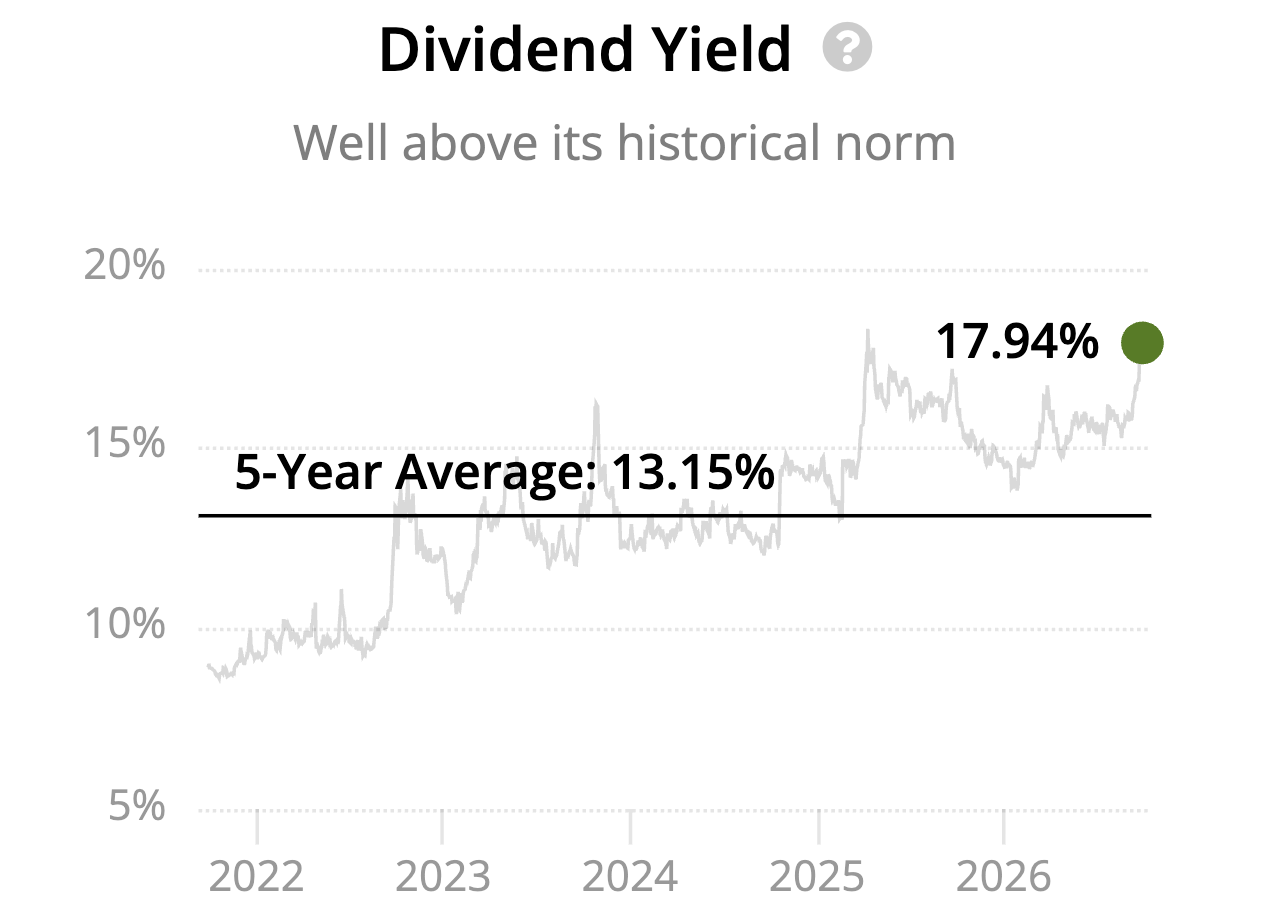
Dynex yields 17.94% against a five-year average of 13.15%. Source: Simply Safe Dividends.
Trinity Capital (TRIN)
Sector: Financials – Asset Management and Custody Banks Dividend Yield: 11.7% Dividend Safety Score: Unsafe (30) Uninterrupted Dividend Streak: 4 years Credit Rating: Not rated by S&P
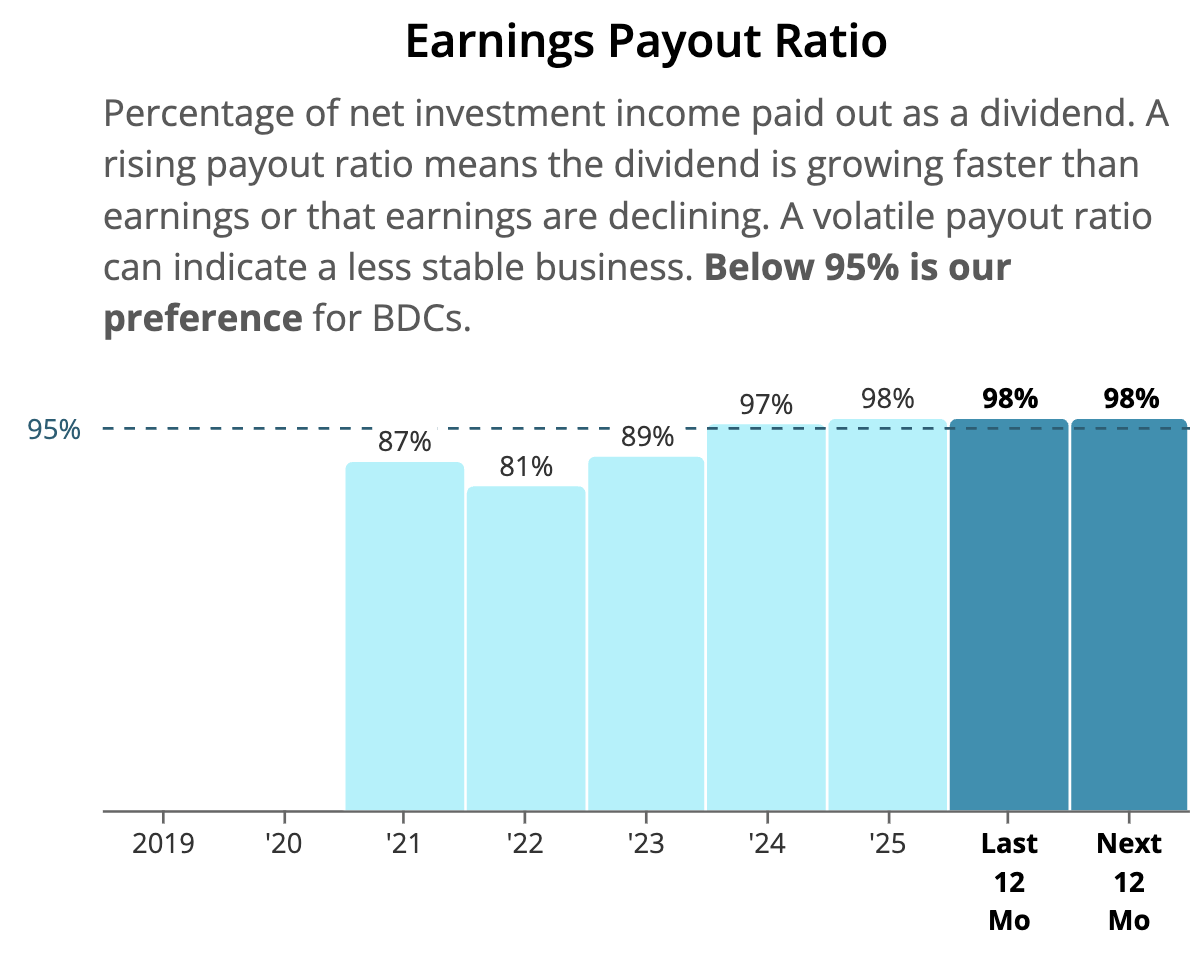
Trinity Capital's dividend leaves almost no margin for error. The BDC pays out 98% of its net investment income, above our 95% preference.
Formed in 2019, Trinity Capital (TRIN) lends to growth-stage companies through loans, equipment financing, and asset-based lending across technology, life sciences, renewable energy, and sponsor finance. Unlike most BDCs, it manages itself and pays no outside adviser.
Trinity has paid out 97% to 98% of its net investment income since 2024, just above our 95% preference for BDCs. Source: Simply Safe Dividends.
Its last dividend increase came in March 2024, and a borrower base of younger, growth-oriented companies adds credit risk if the economy slows.
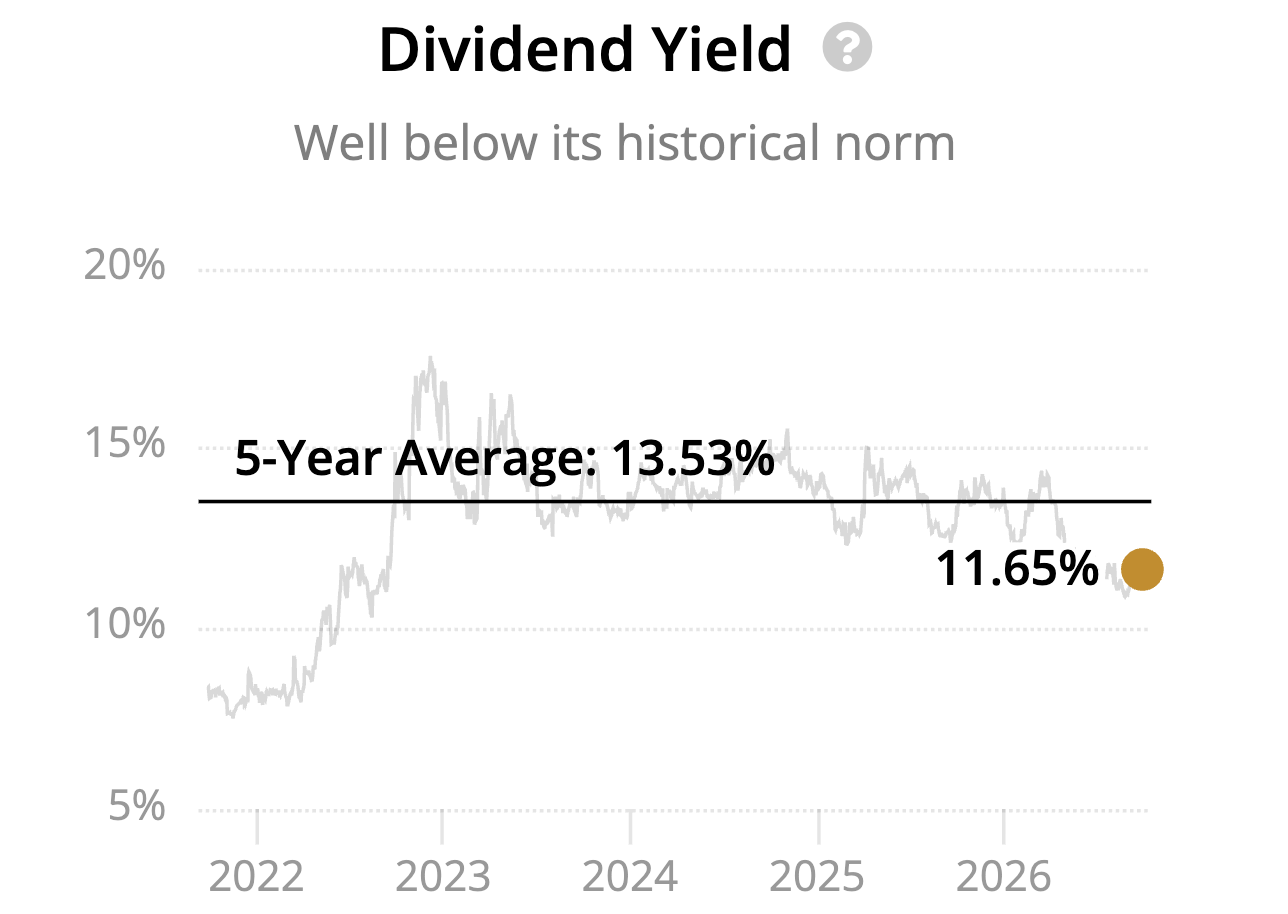
Trinity yields 11.65%, well below its five-year average of 13.53%. Source: Simply Safe Dividends.
Gladstone Commercial (GOOD)
Sector: Real Estate – Diversified REITs Dividend Yield: 9.6% Dividend Safety Score: Unsafe (30) Uninterrupted Dividend Streak: 2 years Credit Rating: Not rated by S&P
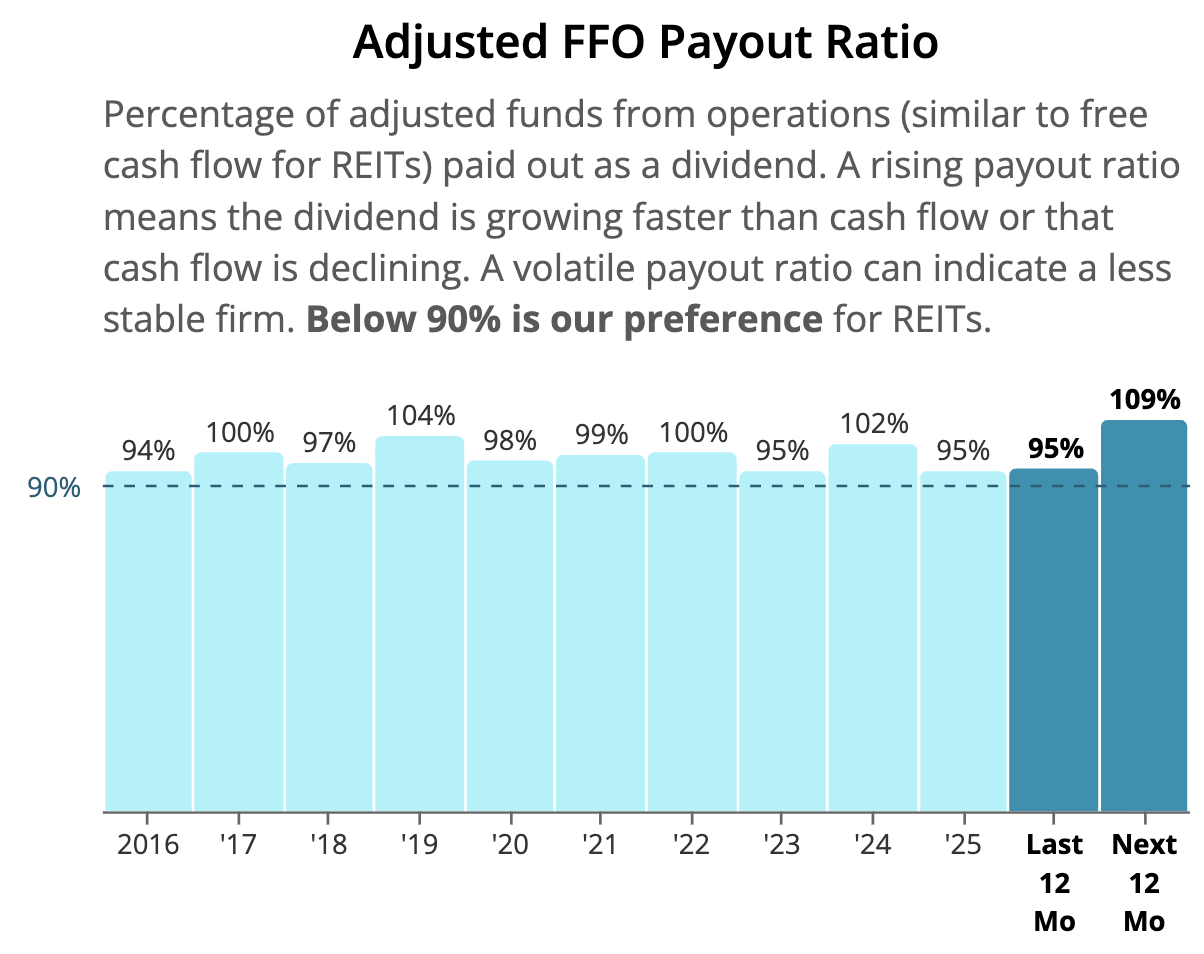
Gladstone Commercial's payout ratio has sat above our 90% preference for REITs every year since 2016, and the REIT cut its dividend 20% in January 2023. We rated it Unsafe before that cut.
Established in 2003, Gladstone Commercial (GOOD) leases industrial and office buildings, weighted toward industrial, to tenants across many industries. An outside adviser, Gladstone Management, runs the business for a fee.
Gladstone Commercial pays out 95% of its adjusted funds from operations, expected to rise to 109%, above our 90% preference for REITs. Source: Simply Safe Dividends.
Gladstone Commercial's debt load is substantial for a REIT, which leaves less flexibility if a large tenant leaves or access to capital becomes more difficult.
The properties are not the problem. From 2003 to 2021, Gladstone Commercial saw only two tenant defaults across more than 100 properties. Its financial policy is. Over the decade to 2021, total assets more than doubled while cash flow per share barely moved, leaving nothing to grow the dividend.
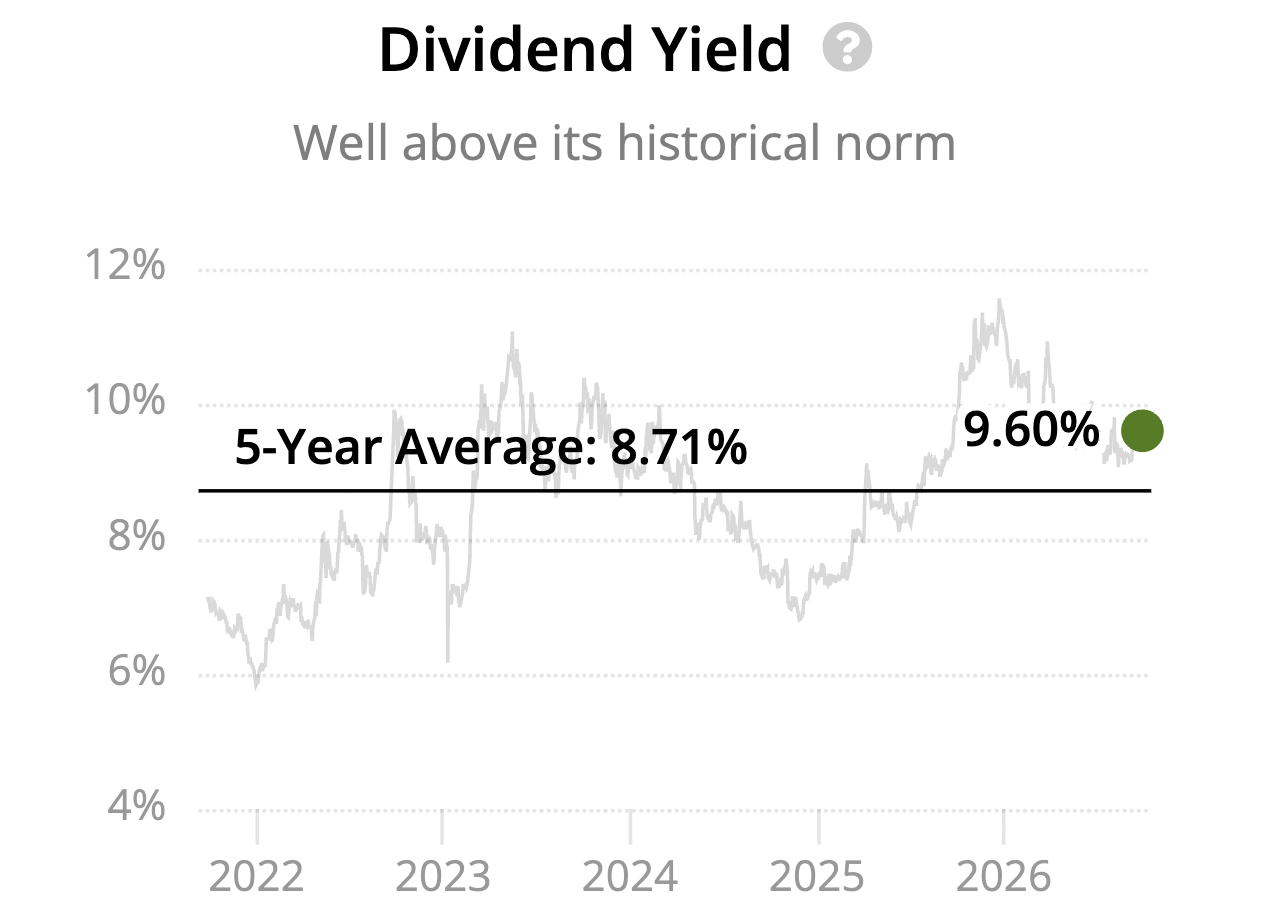
Gladstone Commercial yields 9.60% against a five-year average of 8.71%. Source: Simply Safe Dividends.
Prospect Capital cut its dividend by 22% in May 2026, and it scored Unsafe beforehand. The smaller dividend still is not expected to be covered next year.
Formed in 2004, Prospect Capital (PSEC) is one of the largest externally managed BDCs, lending mainly to privately owned middle-market companies. It also holds riskier structured credit and real estate through National Property REIT Corp.
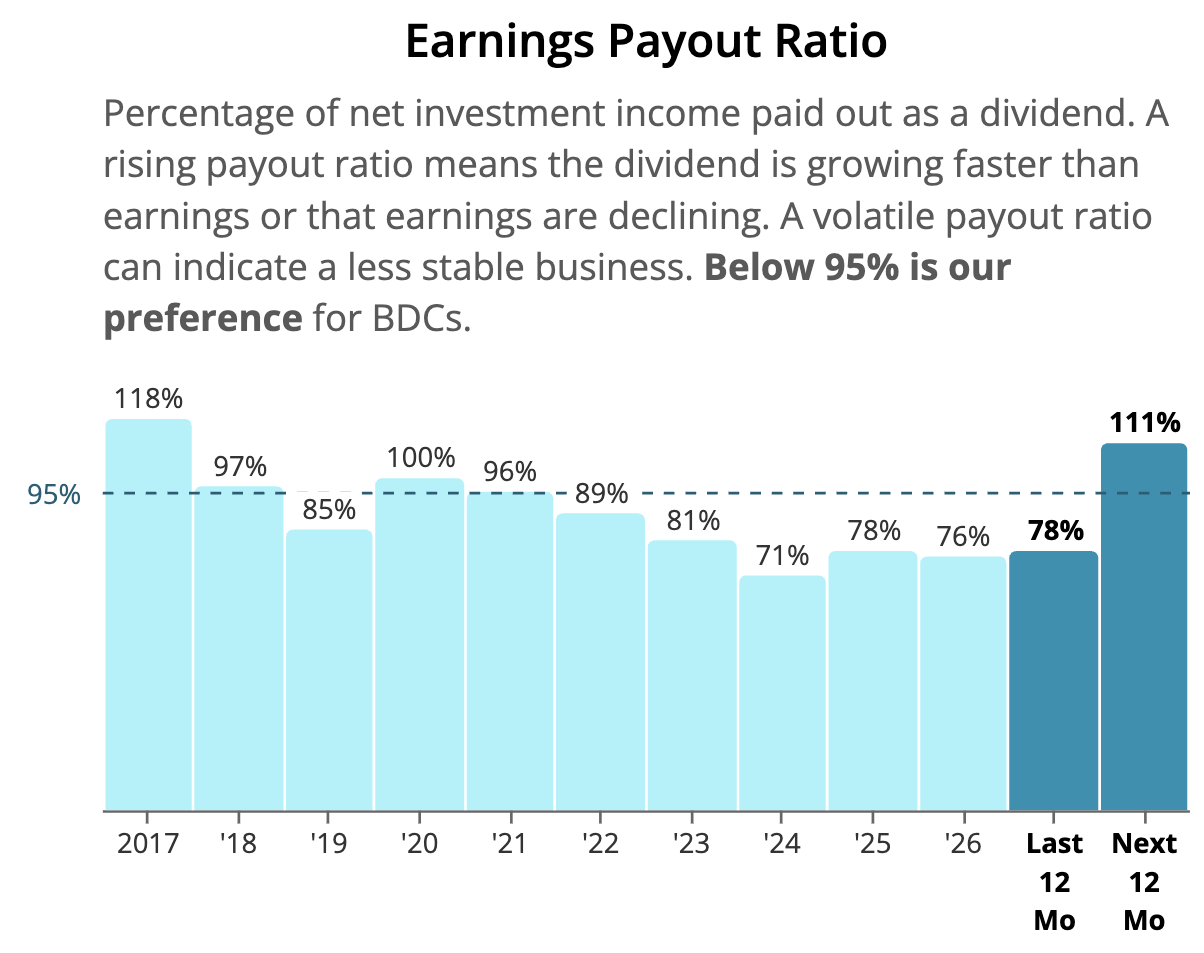
Prospect paid out 78% of its net investment income over the past year, but that is expected to jump to 111%, above our 95% preference for BDCs. Source: Simply Safe Dividends.
A management fee based on total assets rewards growth whether or not it helps shareholders, and years of share issuance have worn down its net asset value. The company is rotating toward first-lien loans, but that shift is not finished.
Its portfolio also holds less first-lien debt than most peers, along with riskier pieces such as residual interests in collateralized loan obligations, which raises the potential for losses when defaults rise.
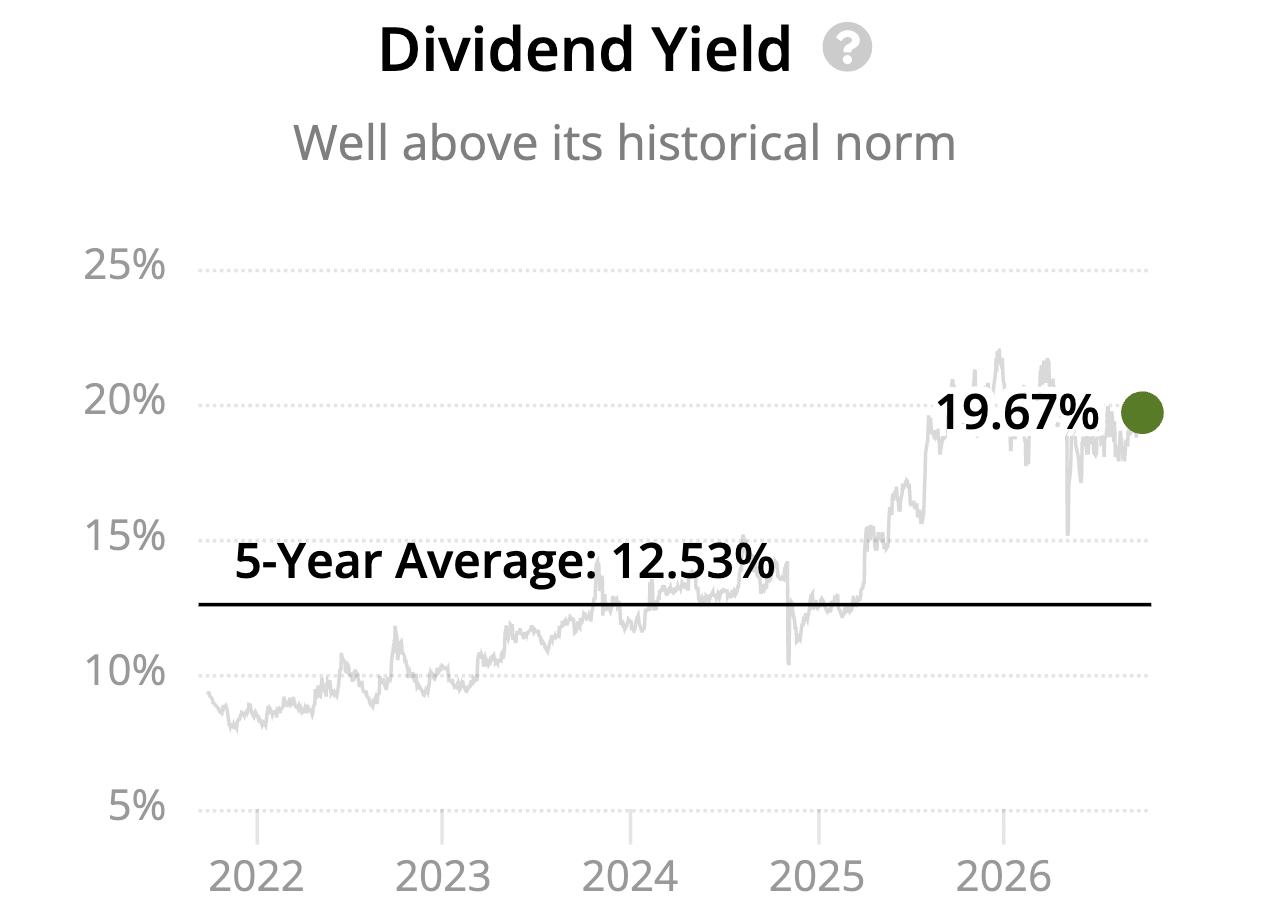
Prospect yields 19.67% against a five-year average of 12.53%. Source: Simply Safe Dividends.
CION Investment (CION)
Sector: Financials – Asset Management and Custody Banks Dividend Yield: 16.9% Dividend Safety Score: Unsafe (30) Uninterrupted Dividend Streak: 0 years Credit Rating: Not rated by S&P
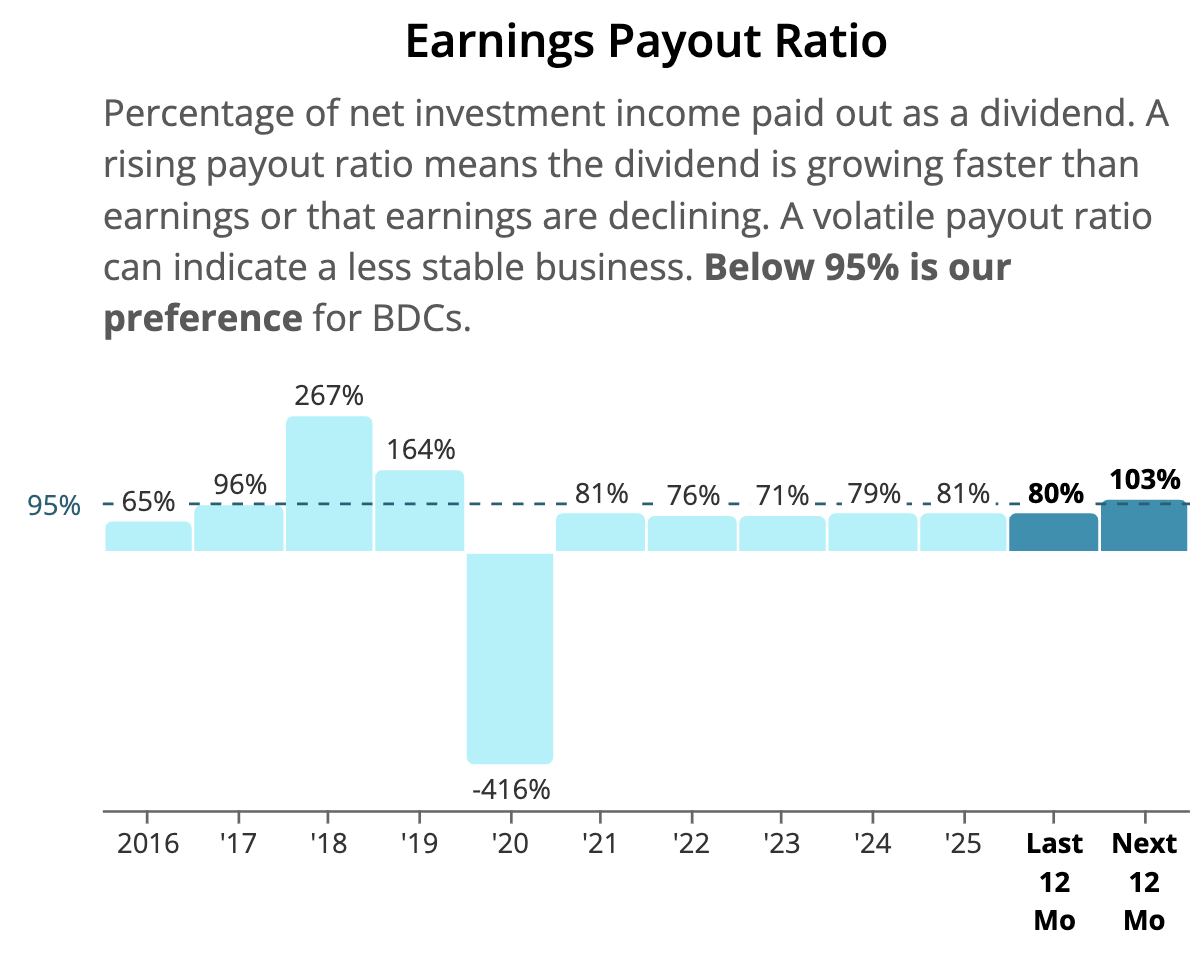
CION Investment's dividend is covered today but is not expected to be next year. Its payout ratio is projected to rise from 80% to 103% of net investment income.
Founded in 2011, CION Investment (CION) lends to medium-sized companies in healthcare, technology, consumer goods, and other industries, mostly through senior secured loans.
CION pays out 80% of its net investment income, but that is expected to reach 103%, above our 95% preference for BDCs. Source: Simply Safe Dividends.
Its leverage is high for a BDC, and at about $350 million in market value, CION is one of the smaller lenders on this list.
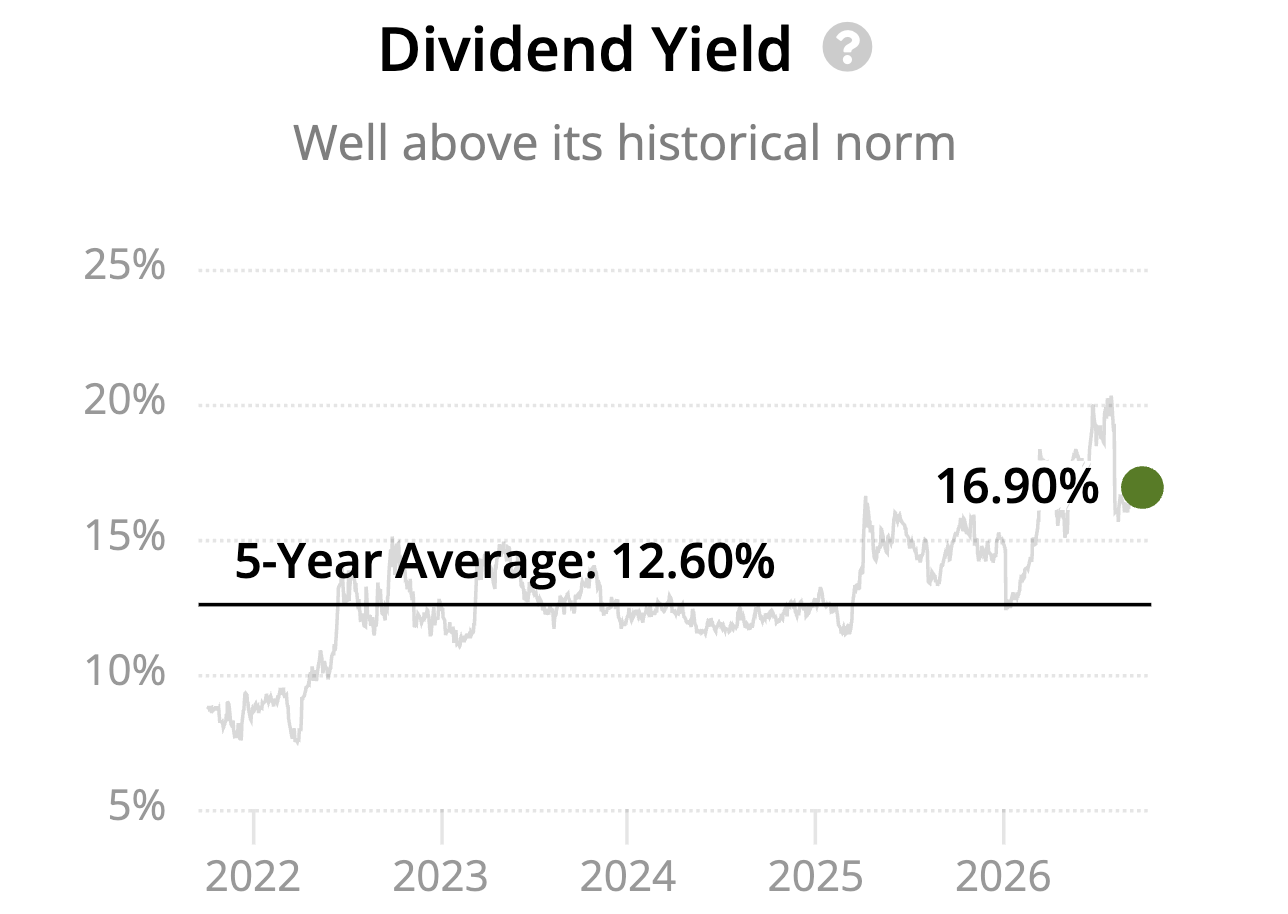
CION yields 16.90% against a five-year average of 12.60%. Source: Simply Safe Dividends.
Ellington Financial (EFC)
Sector: Financials – Mortgage REITs Dividend Yield: 12.8% Dividend Safety Score: Unsafe (30) Uninterrupted Dividend Streak: 0 years Credit Rating: Not rated by S&P
Ellington Financial is more diversified than most mortgage REITs, but that did not spare its dividend in 2020, when it cut the payout nearly in half to preserve liquidity.
Established in 2007, Ellington Financial (EFC) buys residential and commercial mortgage loans and mortgage-backed securities, and its Longbridge subsidiary originates and services reverse mortgages.
Coverage has improved, but its leverage is high even for a mortgage REIT.
Ellington pays out 73% of its earnings, expected to reach 81%, after running above 100% from 2022 to 2024. Source: Simply Safe Dividends.
Its credit portfolio, which spans non-qualified residential mortgages, commercial loans, and reverse mortgages, has shorter durations and uses less leverage than agency bonds, which dampens its sensitivity to interest rates.
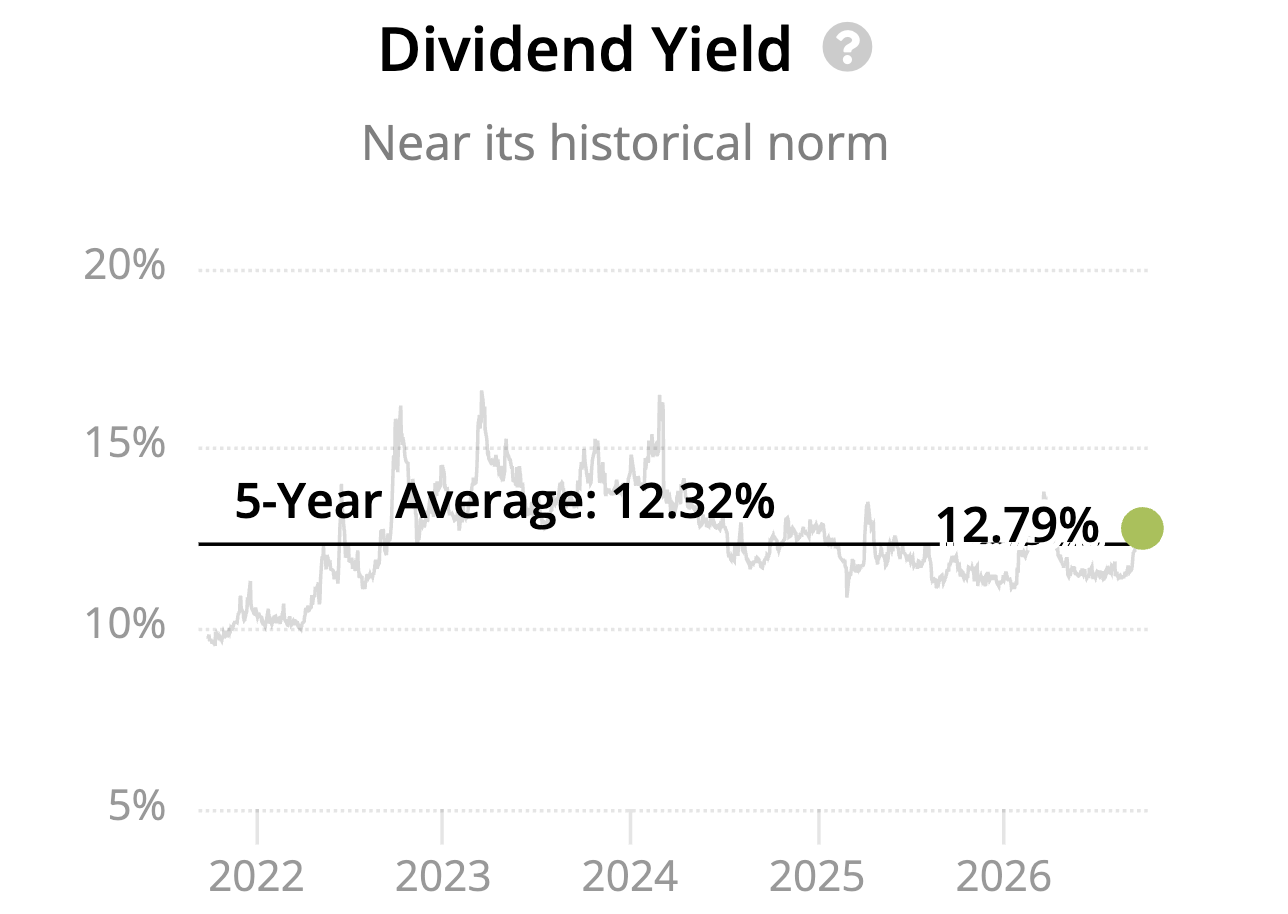
Ellington yields 12.79%, near its five-year average of 12.32%. Source: Simply Safe Dividends.
AGNC Investment (AGNC)
Sector: Financials – Mortgage REITs Dividend Yield: 15.2% Dividend Safety Score: Unsafe (23) Uninterrupted Dividend Streak: 4 years Credit Rating: Not rated by S&P
AGNC is the largest mortgage REIT on this list, and its dividend has still fallen 5.3% a year over the past decade.
Incorporated in 2008, AGNC Investment (AGNC) buys mortgage-backed securities guaranteed by Fannie Mae, Freddie Mac, or Ginnie Mae and borrows short term against them to amplify returns.
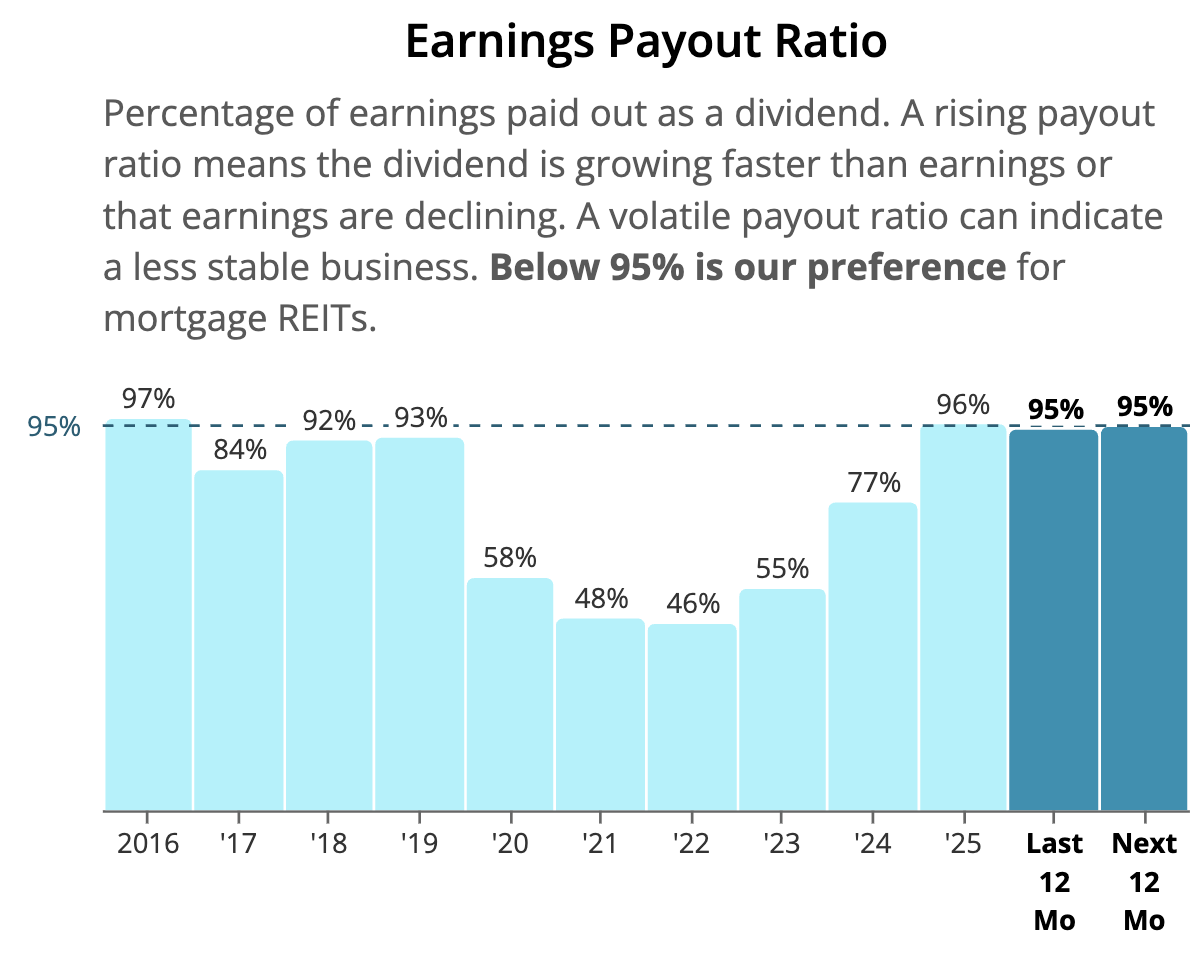
AGNC pays out 95% of its earnings, right at our 95% preference for mortgage REITs. Source: Simply Safe Dividends.
Internal management keeps its costs low, but that does not change the math of a business earning a thin spread on heavy borrowing. AGNC cut its dividend during the 2020 pandemic and has not raised it since.
Its bonds are long-term and fixed-rate, while its repo borrowing resets every few months. When short-term rates rise or the yield curve flattens, that spread narrows, and hedging only goes so far.
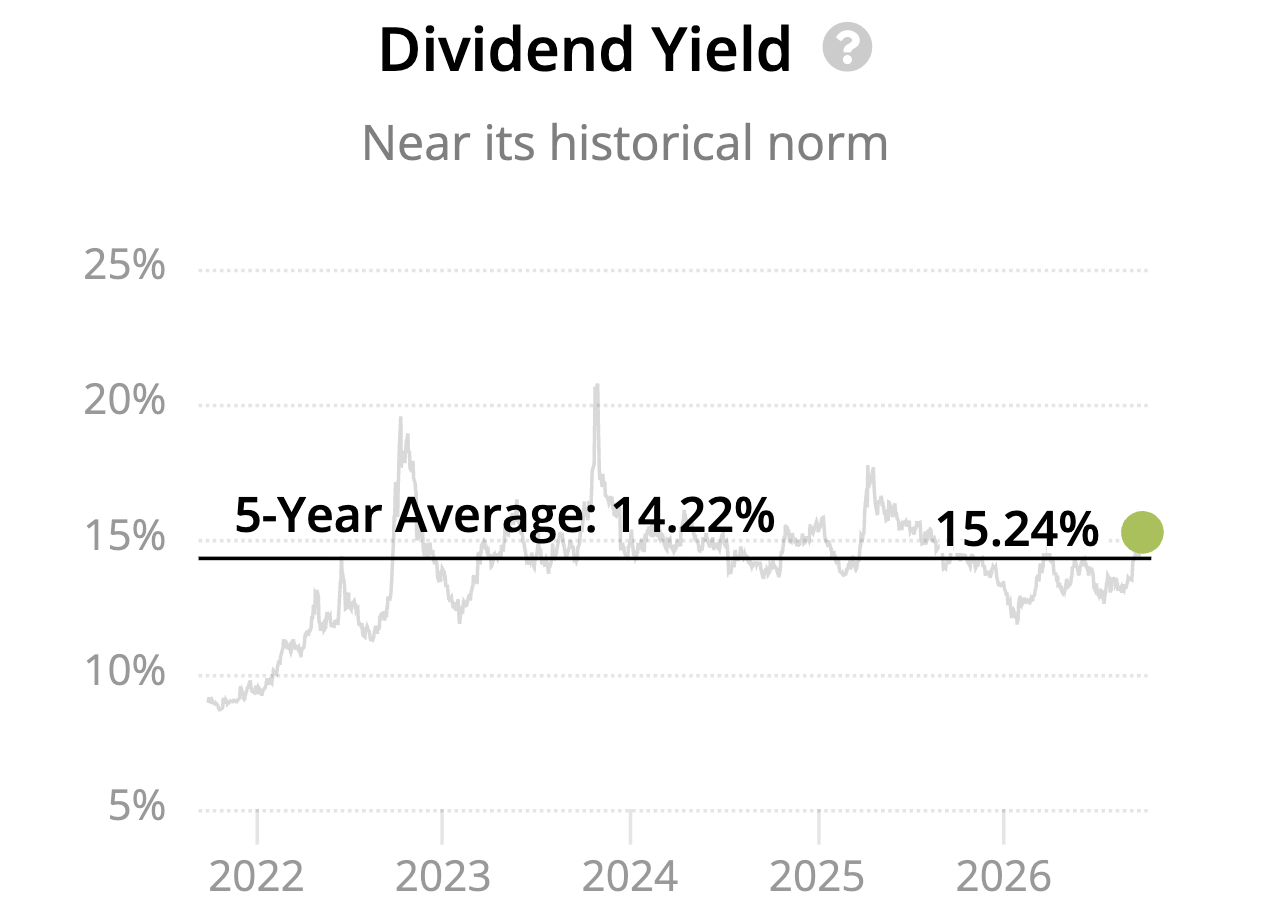
AGNC yields 15.24%, near its five-year average of 14.22%. Source: Simply Safe Dividends.
PennantPark Floating Rate Capital (PFLT)
Sector: Financials – Asset Management and Custody Banks Dividend Yield: 13.8% Dividend Safety Score: Unsafe (23) Uninterrupted Dividend Streak: 0 years Credit Rating: Not rated by S&P
PennantPark Floating Rate Capital cut its dividend by 22% in May 2026, and it scored Unsafe before the cut. Lower interest rates had pushed its payout ratio above 100%.
Founded in 2010, PennantPark Floating Rate (PFLT) makes floating-rate senior secured loans to middle-market companies, so its income rises and falls with interest rates.
The reset dividend is covered for now, but the payout ratio ran above 95% in eight of the ten years from 2016 to 2025, and its leverage is high for a BDC.
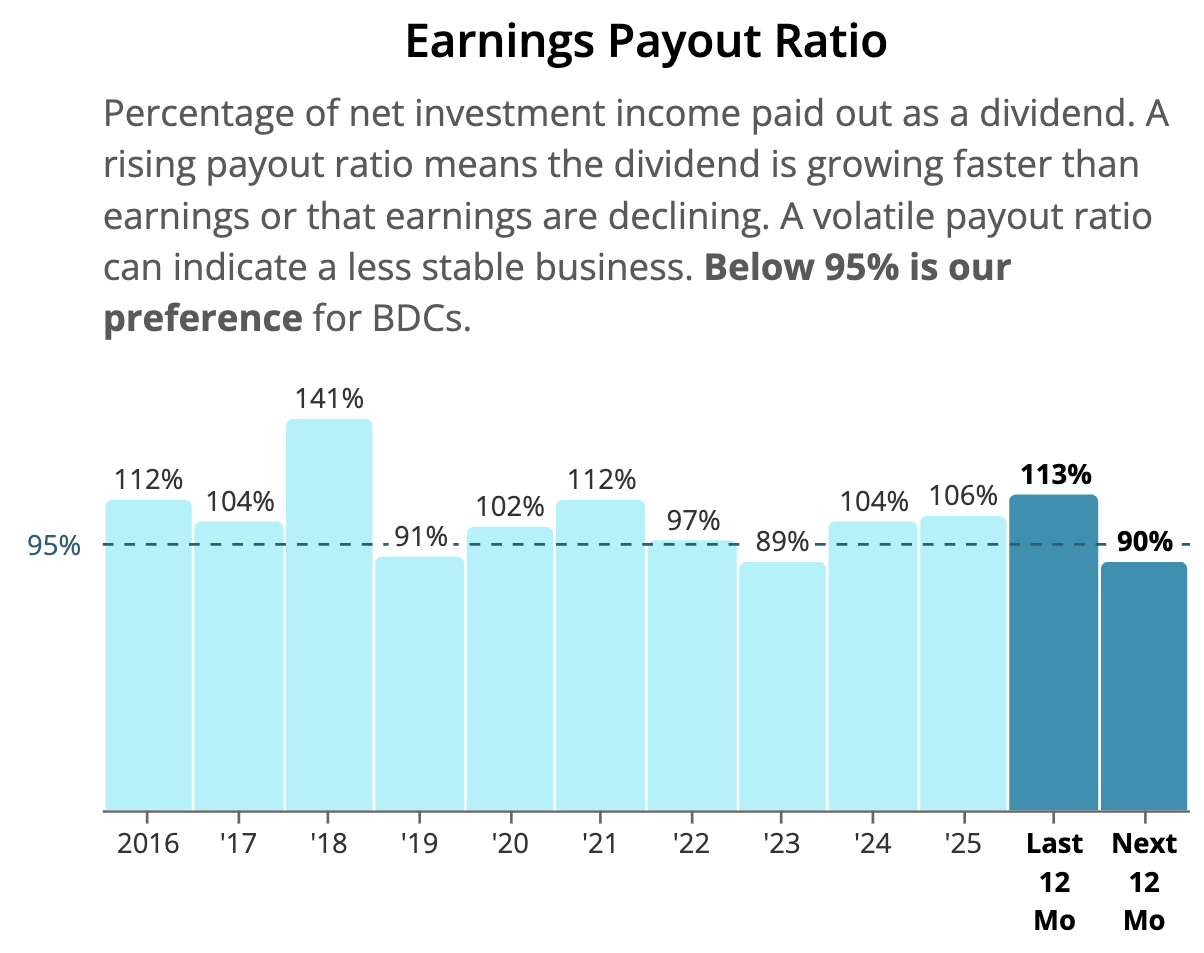
PennantPark Floating Rate paid out 113% of its net investment income over the past year and expects 90% after its cut, back inside our 95% preference for BDCs. Source: Simply Safe Dividends.
Before this year's cut, it had paid uninterrupted dividends since going public in 2011, one of the better records among BDCs. It still leans toward less cyclical borrowers in business services, government services, healthcare, and software.
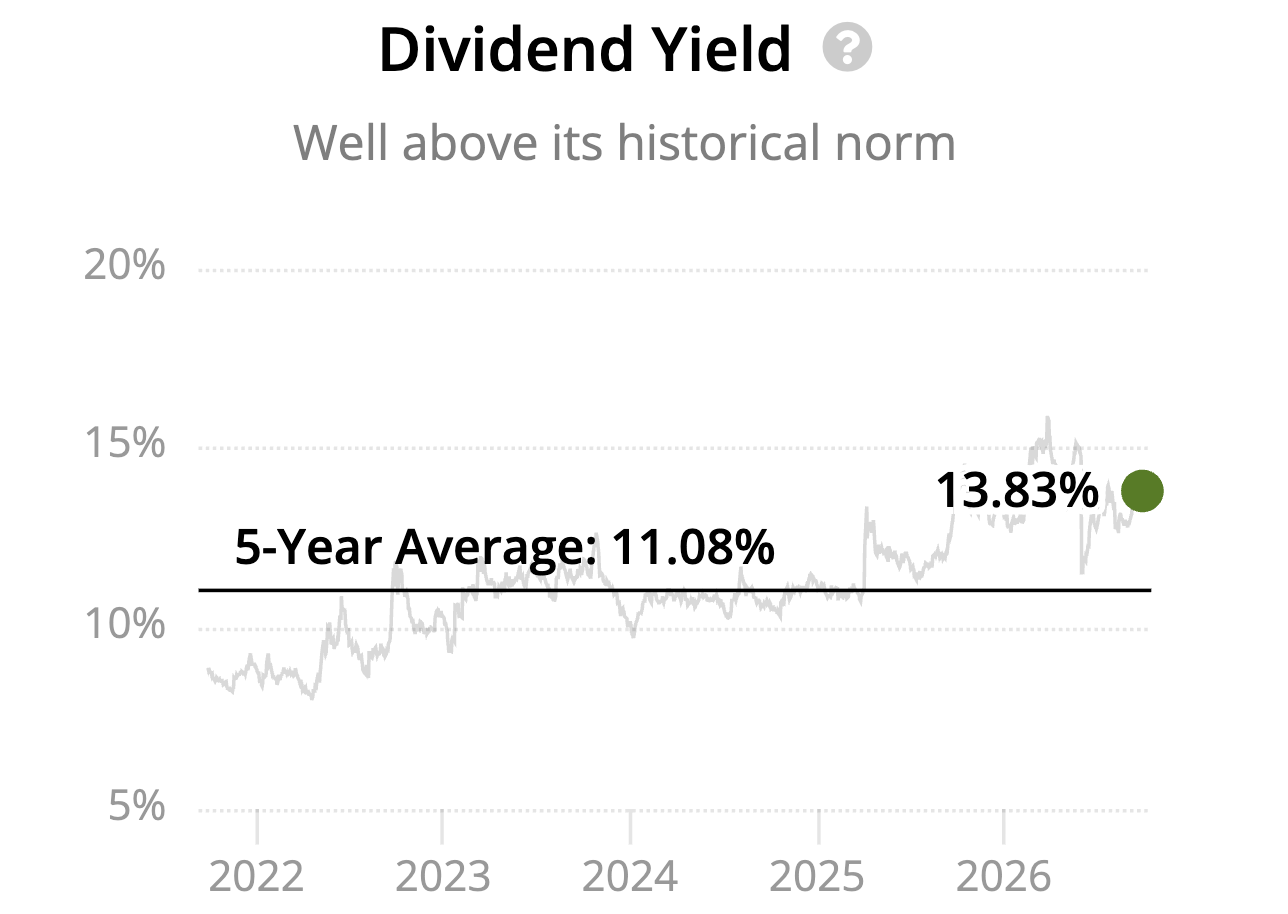
PennantPark Floating Rate yields 13.83% against a five-year average of 11.08%. Source: Simply Safe Dividends.
ARMOUR Residential REIT (ARR)
Sector: Financials – Mortgage REITs Dividend Yield: 20.5% Dividend Safety Score: Unsafe (21) Uninterrupted Dividend Streak: 1 year Credit Rating: Not rated by S&P
ARMOUR Residential REIT's dividend has shrunk 17.4% a year over the past decade, and it pays out nearly all of its earnings today.
Incorporated in 2008, ARMOUR (ARR) is an externally managed mortgage REIT that invests in pools of home loans guaranteed by Fannie Mae, Freddie Mac, and Ginnie Mae.
The dividend has held flat since 2023, but with high leverage and short-term funding that can tighten in a panic, the payout has little room to absorb a bad quarter.
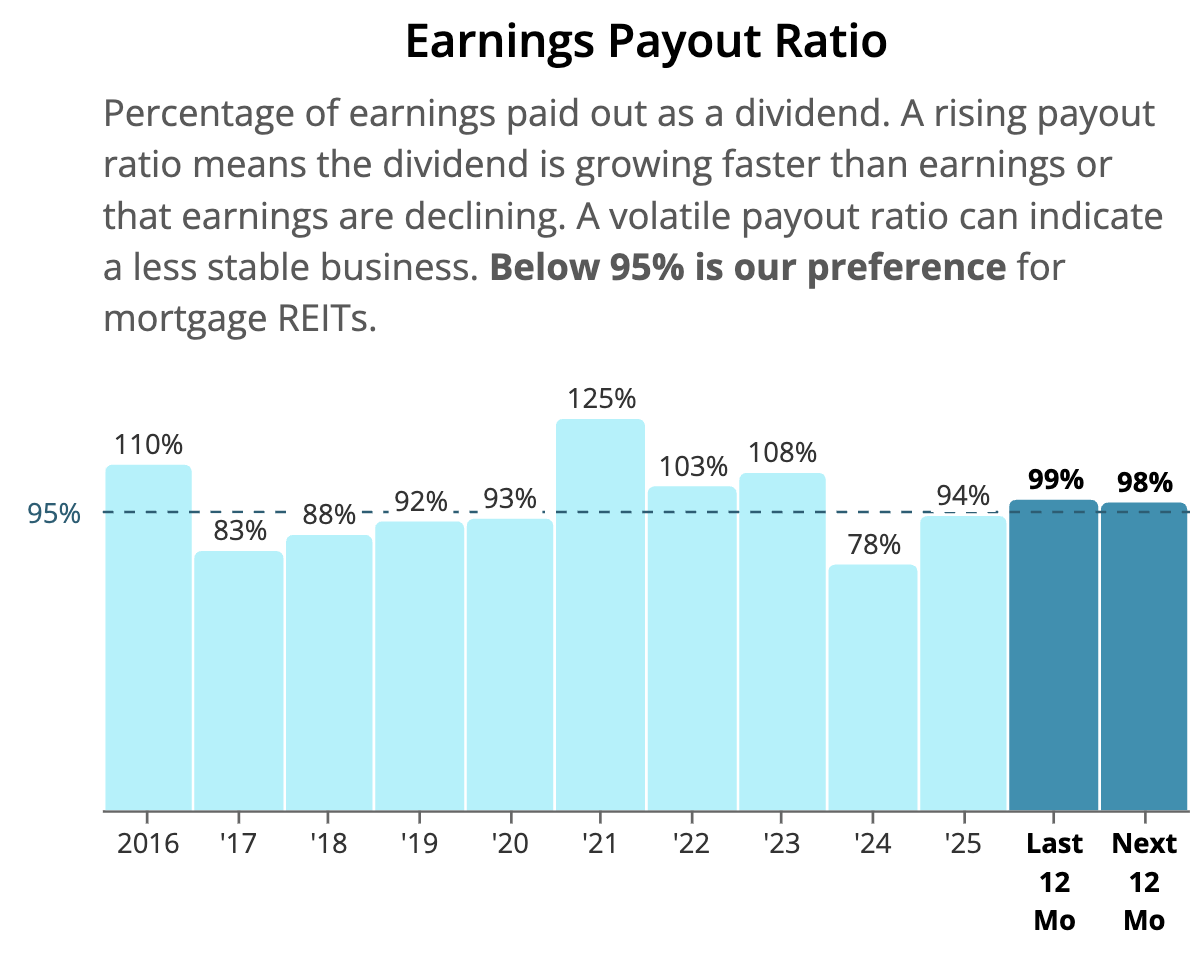
ARMOUR pays out 99% of its earnings, expected to be 98% next year, above our 95% preference for mortgage REITs. Source: Simply Safe Dividends.
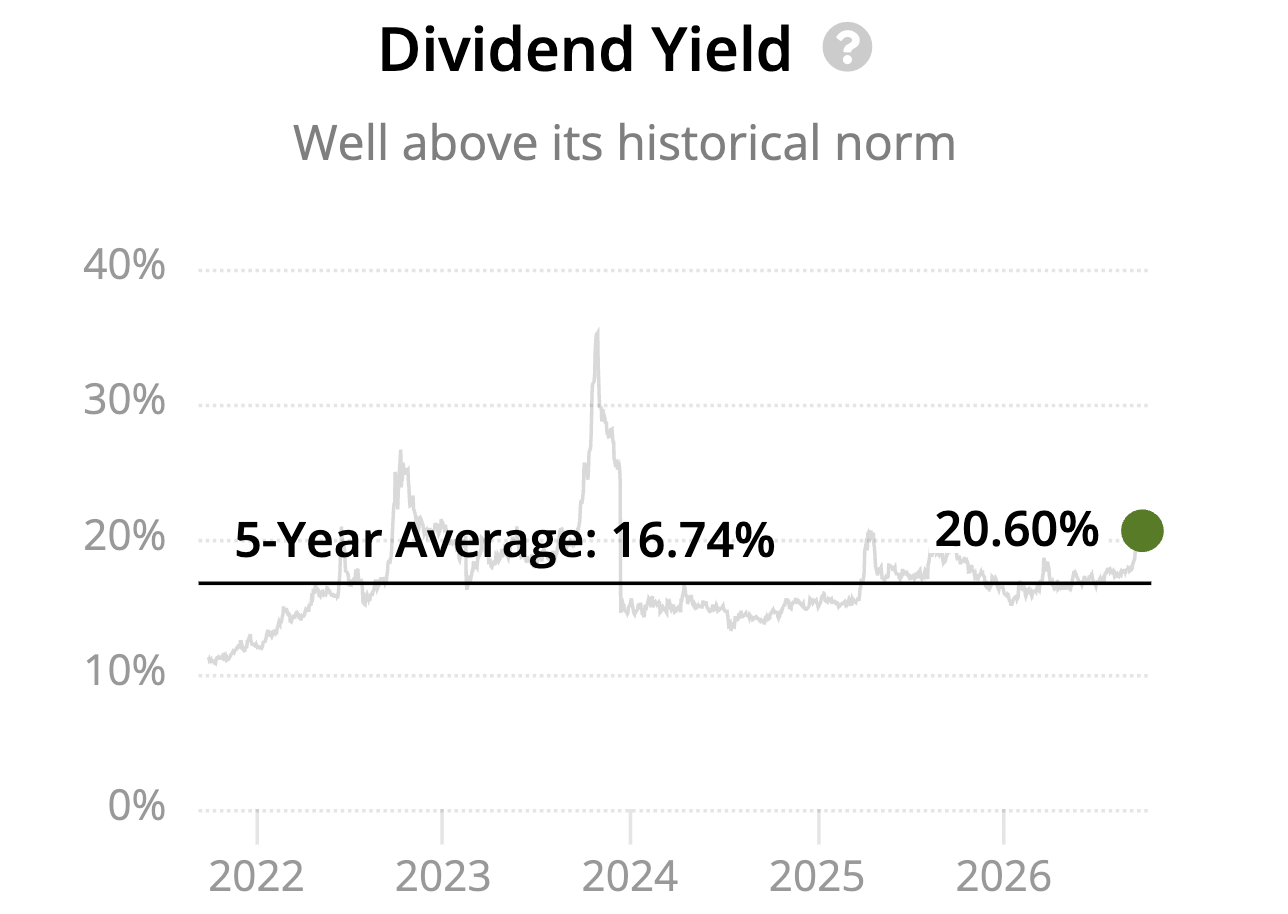
ARMOUR yields 20.60% against a five-year average of 16.74%. Source: Simply Safe Dividends.
Gladstone Capital (GLAD)
Sector: Financials – Asset Management and Custody Banks Dividend Yield: 9.3% Dividend Safety Score: Unsafe (21) Uninterrupted Dividend Streak: 0 years Credit Rating: Not rated by S&P
Gladstone Capital cut its dividend by 9% in October 2025, and it scored Unsafe before the cut.
Founded in 2001, Gladstone Capital (GLAD) lends to small private U.S. businesses, many backed by private equity, and focuses on first-lien debt. It avoids financial services, high-tech, and cyclical businesses to limit downside risk.
Its loans mostly carry floating rates, so income falls when the Fed cuts. A payout ratio that ran near 100% from 2016 to 2021 means the dividend tends to follow earnings down.
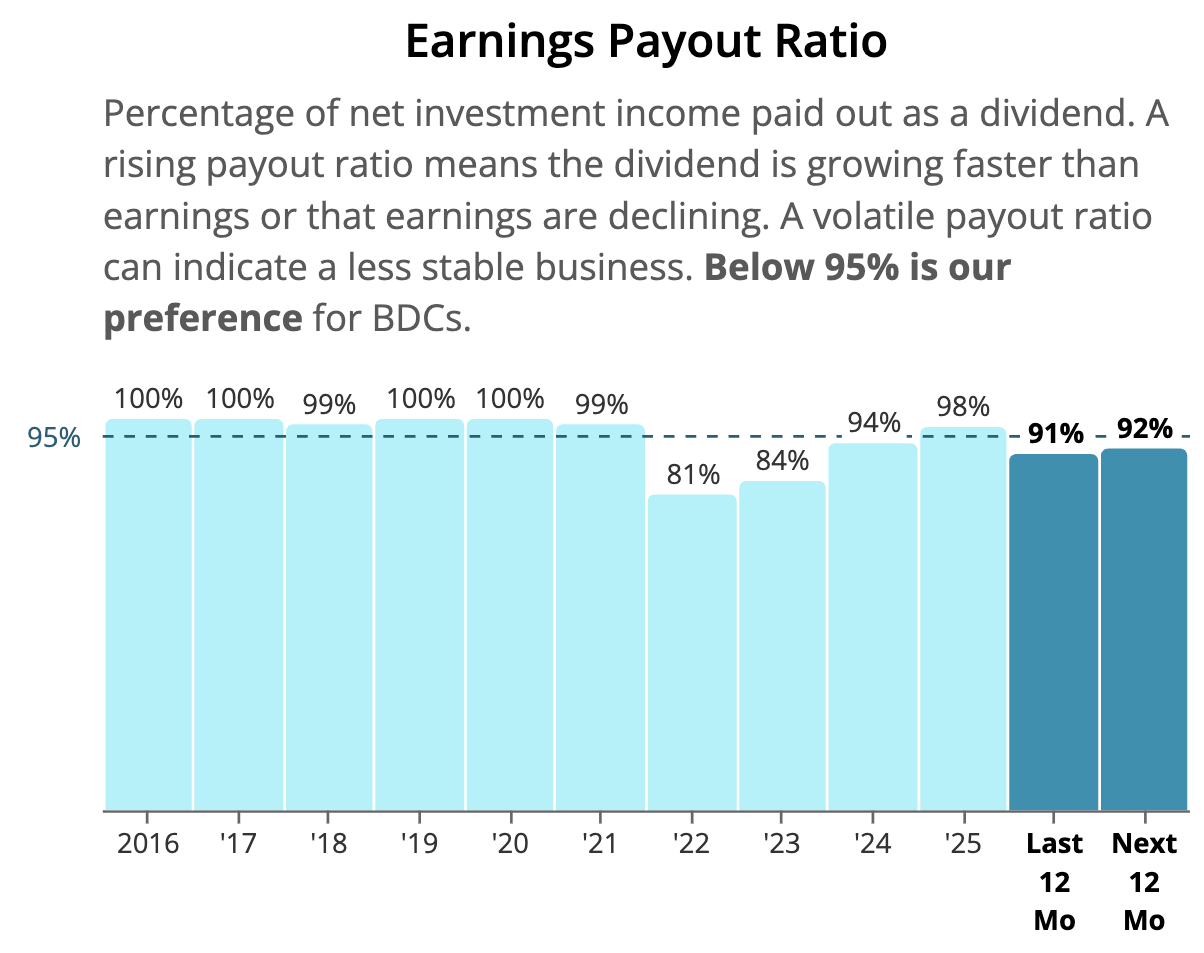
Gladstone Capital pays out 91% of its net investment income, expected to be 92%, just inside our 95% preference for BDCs. Source: Simply Safe Dividends.
It has cut its dividend in each major downturn, including a 50% reduction in 2009 and a smaller cut in 2020.
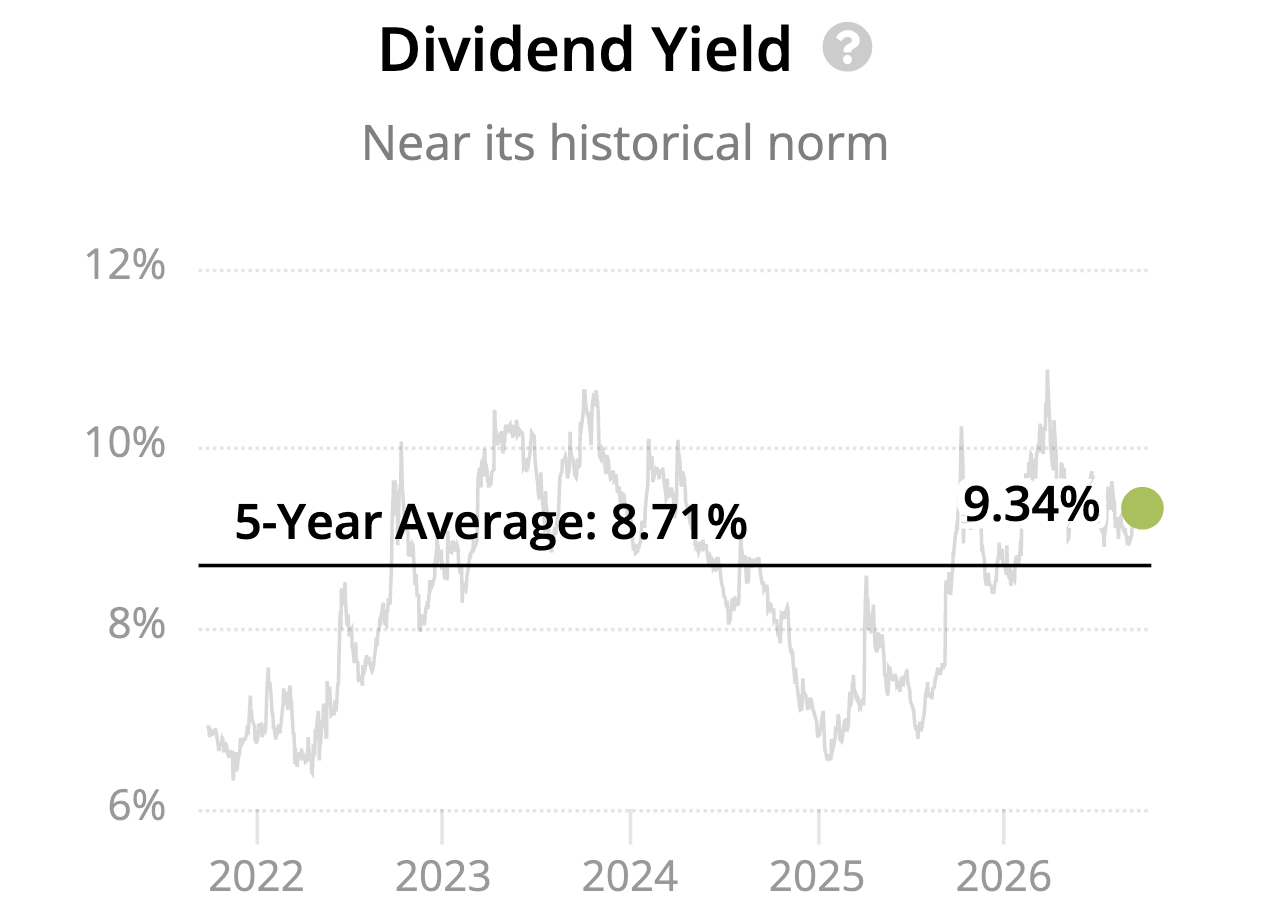
Gladstone Capital yields 9.34%, near its five-year average of 8.71%. Source: Simply Safe Dividends.
Sabine Royalty Trust (SBR)
Sector: Energy – Oil and Gas Production Dividend Yield: 6.4% Dividend Safety Score: Very Unsafe (14) Uninterrupted Dividend Streak: 0 years Credit Rating: Not rated by S&P
Sabine Royalty Trust passes through nearly everything it collects, so its monthly payment rises and falls with oil and gas prices. Distributions fell 17.9% over the past 12 months.
Incorporated in 1982, Sabine (SBR) holds royalty interests in oil and gas properties in Texas, Louisiana, Oklahoma, New Mexico, and other states. It has no operations of its own and collects a share of production revenue.
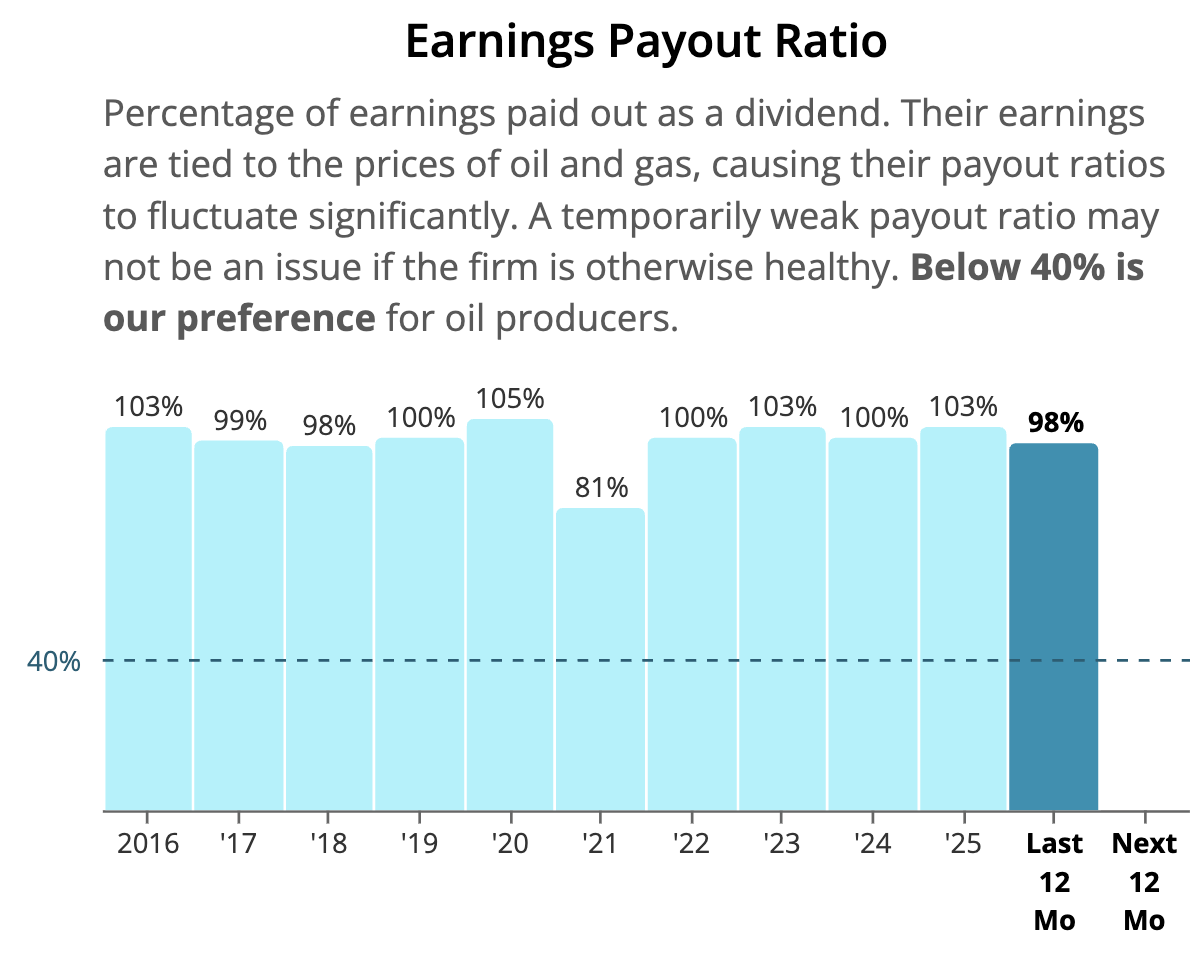
Sabine has paid out about 100% of its earnings nearly every year since 2016, which is how a royalty trust is designed but far above our 40% preference for oil producers. Source: Simply Safe Dividends.
Sabine carries more cash than debt, so the risk is the size of each check rather than the trust's solvency. Investors who need a steady amount every month should look elsewhere.
Its largest exposure is the Permian Basin. For decades, Sabine's reserves have been estimated to last about eight to ten years, as drillers kept developing new wells on its acreage. If that replacement ever stops, the trust would wind down and the monthly payments would end.
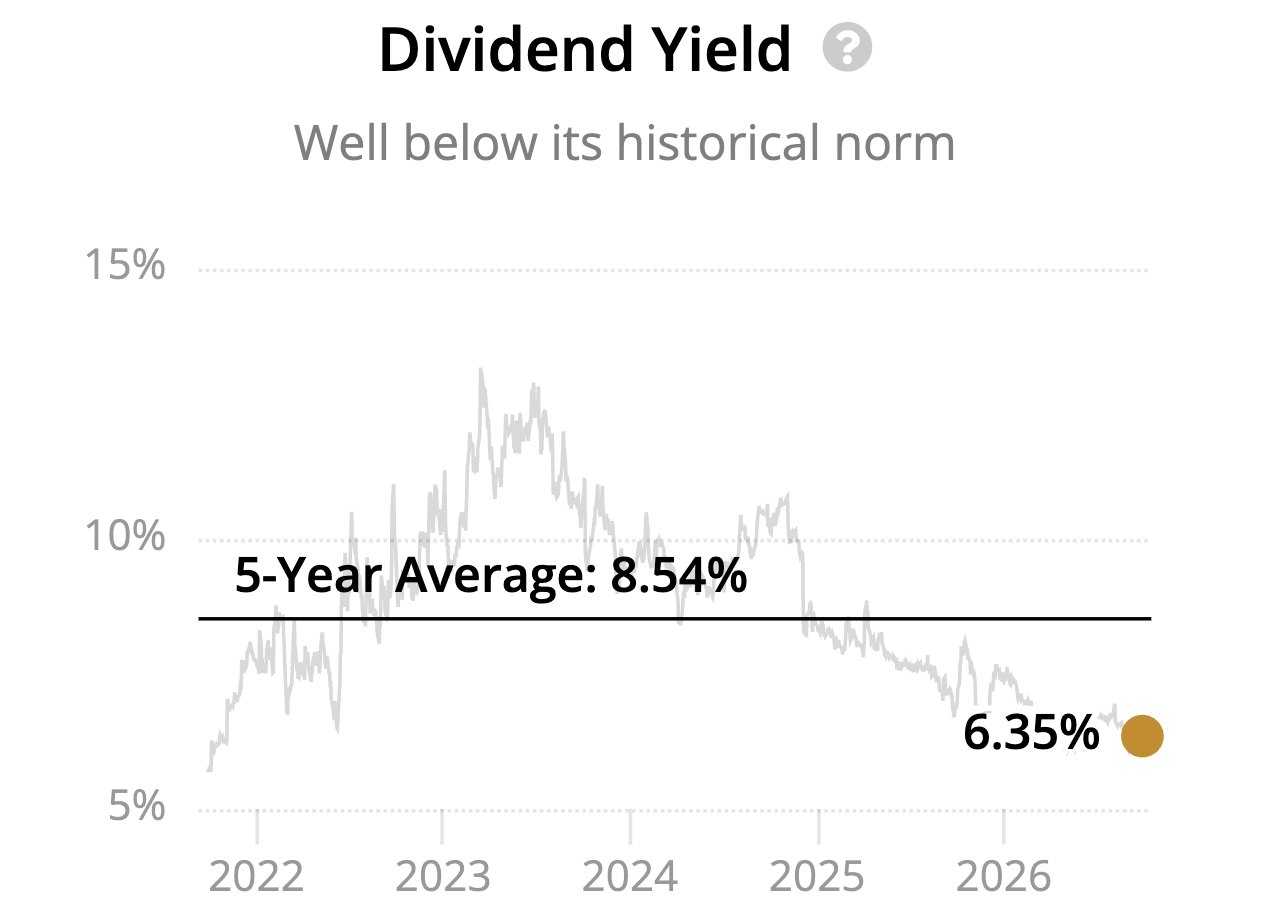
Sabine yields 6.35%, well below its five-year average of 8.54%. Source: Simply Safe Dividends.
Orchid Island Capital (ORC)
Sector: Financials – Mortgage REITs Dividend Yield: 21.1% Dividend Safety Score: Very Unsafe (13) Uninterrupted Dividend Streak: 0 years Credit Rating: Not rated by S&P
Orchid Island Capital cut its dividend by 17% in April 2026, and it scored Very Unsafe before the cut. Its dividend has shrunk 18.3% a year over the past five years.
Formed in 2010, Orchid Island (ORC) invests in mortgage-backed securities guaranteed by Fannie Mae, Freddie Mac, or Ginnie Mae, and it pays an outside manager, Bimini Advisors, to run the business.
The April cut came as falling interest rates squeezed its income. With the payout ratio still above 100%, another reduction would not be a surprise.
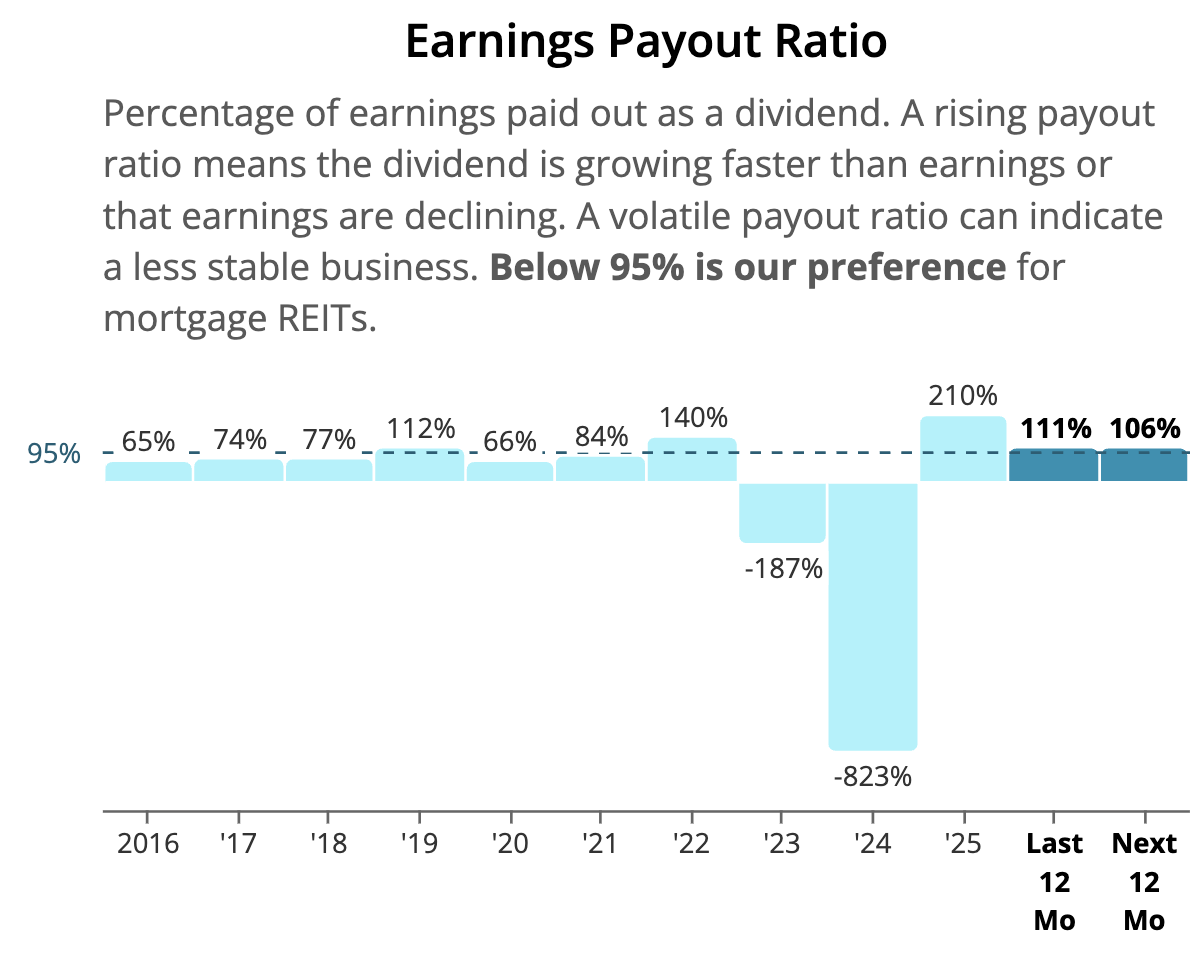
Orchid pays out 111% of its earnings, expected to be 106%, above our 95% preference for mortgage REITs. Source: Simply Safe Dividends.
Investors who want mortgage REIT exposure may prefer internally managed peers with lower costs and more moderate leverage.
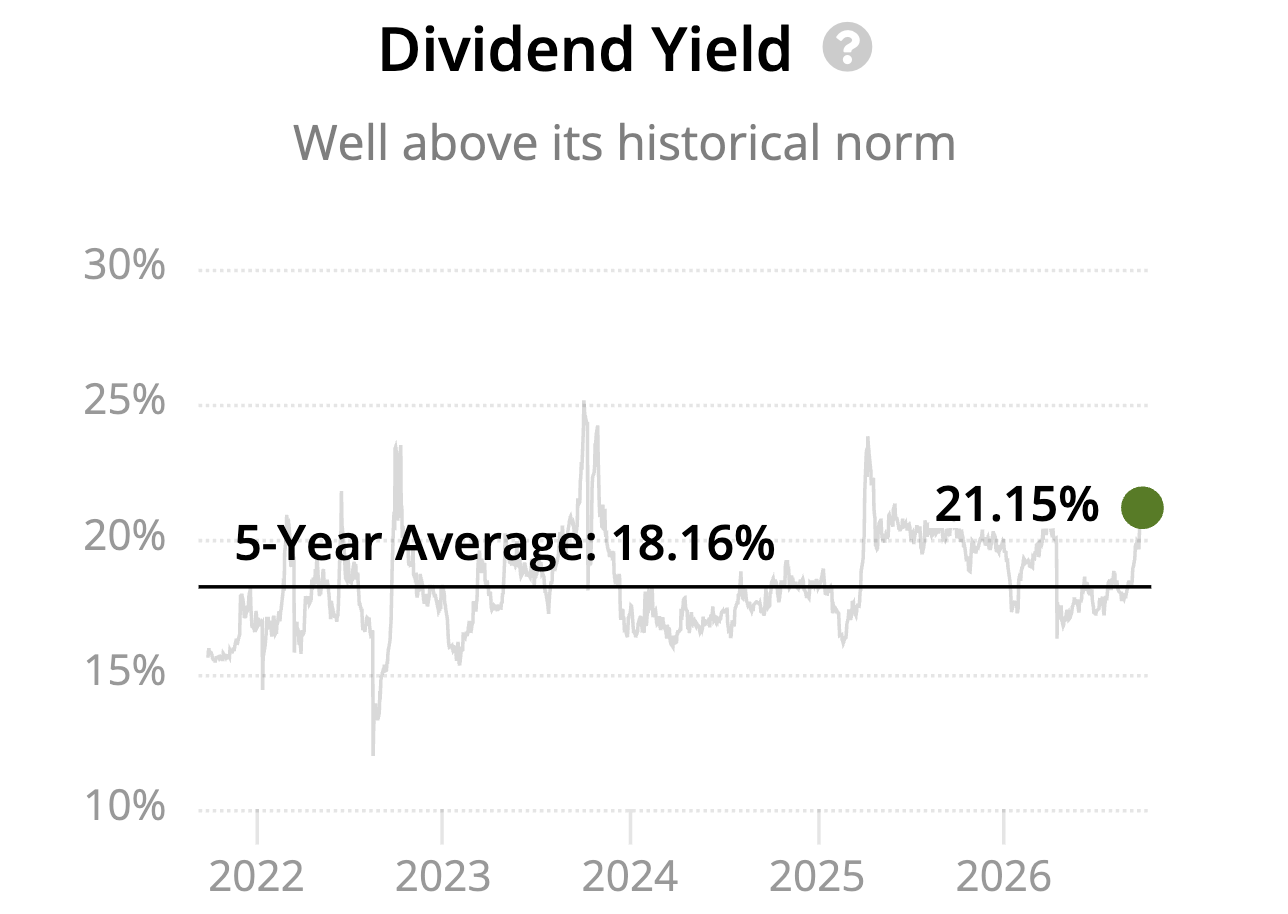
Orchid yields 21.15% against a five-year average of 18.16%. Source: Simply Safe Dividends.
Stellus Capital (SCM)
Sector: Financials – Asset Management and Custody Banks Dividend Yield: 13.3% Dividend Safety Score: Very Unsafe (11) Uninterrupted Dividend Streak: 0 years Credit Rating: Not rated by S&P
Stellus Capital cut its dividend twice in 2026, by 15% in January and 27% in July. It scored Very Unsafe before both cuts.
Formed in 2012, Stellus Capital (SCM) lends to smaller U.S. companies through first-lien, second-lien, and unsecured loans, often alongside equity stakes, and is managed externally.
Falling interest rates pushed its payout ratio higher, and its leverage is high for a BDC.
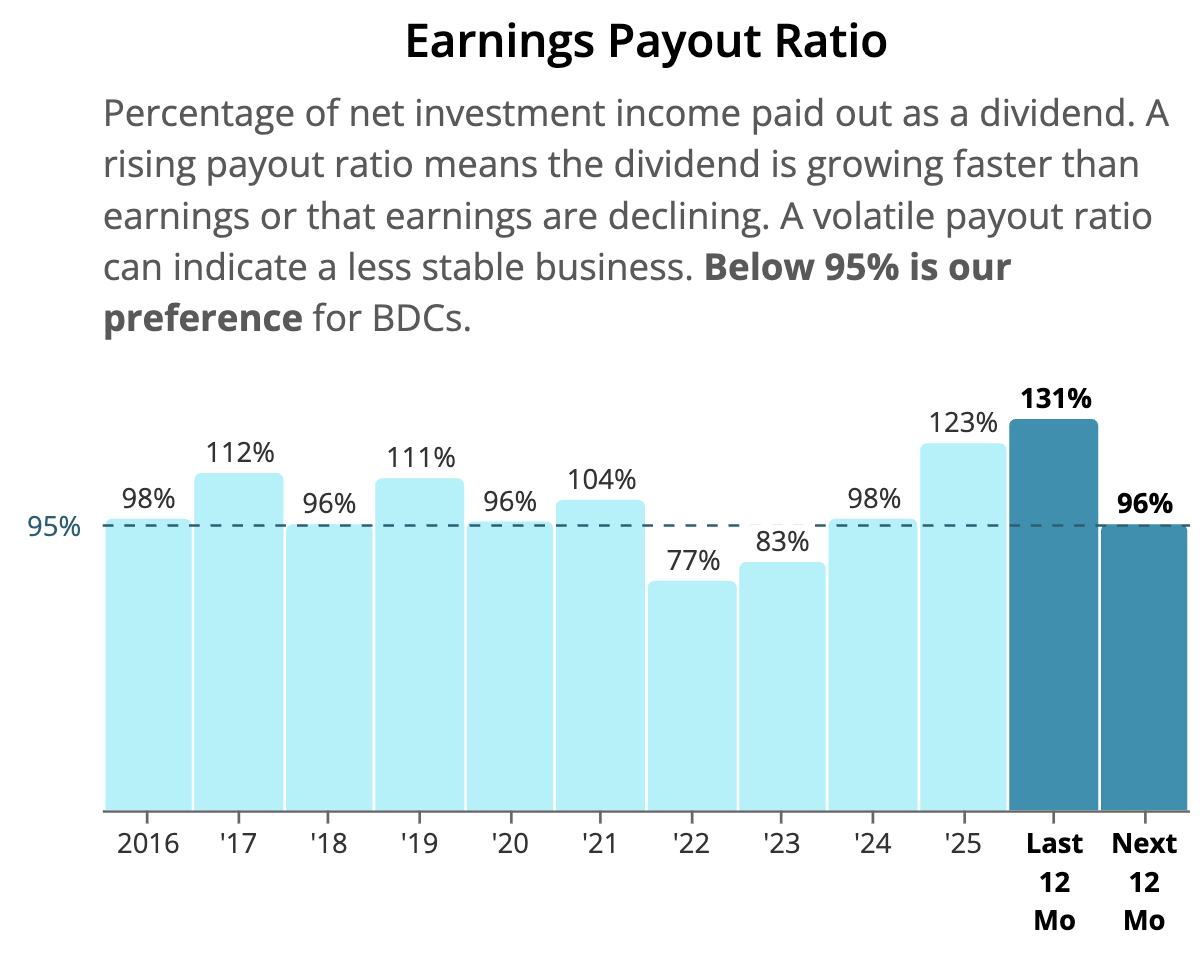
Stellus paid out 131% of its net investment income over the past year and expects 96% after its cuts, still above our 95% preference for BDCs. Source: Simply Safe Dividends.
Stellus originates nearly all of its own loans, which lets it negotiate covenants and other protections, and most of its borrowers are backed by private equity firms that can put in more money if trouble hits.
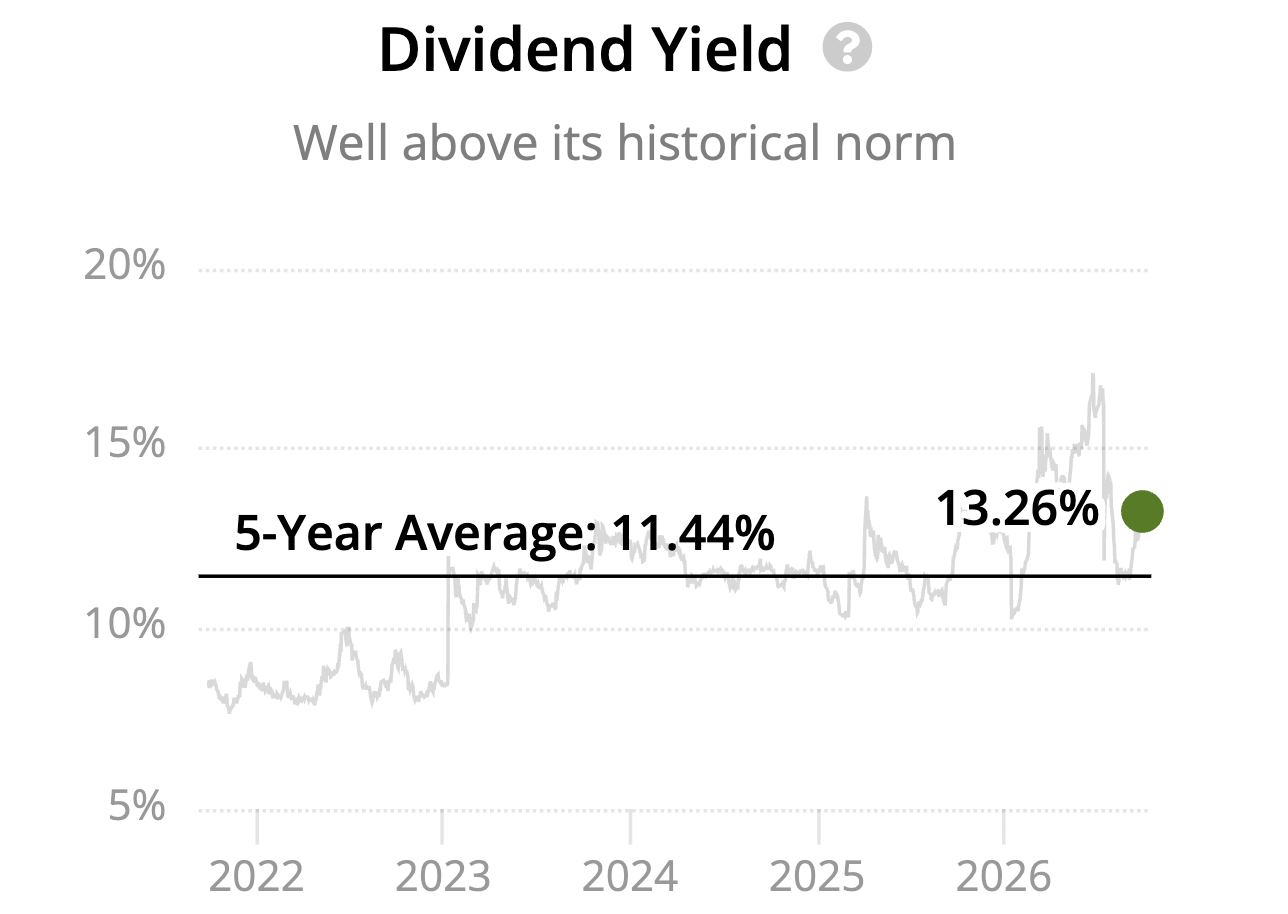
Stellus yields 13.26% against a five-year average of 11.44%. Source: Simply Safe Dividends.
PennantPark Investment (PNNT)
Sector: Financials – Asset Management and Custody Banks Dividend Yield: 29.0% Dividend Safety Score: Very Unsafe (10) Uninterrupted Dividend Streak: 4 years Credit Rating: Not rated by S&P
PennantPark Investment's dividend is likely to reset lower after 2026. We lowered its Dividend Safety Score from 19 to 10, deeper inside the Very Unsafe range, in March 2026.
Founded in 2007, PennantPark Investment (PNNT) lends to middle-market companies through first-lien and second-lien loans, subordinated debt, and equity stakes. Only about half of its portfolio is first-lien debt, compared with roughly 80% for a typical BDC.
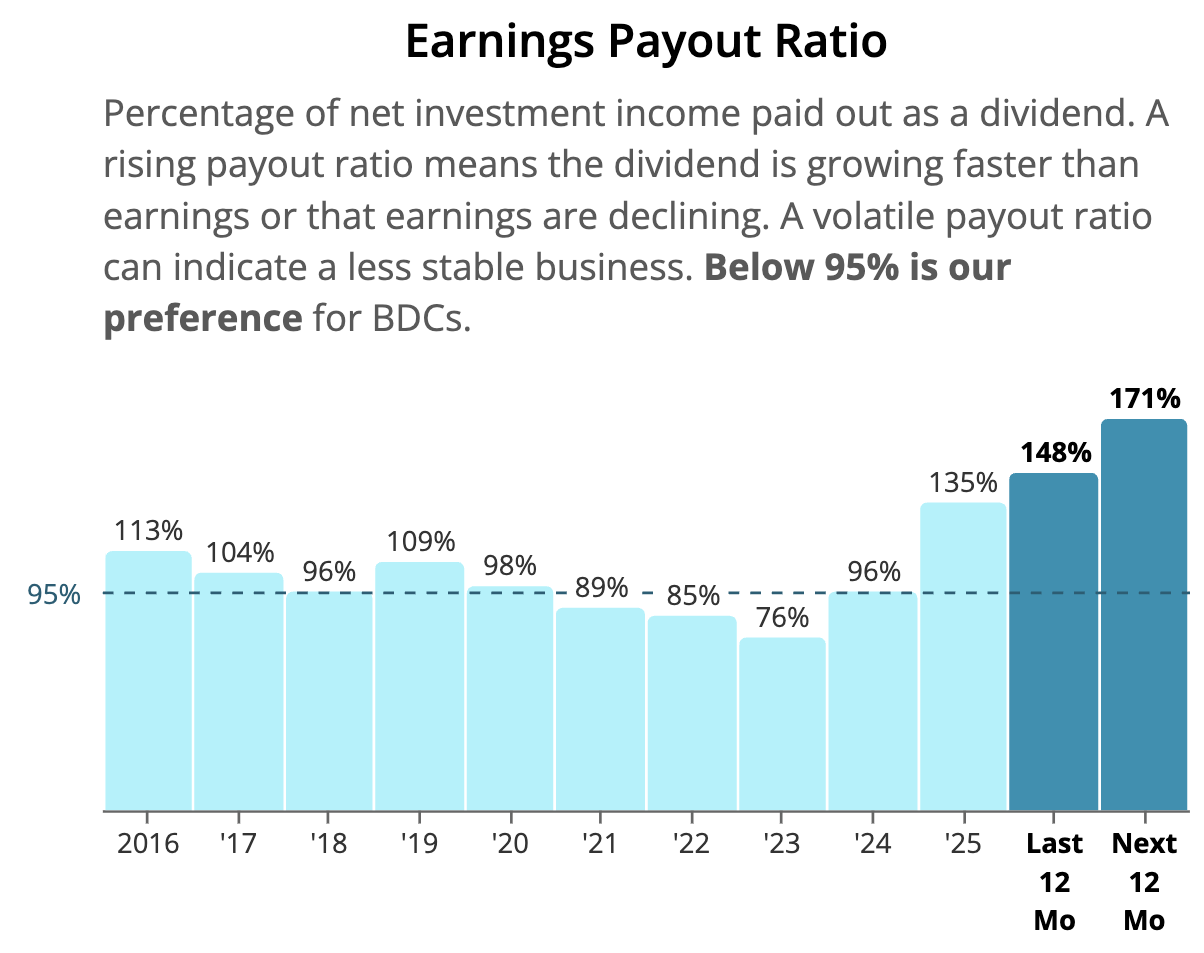
PennantPark pays out 148% of its net investment income, expected to reach 171%, far above our 95% preference for BDCs. Source: Simply Safe Dividends.
Half of its $0.08 monthly dividend is now a supplemental payment funded by spillover income from past years, which management expects to continue only through December 2026. The base dividend is $0.04 a month.
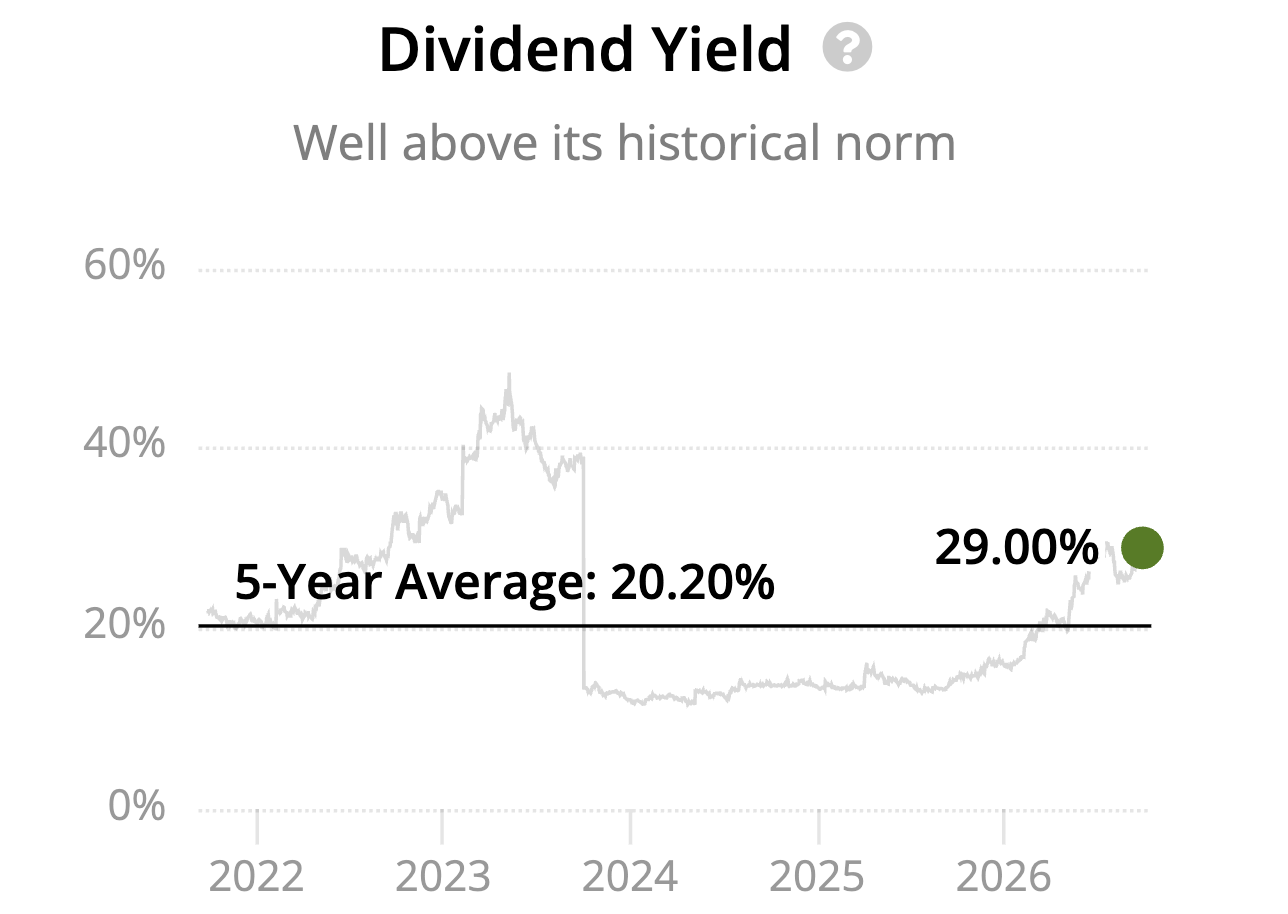
PennantPark yields 29.00% against a five-year average of 20.20%. Source: Simply Safe Dividends.
Oxford Square Capital (OXSQ)
Sector: Financials – Asset Management and Custody Banks Dividend Yield: 32.8% Dividend Safety Score: Very Unsafe (8) Uninterrupted Dividend Streak: 4 years Credit Rating: Not rated by S&P
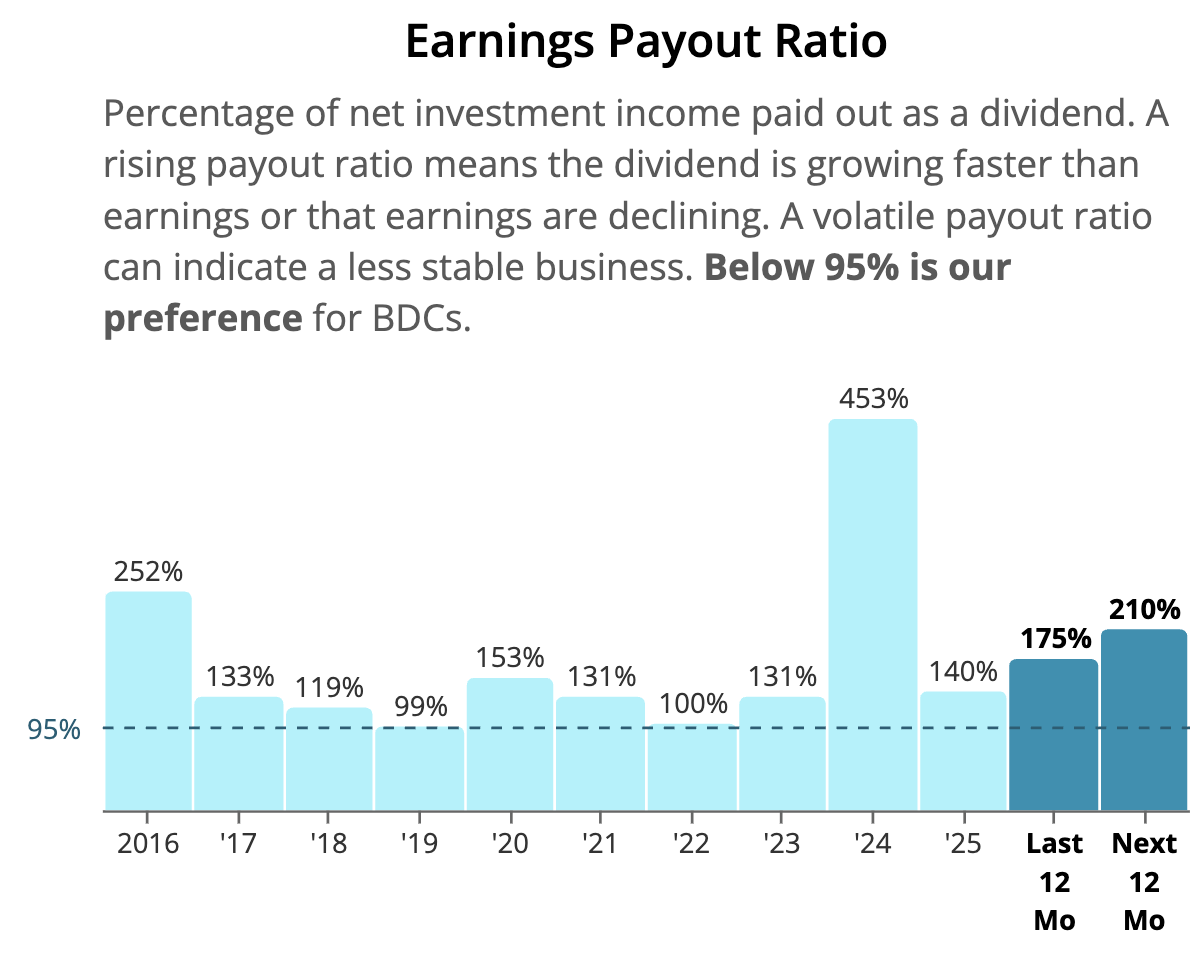
Oxford Square Capital has the highest yield of any monthly payer we rate and one of the lowest Dividend Safety Scores. Its payout ratio has been above our 95% preference for BDCs every year since 2016.
Established in 2003, Oxford Square (OXSQ) invests in the loans and bonds of private companies rated below investment grade, along with the equity and junior debt of collateralized loan obligations, which absorb losses first.
Oxford Square pays out 175% of its net investment income, expected to reach 210%. Source: Simply Safe Dividends.
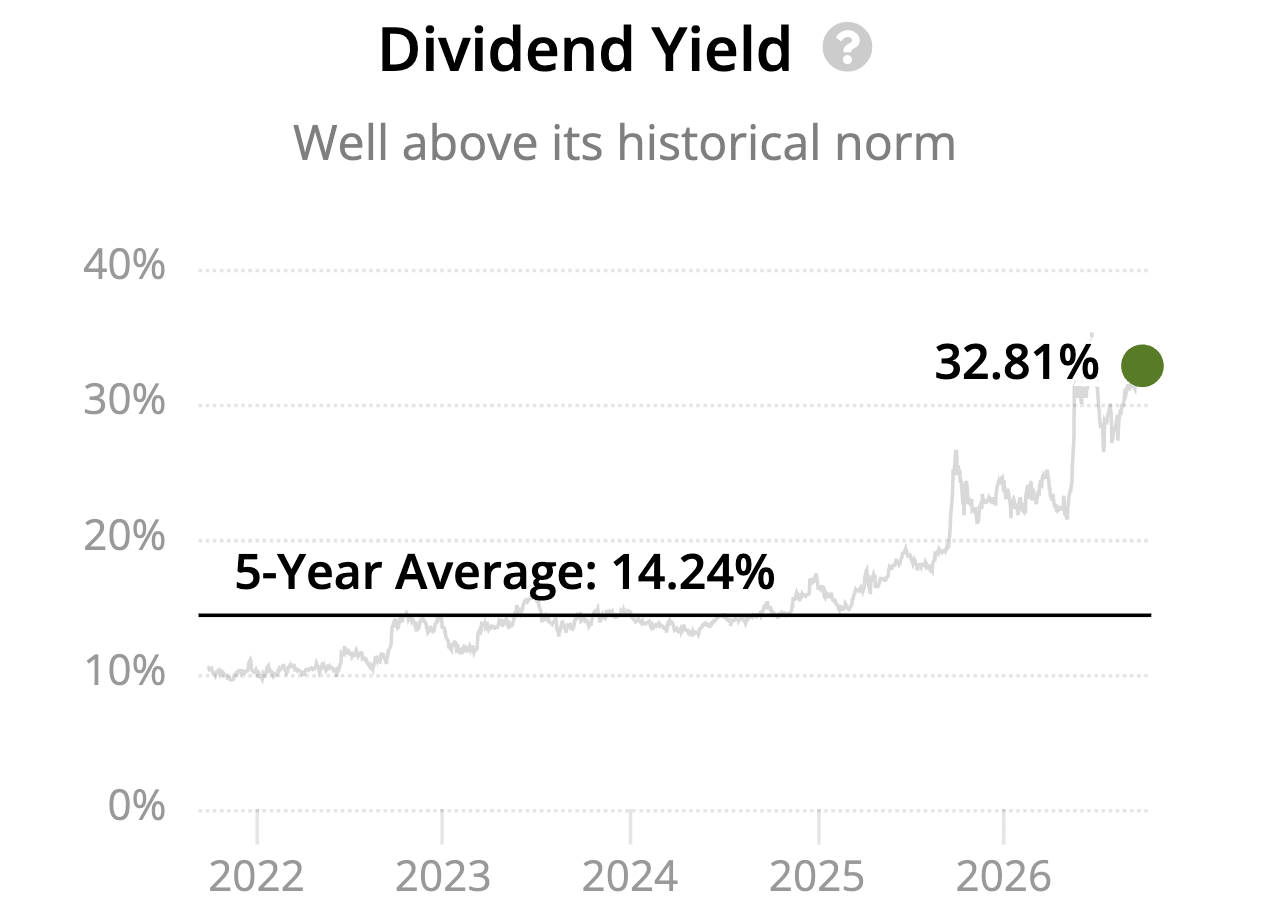
It cut its dividend by 58% during the 2007 to 2009 financial crisis and by 48% in the 2020 pandemic, and its yield is now more than double its five-year average.
Oxford Square yields 32.81% against a five-year average of 14.24%. Source: Simply Safe Dividends.
Ellington Credit Company (EARN)
Sector: Financials – Mortgage REITs Dividend Yield: 22.8% Dividend Safety Score: Very Unsafe (8) Uninterrupted Dividend Streak: Not available Credit Rating: Not rated by S&P
Ellington Credit Company shares the lowest Dividend Safety Score on this list, and its monthly payment has not grown since 2022.
Formerly Ellington Residential, Ellington Credit (EARN) invests in credit assets including mortgage-backed securities, corporate loans, and consumer debt. At about $160 million in market value, it is one of the smallest companies on this list.
Its yield sits far above its five-year average, a sign the market doubts the payout will hold.
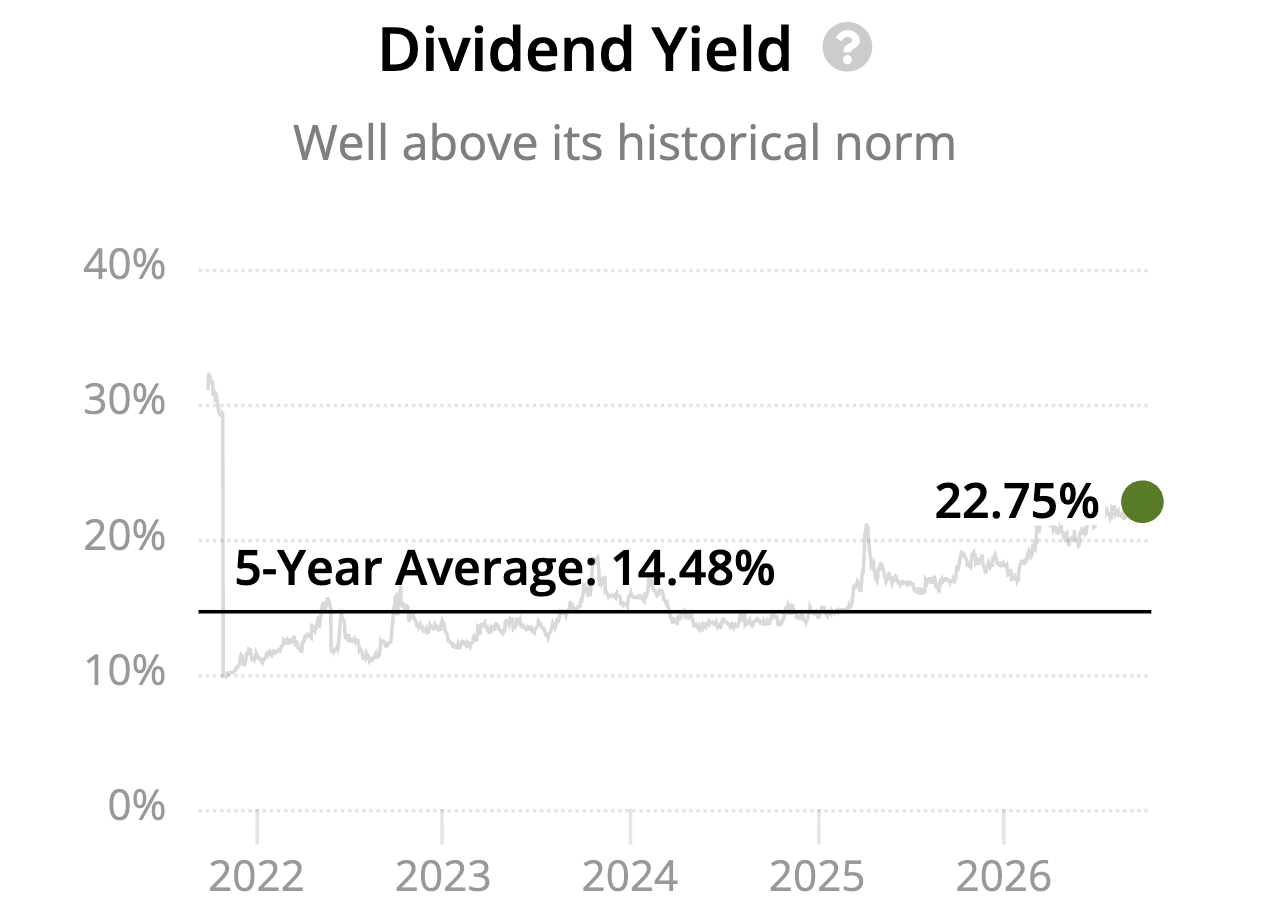
Ellington Credit yields 22.75% against a five-year average of 14.48%. Source: Simply Safe Dividends.
Canadian and Other Unrated Monthly Dividend Stocks
We do not rate 56 of the 91 monthly payers we track for dividend safety.
Thirty-nine are Canadian companies, most of them trading over the counter in the U.S. and on the Toronto Stock Exchange at home.
The rest are six U.S. oil and gas royalty trusts, three Latin American banks, five other companies listed on U.S. exchanges, and three U.S. small caps.
Our list of U.S.-listed monthly payers is meant to be complete. The Canadian list covers the larger and better-known names but not every one since dozens of smaller Toronto-listed companies also pay monthly.
We also leave out a few Argentine and Brazilian bank and telecom ADRs that pay their dividends in monthly installments or irregular batches.
These stocks fall outside our coverage for different reasons. Over-the-counter shares can be thinly traded in the U.S., royalty trust payouts rise and fall with commodity prices, foreign banks report under different rules, and several of the U.S. names listed only recently.
None has a Dividend Safety Score, so we describe each business without a verdict.
Canadian companies' dividends paid to U.S. investors are subject to a 15% withholding tax.
Holding Canadian stocks in a retirement account avoids it, and in a taxable account you can generally claim a foreign tax credit. Our guide to foreign tax withholding explains how.
RioCan is the only Canadian monthly payer we rate. It appears in the ranked list above with a Borderline Safe Dividend Safety Score.
Canadian REITs
Granite REIT (NYSE: GRP.U, TSX: GRT.UN) owns industrial and logistics properties in North America and Europe. It is the one Canadian REIT here listed on a U.S. exchange.
Allied Properties REIT (APYRF, TSX: AP.UN) owns urban office and mixed-use properties in major Canadian cities. It cut its distribution.
First Capital REIT (FCXXF, TSX: FCR.UN) owns grocery-anchored shopping centers in Canada's largest cities.
Crombie REIT (CROMF, TSX: CRR.UN) owns grocery-anchored retail properties, many leased to Sobeys.
Boardwalk REIT (BOWFF, TSX: BEI.UN) owns apartment communities, mainly in Western Canada. It raised its distribution 11.1% in 2026.
Killam Apartment REIT (KMMPF, TSX: KMP.UN) owns apartments and manufactured home communities, mainly in Atlantic Canada, Ontario, and Alberta.
Morguard North American Residential REIT (MNARF, TSX: MRG.UN) owns apartment communities in Canada and the U.S.
Chartwell Retirement Residences (CWSRF, TSX: CSH.UN) owns and operates retirement residences across Canada.
SmartCentres REIT (CWYUF, TSX: SRU.UN) owns and develops Canadian retail centers, many anchored by Walmart, plus mixed-use projects.
CT REIT (CTRRF, TSX: CRT.UN) owns mostly single-tenant, net-leased retail properties in Canada, with Canadian Tire as its main tenant.
Choice Properties REIT (PPRQF, TSX: CHP.UN) owns and develops Canadian commercial and residential properties.
Primaris REIT (PMREF, TSX: PMZ.UN) owns enclosed shopping centers in growing Canadian markets.
Dream Industrial REIT (DREUF, TSX: DIR.UN) owns industrial properties in Canada, Europe, and the U.S. It raised its distribution 2.5% in August 2026.
CAPREIT (CDPYF, TSX: CAR.UN) owns rental apartments, mainly in Canada.
BSR REIT (BSRTF, TSX: HOM.U) owns apartment communities in U.S. Sunbelt markets, mainly Texas.
Flagship Communities REIT (MHCUF, TSX: MHC.U) owns manufactured housing communities in Kentucky, Indiana, Ohio, and other Midwest and Southern states.
Firm Capital Property Trust (FRMUF, TSX: FCD.UN) owns retail, industrial, apartment, and manufactured home properties, mainly in Ontario and Quebec.
Vital Infrastructure Property Trust (NWHUF, TSX: VITL.UN) formerly NorthWest Healthcare Properties REIT, owns healthcare real estate in North America, Brazil, Europe, and Australia.
Canadian Lenders
Timbercreek Financial (TBCRF, TSX: TF) makes short-term, mostly first-mortgage loans on Canadian commercial real estate.
Atrium Mortgage Investment (AMIVF, TSX: AI) makes residential and commercial mortgage loans in major Canadian cities.
Canadian Royalty Companies
Pizza Pizza Royalty (PZRIF, TSX: PZA) collects royalties on sales at Pizza Pizza and Pizza 73 restaurants. It cut its dividend about 13% in May 2026.
Boston Pizza Royalties Income Fund (BPZZF, TSX: BPF.UN) collects royalties on sales at Boston Pizza restaurants in Canada. It raised its distribution 3.3% in 2026.
Diversified Royalty (BEVFF, TSX: DIV) buys royalties from franchisors such as Mr. Lube + Tires, Sutton, and Mr. Mikes.
Freehold Royalties (FRHLF, TSX: FRU) holds oil and gas royalty interests on land in Canada and the U.S.
Canadian Energy Producers
Whitecap Resources (WCPRF, TSX: WCP) produces oil and gas in Western Canada.
Peyto Exploration and Development (PEYUF, TSX: PEY) produces natural gas and natural gas liquids in Alberta's Deep Basin. It raised its dividend 9% in May 2026.
Cardinal Energy (CRLFF, TSX: CJ) produces oil in Western Canada from low-decline conventional and thermal assets.
Surge Energy (SGYEF, TSX: SGY) produces mainly light and medium crude oil in Alberta and Saskatchewan.
Paramount Resources (PRMRF, TSX: POU) produces oil and gas in Alberta and British Columbia. It reset its monthly dividend in January 2025 after selling assets and paying a large special distribution.
Pine Cliff Energy (PIFYF, TSX: PNE) produces natural gas in Western Canada. It cut its dividend 75% in April 2025 to fund drilling.
Other Canadian Companies
Exchange Income (EIFZF, TSX: EIF) owns aerospace, aviation, and manufacturing businesses. It raised its dividend in August 2026.
Chemtrade Logistics Income Fund (CGIFF, TSX: CHE.UN) supplies industrial chemicals such as sulphuric acid and water treatment chemicals.
Mullen Group (MLLGF, TSX: MTL) provides trucking and logistics services in Canada and the U.S.
Bird Construction (BIRDF, TSX: BDT) is a construction and maintenance contractor for industrial, commercial, and infrastructure clients.
Savaria (SISXF, TSX: SIS) makes home elevators, stairlifts, and other accessibility products. It raised its dividend 5.4% in September 2026.
Richards Group (RPKIF, TSX: RIC) distributes packaging and medical devices and supplies. It converted from an income fund to a corporation in December 2025.
Northland Power (NPIFF, TSX: NPI) owns wind, solar, and natural gas power plants. It cut its dividend 40% in late 2025.
Sienna Senior Living (LWSCF, TSX: SIA) operates Canadian seniors' communities and long-term care homes.
Extendicare (EXETF, TSX: EXE) provides long-term care, home health care, and group purchasing services for Canadian seniors.
U.S. Royalty Trusts
Permianville Royalty Trust (PVL) holds an interest in oil and gas properties in Texas, Louisiana, and New Mexico. Its monthly payment varies with production and prices.
San Juan Basin Royalty Trust (SJT) holds royalty interests in natural gas properties in New Mexico. It pays monthly when there is income to distribute and paid nothing for September 2026.
Mesa Royalty Trust (MTR) holds royalty interests in natural gas properties in Kansas, Colorado, and New Mexico. It has skipped most monthly payments in 2026.
Permian Basin Royalty Trust (PBT) holds royalty interests in Texas oil and gas properties. Its monthly payment varies with production and prices, and a pending deal to convert it into a corporation could end the monthly payout.
Cross Timbers Royalty Trust (CRT) holds interests in oil and gas properties in Texas, Oklahoma, and New Mexico. Its monthly payment varies with production and prices.
PermRock Royalty Trust (PRT) holds an interest in Permian Basin oil and gas properties. Its monthly payment varies widely and fell close to zero in early 2026.
Latin American Banks
Grupo Aval (AVAL) is a Colombian financial holding company that controls several of the country's largest banks.
Itaú Unibanco (ITUB) is Brazil's largest private bank. It pays a small fixed amount every month, plus larger periodic payments, and Brazilian withholding tax applies.
Banco Bradesco (BBD) is one of Brazil's largest private banks, with a large insurance business. It pays a small amount every month plus larger interim payments several times a year.
Other Companies Listed on U.S. Exchanges
MSC Income Fund (MSIF) is a business development company advised by an affiliate of Main Street Capital. It switched to monthly dividends in July 2026.
SmartStop Self Storage REIT (SMA) owns self-storage properties in the U.S. and Canada and listed its shares in 2025.
Modiv Industrial (MDV) owns industrial and manufacturing properties under long-term net leases.
Janus Living (JAN) owns senior housing communities and went public in March 2026 as a spinoff from Healthpeak.
Himalaya Shipping (HSHP) owns large dry bulk ships. Its monthly dividend varies with charter rates.
U.S. Small Caps
Global Water Resources (GWRS) owns regulated water and wastewater utilities, mainly around Phoenix, Arizona.
U.S. Global Investors (GROW) manages funds focused on niches such as gold miners and airlines.
Fortitude Gold (FTCO) mines gold in Nevada. It cut its dividend 75% in 2025.
No Longer Monthly
Slate Grocery REIT (SRRTF) suspended its distribution in September 2026 and agreed to be acquired.
H&R REIT (HRUFF) suspended its distribution after agreeing in August 2026 to be acquired.
Bridgemarq Real Estate Services (BREUF) switched to quarterly payments in July 2026 and cut its dividend by about 96%.
Tamarack Valley Energy (TNEYF) switched to quarterly payments in 2026.
How We Rank Monthly Dividend Stocks
Our Dividend Safety Scores rate how likely a company is to cut its dividend, on a scale of 0 to 100. Scores of 81 to 100 are Very Safe, 61 to 80 Safe, 41 to 60 Borderline Safe, 21 to 40 Unsafe, and 20 or below Very Unsafe.
They weigh the payout ratio, which is the share of profits a company pays out as dividends, along with debt, the steadiness of cash flow, and how the dividend held up in past recessions. Our analysts oversee every score, and when something changes the picture we publish a dated note explaining what moved and why.
Since we launched the scores in 2015, investors who stuck with stocks scoring above 60 would have avoided 97% of the dividend cuts that followed, 925 of 946 in total. You can review every one on our public track record.
Why Most Monthly Dividend Stocks Are Risky
Monthly dividends cluster in a handful of industries. Of the 35 monthly payers we rate, 14 are business development companies, 13 are property-owning REITs, 7 are mortgage REITs, and one is an oil and gas royalty trust. These businesses collect rent or interest every month, so a monthly dividend matches the way cash comes in.
The lenders are where safety falls away. Only one of the 21 BDCs and mortgage REITs, Main Street Capital, scores Safe, and all seven mortgage REITs score Unsafe or Very Unsafe. Property-owning REITs fare better, with four of 13 rated Safe and five more Borderline Safe.
Falling interest rates explain most of the recent damage. Seven of the nine dividend cuts of the past 12 months came from lenders, and several were blamed directly on lower rates, which shrink the income on floating-rate loans.
The median yield of the 23 Unsafe and Very Unsafe names is 15.8%, three times the 5.1% median of the five Safe ones. A yield that high is usually the market pricing in a cut. For a closer look at the lenders, see our video on which of the 44 BDCs might cut their dividends.
Frequently Asked Questions
What stocks pay monthly dividends?
As of September 28, 2026, we count 51 stocks listed on U.S. exchanges that pay monthly dividends, plus 40 that trade over the counter, most of them Canadian. We rate 35 of the 91, and the five with Safe Dividend Safety Scores are Realty Income (O), Main Street Capital (MAIN), UDR (UDR), Agree Realty (ADC), and Phillips Edison (PECO).
What are the safest monthly dividend stocks?
Realty Income has the highest Dividend Safety Score among monthly payers, 80 on our 0 to 100 scale, followed by UDR at 71, Agree Realty and Phillips Edison at 70, and Main Street Capital at 62. None of the 35 monthly payers we rate scores Very Safe.
What are the best monthly dividend stocks to hold forever?
Realty Income comes closest. It has paid uninterrupted dividends for 57 years, has raised its payout every year since going public in 1994, and holds an A- credit rating, the strongest of any monthly payer we rate.
Which REITs pay monthly dividends?
We rate 20 REITs that pay monthly: 13 that own property and 7 mortgage REITs. The four with Safe Dividend Safety Scores are Realty Income (5.9% yield), UDR (5.1%), Agree Realty (4.8%), and Phillips Edison (3.7%). All seven mortgage REITs score Unsafe or Very Unsafe.
What are the highest-paying monthly dividend stocks?
The highest yields belong to Oxford Square Capital (32.8%), PennantPark Investment (29.0%), Invesco Mortgage Capital (22.9%), Ellington Credit (22.8%), and Orchid Island Capital (21.1%). All five score Unsafe or Very Unsafe. Of the 20 monthly payers we rate that yield 8% or more, none scores Safe. Our video on five dividend traps to avoid in 2026 covers the warning signs.
Are there good monthly dividend stocks under $10?
Not by our measure. Thirteen of the monthly payers we rate traded below $10 a share on September 28, 2026, and none scores better than Unsafe. A low share price says nothing about value or safety.
Are there Canadian monthly dividend stocks?
Yes, dozens. We track 40 Canadian monthly payers, most of them REITs, royalty companies, and energy producers, including Granite REIT, the one listed on the NYSE. RioCan (RIOCF) is the only one we rate, with a 5.7% yield and a Borderline Safe Dividend Safety Score. U.S. investors generally face a 15% Canadian withholding tax outside retirement accounts.
How much do I need to invest to earn $1,000 a month in dividends?
At the 5.1% average yield of the five monthly payers we rate Safe, you would need about $238,000 to earn $12,000 a year, or $1,000 a month. Our guide on how to live off dividends walks through the math for a full portfolio, and our video on what a $1 million dividend portfolio pays each month shows a realistic example.
Are monthly dividends better than quarterly dividends?
Not in total income. A stock paying $1.20 a year pays the same whether it sends $0.10 monthly or $0.30 quarterly. Monthly payments can make budgeting easier, and you can get the same effect by owning quarterly payers with staggered schedules, as our guide on how to build a dividend portfolio explains. Our video on building a 5% yield portfolio with equal monthly payouts shows how.
How are monthly dividends taxed?
The same as quarterly dividends. Most monthly payers are REITs and BDCs, and their dividends are generally taxed as ordinary income rather than at the lower qualified rate. Our REIT taxation lesson explains why.
How accurate are Dividend Safety Scores for monthly dividend stocks?
Over the past 12 months, eight of today's monthly payers cut their dividends nine times, and every one scored Unsafe or Very Unsafe beforehand. Across all stocks since 2015, investors who stuck with scores above 60 would have avoided 925 of 946 dividend cuts.
Closing Thoughts on Monthly Dividend Stocks
Monthly dividends are a convenience, not a sign of quality. Only five of the 35 monthly payers we rate score Safe, and the dividend cuts of the past year all came from names we had already flagged as Unsafe or Very Unsafe.
Most income investors build monthly income from a diversified mix of dividend stocks, even if only a few of them pay monthly. If safety matters more to you than the payment schedule, our high dividend stocks list, Dividend Aristocrats list, and Dividend Kings list rank companies with stronger dividend safety.
To see how much income your own portfolio pays each month, try our online portfolio tools. They track every payment, show the Dividend Safety Score of each stock you own, and alert you when a score changes.