2026 Dividend Kings List: All 59 Ranked & Analyzed
There are 59 Dividend Kings in 2026, companies that have raised their dividends for at least 50 consecutive years. Pentair, Carlisle, and McDonald's reached that mark in the past year.
We rate all 59 for dividend safety. Twenty-eight earn a Very SafeDividend Safety Score and 25 score Safe. Five are Borderline Safe, and one, Universal, scores Unsafe.
A 50-year streak is not a guarantee. We lowered the Dividend Safety Scores of 18 Kings over the past 12 months and raised two. Seven of the downgrades were tied to acquisitions, and four to shoppers trading down to cheaper brands.
Unlike Dividend Aristocrats, Dividend Kings do not need to belong to the S&P 500, so the list includes small companies such as Tootsie Roll, Middlesex Water, and Farmers & Merchants Bancorp.
Clorox is next in line to be crowned. Its July 2026 raise was its 49th in a row, so another increase in 2027 would make it a King. Medtronic (48 years) and Sherwin-Williams (47 years) follow.
How Safe Are the Dividend Kings' Dividends?
To see what owning all of them looks like, we built an equal-weight portfolio of all 59 Dividend Kings in our portfolio tools, putting about $1,695 into each for a $100,000 total.
It yields 2.59%, or about $2,588 a year in dividends. Its beta, a measure of how much a portfolio moves with the market, is 0.67, so it has been about a third less volatile than the S&P 500.
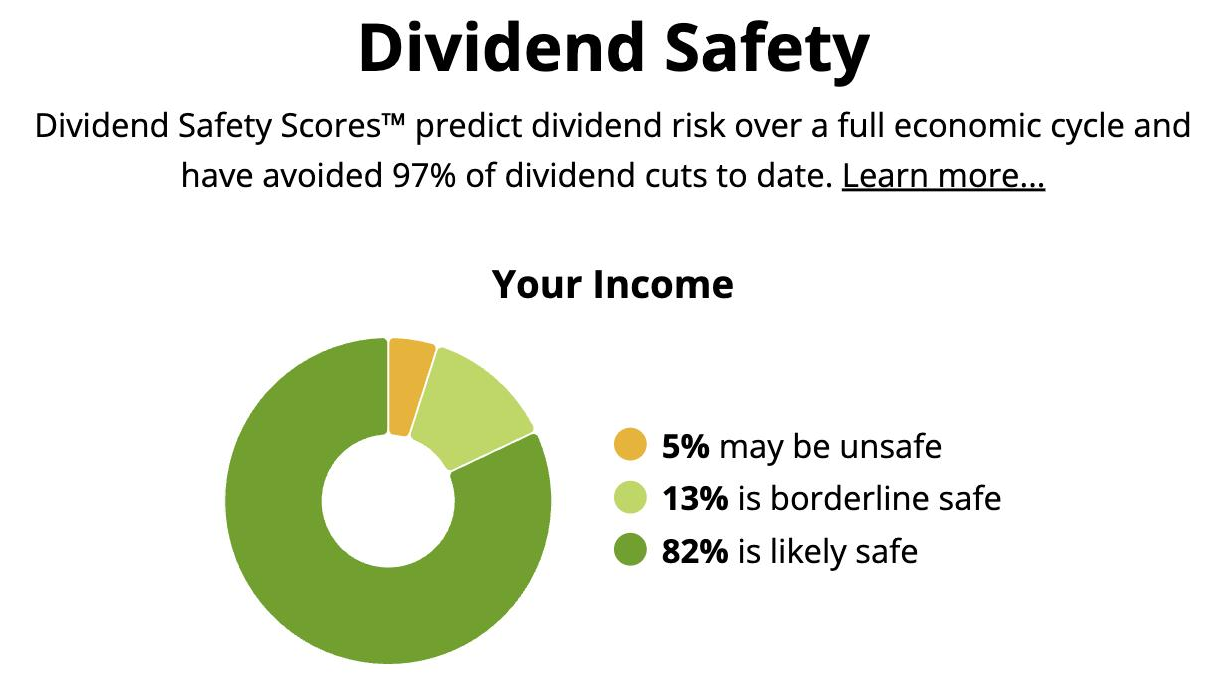
Most of that income is well protected. Stocks with Safe or Very Safe Dividend Safety Scores produce 82% of the portfolio's income. The five Borderline Safe names, Altria, Kenvue, Stanley Black & Decker, Genuine Parts, and Sysco, produce 13%, and Universal alone produces the remaining 5%.
82% of the equal-weight Dividend Kings portfolio's income comes from stocks with Safe or Very Safe Dividend Safety Scores. Source: Simply Safe Dividends.
The downgrades of the past year show where the pressure is. Seven came after companies agreed to large acquisitions or received a buyout offer: Kimberly-Clark, Sysco, H2O America, Marzetti, Pentair, Genuine Parts, and Hormel. Deals add debt and take management's attention, which leaves less room for error.
Four more reflected shoppers trading down to store brands and cheaper products. Procter & Gamble, PepsiCo, Target, and Stepan all saw volumes slip as years of price increases pushed consumers toward value.
Only two of those eleven, Sysco and Genuine Parts, fell below Safe. That is the usual pattern for Kings, with slower dividend growth showing up long before any threat to the payout itself.
Dividend Kings' Performance, Sector Mix, and Dividend Growth
Over most long-term periods, the current group of Dividend King stocks has delivered similar total returns to the S&P 500 but with lower volatility.
However, in recent years the Kings have not kept up with the increasingly tech-heavy S&P 500 as investors have flocked to growth stocks and AI companies.
Source: Simply Safe Dividends
This shortfall doesn't come as a big surprise since the Dividend Kings look nothing like the S&P 500, which is nearly half made up of tech stocks (including Amazon, Meta, and Alphabet, which are technically in other sectors).
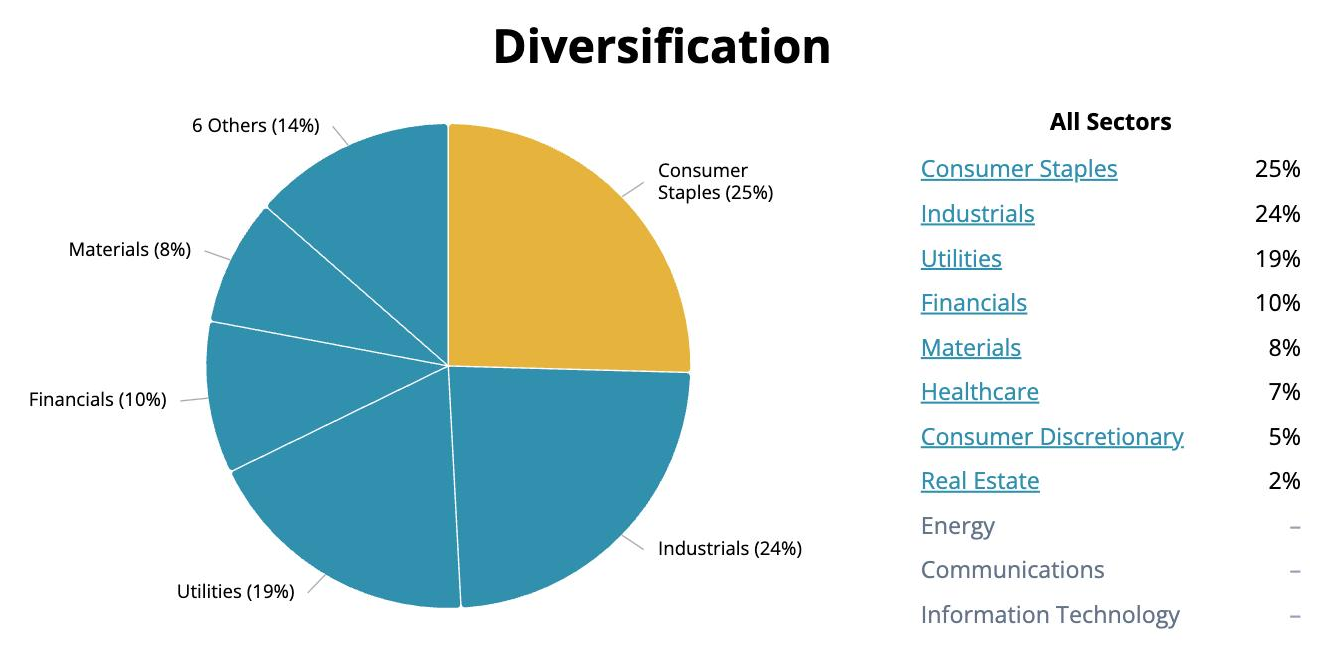
No Dividend Kings are in the technology, communications, or energy sectors. Consumer staples make up 25% of an equal-weight portfolio of the Kings, followed by industrials at 24% and utilities at 19%.
These businesses generally sell things that are needed regardless of the economy, either because demand is inelastic, regulatory support limits competition, switching is more trouble than it's worth, or the consequences of changing suppliers are too risky to contemplate.
Sector mix of an equal-weight portfolio of the 59 Dividend Kings. Source: Simply Safe Dividends.
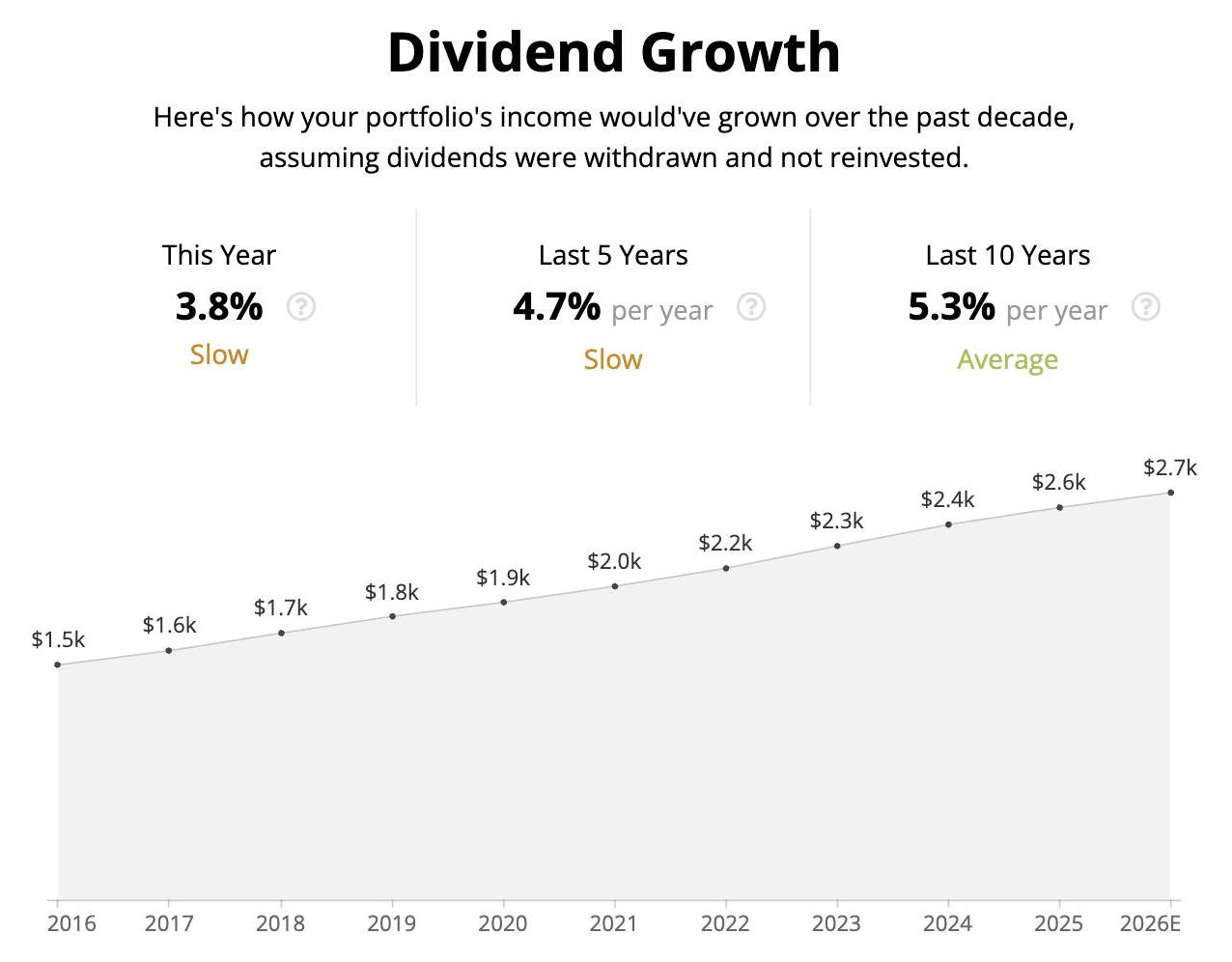
What Dividend Kings lack in excitement they make up for with consistency. The equal-weight portfolio's dividend income grew from about $1,500 in 2016 to an estimated $2,700 in 2026, or 5.3% a year. Growth has slowed to 4.7% a year over the past five years and 3.8% this year.
There is some survivorship bias since fallen Kings like 3M and Leggett & Platt are excluded, but we expect a similar pace of dividend growth to continue over the long run.
Annual dividend income from $100,000 invested equally in today's 59 Dividend Kings, with 2026 estimated. Source: Simply Safe Dividends.
Every Dividend King Ranked by Dividend Safety
Below, we analyze all 59 Dividend Kings, ranked from safest to riskiest by Dividend Safety Score. Ties are broken by the length of each company's dividend growth streak, then by yield.
Each profile includes the company's payout ratio history and its current yield compared with its five-year average, a quick read on valuation.
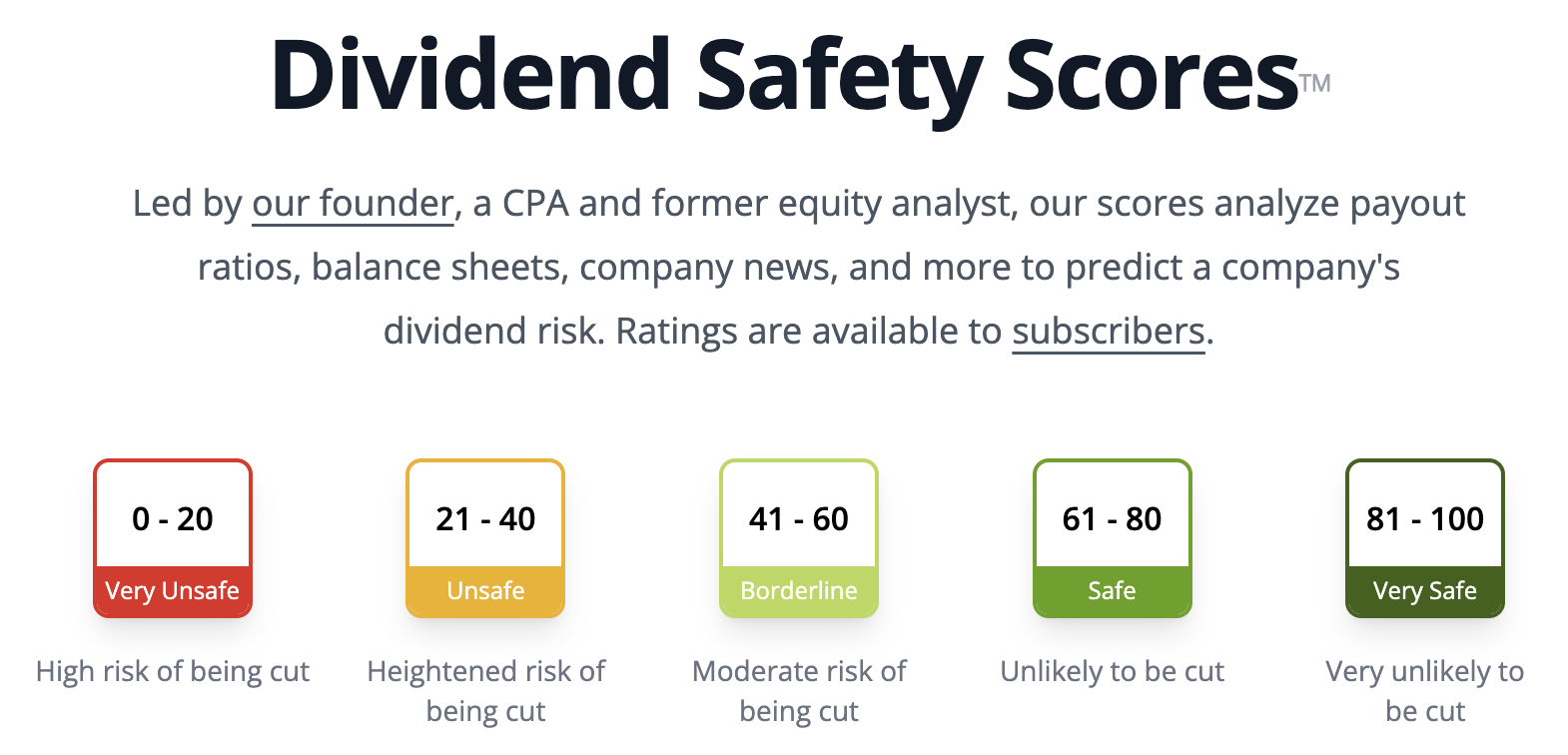
Our Dividend Safety Scores rate how likely a company is to cut its dividend, on a scale of 0 to 100. Scores of 81 to 100 are Very Safe, 61 to 80 Safe, 41 to 60 Borderline Safe, 21 to 40 Unsafe, and 20 or below Very Unsafe.
Source: Simply Safe Dividends
Scores are overseen by our analysts and weigh the payout ratio, which is the share of profits a company pays out as dividends, along with debt, recession performance, and industry trends. Our track record shows how they have performed in calling dividend cuts.
Johnson & Johnson now focuses on prescription drugs and medical devices after spinning off its consumer health business, Kenvue, in 2023. It plans to separate its orthopedics division, DePuy Synthes, as well.
It is one of only two U.S. companies with a AAA credit rating.
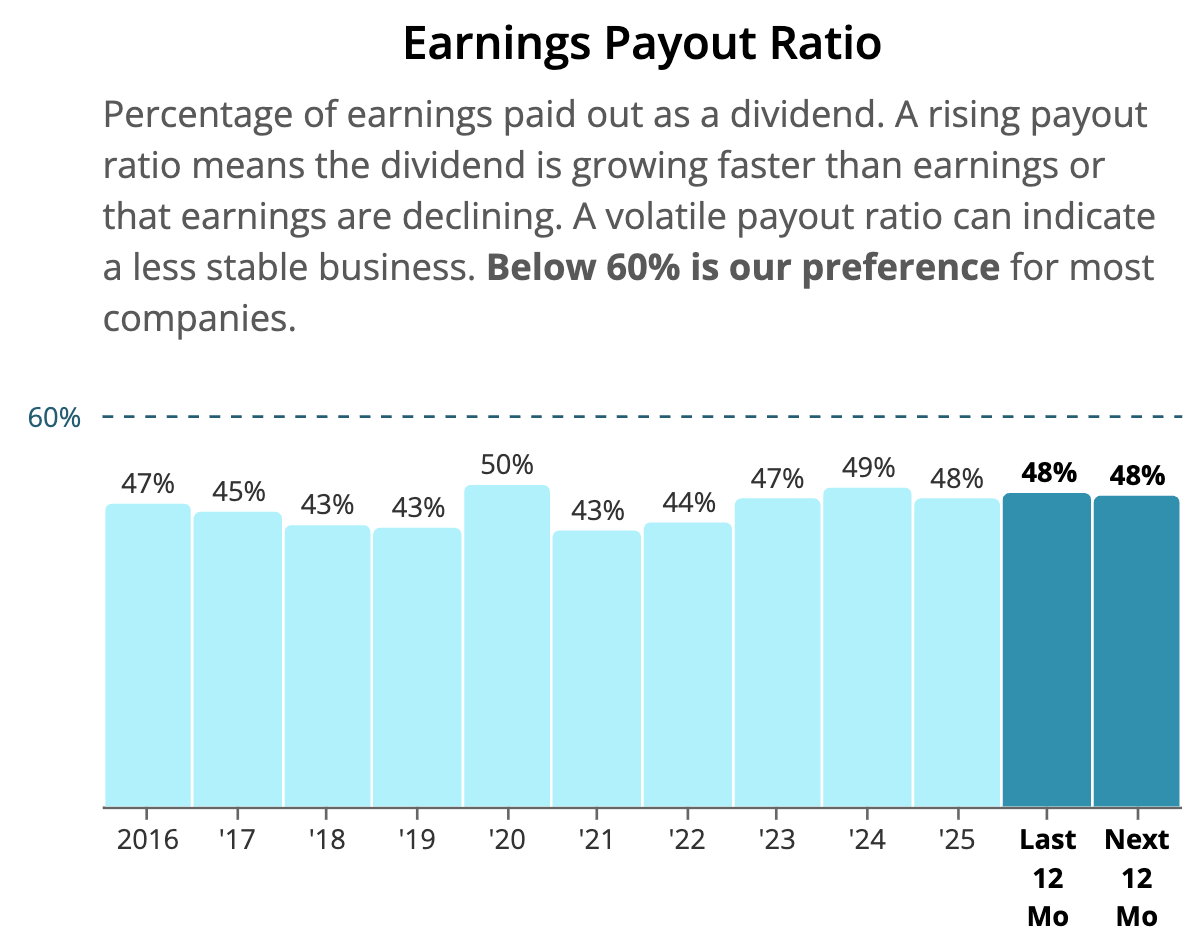
Johnson & Johnson has paid out between 43% and 50% of its earnings every year since 2016, a steady record for a drugmaker that constantly has to replace products losing patent protection.
Johnson & Johnson pays out 48% of its earnings, expected to be 48% next year, within our 60% preference for most companies. Source: Simply Safe Dividends.
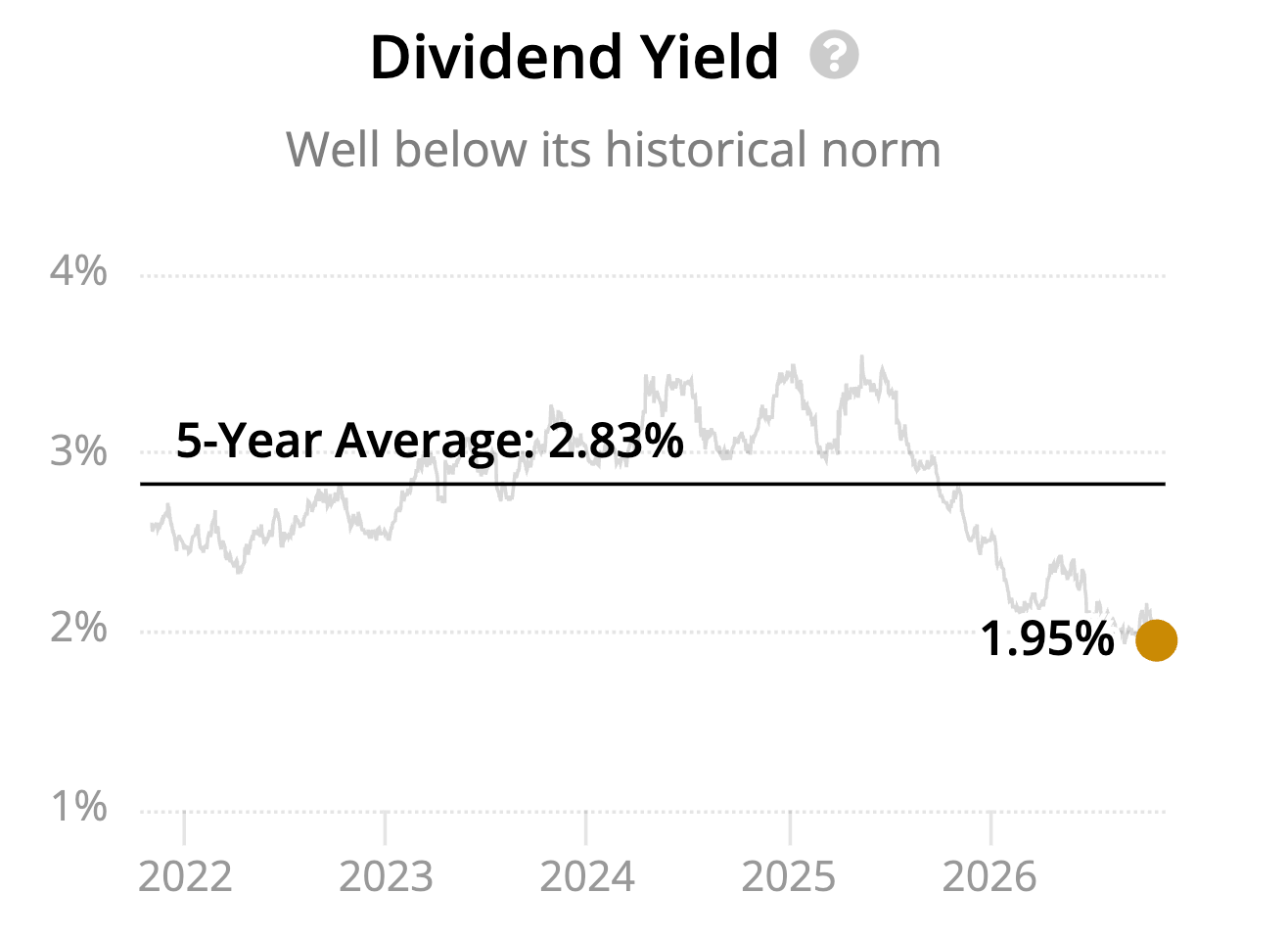
Shares have rallied, pushing the yield down to 1.95%, well below its five-year average of 2.83%. Our valuation screen suggests the stock could be overvalued.
Johnson & Johnson yields 1.95%, well below its five-year average of 2.83%. Source: Simply Safe Dividends.
MSA Safety (MSA)
Sector: Industrials – Office Services and Supplies Dividend Yield: 1.2% Dividend Safety Score: Very Safe (99) Dividend Growth Streak: 59 years Credit Rating: Not rated by S&P
MSA Safety makes gas detectors, breathing equipment for firefighters, hard hats, and fall protection gear. Safety rules require much of this equipment, and replacement parts and service keep customers coming back.
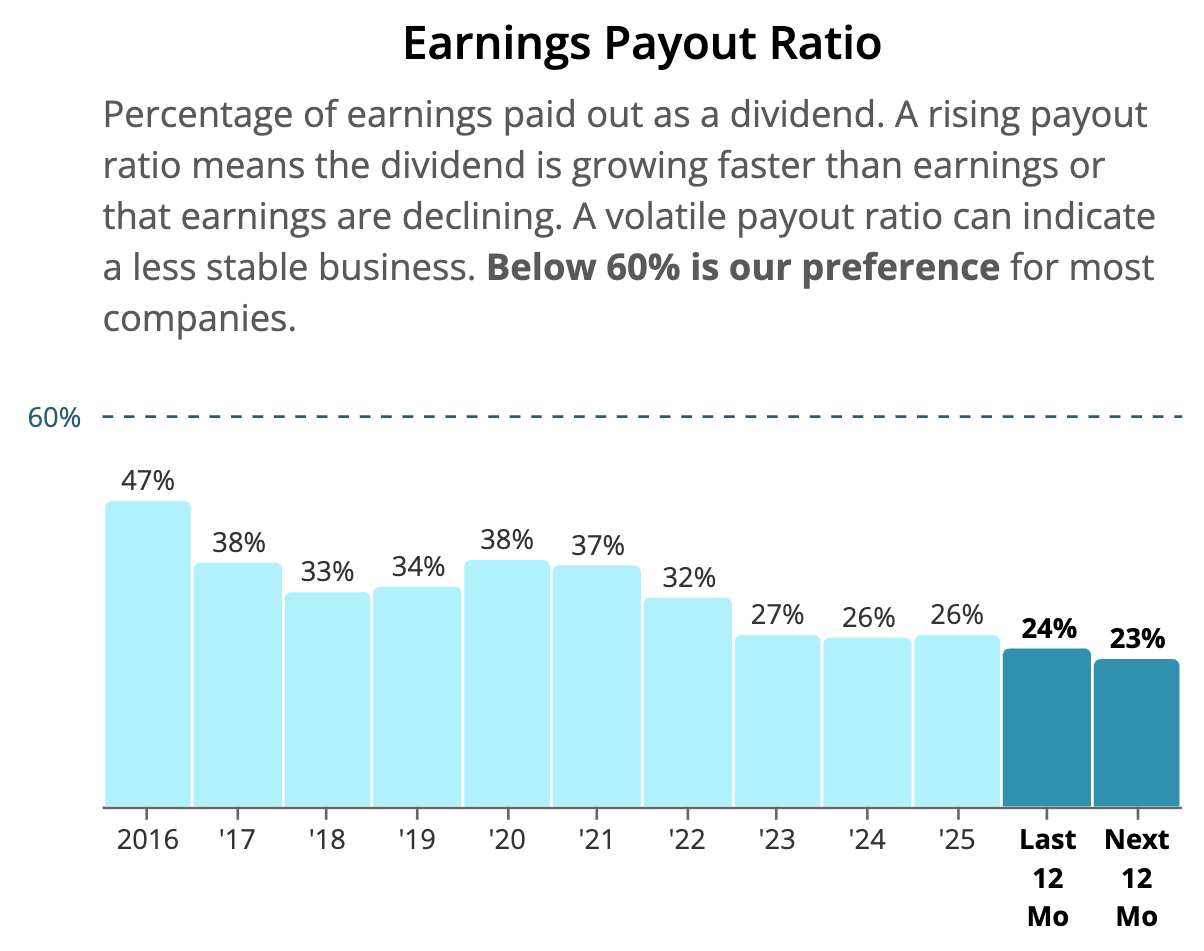
Its payout ratio has drifted down from 47% in 2016 to about 24% as earnings grew, and its leverage is very low.
MSA pays out 24% of its earnings, expected to be 23% next year, within our 60% preference for most companies. Source: Simply Safe Dividends.
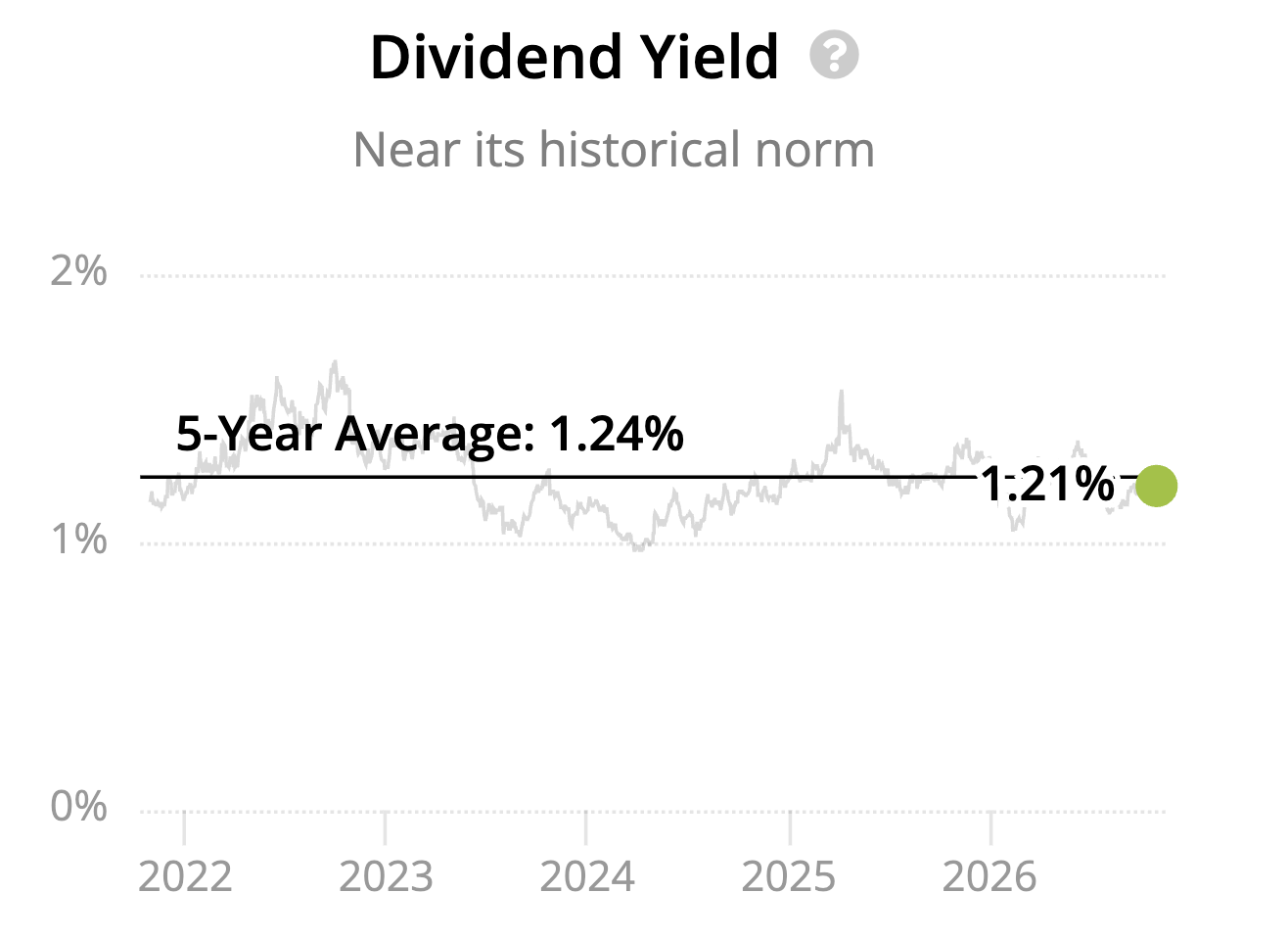
The stock yields 1.21%, close to its five-year average of 1.24%, and our valuation screen suggests it may be undervalued.
MSA yields 1.21%, near its five-year average of 1.24%. Source: Simply Safe Dividends.
California Water Service Group (CWT)
Sector: Utilities – Water Utilities Dividend Yield: 2.8% Dividend Safety Score: Very Safe (99) Dividend Growth Streak: 58 years Credit Rating: A+
California Water Service Group provides regulated water service, mostly in California, with smaller utilities in Washington, New Mexico, Hawaii, and Texas. State regulators set its rates to earn a return on the pipes and treatment plants it builds.
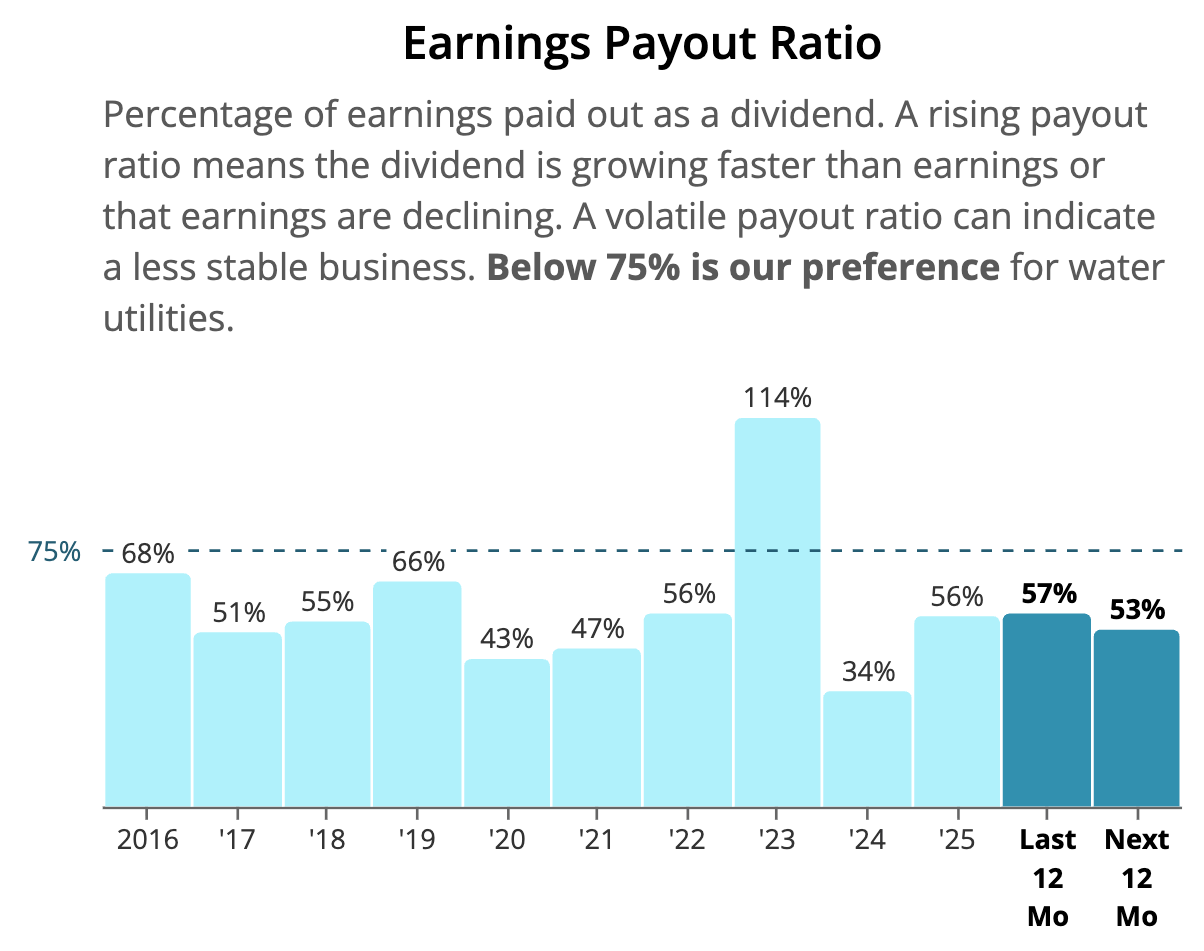
Its payout ratio has stayed inside our 75% preference for water utilities in every year since 2016 except 2023, when earnings dipped and the ratio spiked to 114%. Its latest raise was 11.7%, well above its 10-year average of 6.0% a year.
California Water pays out 57% of its earnings, expected to be 53% next year, within our 75% preference for water utilities. Source: Simply Safe Dividends.
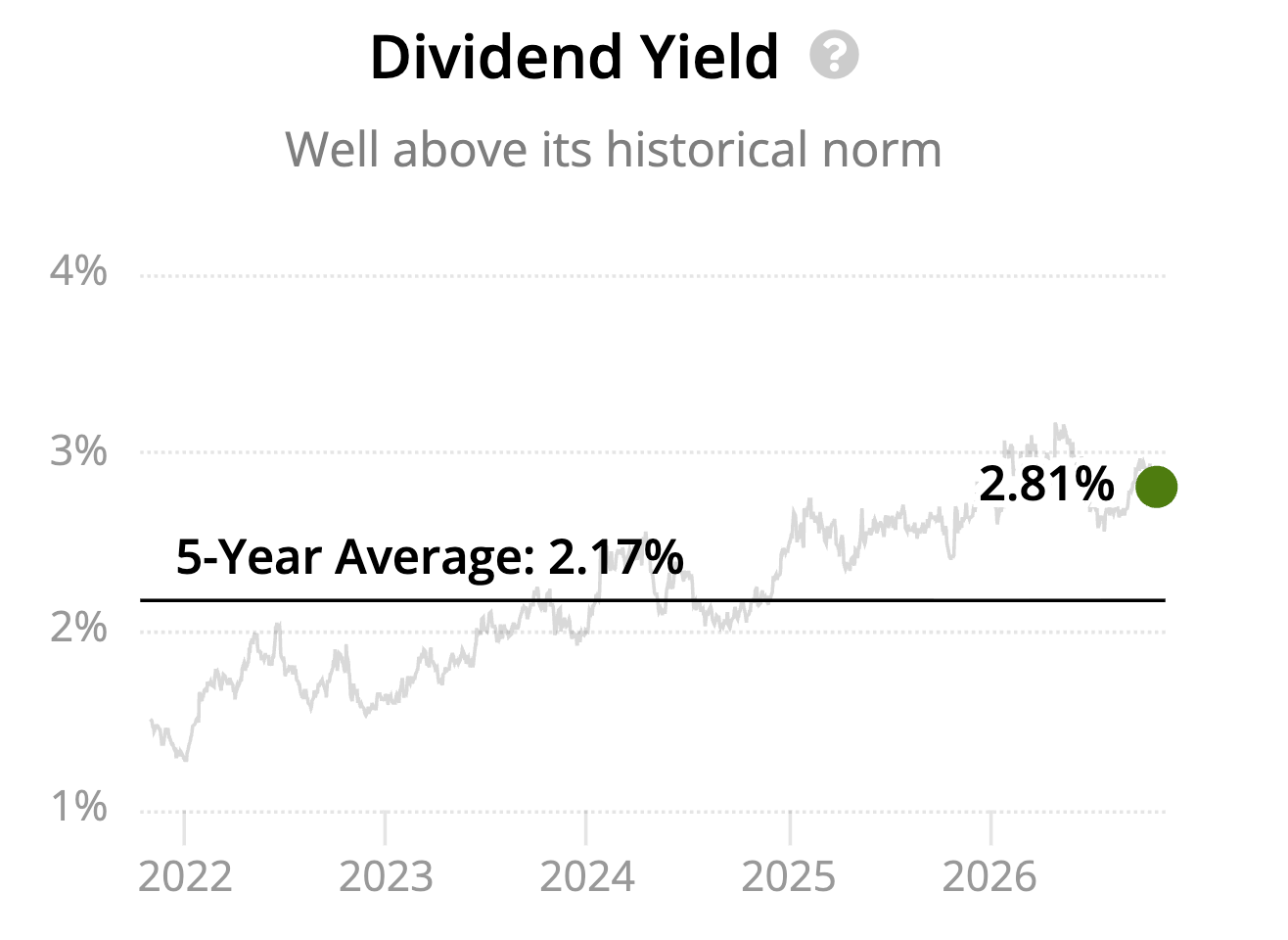
The 2.81% yield sits well above its five-year average of 2.17%, because the dividend has kept growing while the shares have not. Our valuation screen suggests the stock may be undervalued.
California Water yields 2.81%, well above its five-year average of 2.17%. Source: Simply Safe Dividends.
Commerce Bancshares is a Missouri bank founded in 1865, with branches across Missouri, Kansas, Illinois, Oklahoma, and Colorado. Its wealth management and brokerage businesses add fee income that does not depend on lending.
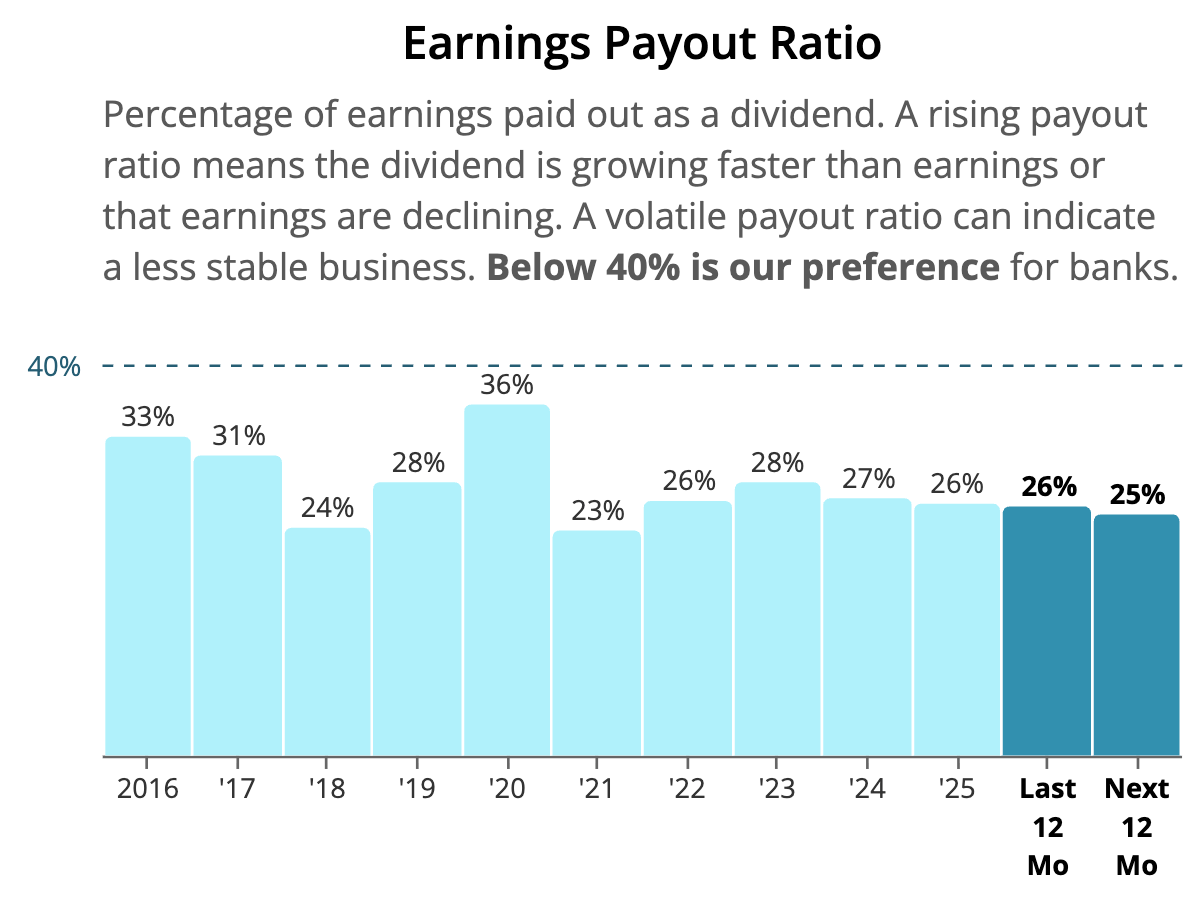
Commerce pays out about a quarter of its earnings. The ratio has stayed below our 40% preference for banks in every year of the past decade.
Commerce pays out 26% of its earnings, expected to be 25% next year, within our 40% preference for banks. Source: Simply Safe Dividends.
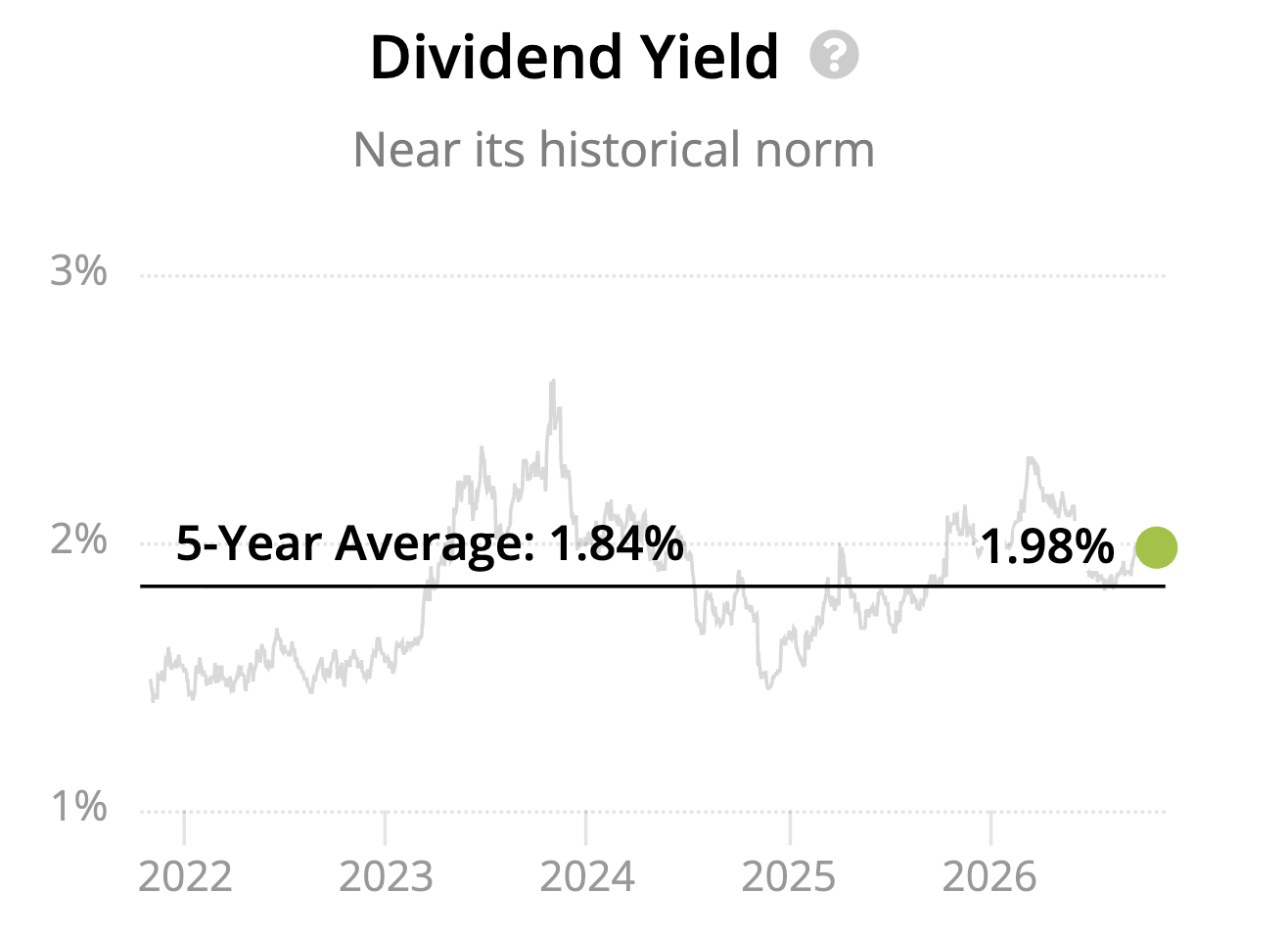
Its 1.98% yield is close to its five-year average of 1.84%.
Commerce yields 1.98%, near its five-year average of 1.84%. Source: Simply Safe Dividends.
W.W. Grainger (GWW)
Sector: Industrials – Trading Companies and Distributors Dividend Yield: 0.7% Dividend Safety Score: Very Safe (99) Dividend Growth Streak: 54 years Credit Rating: A+
W.W. Grainger distributes maintenance, repair, and operating supplies, from safety gear to plumbing parts, to businesses and institutions. Customers buy these items to keep their facilities running, and Grainger's scale gives it purchasing and distribution advantages that smaller rivals struggle to match.
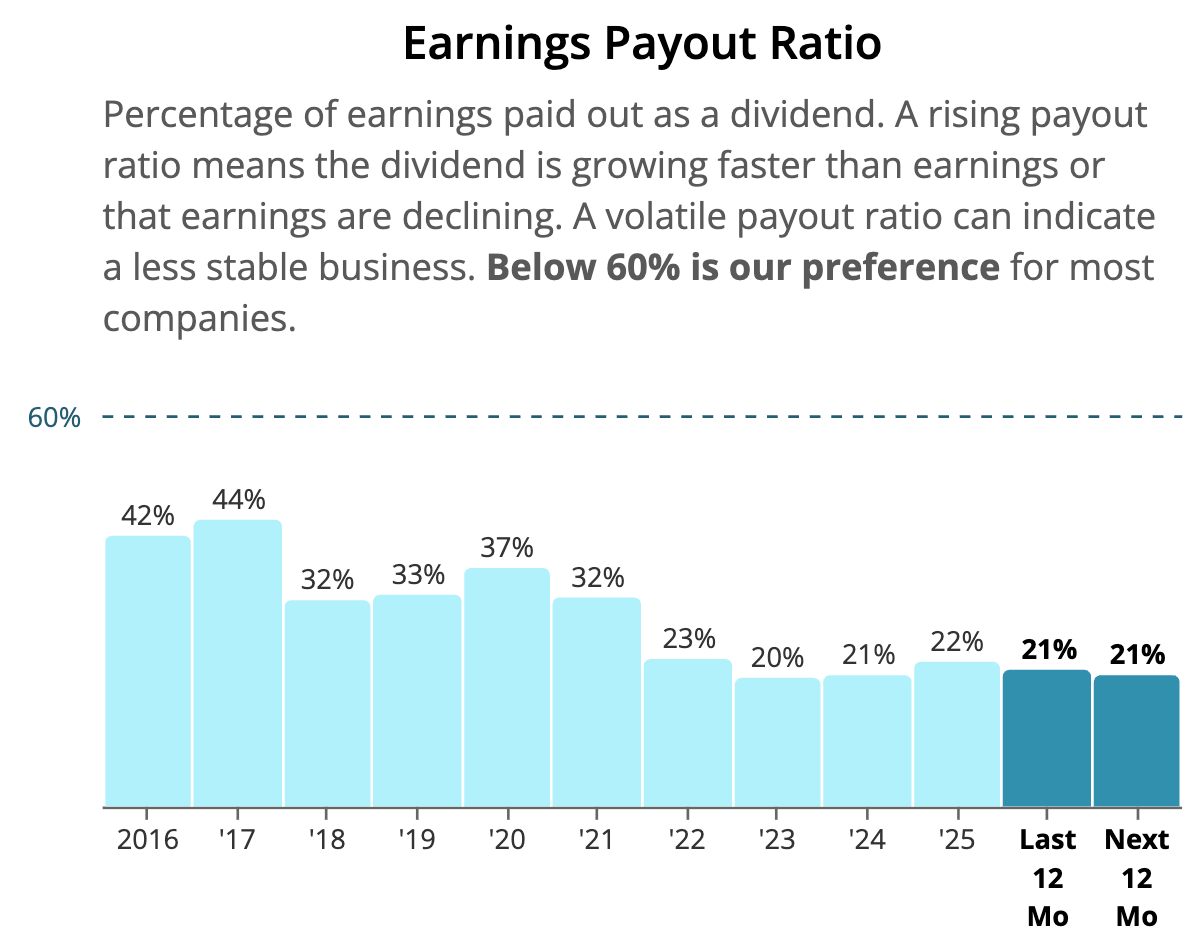
Its payout ratio has fallen from the low 40s in 2016 and 2017 to about 21%, because earnings have grown faster than the dividend. Its most recent raise was 10.2%.
Grainger pays out 21% of its earnings, expected to be 21% next year, within our 60% preference for most companies. Source: Simply Safe Dividends.
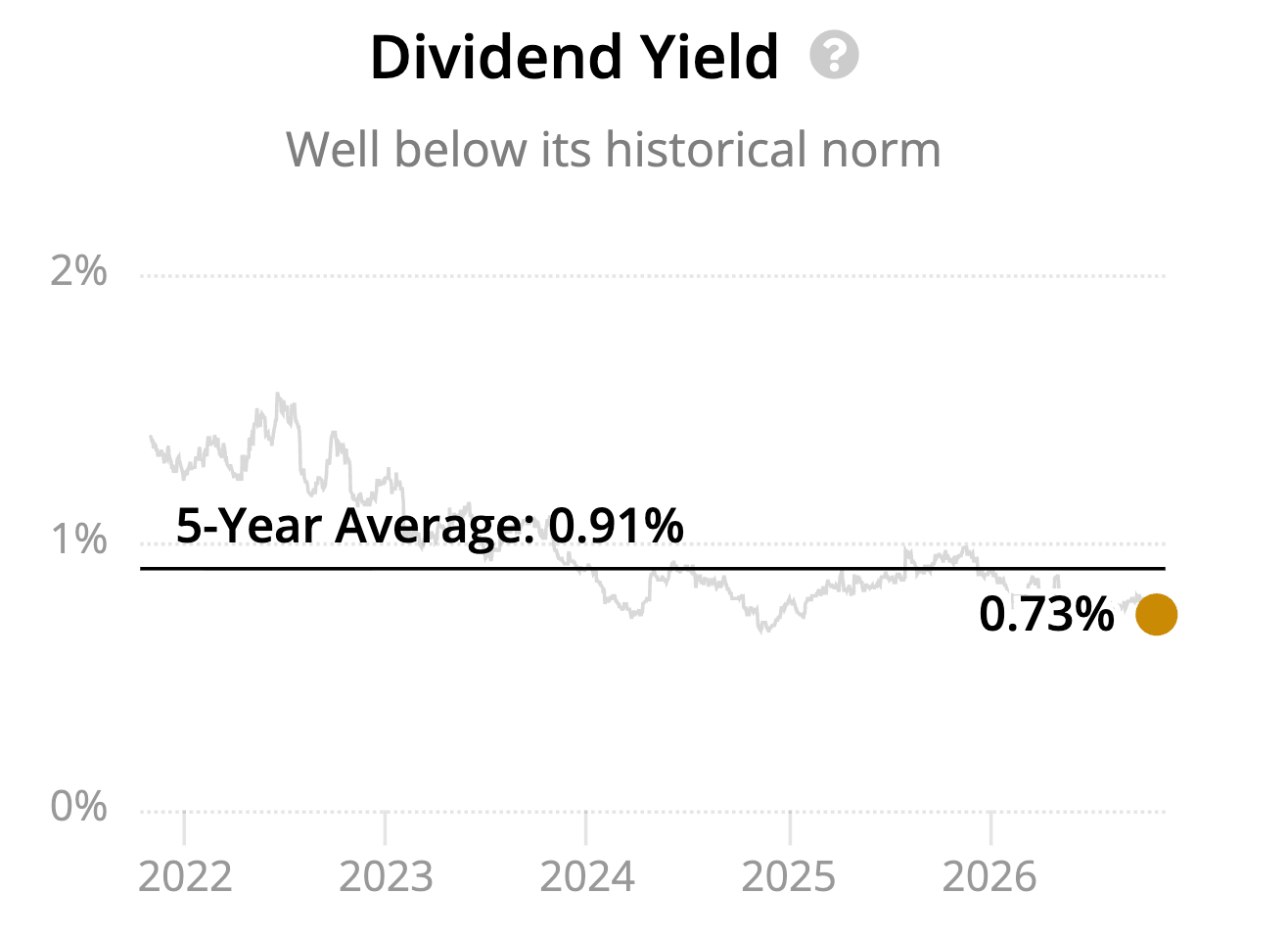
At 0.73%, Grainger has the lowest yield of any Dividend King, well below its five-year average of 0.91%.
Grainger yields 0.73%, well below its five-year average of 0.91%. Source: Simply Safe Dividends.
S&P Global (SPGI)
Sector: Financials – Financial Exchanges and Data Dividend Yield: 0.8% Dividend Safety Score: Very Safe (99) Dividend Growth Streak: 52 years Credit Rating: Not rated by S&P
S&P Global sells credit ratings, market data, and benchmarks such as the S&P 500 to the world's financial markets. Much of its revenue recurs, because bond issuers need ratings and fund managers pay to license its indexes.
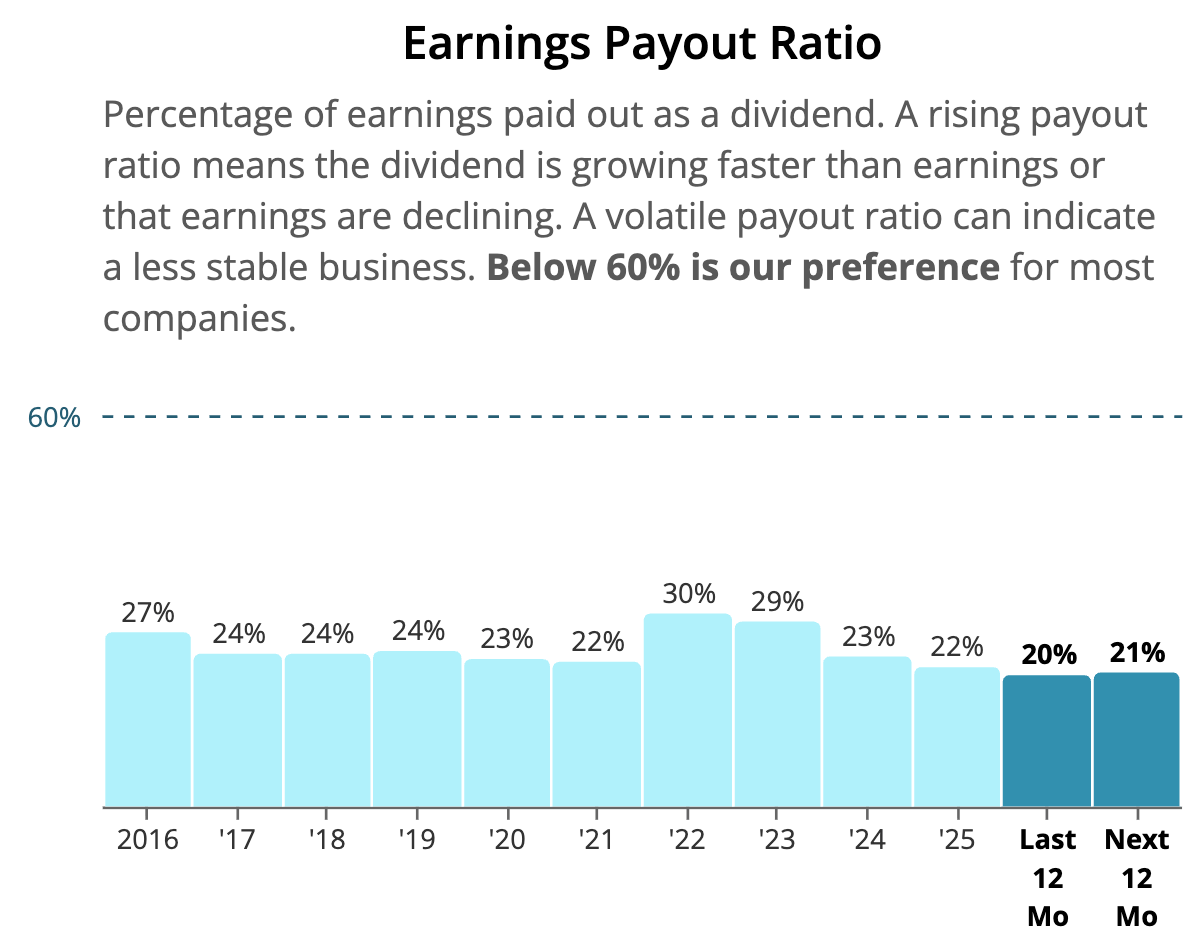
It pays out only about a fifth of its earnings, leaving plenty of room to keep raising the dividend in a year when bond issuance dries up. Its leverage is very low.
S&P Global pays out 20% of its earnings, expected to be 21% next year, within our 60% preference for most companies. Source: Simply Safe Dividends.
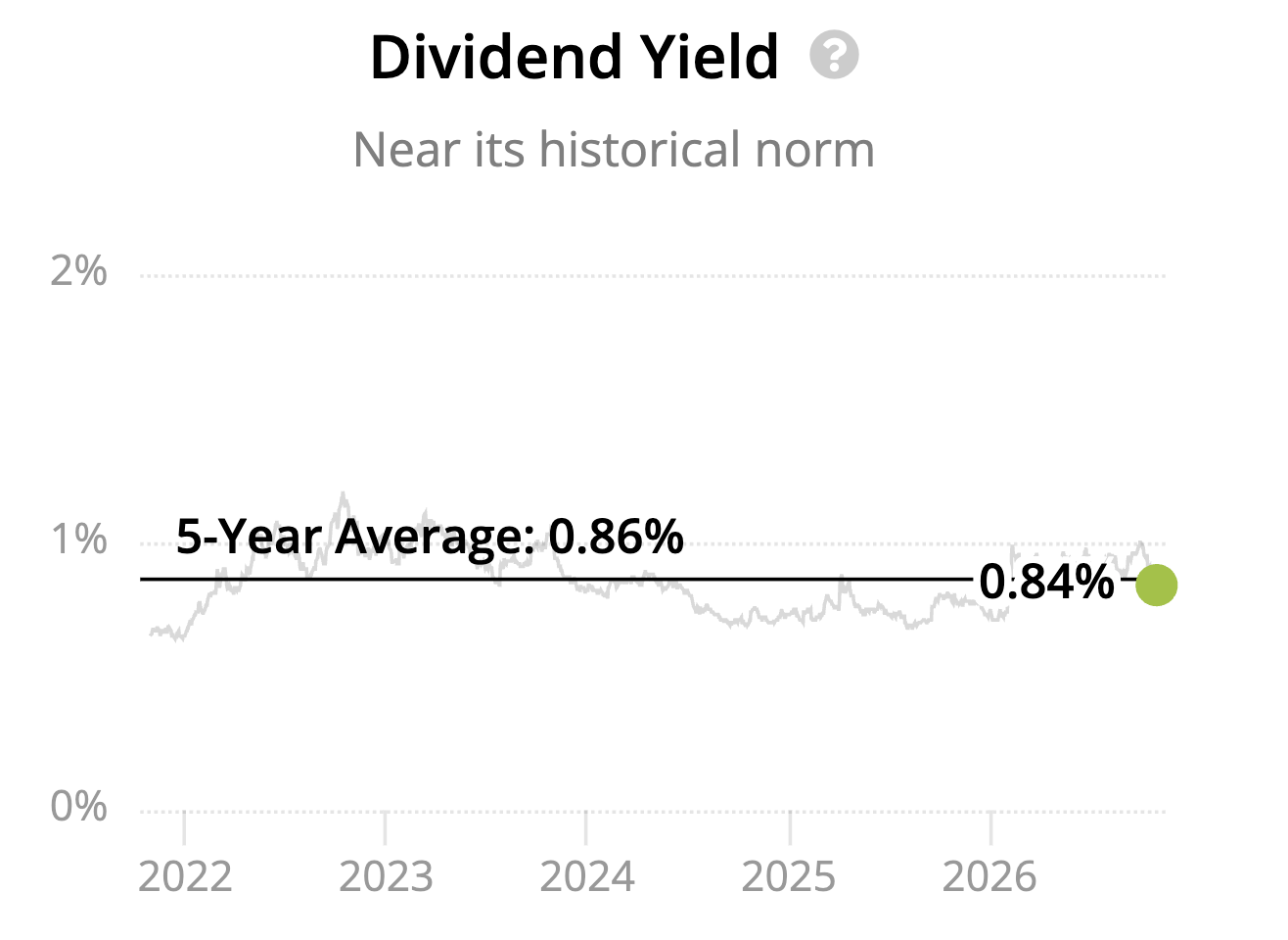
The stock yields 0.84%, in line with its five-year average of 0.86%, and our valuation screen suggests it may be undervalued.
S&P Global yields 0.84%, near its five-year average of 0.86%. Source: Simply Safe Dividends.
Carlisle Companies (CSL)
Sector: Industrials – Building Products Dividend Yield: 1.4% Dividend Safety Score: Very Safe (99) Dividend Growth Streak: 50 years Credit Rating: BBB
Carlisle makes roofing membranes, insulation, and waterproofing systems that seal commercial and residential buildings. Most of its roofing sales come from replacing roofs on existing buildings rather than new construction, which steadies demand.
Carlisle raised its dividend for the 50th consecutive year in August 2026, making it one of this year's new Dividend Kings.
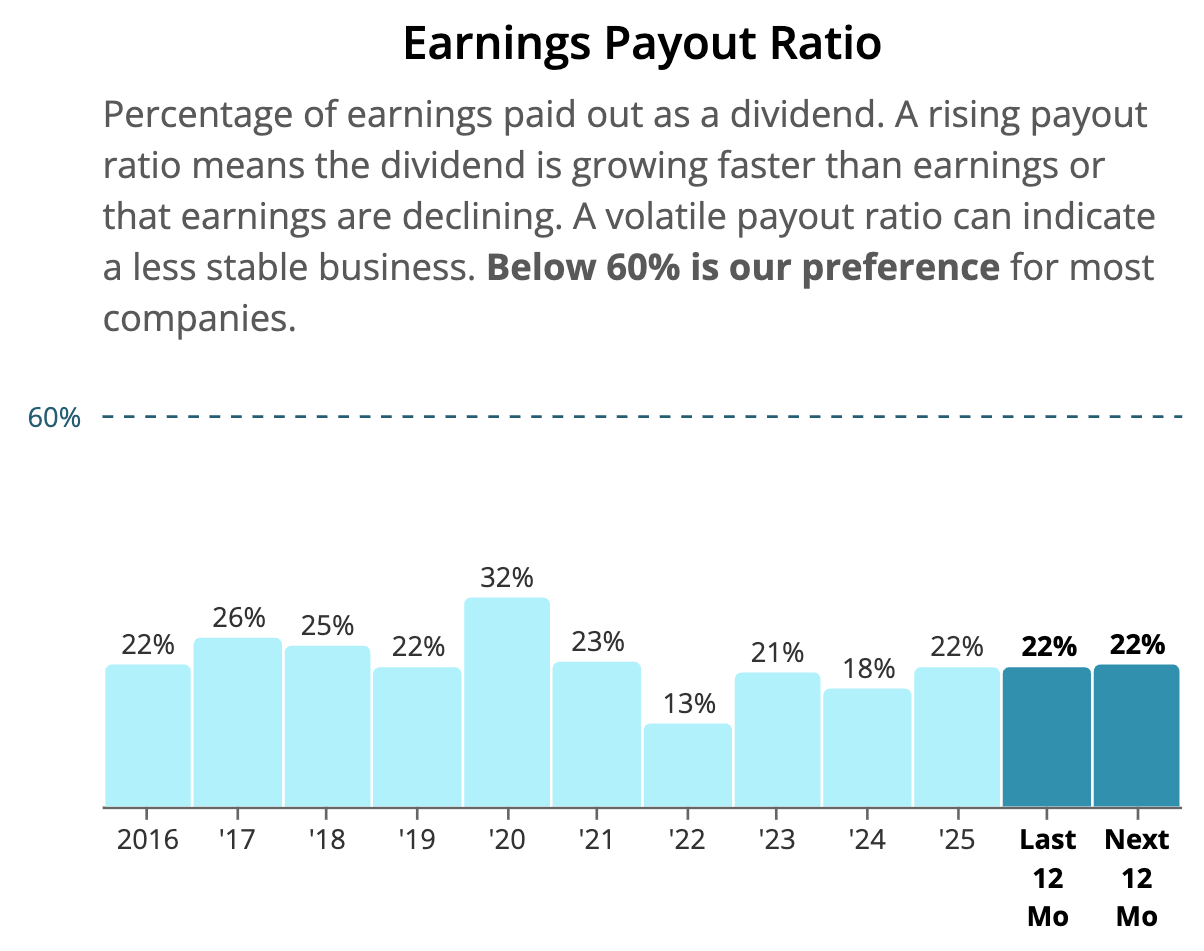
It pays out only about 22% of its earnings, and it has raised its dividend 15.4% a year over the past five years, one of the fastest paces among the Kings.
Carlisle pays out 22% of its earnings, expected to be 22% next year, within our 60% preference for most companies. Source: Simply Safe Dividends.
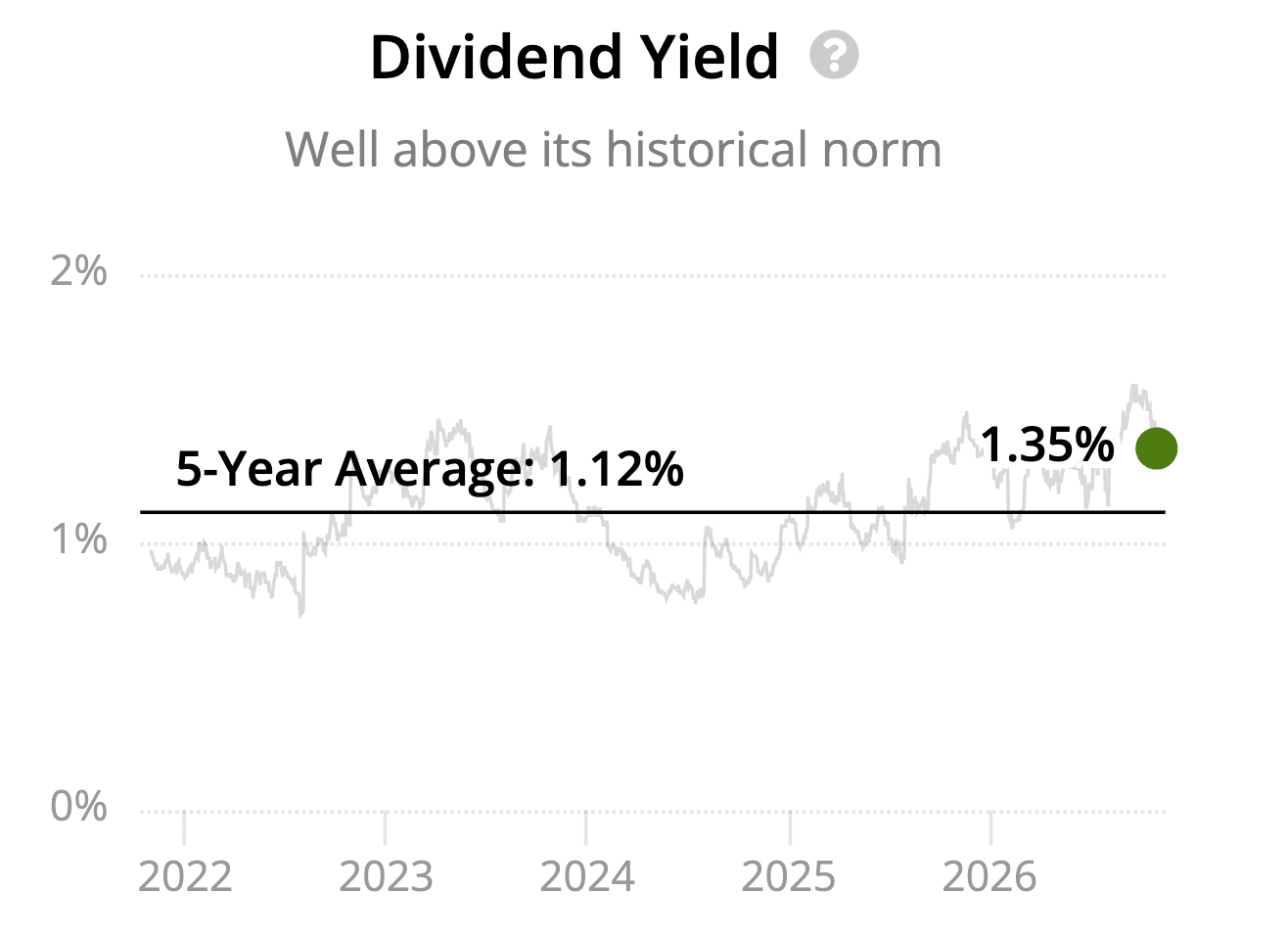
The 1.35% yield sits well above its five-year average of 1.12%.
Carlisle yields 1.35%, well above its five-year average of 1.12%. Source: Simply Safe Dividends.
American States Water (AWR)
Sector: Utilities – Water Utilities Dividend Yield: 2.6% Dividend Safety Score: Very Safe (98) Dividend Growth Streak: 71 years Credit Rating: A
American States Water owns Golden State Water, a regulated California water utility, along with a small electric utility and a business that runs water systems on military bases.
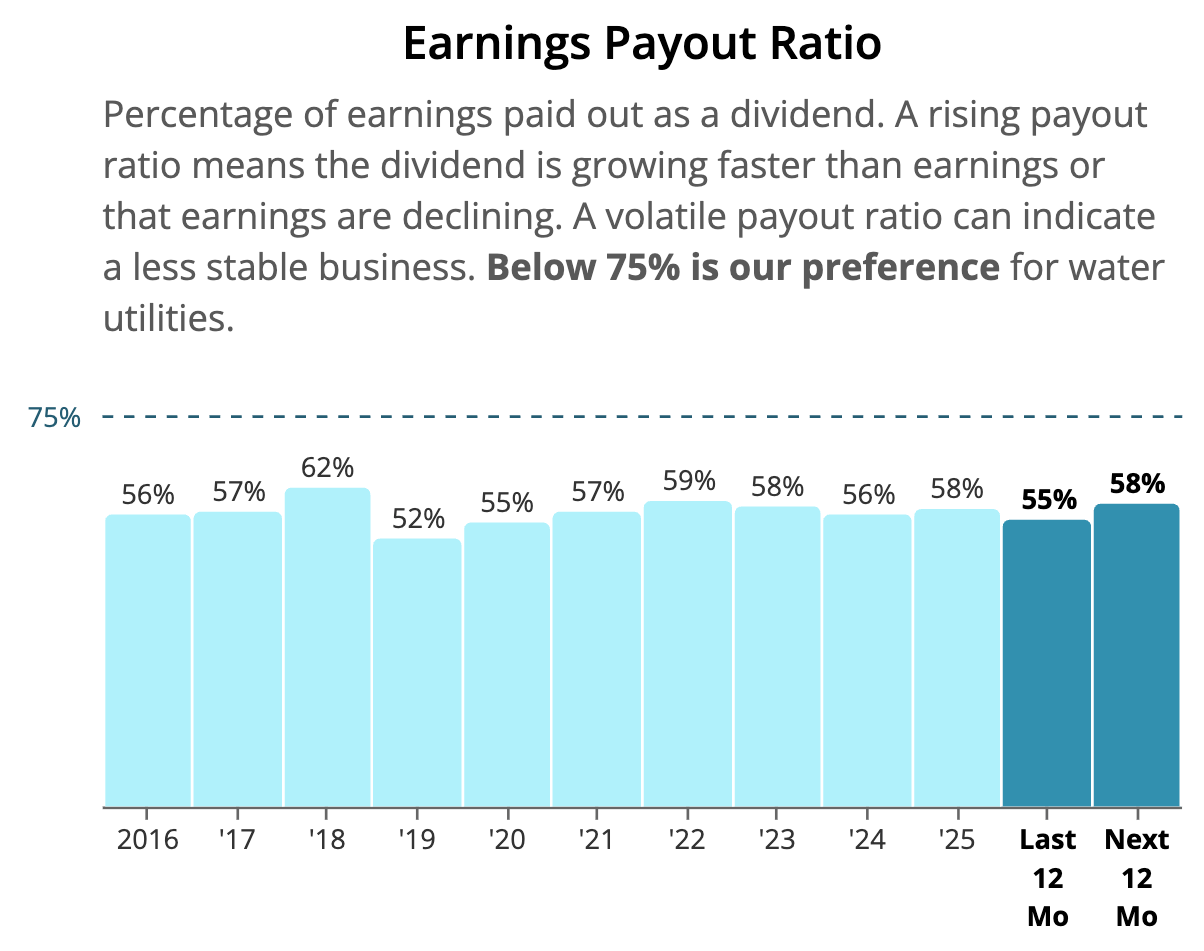
Its 71-year dividend growth streak is the longest of any Dividend King. Its payout ratio has held in the 50s for a decade, inside our 75% preference for water utilities, and its leverage is very low for the industry.
American States Water pays out 55% of its earnings, expected to be 58% next year, within our 75% preference for water utilities. Source: Simply Safe Dividends.
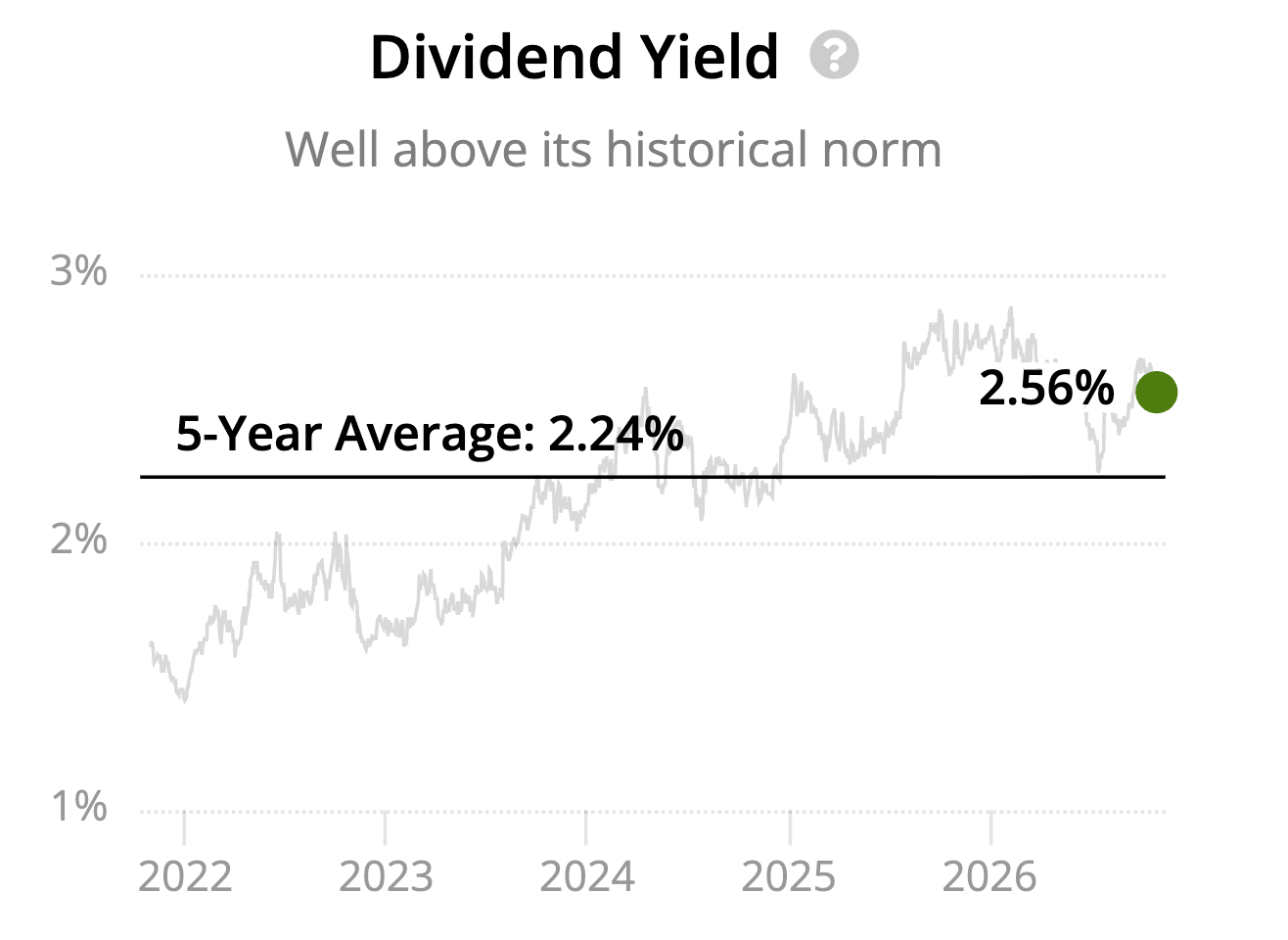
Its 2.56% yield is well above its five-year average of 2.24%, and our valuation screen suggests the stock may be undervalued.
American States Water yields 2.56%, well above its five-year average of 2.24%. Source: Simply Safe Dividends.
National Fuel Gas (NFG)
Sector: Utilities – Gas Utilities Dividend Yield: 2.8% Dividend Safety Score: Very Safe (95) Dividend Growth Streak: 55 years Credit Rating: BBB-
National Fuel Gas produces natural gas in Appalachia, moves it through its own pipelines and storage fields, and delivers it to homes in western New York and Pennsylvania. Its regulated utility and pipeline businesses steady results when gas prices swing.
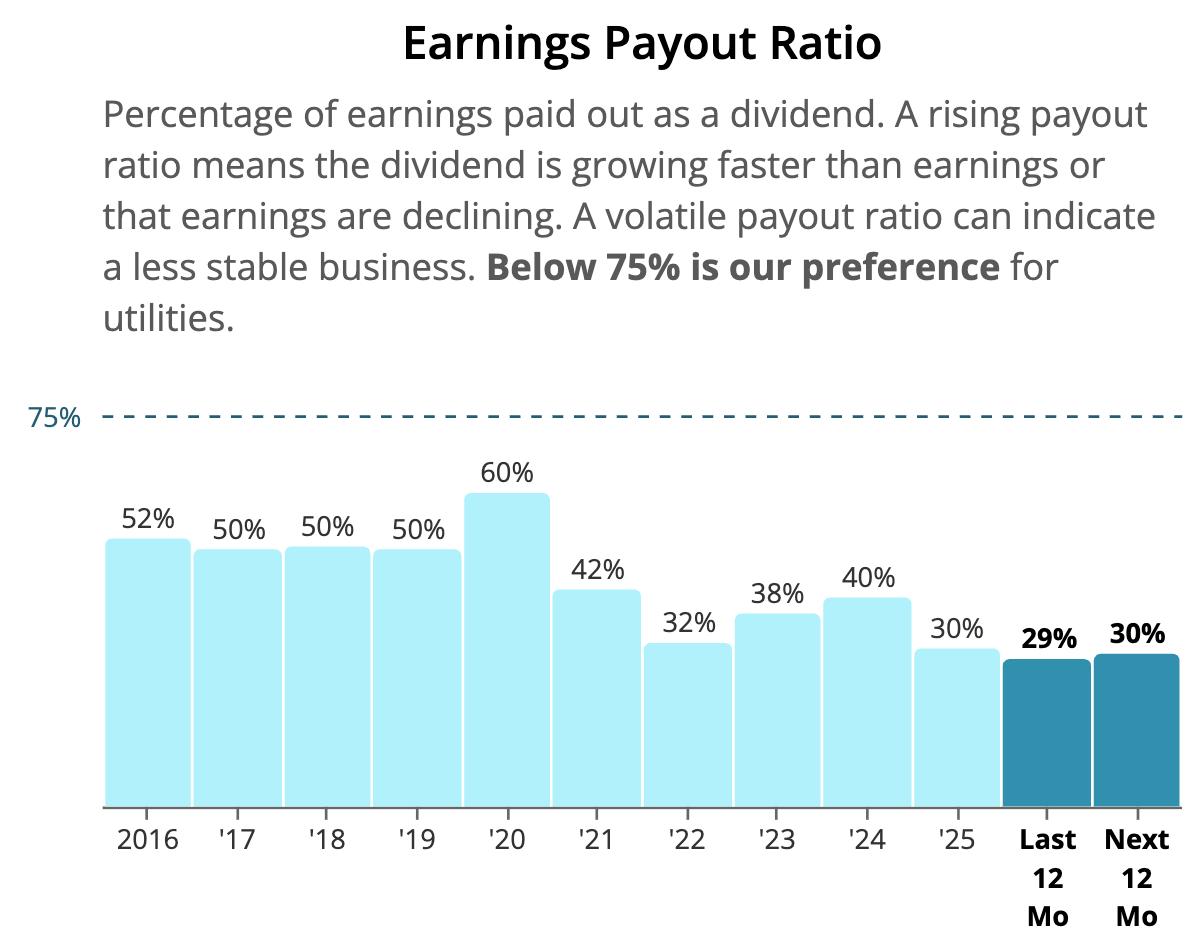
Its payout ratio has fallen from 60% in 2020 to about 30% as production grew, and its leverage is very low for a utility.
National Fuel Gas pays out 29% of its earnings, expected to be 30% next year, within our 75% preference for utilities. Source: Simply Safe Dividends.
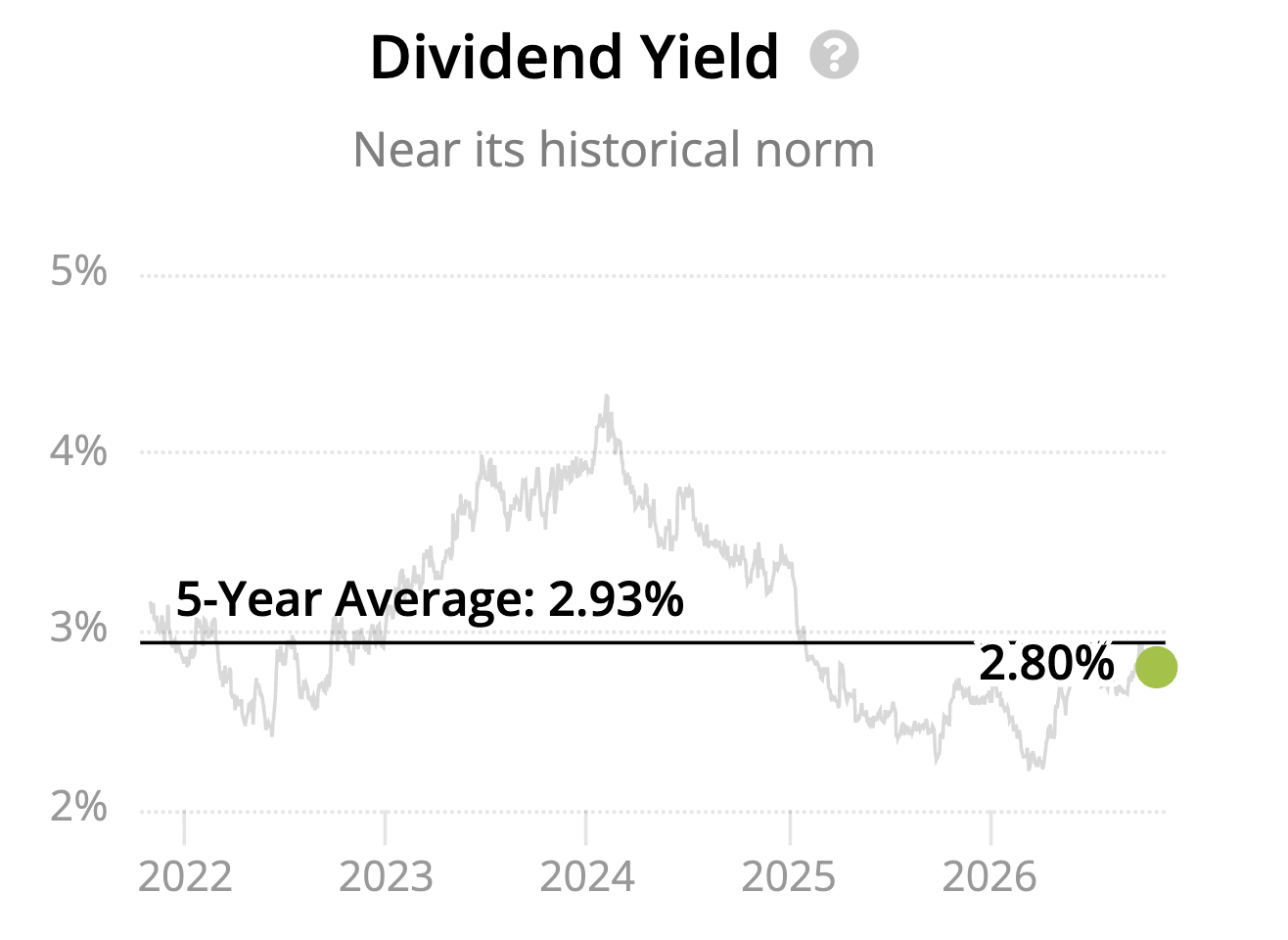
The 2.80% yield is close to its five-year average of 2.93%.
National Fuel Gas yields 2.80%, near its five-year average of 2.93%. Source: Simply Safe Dividends.
Parker-Hannifin (PH)
Sector: Industrials – Industrial Machinery and Components Dividend Yield: 0.9% Dividend Safety Score: Very Safe (94) Dividend Growth Streak: 70 years Credit Rating: BBB+
Parker-Hannifin makes hydraulic, pneumatic, and electromechanical components that control motion in factories, heavy equipment, and aircraft. Much of its revenue comes from replacement parts that keep customers' machines running.
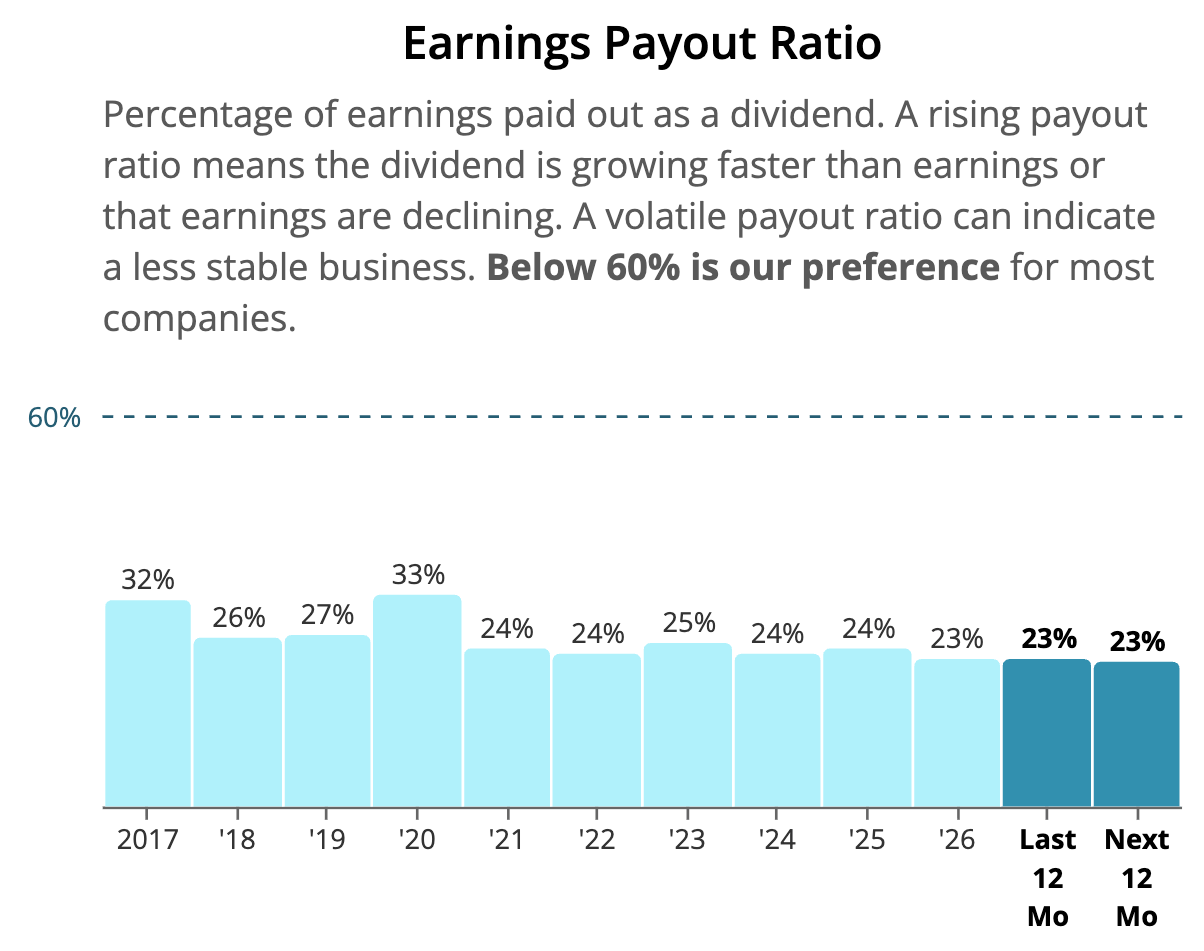
Its payout ratio has held near 23% for five years even as the dividend grew 15.1% a year.
Parker-Hannifin pays out 23% of its earnings, expected to be 23% next year, within our 60% preference for most companies. Source: Simply Safe Dividends.
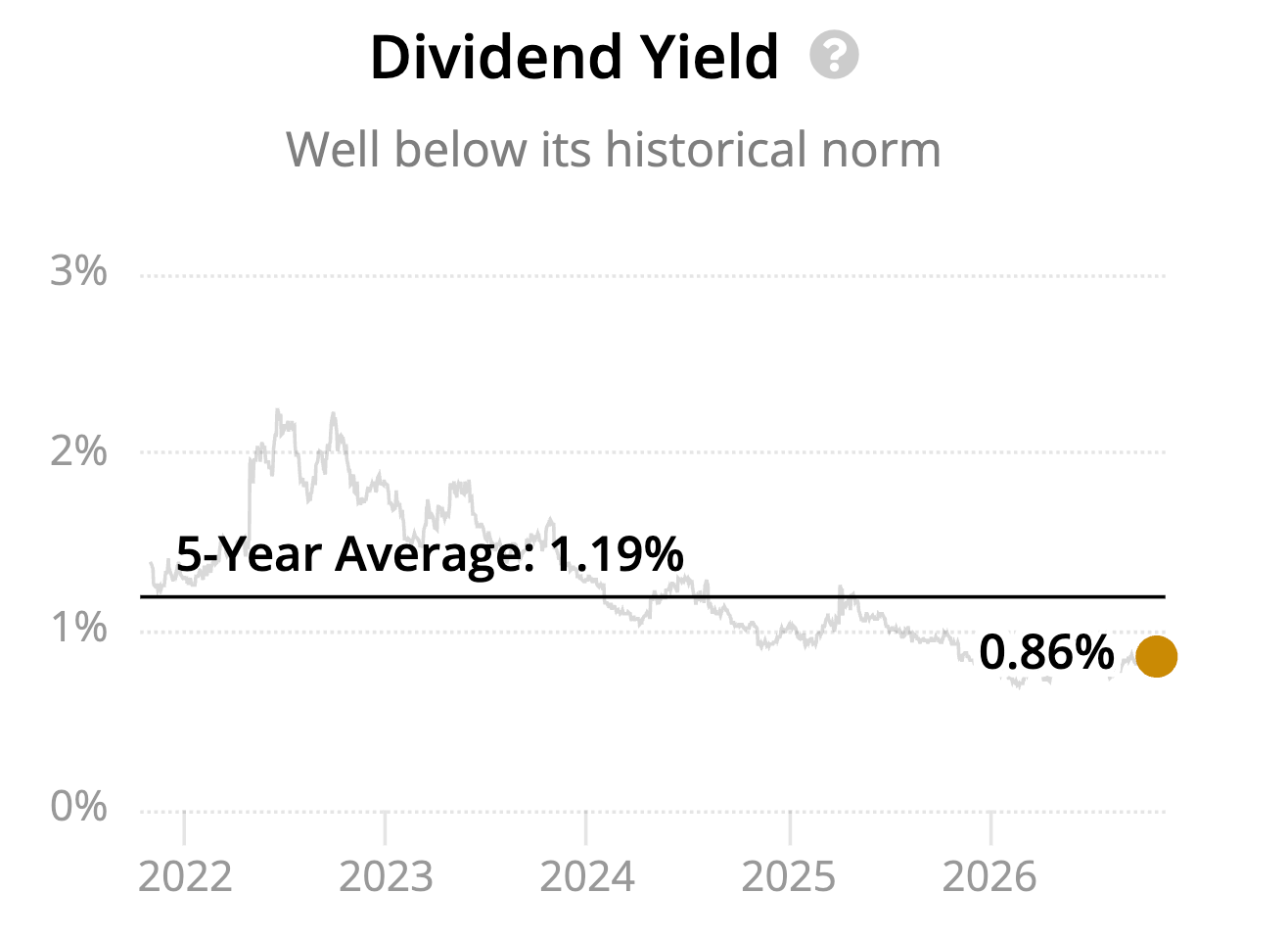
At 0.86%, the stock yields well below its five-year average of 1.19% after a strong run in the shares.
Parker-Hannifin yields 0.86%, well below its five-year average of 1.19%. Source: Simply Safe Dividends.
Nordson (NDSN)
Sector: Industrials – Industrial Machinery and Components Dividend Yield: 1.1% Dividend Safety Score: Very Safe (94) Dividend Growth Streak: 63 years Credit Rating: BBB
Nordson makes precision equipment that dispenses adhesives, coatings, and sealants in packaging, electronics, and medical device manufacturing. Its installed systems keep buying parts and supplies long after the initial sale.
It pays out under 30% of its earnings. Its dividend has grown 15.6% a year over the past five years, tied with Lowe's for the fastest pace of any Dividend King.
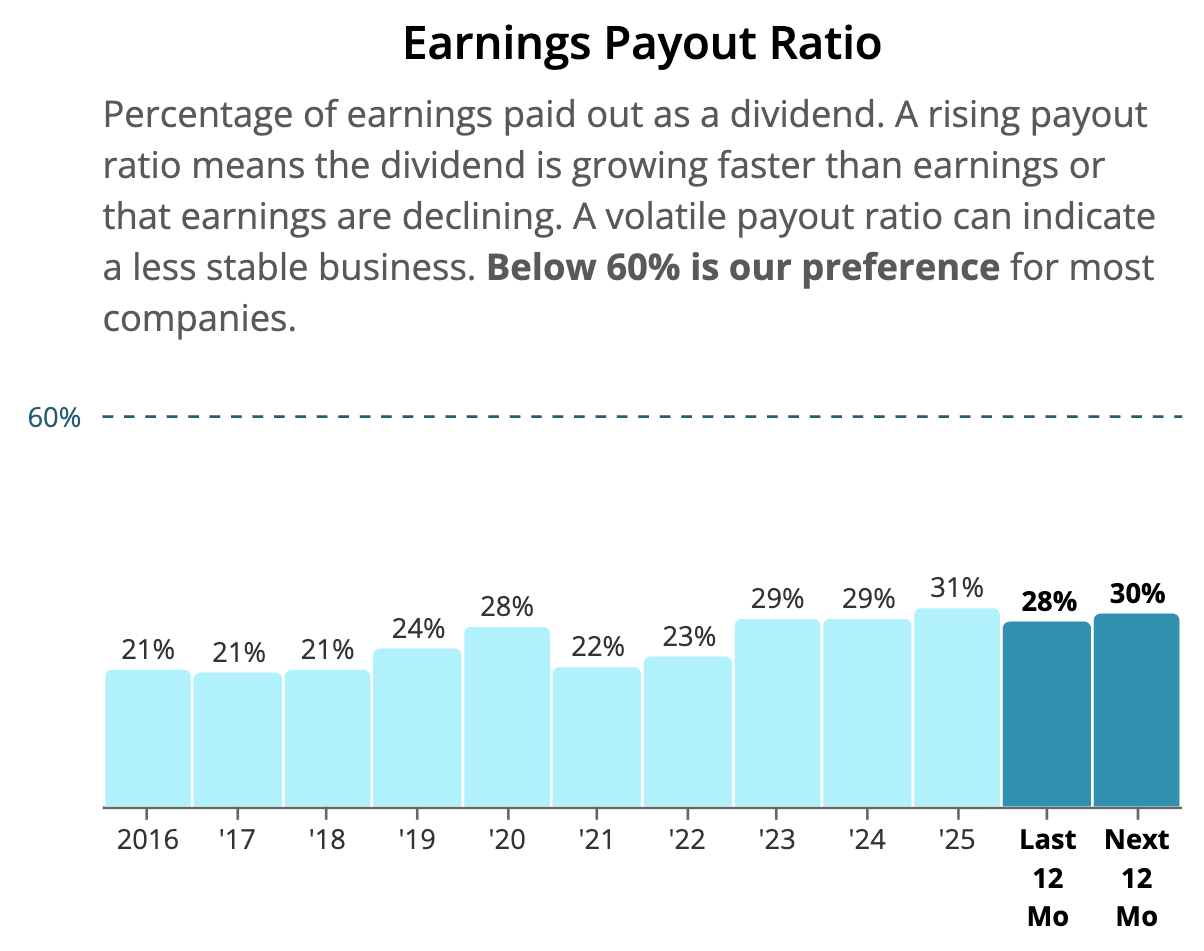
Nordson pays out 28% of its earnings, expected to be 30% next year, within our 60% preference for most companies. Source: Simply Safe Dividends.
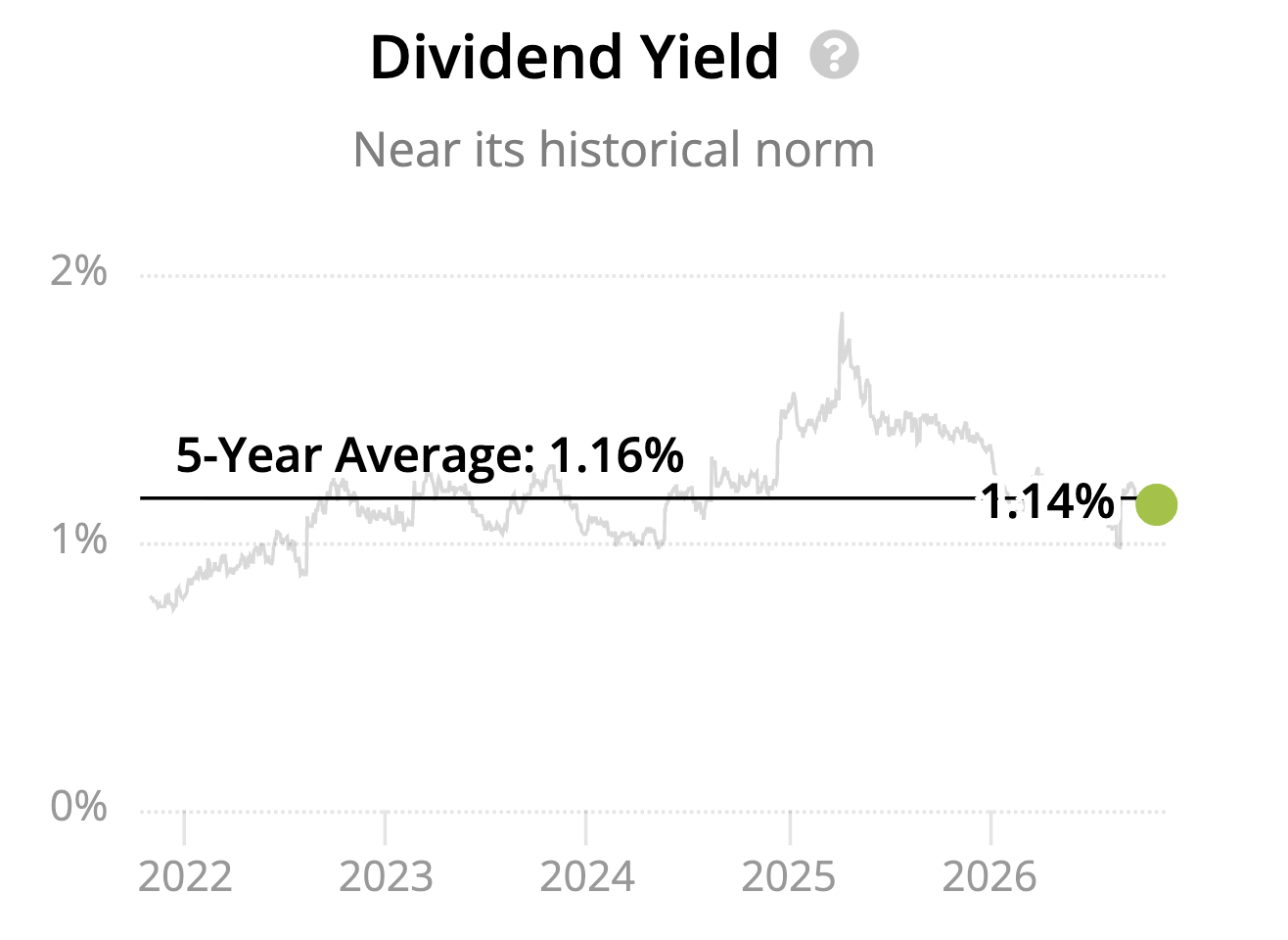
The yield of 1.14% is near its five-year average of 1.16%.
Nordson yields 1.14%, near its five-year average of 1.16%. Source: Simply Safe Dividends.
Middlesex Water (MSEX)
Sector: Utilities – Water Utilities Dividend Yield: 2.8% Dividend Safety Score: Very Safe (91) Dividend Growth Streak: 54 years Credit Rating: A
Middlesex Water supplies drinking water and wastewater service in New Jersey and Delaware to a population of about half a million people.
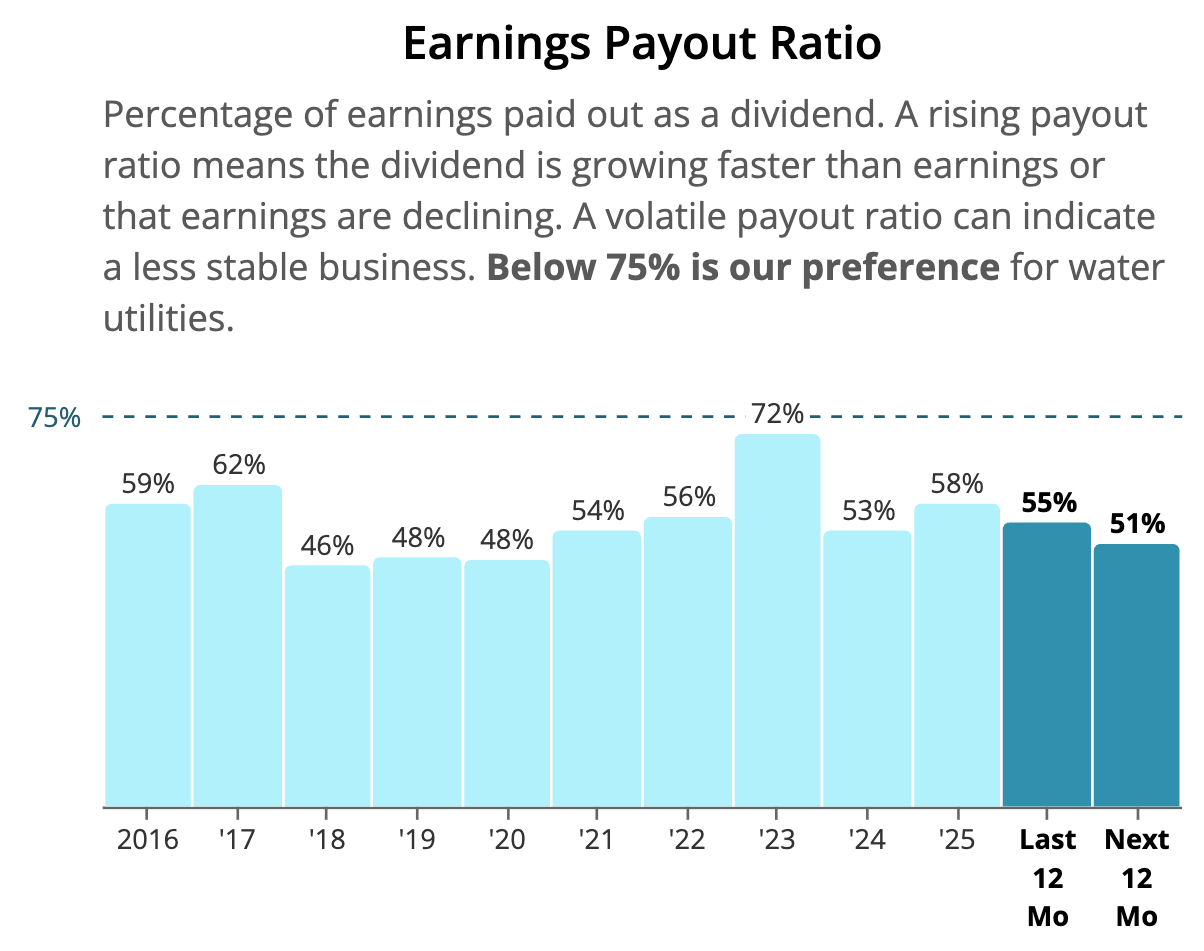
Its payout ratio has mostly stayed in the 50s, apart from a 72% reading in 2023, inside our 75% preference for water utilities.
Middlesex Water pays out 55% of its earnings, expected to be 51% next year, within our 75% preference for water utilities. Source: Simply Safe Dividends.
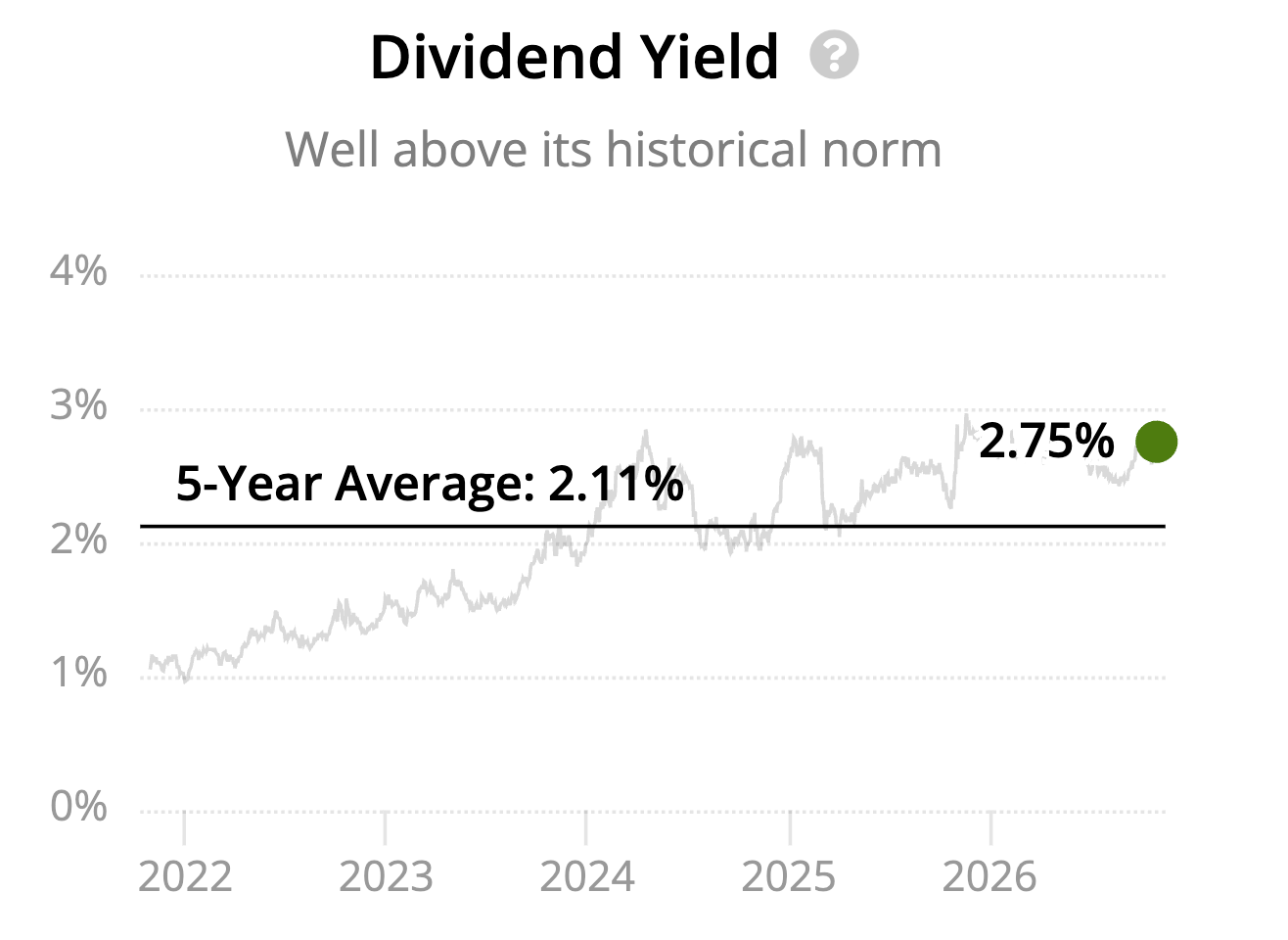
Its 2.75% yield is well above its five-year average of 2.11%, and our valuation screen suggests the stock may be undervalued.
Middlesex Water yields 2.75%, well above its five-year average of 2.11%. Source: Simply Safe Dividends.
Becton Dickinson (BDX)
Sector: Healthcare – Health Care Equipment Dividend Yield: 2.1% Dividend Safety Score: Very Safe (91) Dividend Growth Streak: 53 years Credit Rating: BBB
Becton Dickinson makes syringes, needles, catheters, and infusion pumps used every day in hospitals. It completed the separation of its life sciences business in early 2026, leaving a simpler company built around products hospitals use constantly.
Its payout ratio has hovered around 30% for a decade, though its latest raise was a token 1.0%.
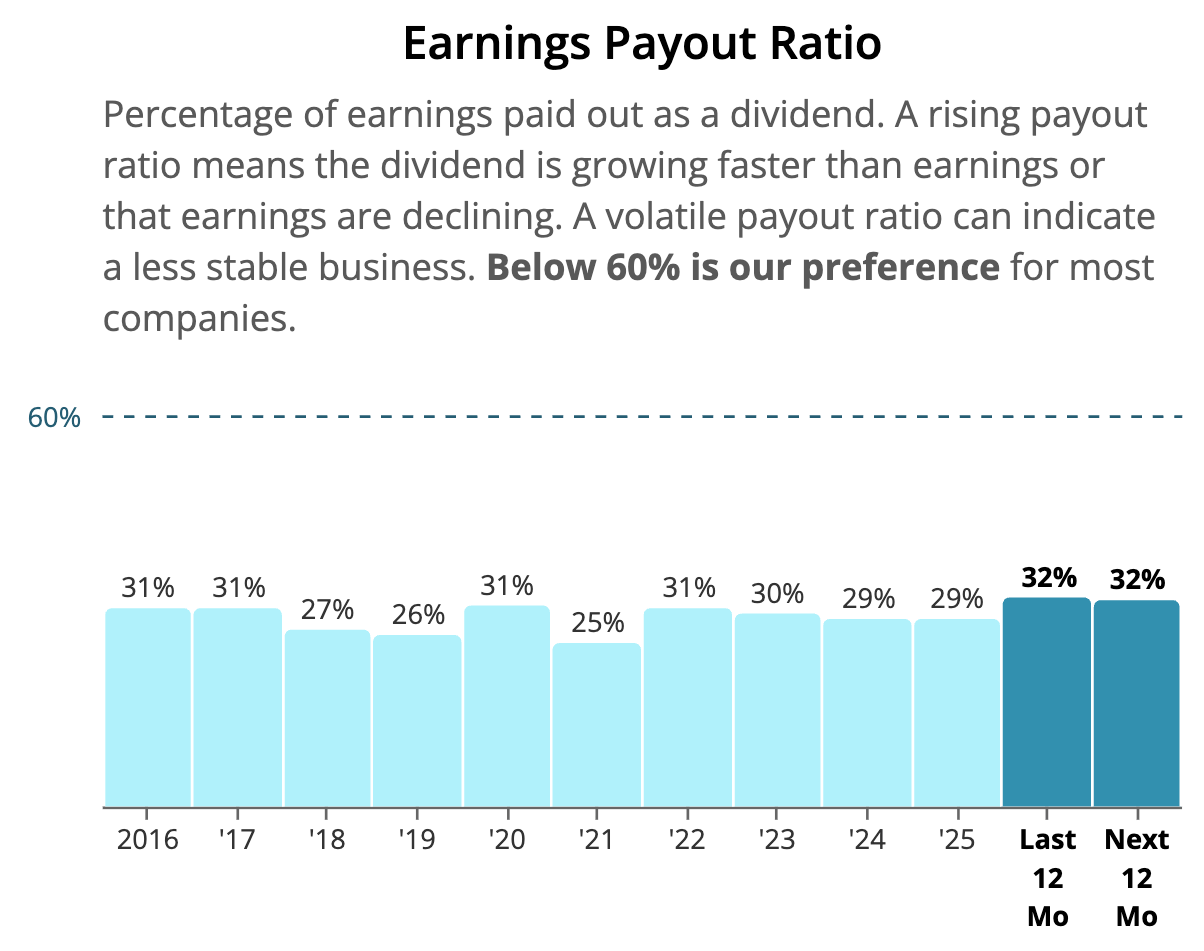
Becton Dickinson pays out 32% of its earnings, expected to be 32% next year, within our 60% preference for most companies. Source: Simply Safe Dividends.
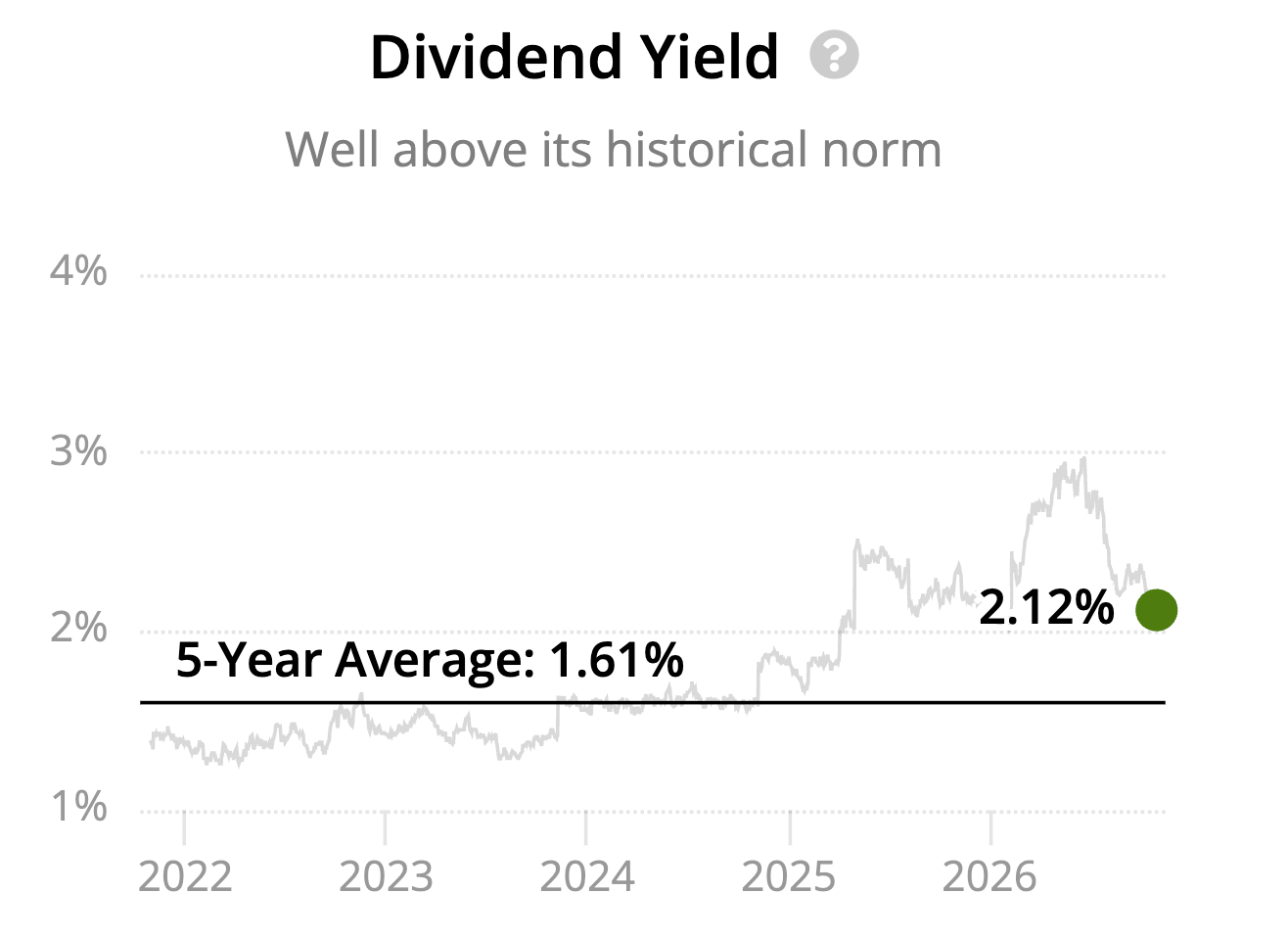
The 2.12% yield sits well above its five-year average of 1.61%, and our valuation screen suggests the stock may be undervalued.
Becton Dickinson yields 2.12%, well above its five-year average of 1.61%. Source: Simply Safe Dividends.
Procter & Gamble owns Tide, Pampers, Charmin, Gillette, and dozens of other household brands. We lowered its Dividend Safety Score from 99 to 90, still Very Safe, in September 2026 as store brands closed the quality gap in categories such as paper products.
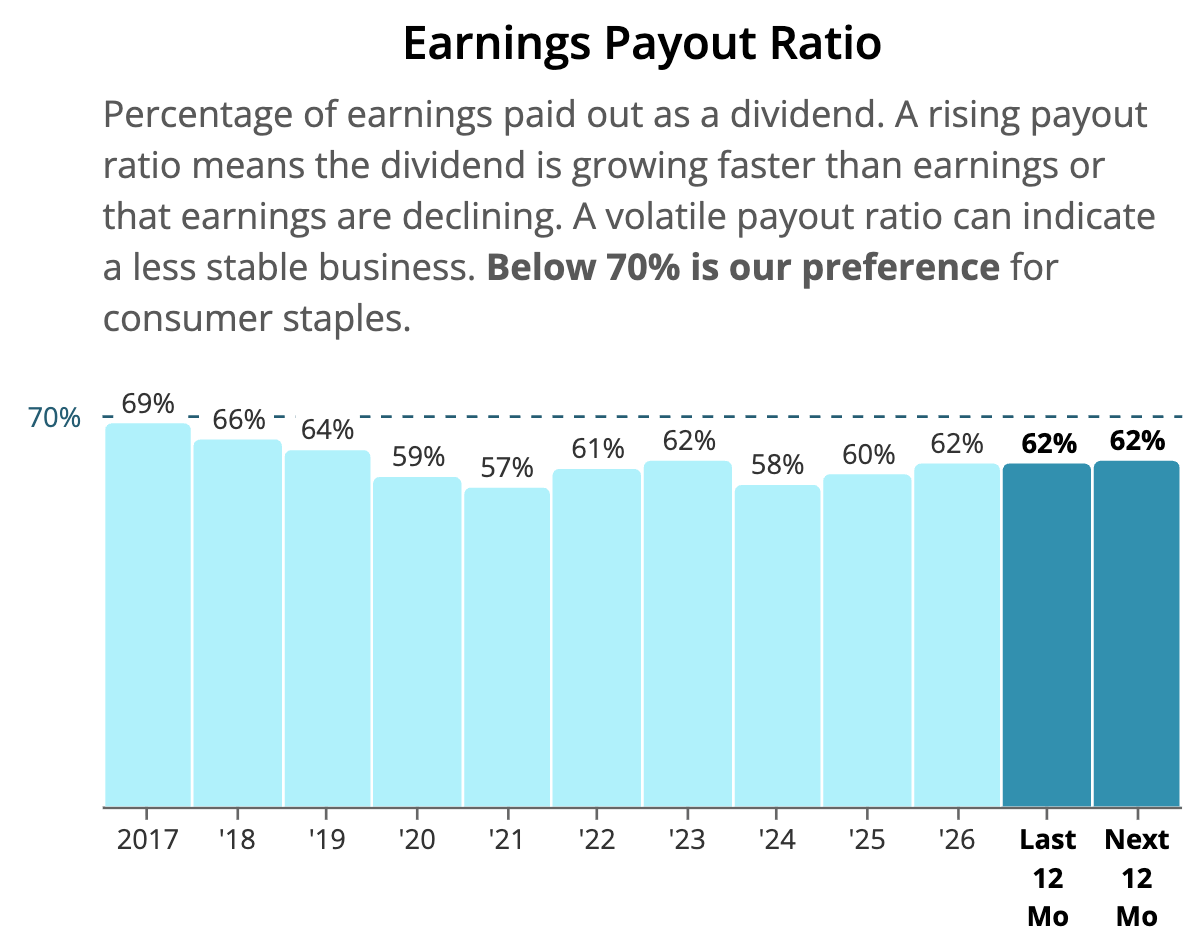
It pays out about 62% of its earnings, within our 70% preference for consumer staples, and its leverage is very low.
Procter & Gamble pays out 62% of its earnings, expected to be 62% next year, within our 70% preference for consumer staples. Source: Simply Safe Dividends.
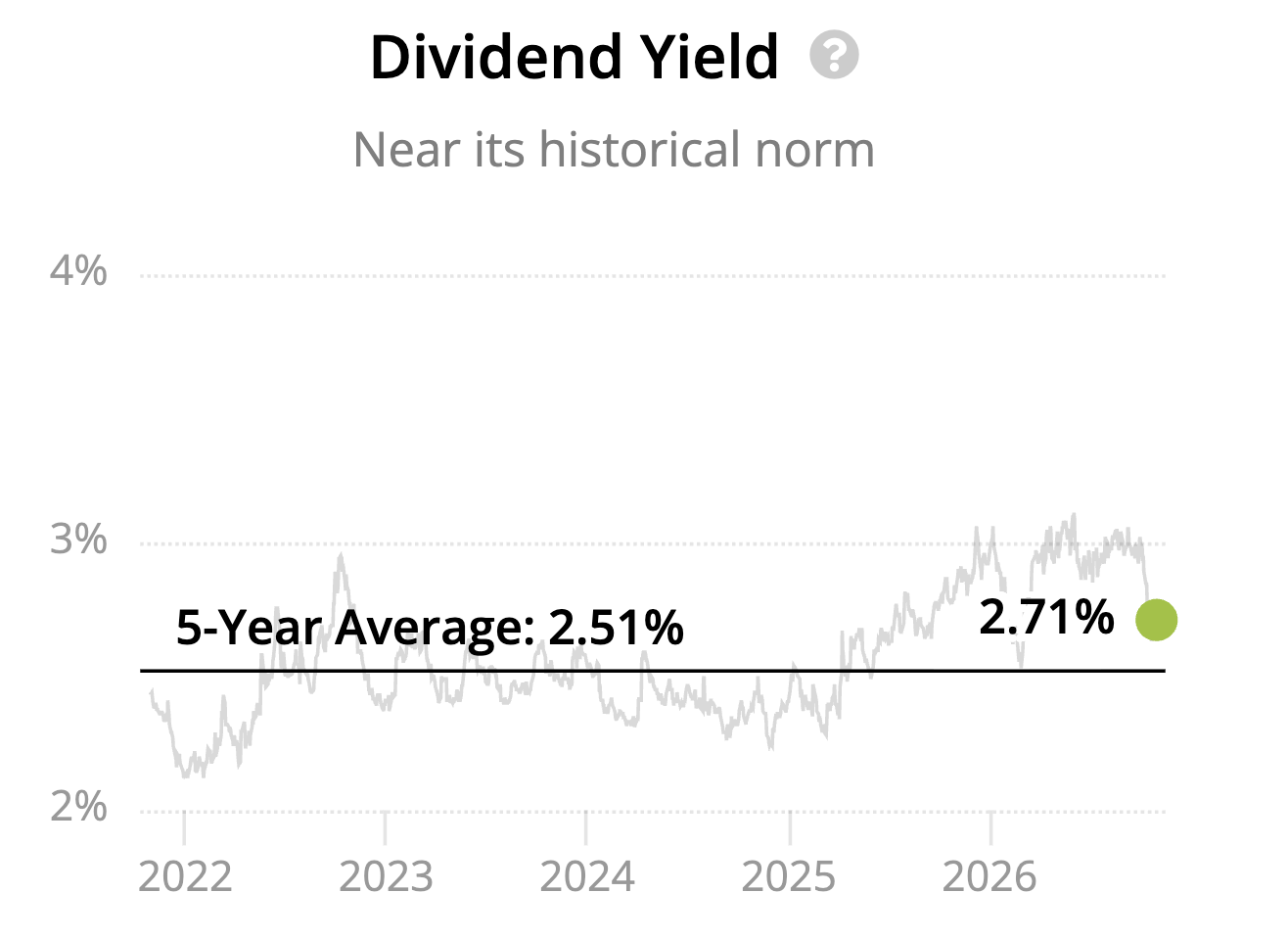
The 2.71% yield is near its five-year average of 2.51%.
Procter & Gamble yields 2.71%, near its five-year average of 2.51%. Source: Simply Safe Dividends.
Marzetti (MZTI)
Sector: Consumer Staples – Packaged Foods and Meats Dividend Yield: 3.7% Dividend Safety Score: Very Safe (90) Dividend Growth Streak: 63 years Credit Rating: Not rated by S&P
Marzetti, formerly Lancaster Colony, sells Marzetti salad dressings, New York Bakery garlic bread, and Sister Schubert's rolls to grocery stores and restaurant chains.
We lowered its Dividend Safety Score from 95 to 90 in February 2026 after its $400 million purchase of Bachan's barbecue sauce, which left it with more debt than cash for the first time in at least a decade.
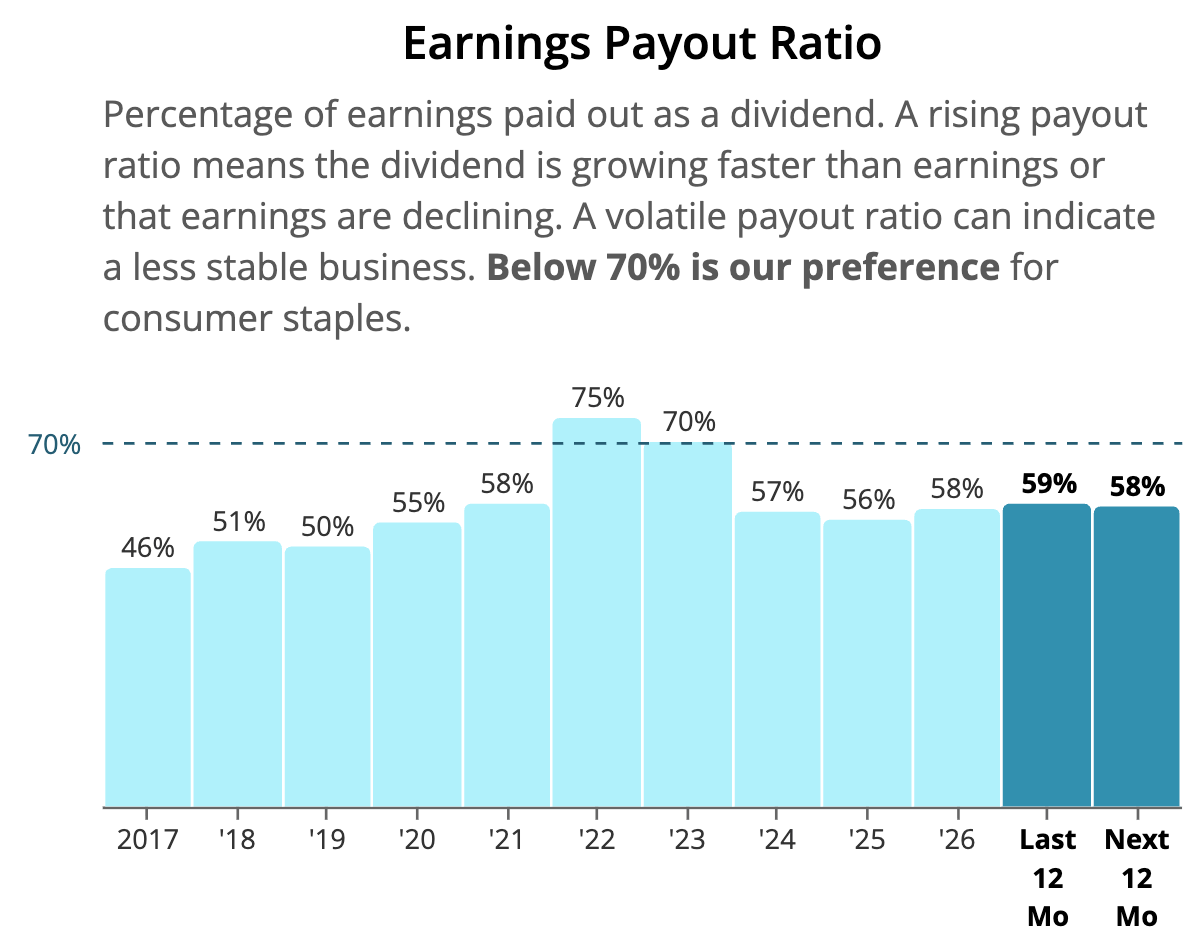
Its payout ratio has stayed between 46% and 58% outside of 2022 and 2023, within our 70% preference for consumer staples.
Marzetti pays out 59% of its earnings, expected to be 58% next year, within our 70% preference for consumer staples. Source: Simply Safe Dividends.
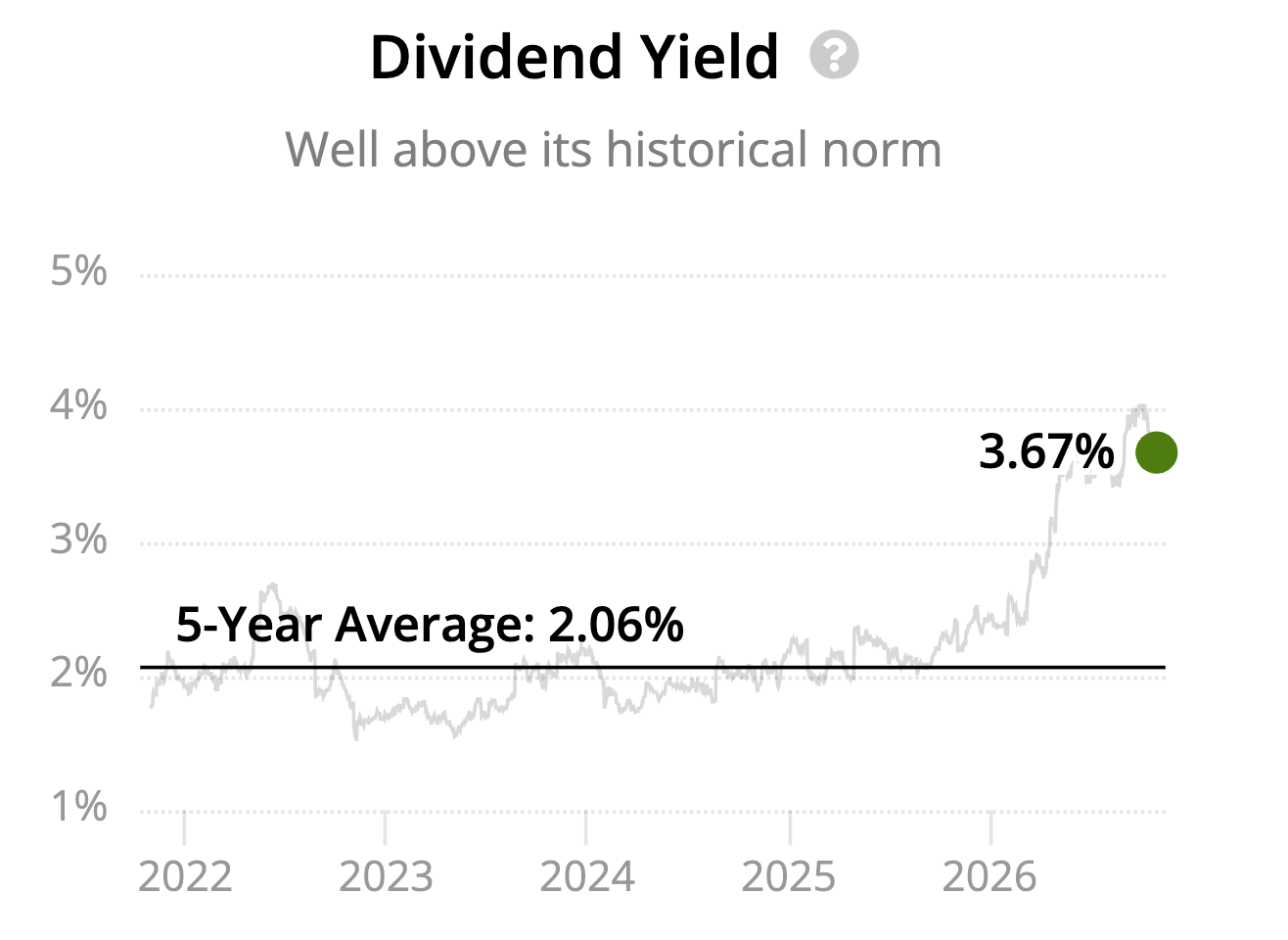
The yield of 3.67% is well above its five-year average of 2.06%, and our valuation screen suggests the stock may be undervalued.
Marzetti yields 3.67%, well above its five-year average of 2.06%. Source: Simply Safe Dividends.
Colgate-Palmolive sells toothpaste, soap, household cleaners, and Hill's pet food in more than 200 countries. Most of its sales come from outside the U.S., including fast-growing emerging markets.
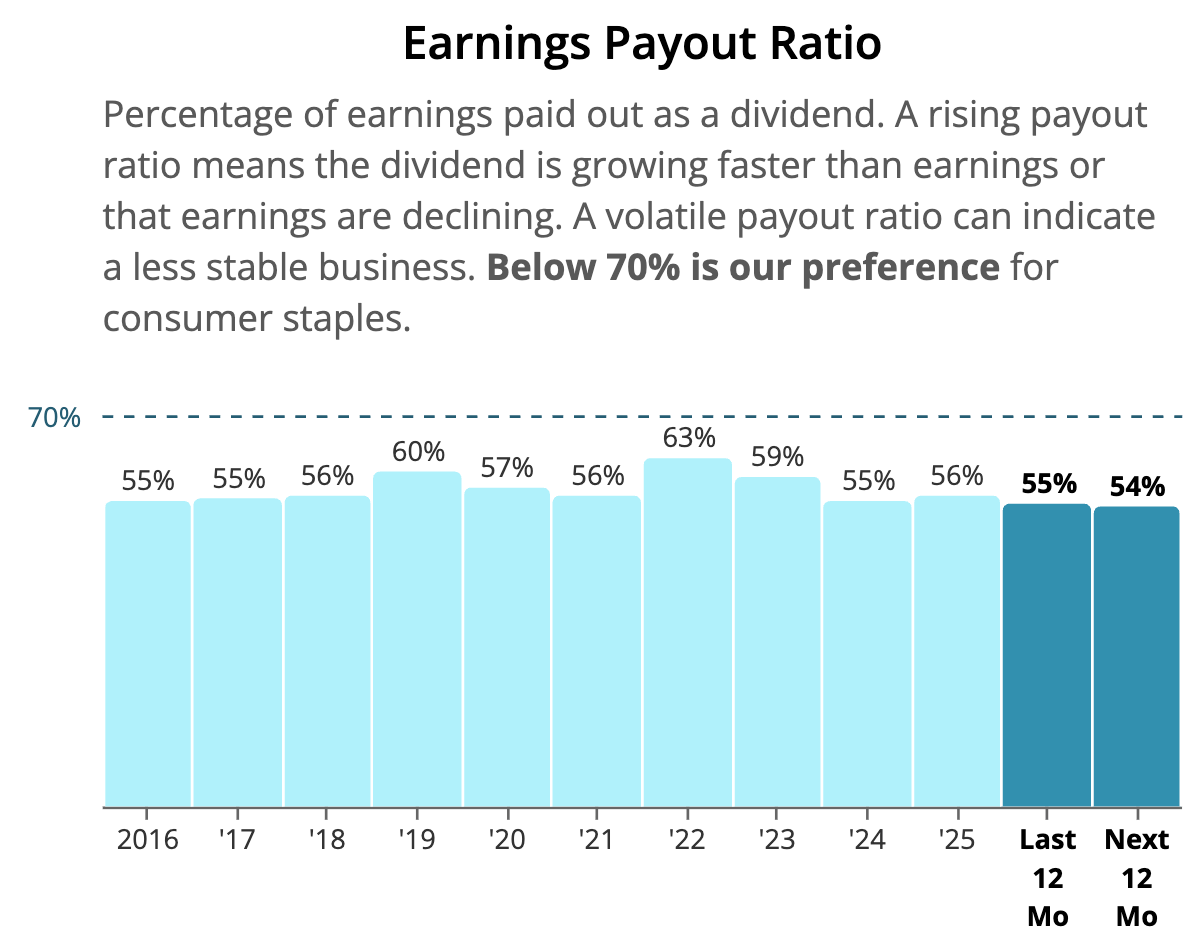
Its payout ratio has stayed between 55% and 63% since 2016, and its leverage is very low.
Colgate pays out 55% of its earnings, expected to be 54% next year, within our 70% preference for consumer staples. Source: Simply Safe Dividends.
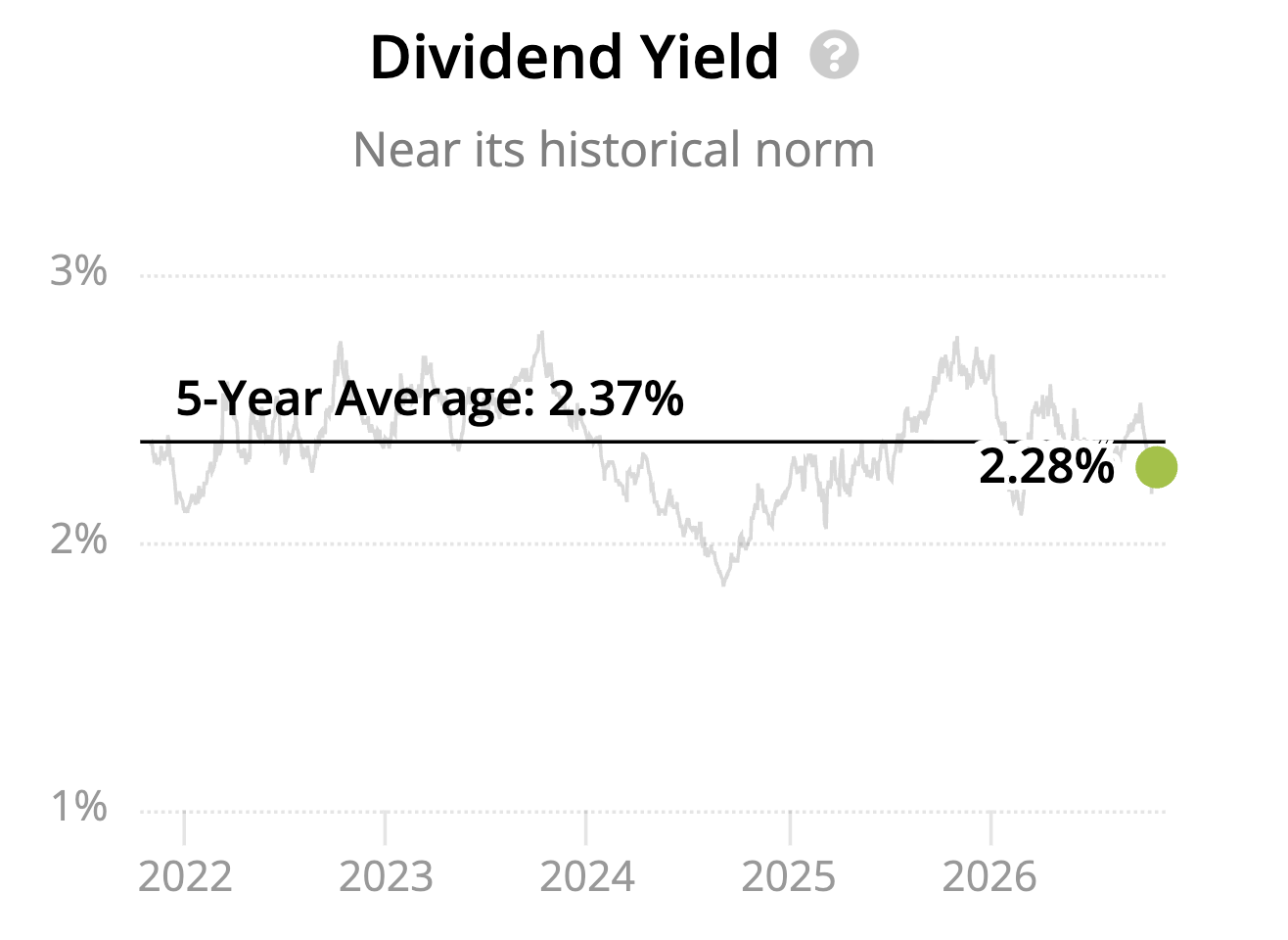
The yield of 2.28% is near its five-year average of 2.37%.
Colgate yields 2.28%, near its five-year average of 2.37%. Source: Simply Safe Dividends.
Tootsie Roll (TR)
Sector: Consumer Staples – Packaged Foods and Meats Dividend Yield: 1.0% Dividend Safety Score: Very Safe (90) Dividend Growth Streak: 60 years Credit Rating: Not rated by S&P
Tootsie Roll makes Tootsie Pops, Junior Mints, Dots, and other old-line candy brands. It holds more than $125 million in cash and carries no net debt.
We still lowered its Dividend Safety Score from 99 to 90 in April 2026, because more consumers are cutting back on sugar.
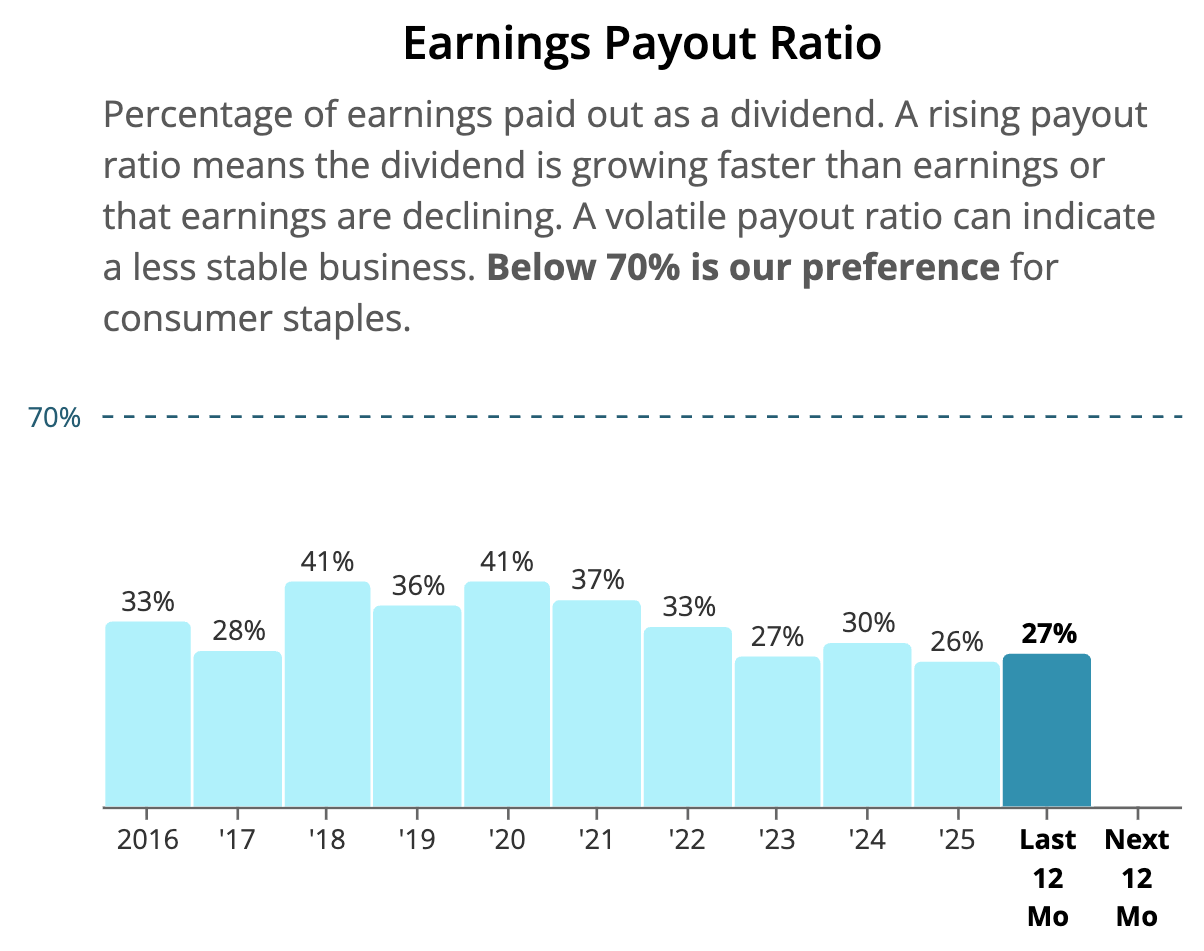
Its payout ratio has stayed between 26% and 41% since 2016, an unusually steady record.
Tootsie Roll pays out 27% of its earnings, within our 70% preference for consumer staples. Source: Simply Safe Dividends.
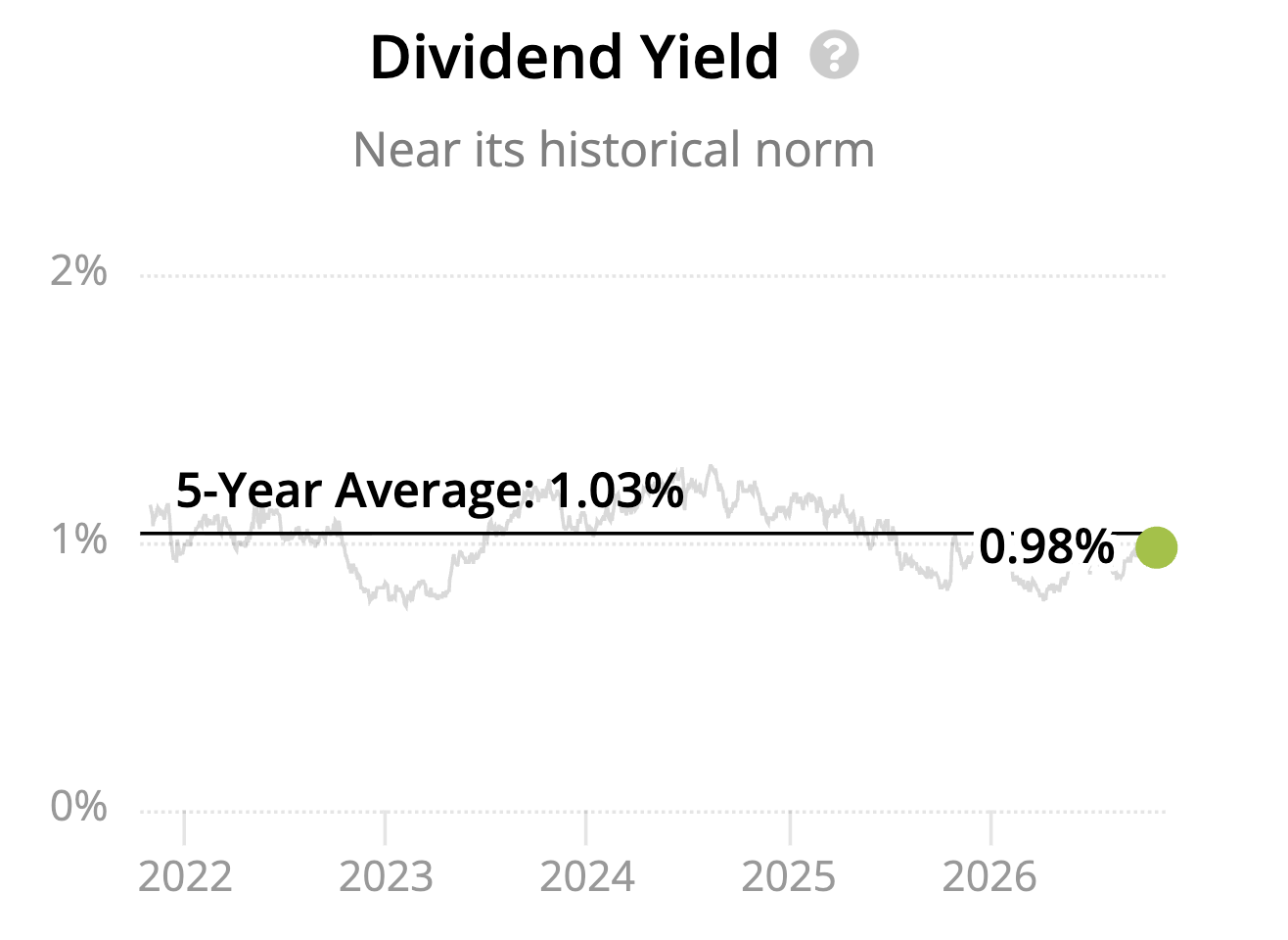
The 0.98% yield is near its five-year average of 1.03%.
Tootsie Roll yields 0.98%, near its five-year average of 1.03%. Source: Simply Safe Dividends.
H2O America (HTO)
Sector: Utilities – Water Utilities Dividend Yield: 3.0% Dividend Safety Score: Very Safe (90) Dividend Growth Streak: 58 years Credit Rating: A-
H2O America, formerly SJW Group, owns regulated water utilities in California, Texas, Connecticut, and Maine. We lowered its Dividend Safety Score from 99 to 90, still Very Safe, in August 2026 after an acquisition narrowed its cushion.
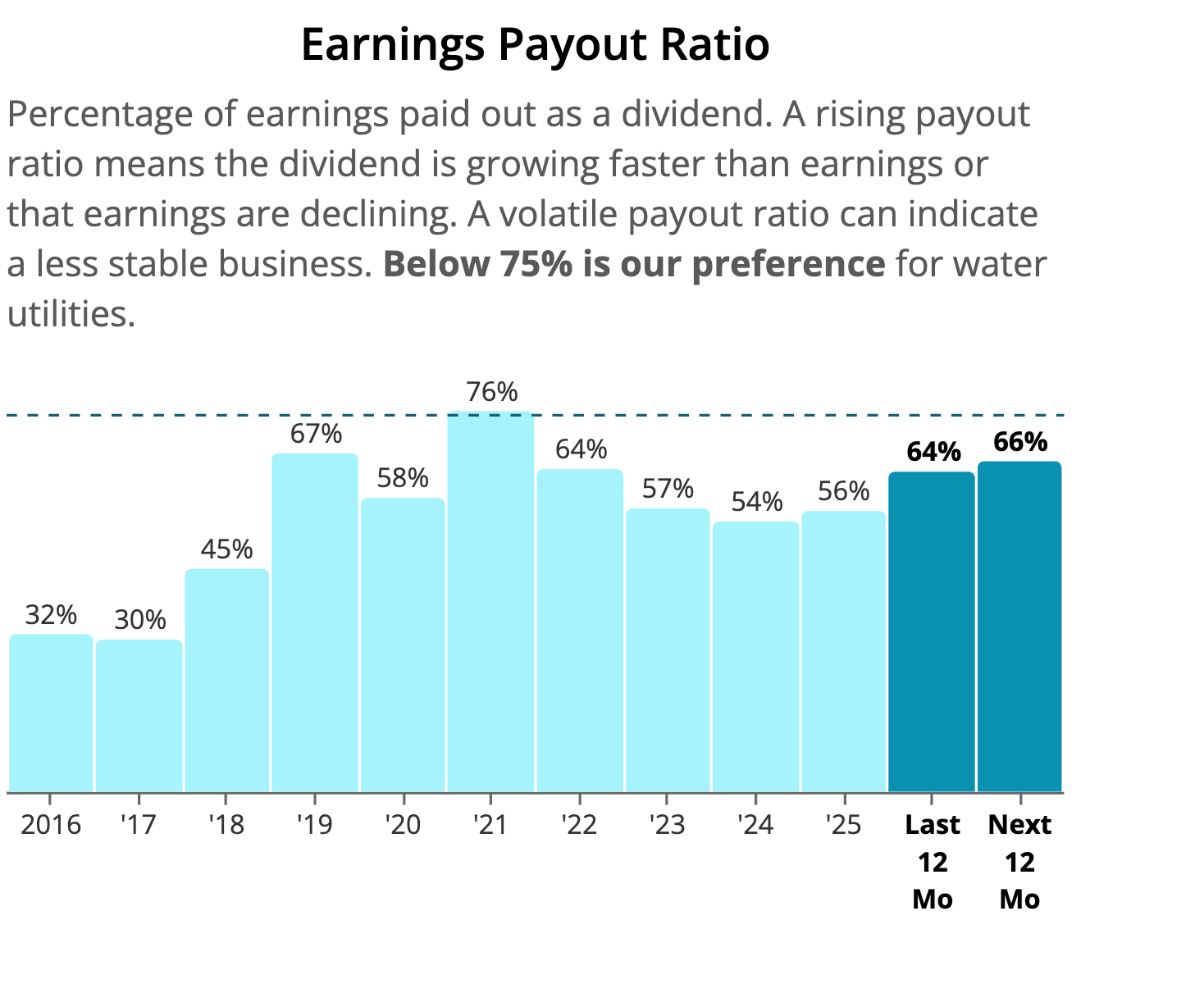
Its payout ratio is expected to rise to 66% over the next year, still within our 75% preference for water utilities, but its leverage is edging high for the industry.
H2O America pays out 64% of its earnings, expected to be 66% next year, within our 75% preference for water utilities. Source: Simply Safe Dividends.
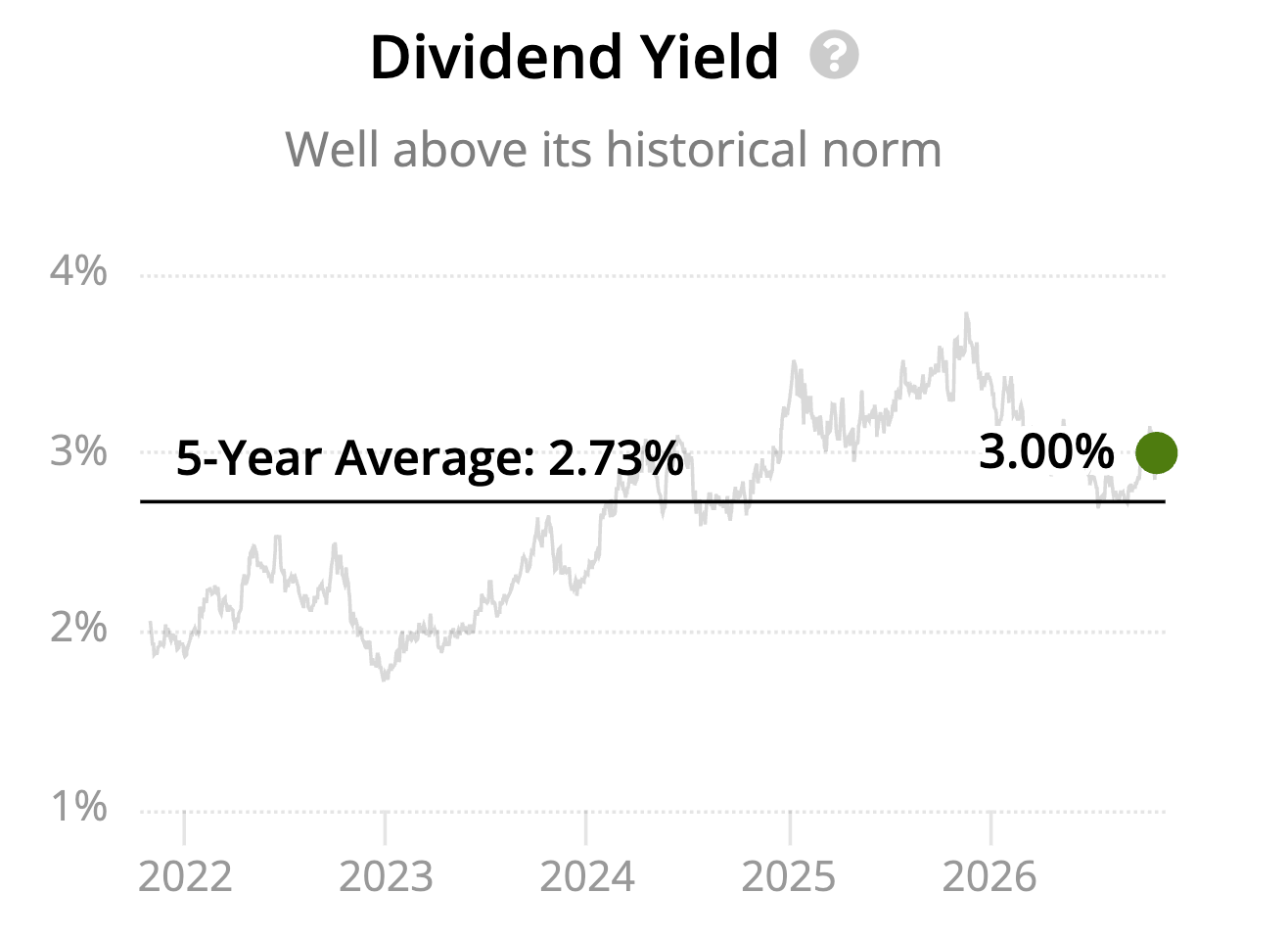
The 3.00% yield is well above its five-year average of 2.73%.
H2O America yields 3.00%, well above its five-year average of 2.73%. Source: Simply Safe Dividends.
Abbott Laboratories (ABT)
Sector: Healthcare – Health Care Equipment Dividend Yield: 2.4% Dividend Safety Score: Very Safe (90) Dividend Growth Streak: 54 years Credit Rating: A+
Abbott makes medical devices, diagnostic tests, nutrition products, and branded generic drugs, led by its FreeStyle Libre glucose monitors. We lowered its Dividend Safety Score from 99 to 90, still Very Safe, in November 2025.
The stock fell more than 15% in January 2026 after its nutrition business missed expectations.
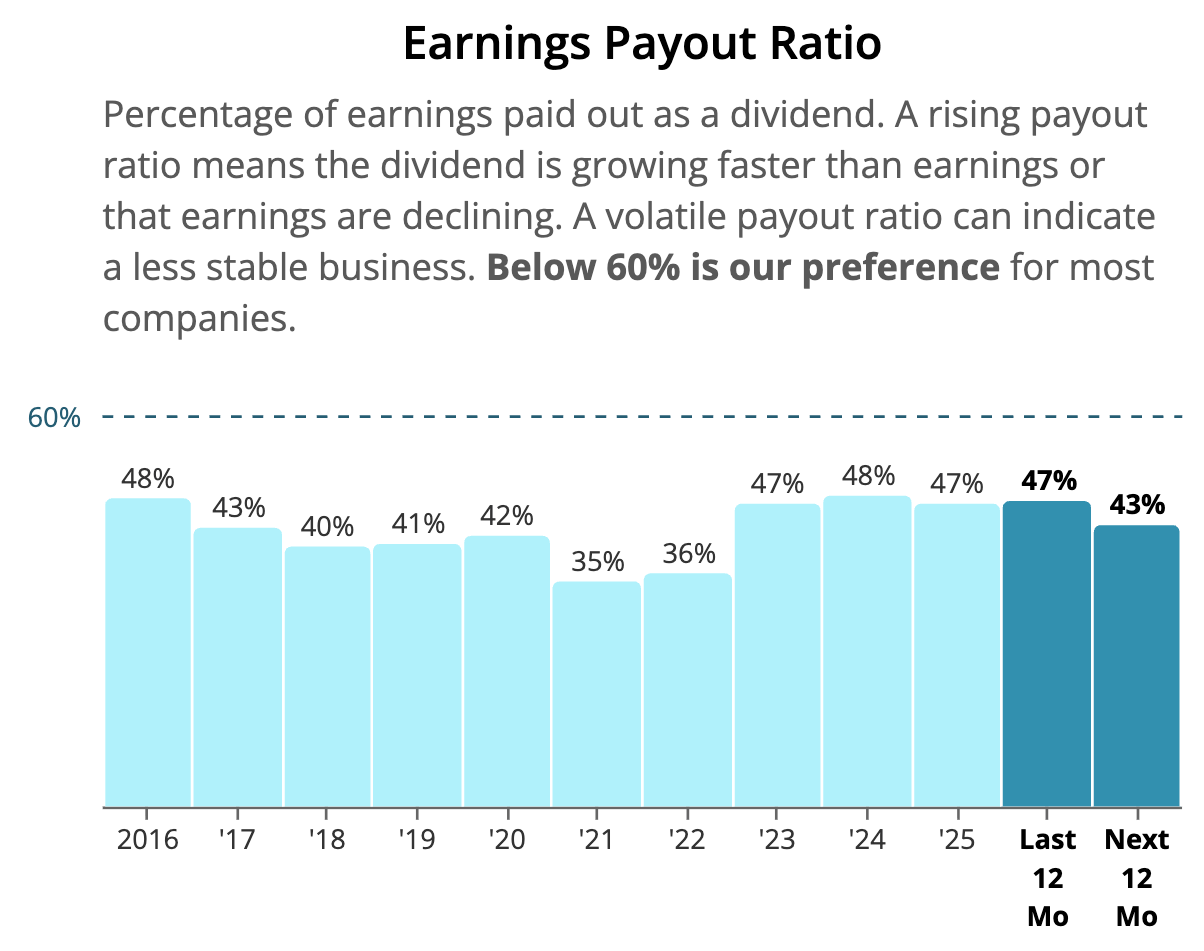
Abbott pays out 47% of its earnings, and its leverage is low.
Abbott pays out 47% of its earnings, expected to be 43% next year, within our 60% preference for most companies. Source: Simply Safe Dividends.
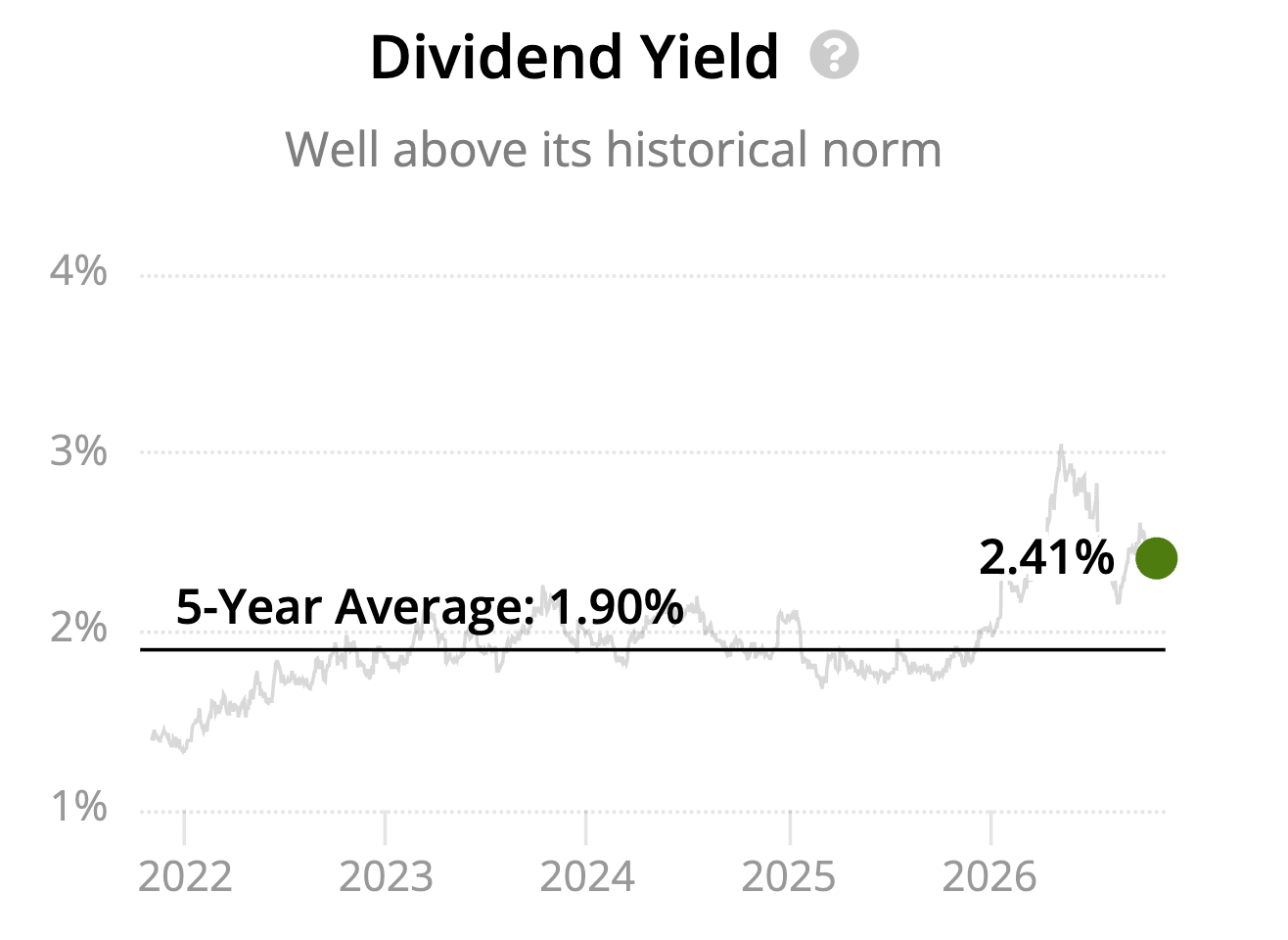
The selloff lifted the yield to 2.41%, well above its five-year average of 1.90%, and our valuation screen suggests the stock may be undervalued.
Abbott yields 2.41%, well above its five-year average of 1.90%. Source: Simply Safe Dividends.
Automatic Data Processing (ADP)
Sector: Industrials – Human Resource Services Dividend Yield: 2.4% Dividend Safety Score: Very Safe (90) Dividend Growth Streak: 52 years Credit Rating: AA-
ADP runs payroll and HR software for businesses of every size and pays roughly one in six American workers. We lowered its Dividend Safety Score from 97 to 90, still Very Safe, in February 2026 as its growth outlook slowed.
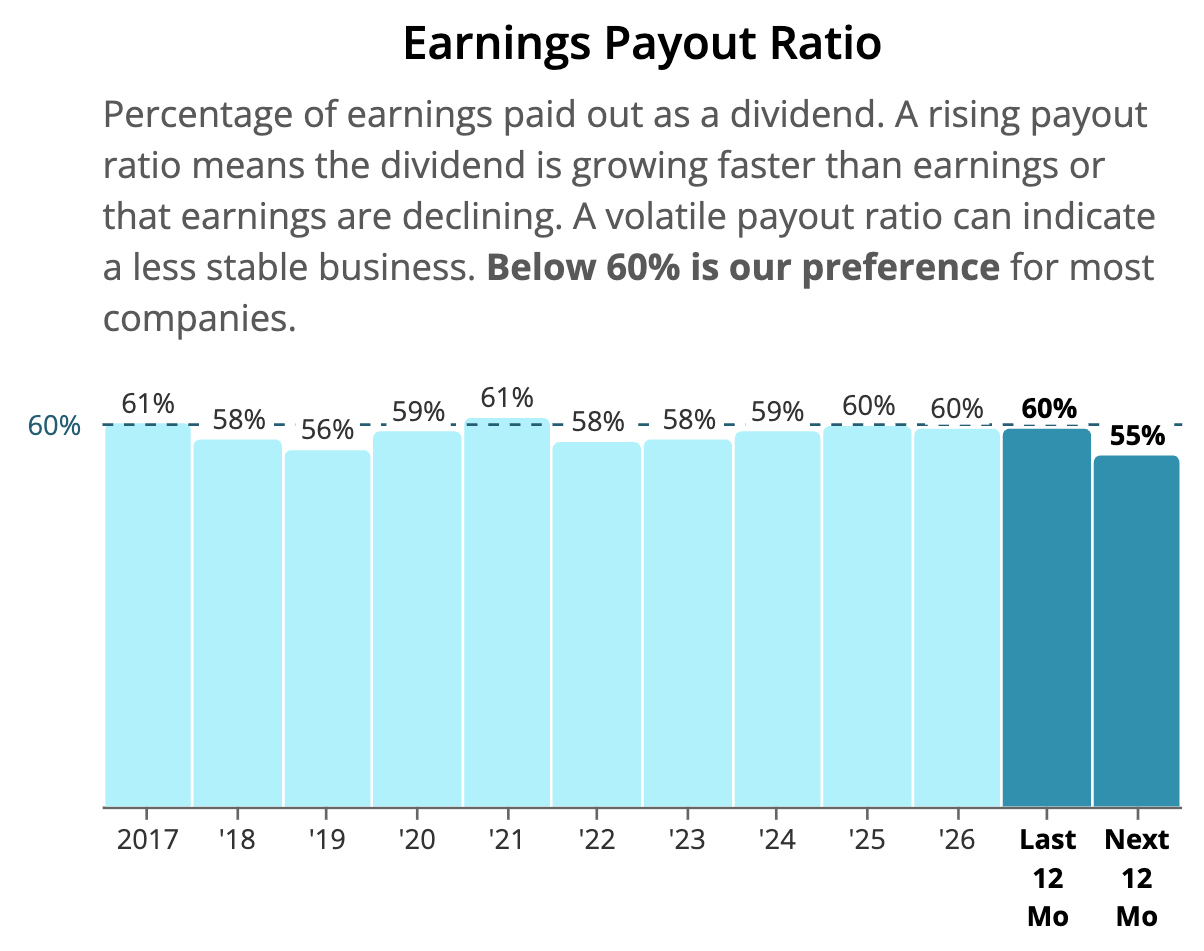
Its payout ratio has held near 60% for a decade, because ADP has raised its dividend about as fast as earnings have grown. It carries very little debt.
ADP pays out 60% of its earnings, expected to be 55% next year, within our 60% preference for most companies. Source: Simply Safe Dividends.
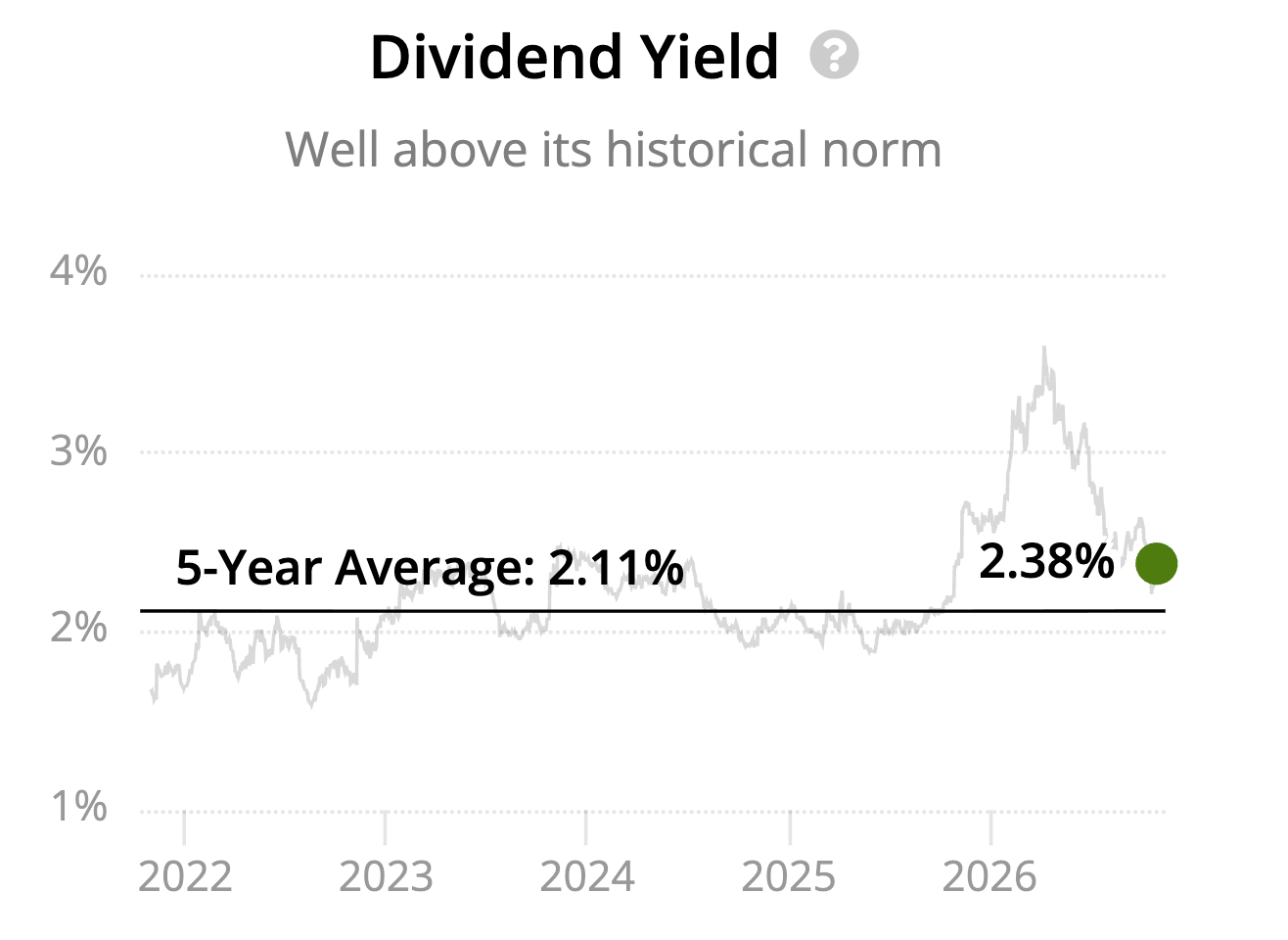
The yield of 2.38% is well above its five-year average of 2.11%, and our valuation screen suggests the stock may be undervalued.
ADP yields 2.38%, well above its five-year average of 2.11%. Source: Simply Safe Dividends.
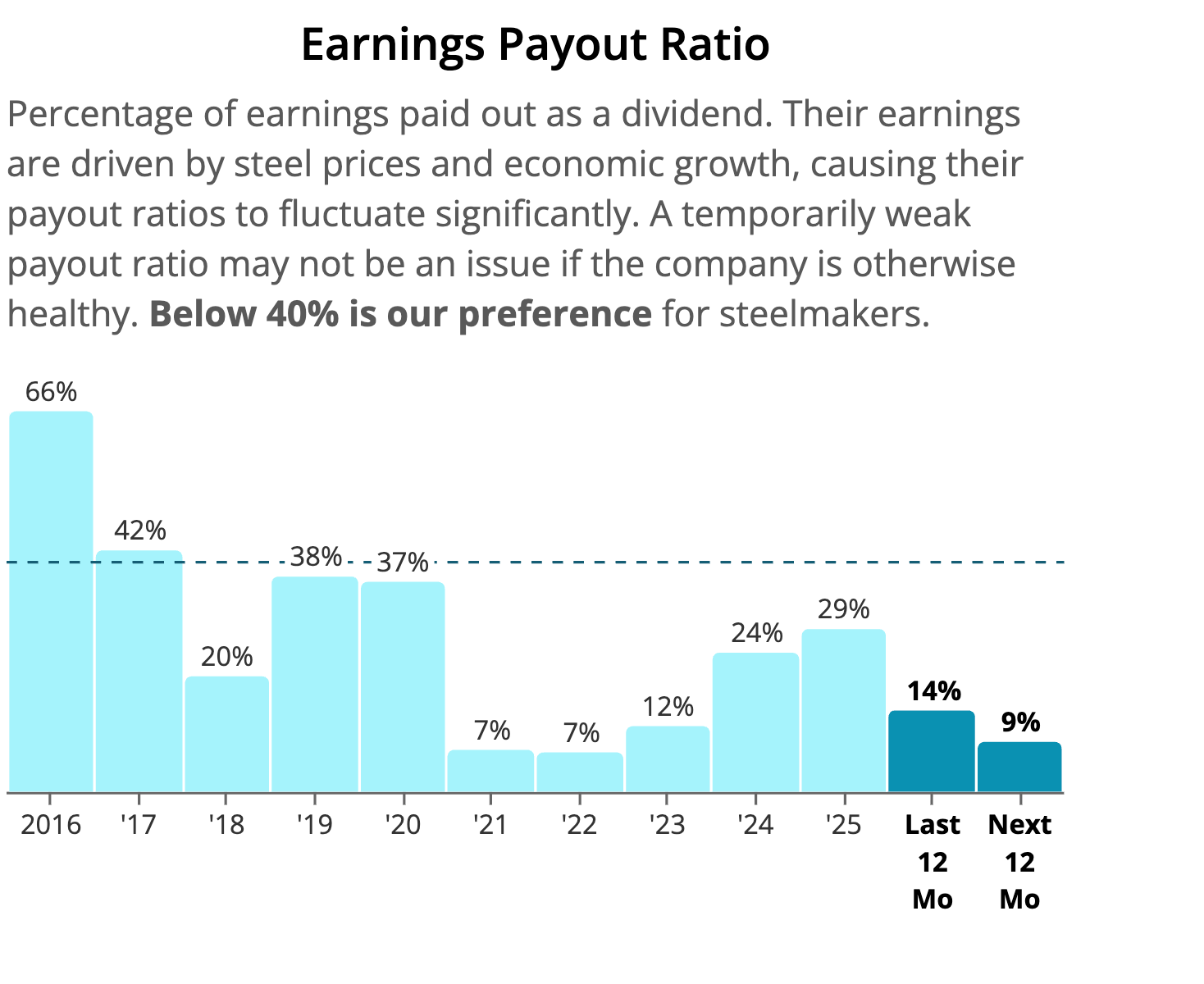
Nucor is North America's largest steel producer and recycler, melting scrap in electric arc furnaces. Steel demand is cyclical, so Nucor pays a modest base dividend it can sustain through downturns.
Its payout ratio swings with steel prices, from 66% in 2016 to 7% in 2021 and 2022, and it sits well below our 40% preference for steelmakers today. Its leverage is very low.
Nucor pays out 14% of its earnings, expected to be 9% next year, within our 40% preference for steelmakers. Source: Simply Safe Dividends.
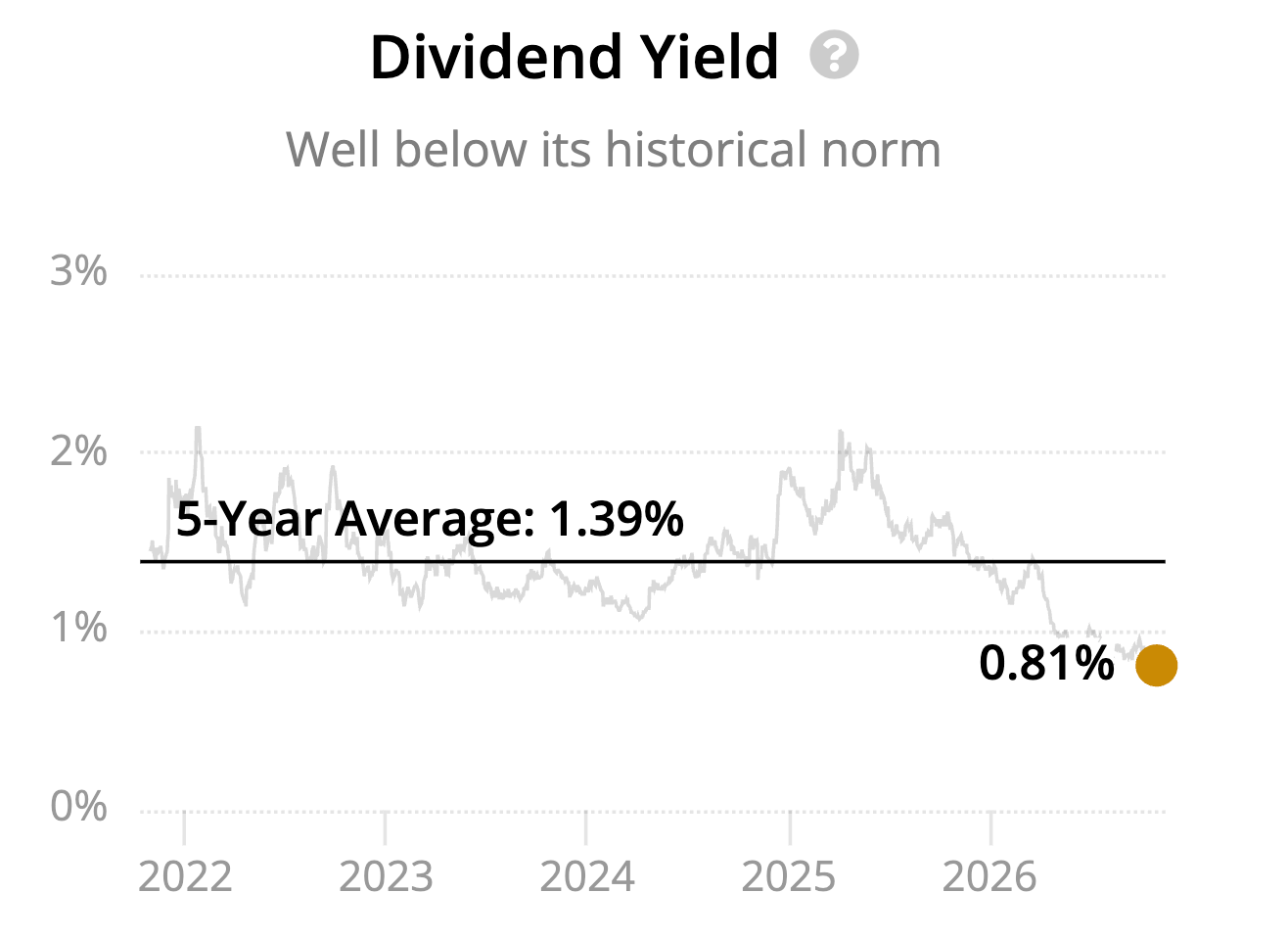
The 0.81% yield is well below its five-year average of 1.39%.
Nucor yields 0.81%, well below its five-year average of 1.39%. Source: Simply Safe Dividends.
Walmart (WMT)
Sector: Consumer Staples – General Merchandise Retail Dividend Yield: 0.8% Dividend Safety Score: Very Safe (90) Dividend Growth Streak: 52 years Credit Rating: AA
Walmart is the world's largest retailer, selling groceries and general merchandise at low prices through Supercenters, Sam's Club, and online. Advertising and membership fees are a growing source of profit.
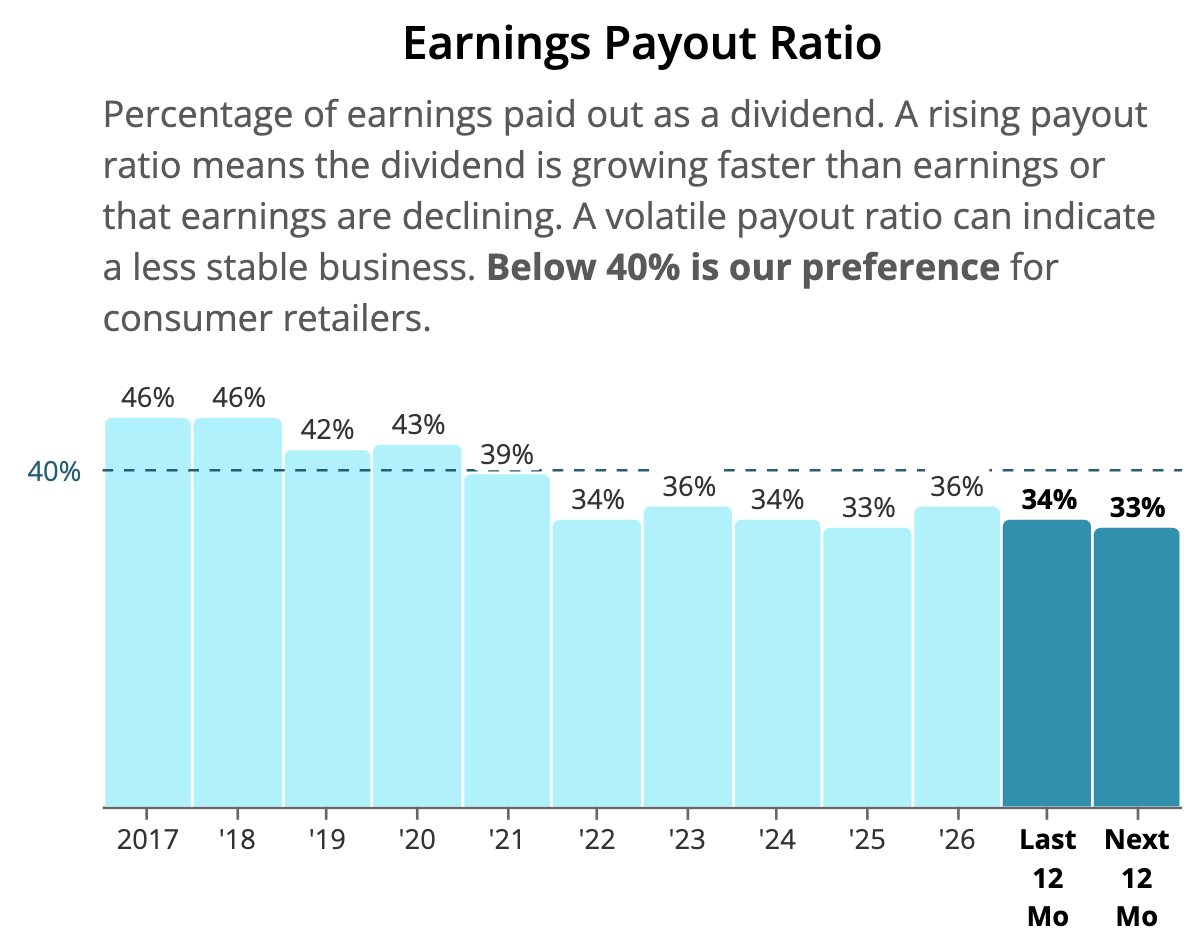
It pays out about a third of its earnings, below our 40% preference for retailers.
Walmart pays out 34% of its earnings, expected to be 33% next year, within our 40% preference for retailers. Source: Simply Safe Dividends.
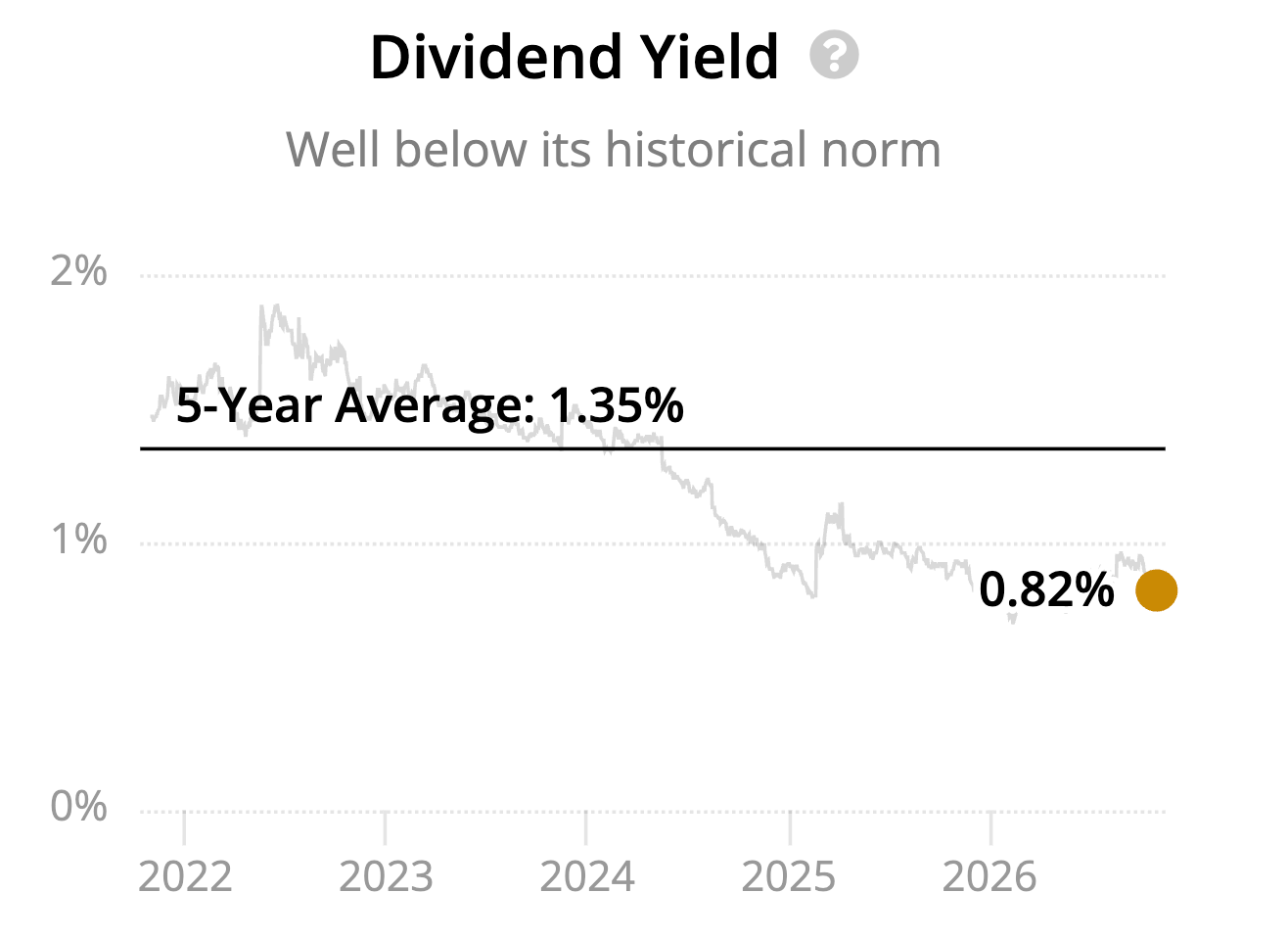
Shares have risen far faster than the dividend, pushing the yield to 0.82%, well below its five-year average of 1.35%.
Walmart yields 0.82%, well below its five-year average of 1.35%. Source: Simply Safe Dividends.
Consolidated Edison delivers electricity, natural gas, and steam in and around New York City. Its regulated delivery business earns rates set by state regulators, which makes its cash flow predictable.
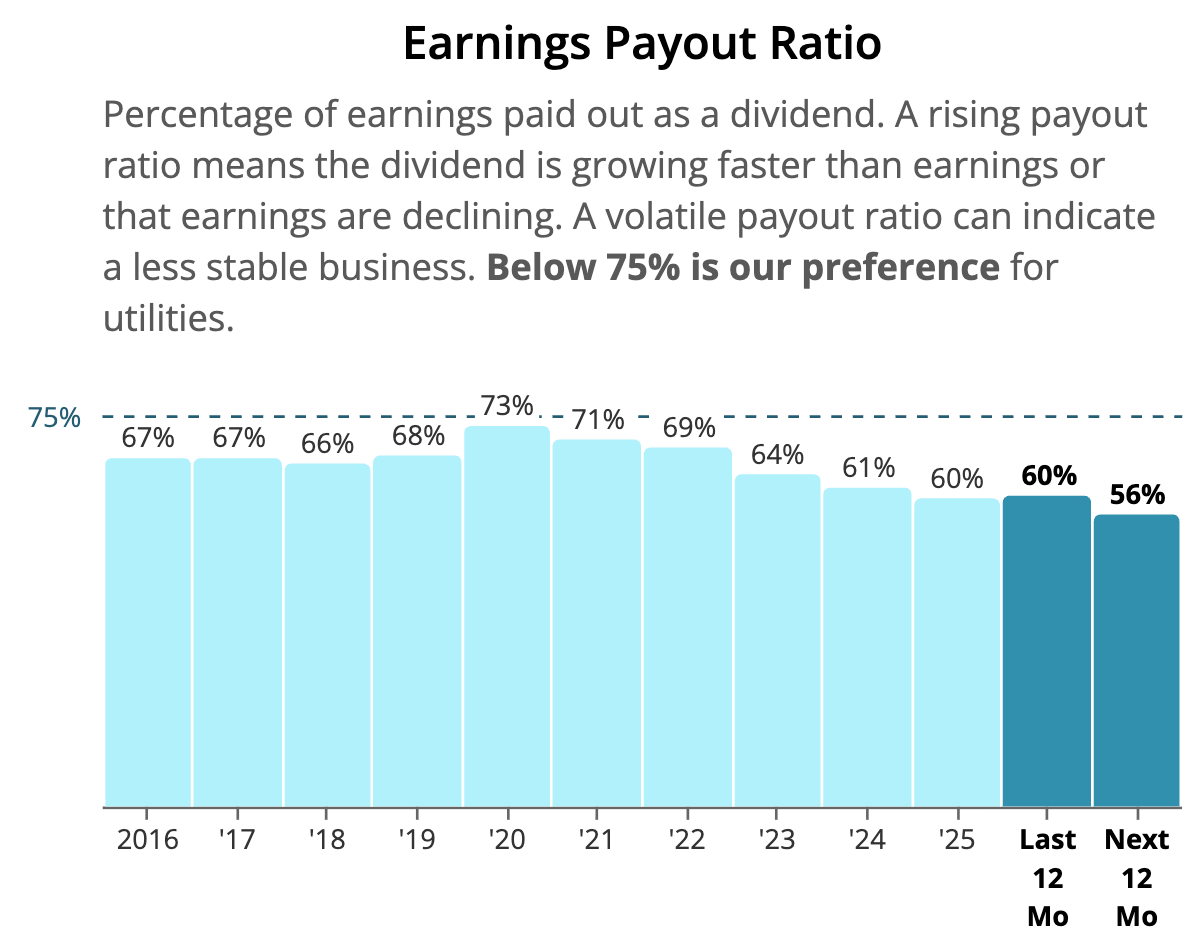
Management targets a payout ratio of 60% to 70% of earnings, and the ratio has come down from 73% in 2020 to about 60%.
Con Ed pays out 60% of its earnings, expected to be 56% next year, within our 75% preference for utilities. Source: Simply Safe Dividends.
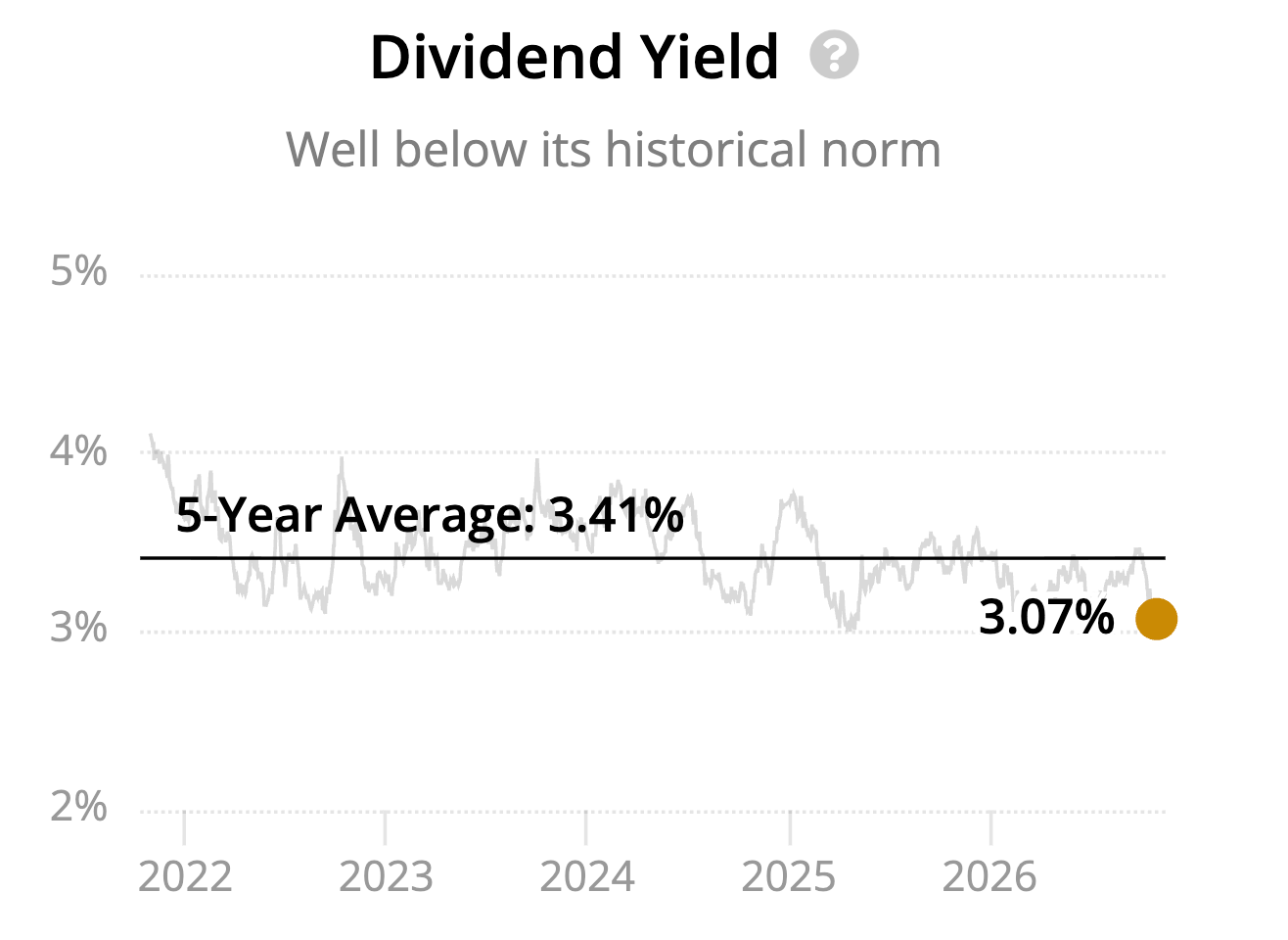
Its 3.07% yield is well below its five-year average of 3.41%, and our valuation screen suggests the stock could be overvalued.
Con Ed yields 3.07%, well below its five-year average of 3.41%. Source: Simply Safe Dividends.
Dover (DOV)
Sector: Industrials – Industrial Machinery and Components Dividend Yield: 1.0% Dividend Safety Score: Very Safe (89) Dividend Growth Streak: 70 years Credit Rating: BBB+
Dover makes industrial equipment ranging from fuel dispensers and pumps to the printers that mark dates and codes on packaged goods. It has raised its dividend for 70 straight years, tied for the second-longest streak on this list, but its raises have been small lately.
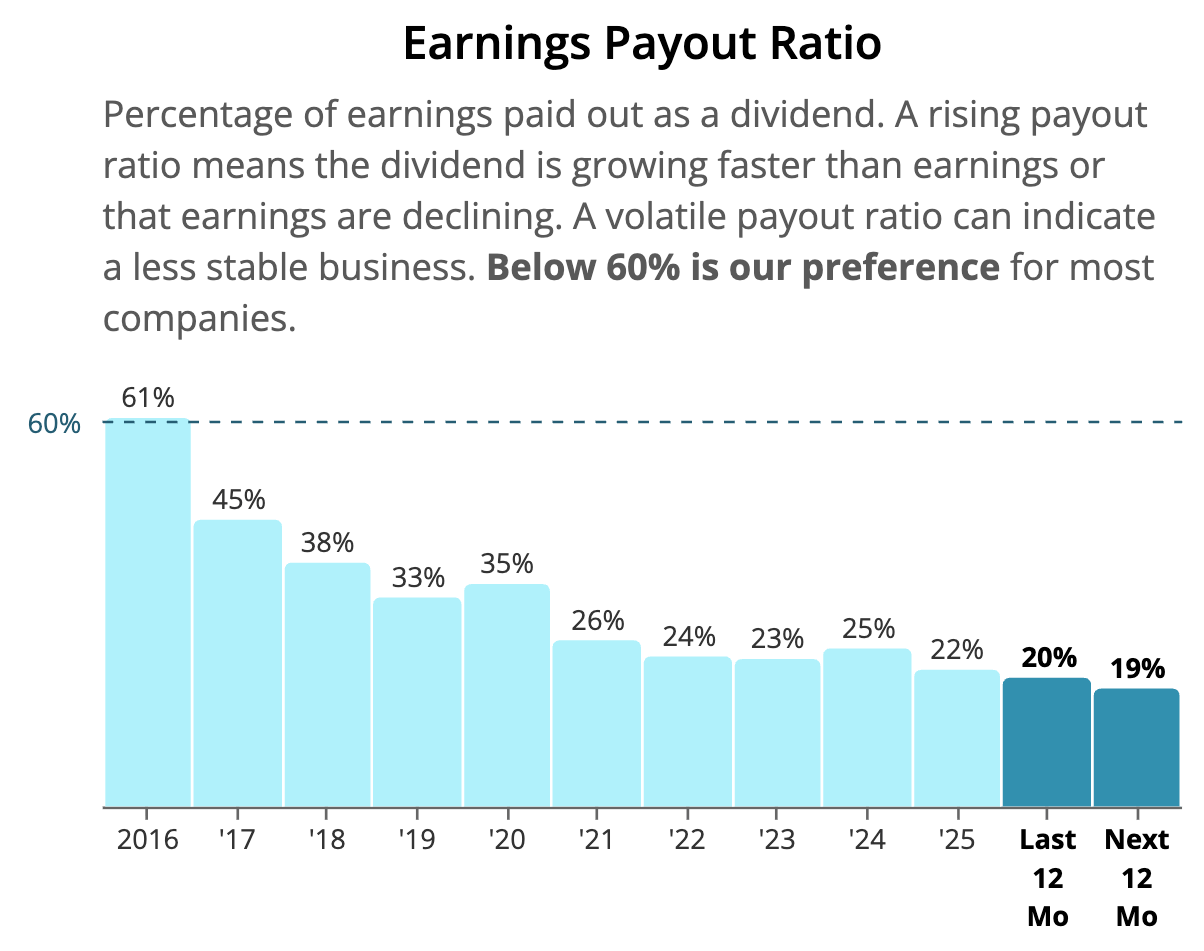
Dividend growth has averaged just 1.0% a year over the past five years, which is why its payout ratio has fallen from 61% in 2016 to about 20%.
Dover pays out 20% of its earnings, expected to be 19% next year, within our 60% preference for most companies. Source: Simply Safe Dividends.
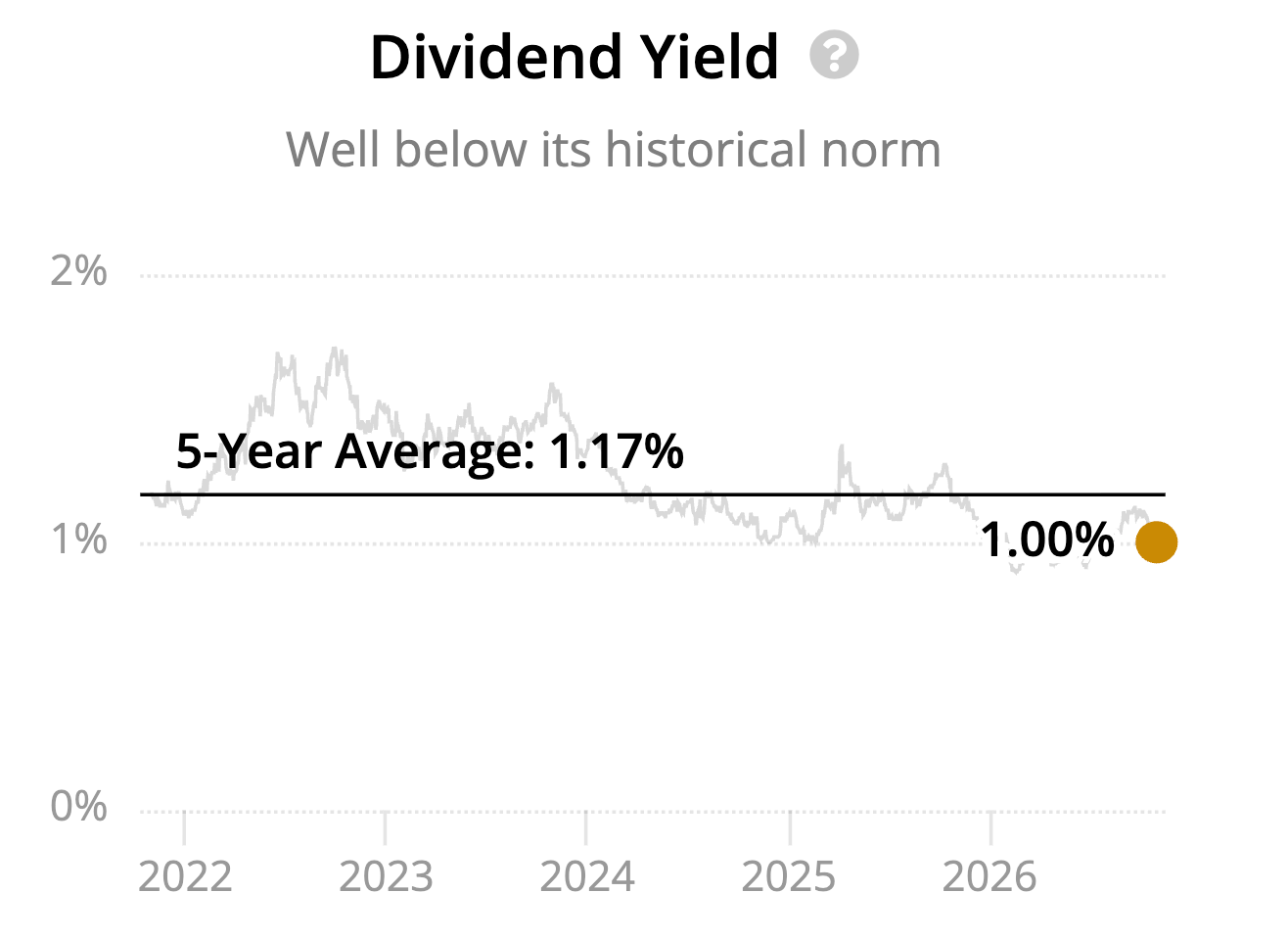
The yield is 1.00%, well below its five-year average of 1.17%.
Dover yields 1.00%, well below its five-year average of 1.17%. Source: Simply Safe Dividends.
MGE Energy (MGEE)
Sector: Utilities – Electric Utilities Dividend Yield: 2.8% Dividend Safety Score: Very Safe (84) Dividend Growth Streak: 50 years Credit Rating: Not rated by S&P
MGE Energy owns Madison Gas and Electric, which serves Madison, Wisconsin, and the surrounding counties.
It pays out about half of its earnings, well within our 75% preference for utilities, and its leverage is very low for a utility.
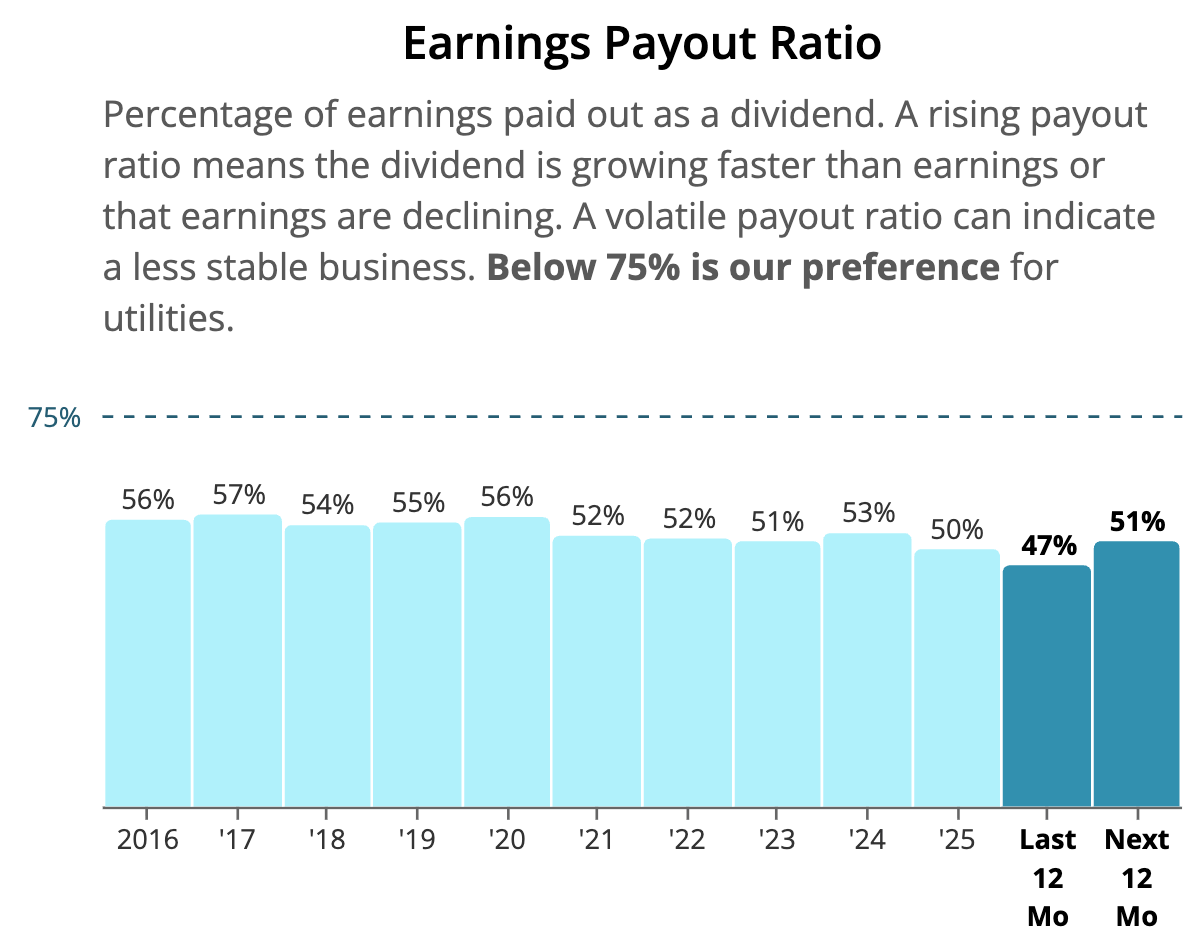
MGE Energy pays out 47% of its earnings, expected to be 51% next year, within our 75% preference for utilities. Source: Simply Safe Dividends.
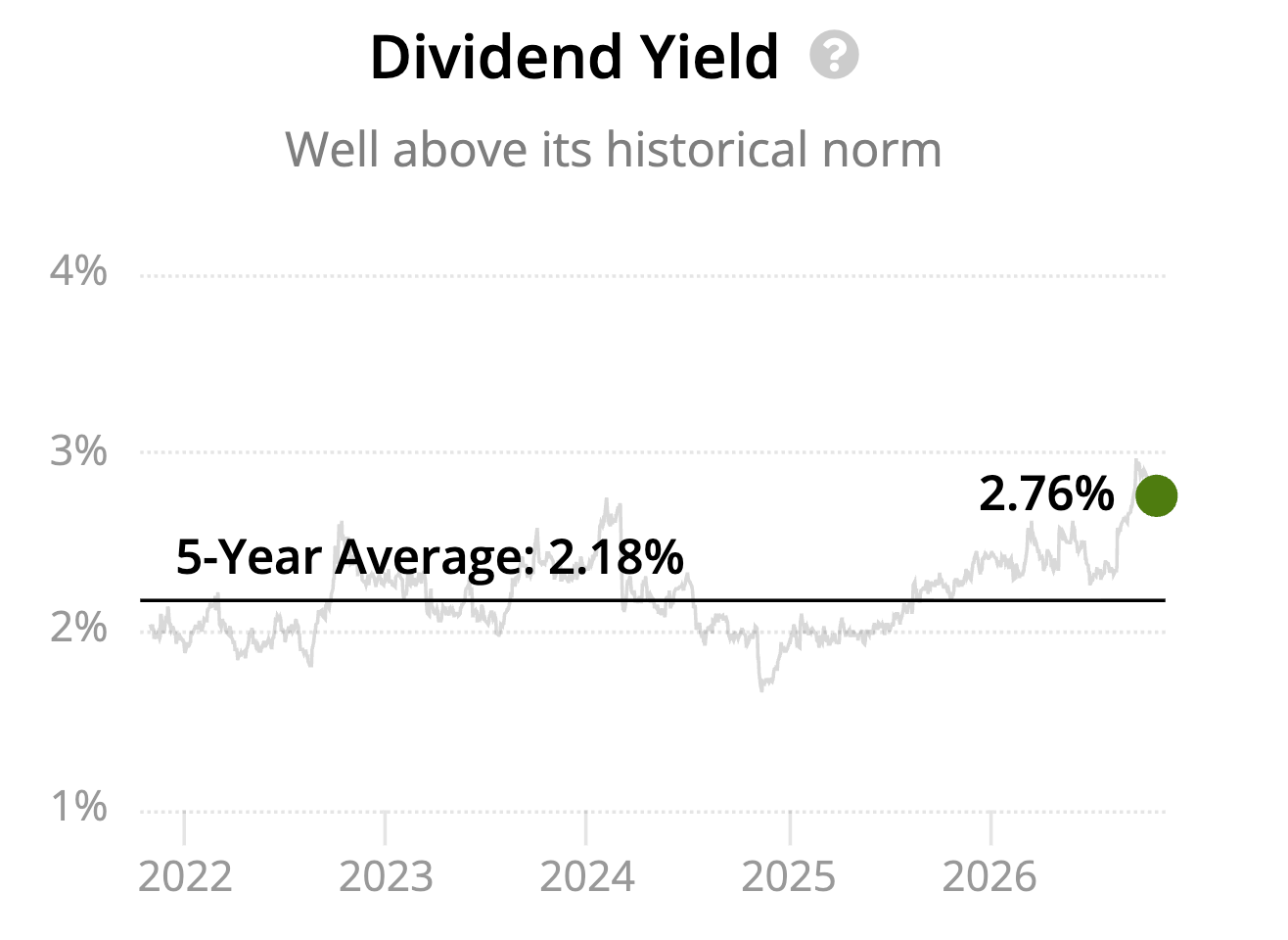
The 2.76% yield sits well above its five-year average of 2.18%, and our valuation screen suggests the stock may be undervalued.
MGE Energy yields 2.76%, well above its five-year average of 2.18%. Source: Simply Safe Dividends.
RLI Corp. (RLI)
Sector: Financials – Property and Casualty Insurance Dividend Yield: 1.1% Dividend Safety Score: Very Safe (82) Dividend Growth Streak: 50 years Credit Rating: BBB
RLI underwrites specialty property and casualty insurance for risks that standard insurers avoid, such as commercial excess liability and trucking. It has earned an underwriting profit for decades, and it often pays special dividends on top of its regular payout.
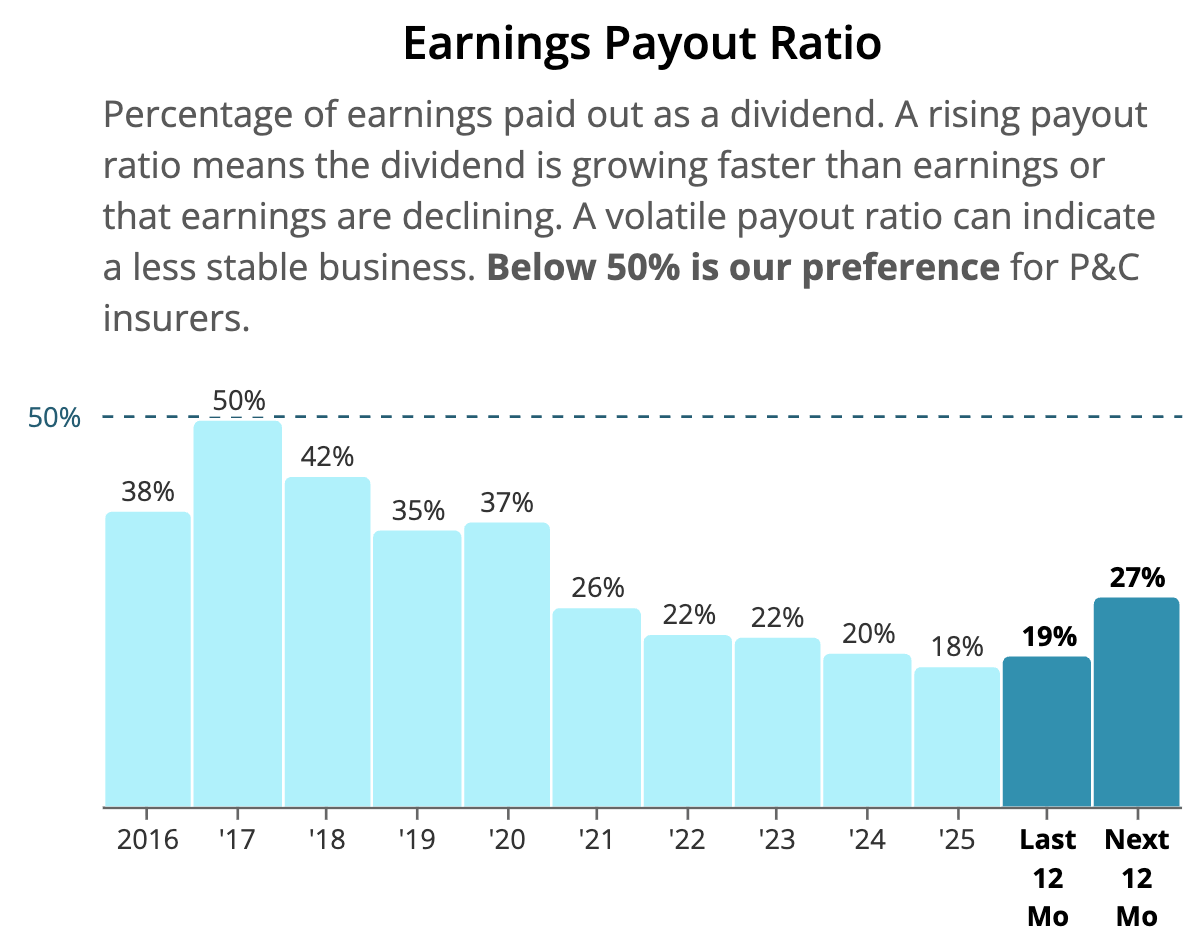
Its payout ratio on regular dividends has fallen to about 19%, well below our 50% preference for P&C insurers.
RLI pays out 19% of its earnings, expected to be 27% next year, within our 50% preference for P&C insurers. Source: Simply Safe Dividends.
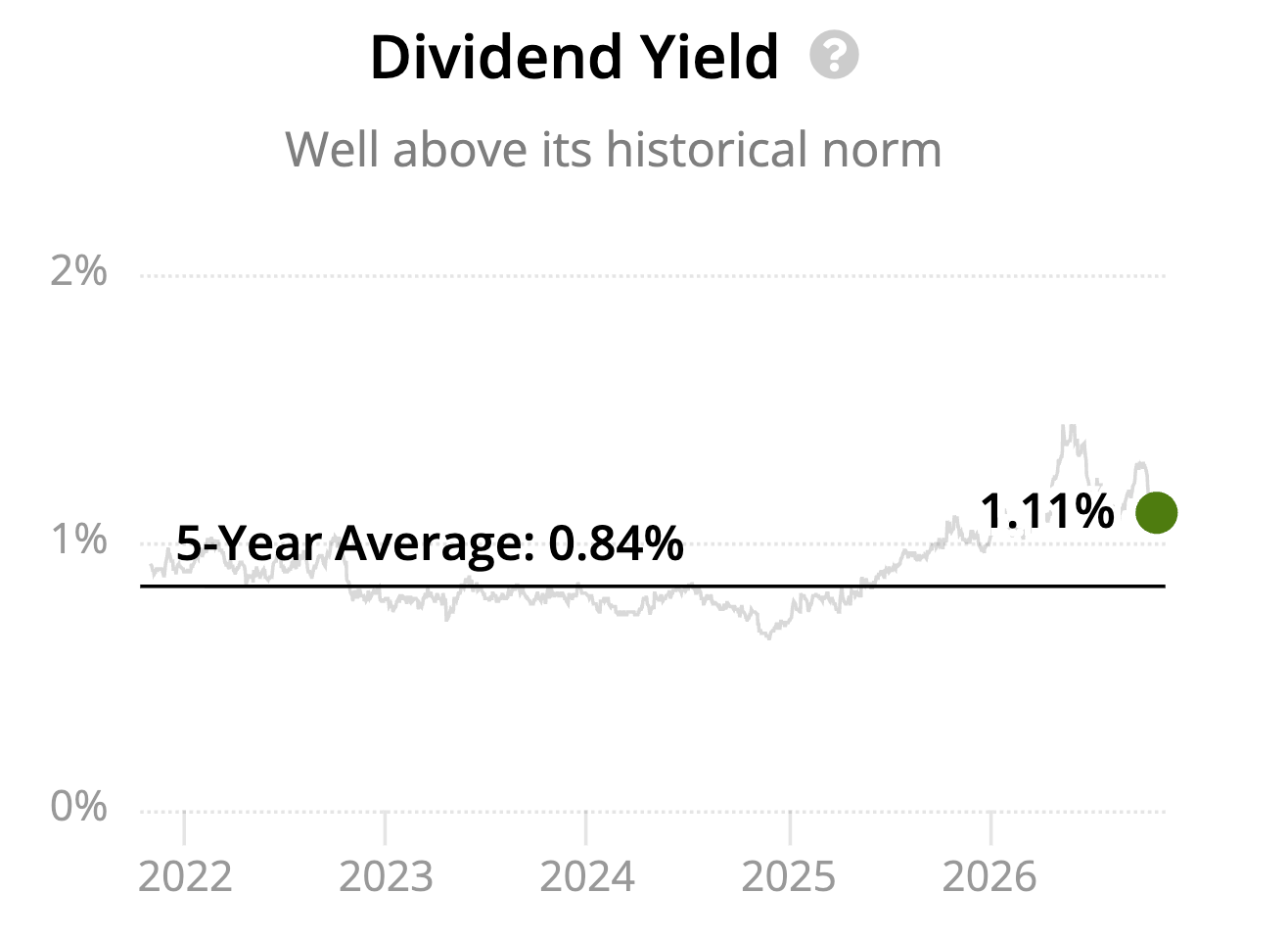
The 1.11% yield is well above its five-year average of 0.84%, and our valuation screen suggests the stock may be undervalued.
RLI yields 1.11%, well above its five-year average of 0.84%. Source: Simply Safe Dividends.
Farmers & Merchants Bancorp (FMCB)
Sector: Financials – Regional Banks Dividend Yield: 1.6% Dividend Safety Score: Very Safe (81) Dividend Growth Streak: 63 years Credit Rating: Not rated by S&P
Farmers & Merchants Bancorp is a community bank in California's Central Valley that lends to farms, businesses, and homeowners. Its shares trade over the counter.
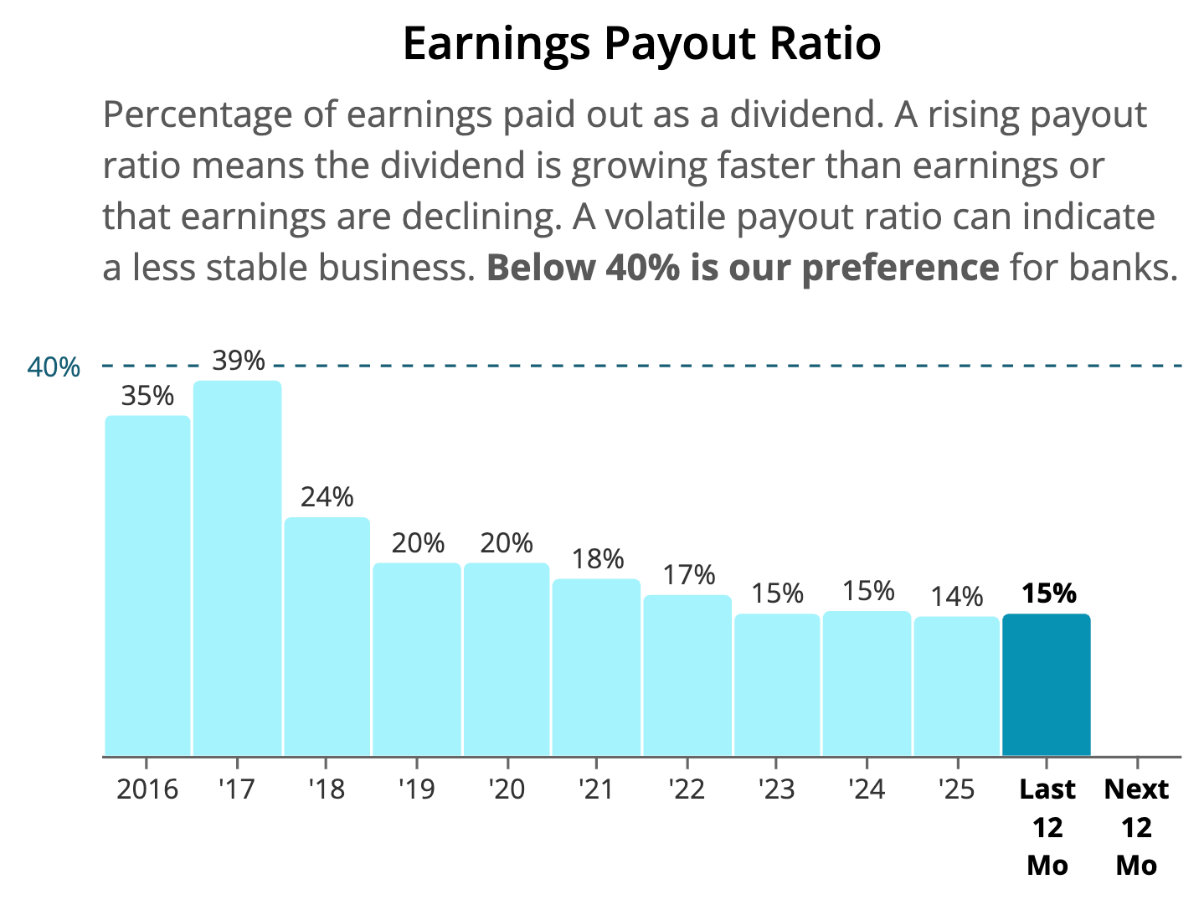
It pays out only about 15% of its earnings, the lowest payout ratio of any Dividend King.
Farmers & Merchants pays out 15% of its earnings, within our 40% preference for banks. Source: Simply Safe Dividends.
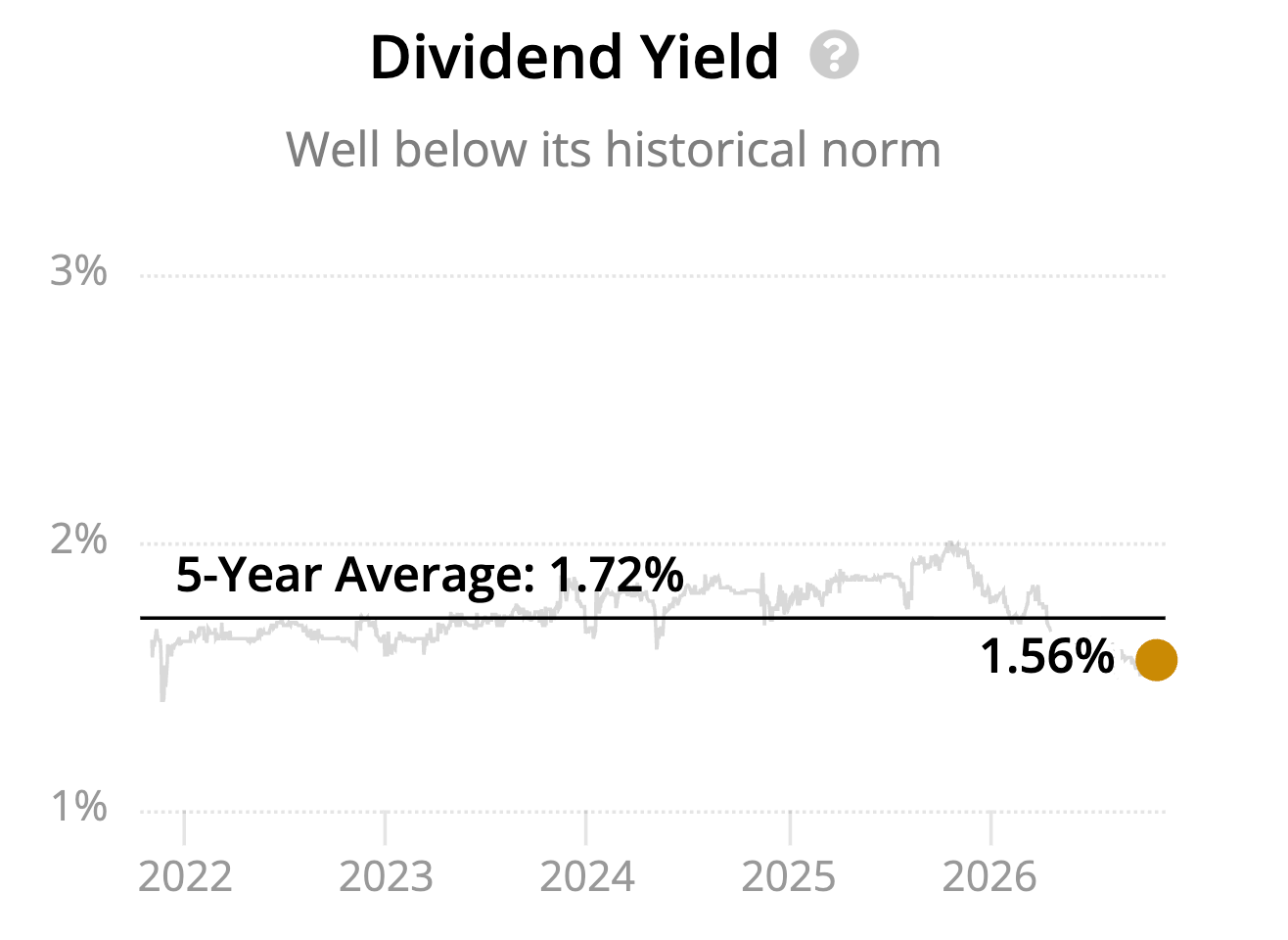
The yield of 1.56% is well below its five-year average of 1.72%.
Farmers & Merchants yields 1.56%, well below its five-year average of 1.72%. Source: Simply Safe Dividends.
Illinois Tool Works (ITW)
Sector: Industrials – Industrial Machinery and Components Dividend Yield: 2.4% Dividend Safety Score: Very Safe (81) Dividend Growth Streak: 54 years Credit Rating: A+
Illinois Tool Works makes specialized industrial products, from automotive components to commercial food equipment and welding tools. It concentrates on its most profitable products and customers, which supports some of the highest margins among industrial companies.
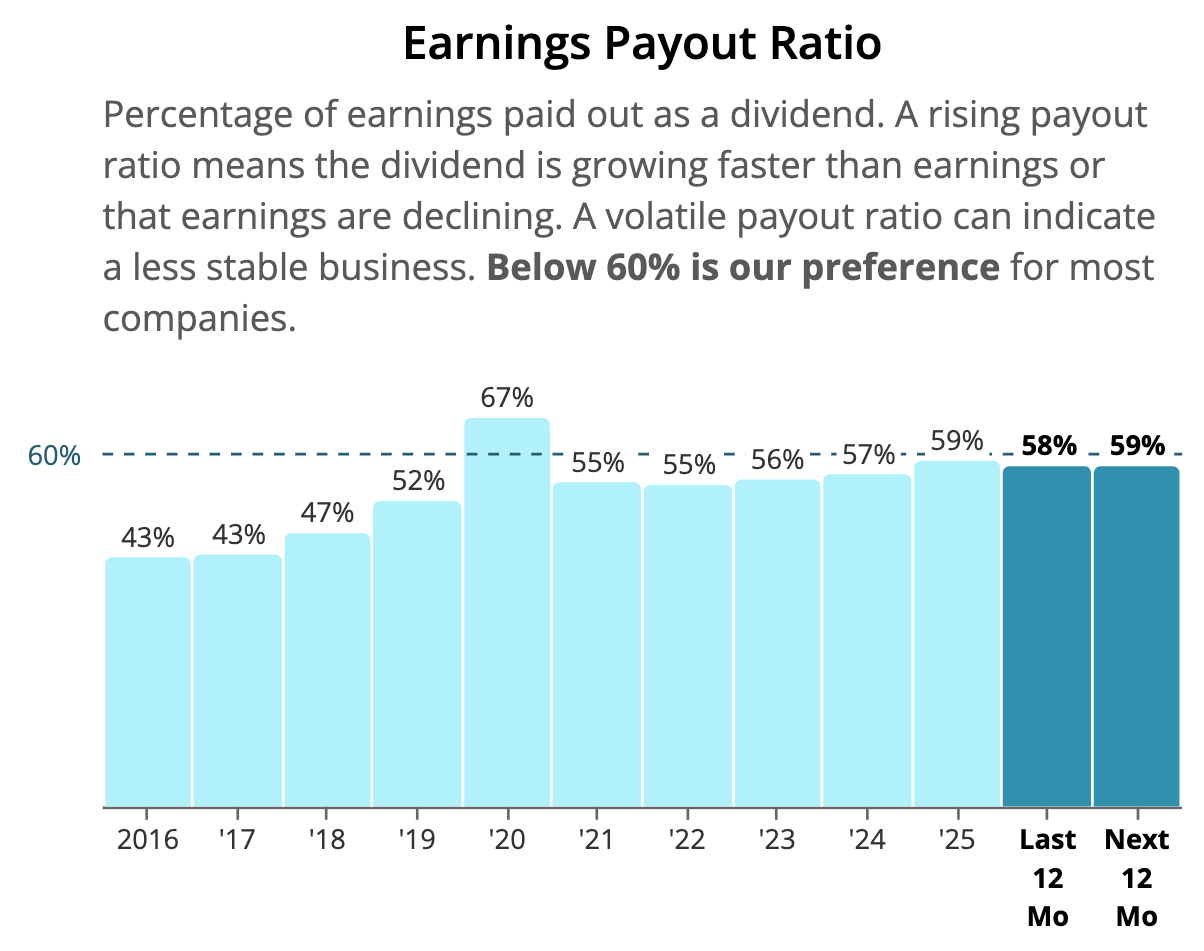
Its payout ratio has risen from 43% in 2016 to about 58% as dividend growth outpaced earnings, close to our 60% preference for most companies.
ITW pays out 58% of its earnings, expected to be 59% next year, within our 60% preference for most companies. Source: Simply Safe Dividends.
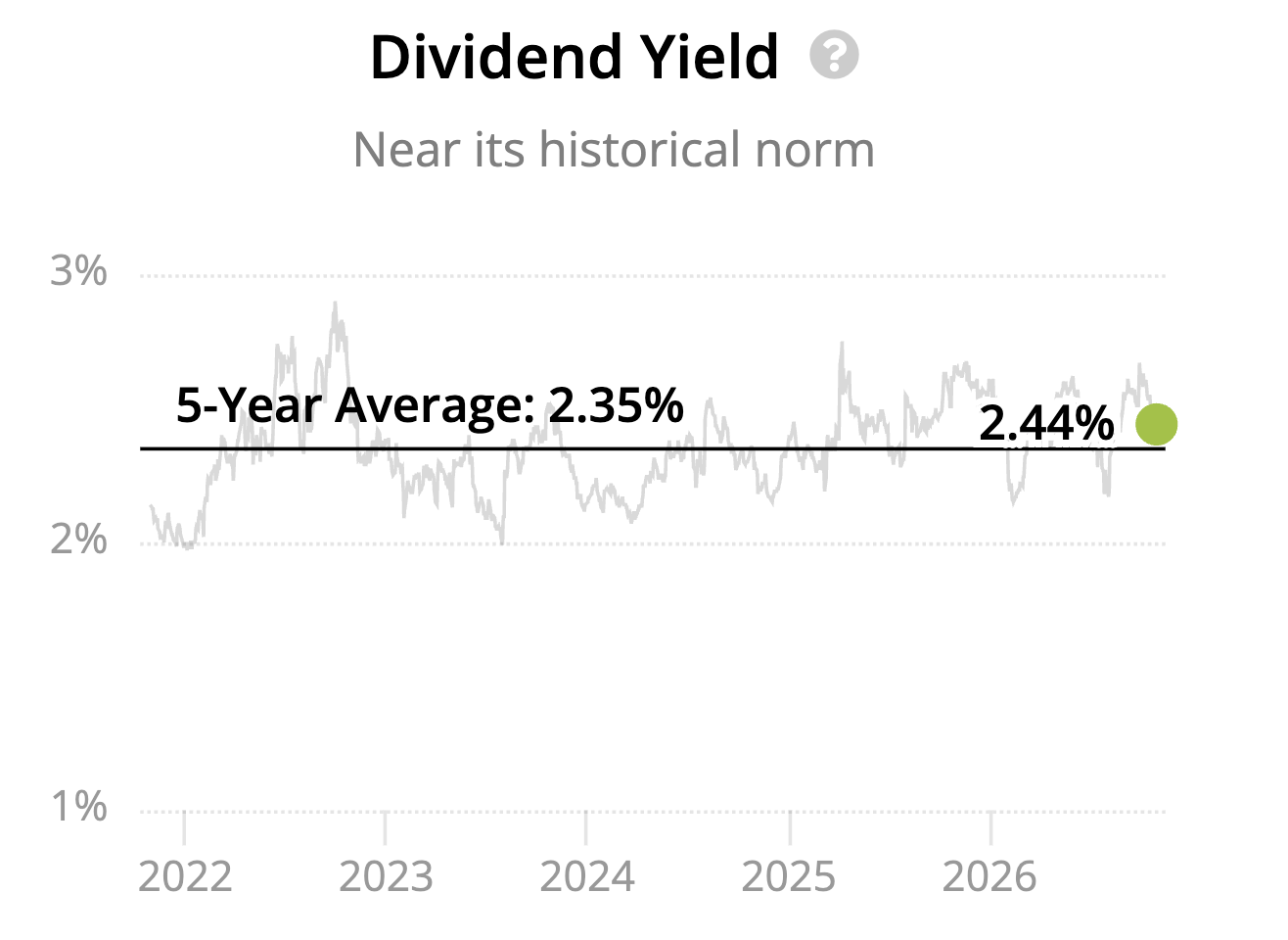
The yield of 2.44% is near its five-year average of 2.35%.
ITW yields 2.44%, near its five-year average of 2.35%. Source: Simply Safe Dividends.
Lowe's is one of the world's largest home improvement retailers. We lowered its Dividend Safety Score from Very Safe to Safe in August 2026 as a stalled housing market and higher leverage narrowed its cushion.
The payout ratio has crept just above management's 35% target, to about 39%, still well within our 60% preference for most companies.
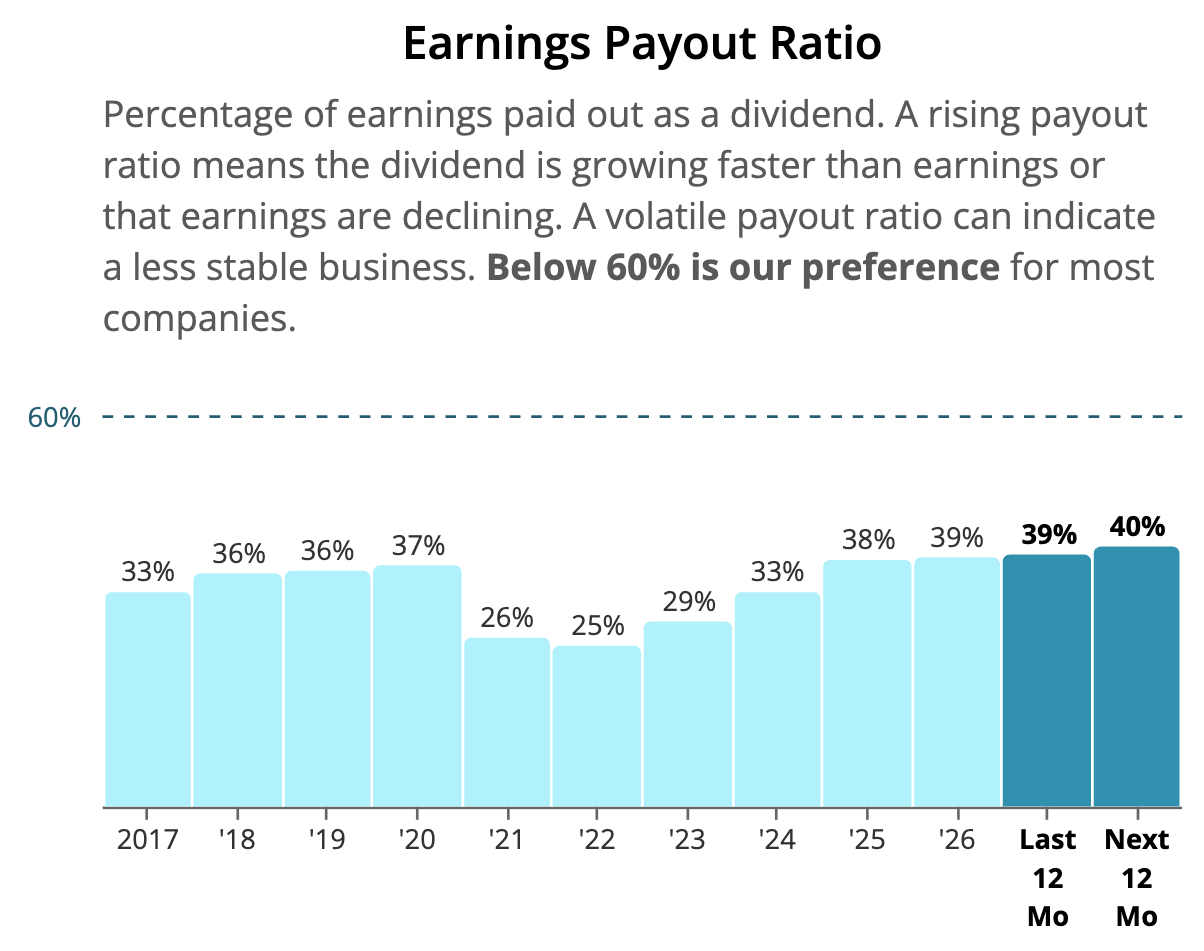
Lowe's pays out 39% of its earnings, expected to be 40% next year, within our 60% preference for most companies. Source: Simply Safe Dividends.
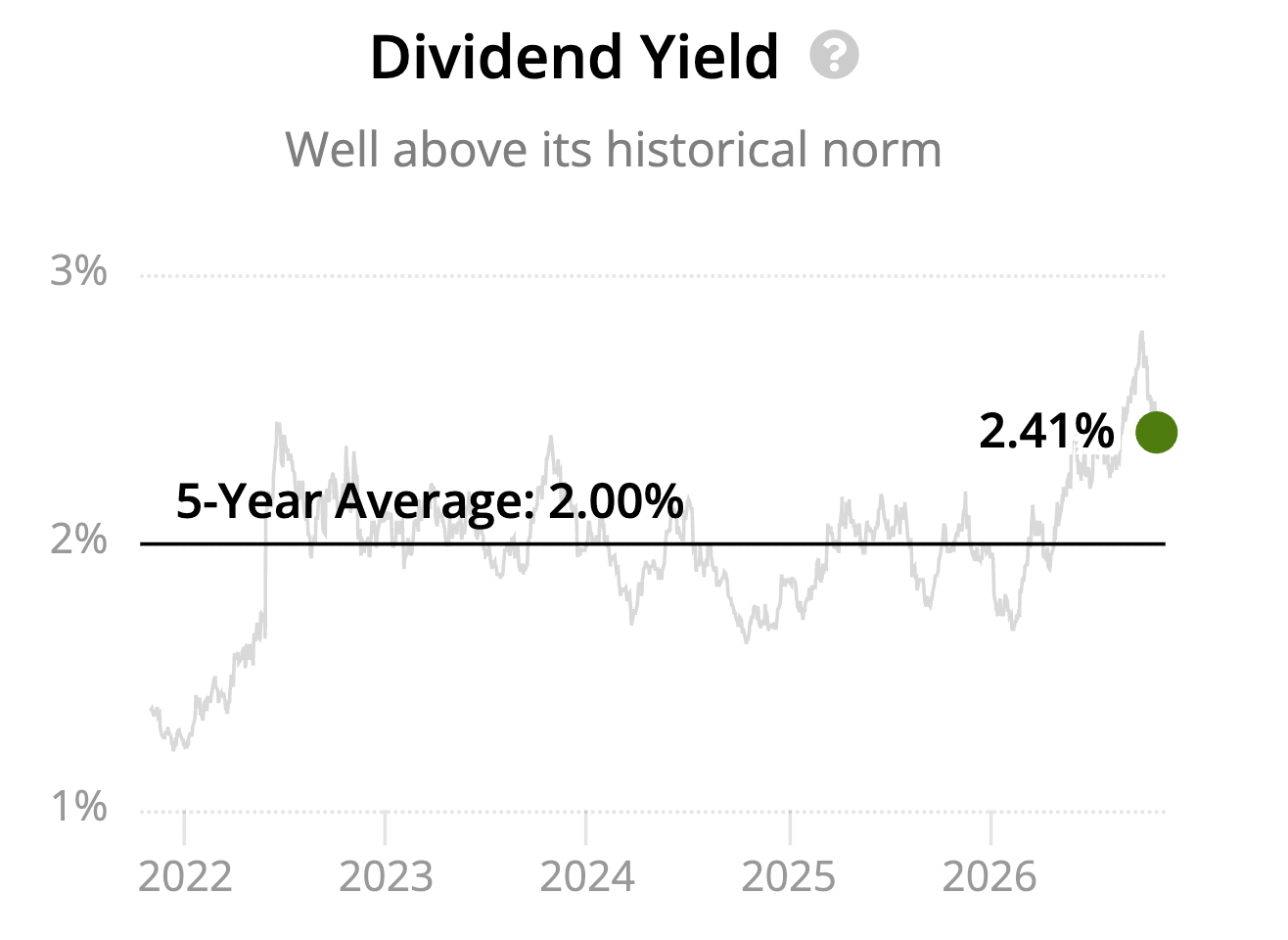
The 2.41% yield is well above its five-year average of 2.00%.
Lowe's yields 2.41%, well above its five-year average of 2.00%. Source: Simply Safe Dividends.
Coca-Cola makes syrup concentrate and sells it to bottlers around the world, which keeps its business light on capital. Its brands include Coca-Cola, Sprite, Fanta, Dasani, and Minute Maid.
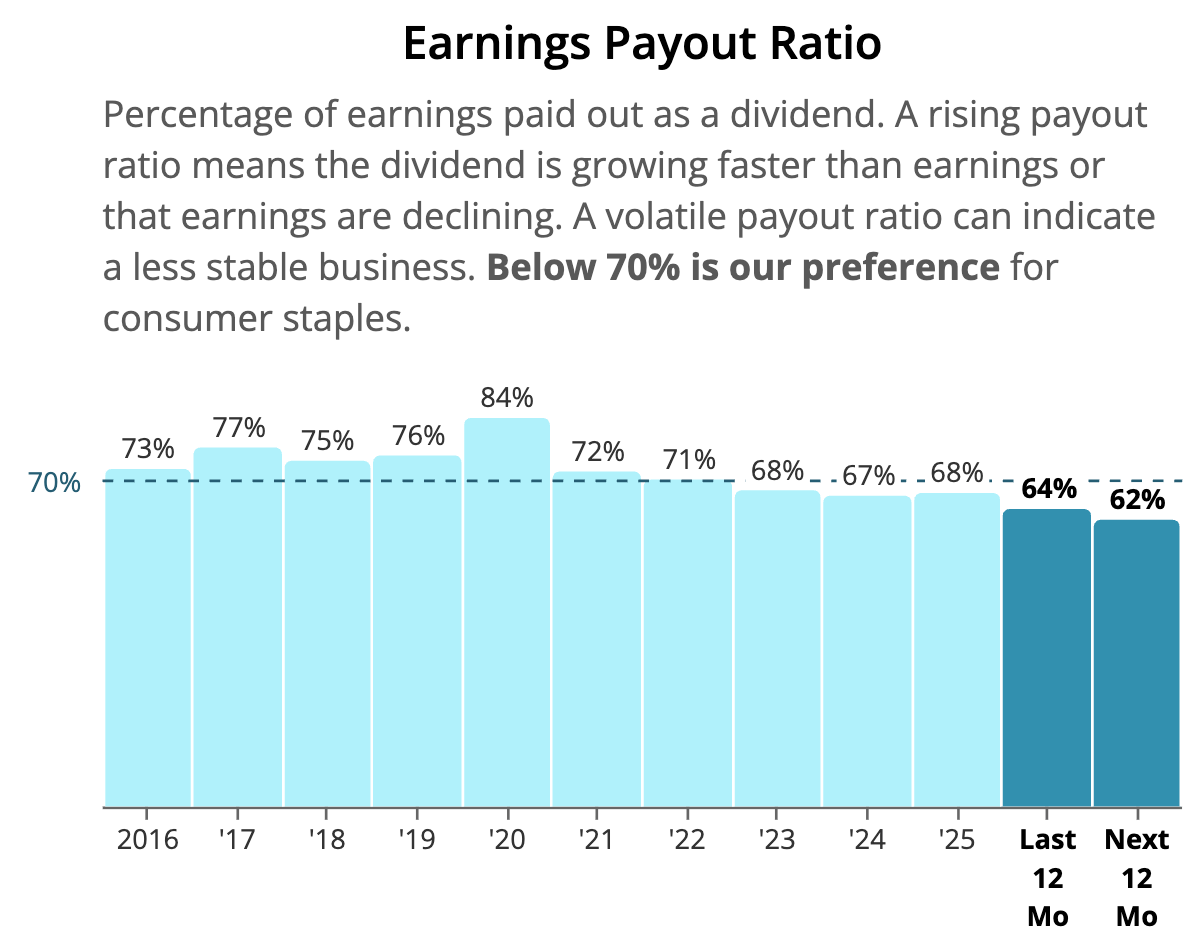
Its payout ratio has fallen from the mid-70s to about 64%, back inside our 70% preference for consumer staples.
Coca-Cola pays out 64% of its earnings, expected to be 62% next year, within our 70% preference for consumer staples. Source: Simply Safe Dividends.
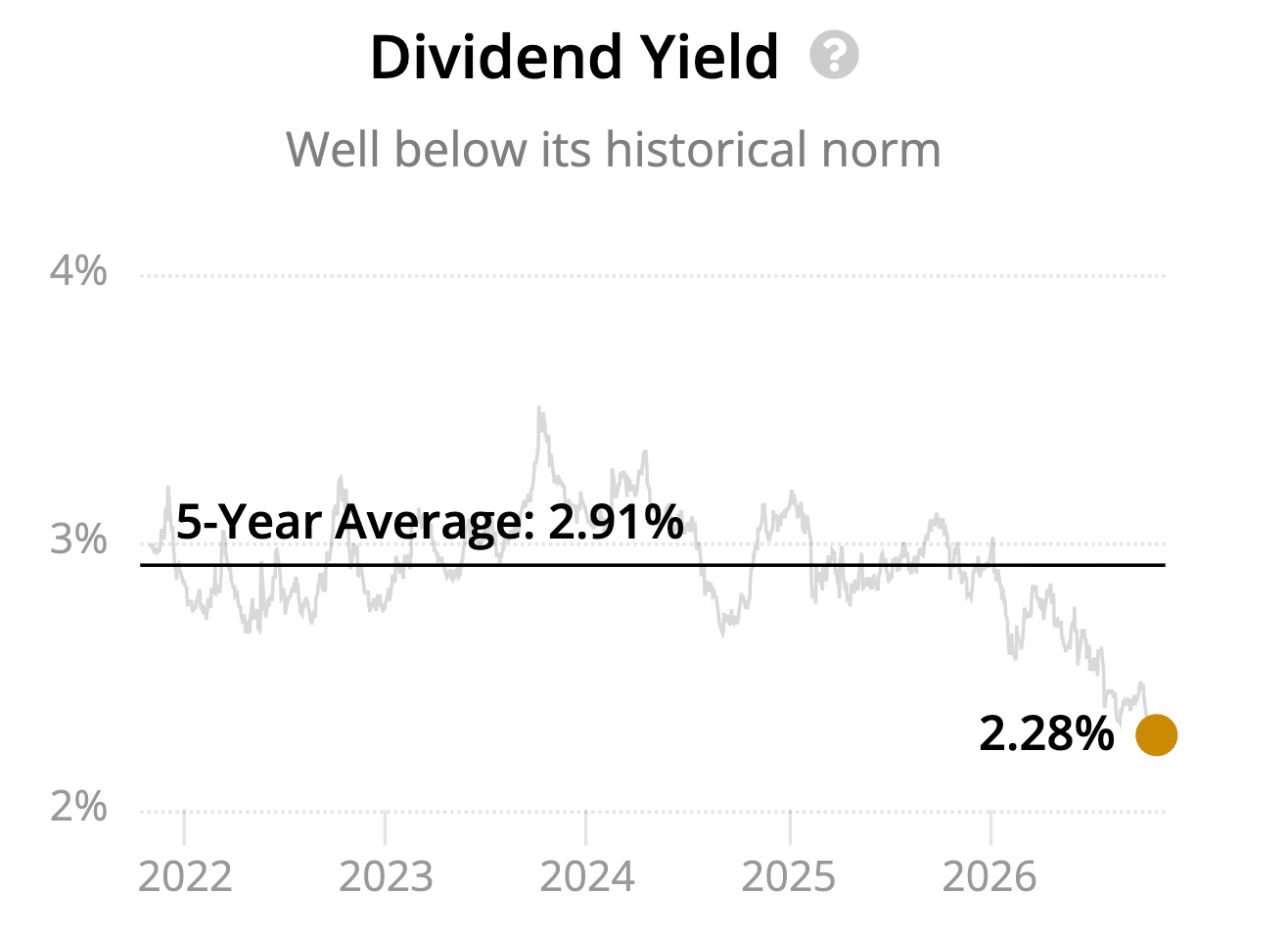
At 2.28%, the yield is well below its five-year average of 2.91%, and our valuation screen suggests the stock could be overvalued.
Coca-Cola yields 2.28%, well below its five-year average of 2.91%. Source: Simply Safe Dividends.
Federal Realty owns grocery-anchored shopping centers and mixed-use properties in affluent coastal markets. Its 58-year streak is the only one among REITs long enough to make this list.
We raised its Dividend Safety Score from 70 to 80 in July 2026 as its balance sheet improved and management guided for faster growth in funds from operations.
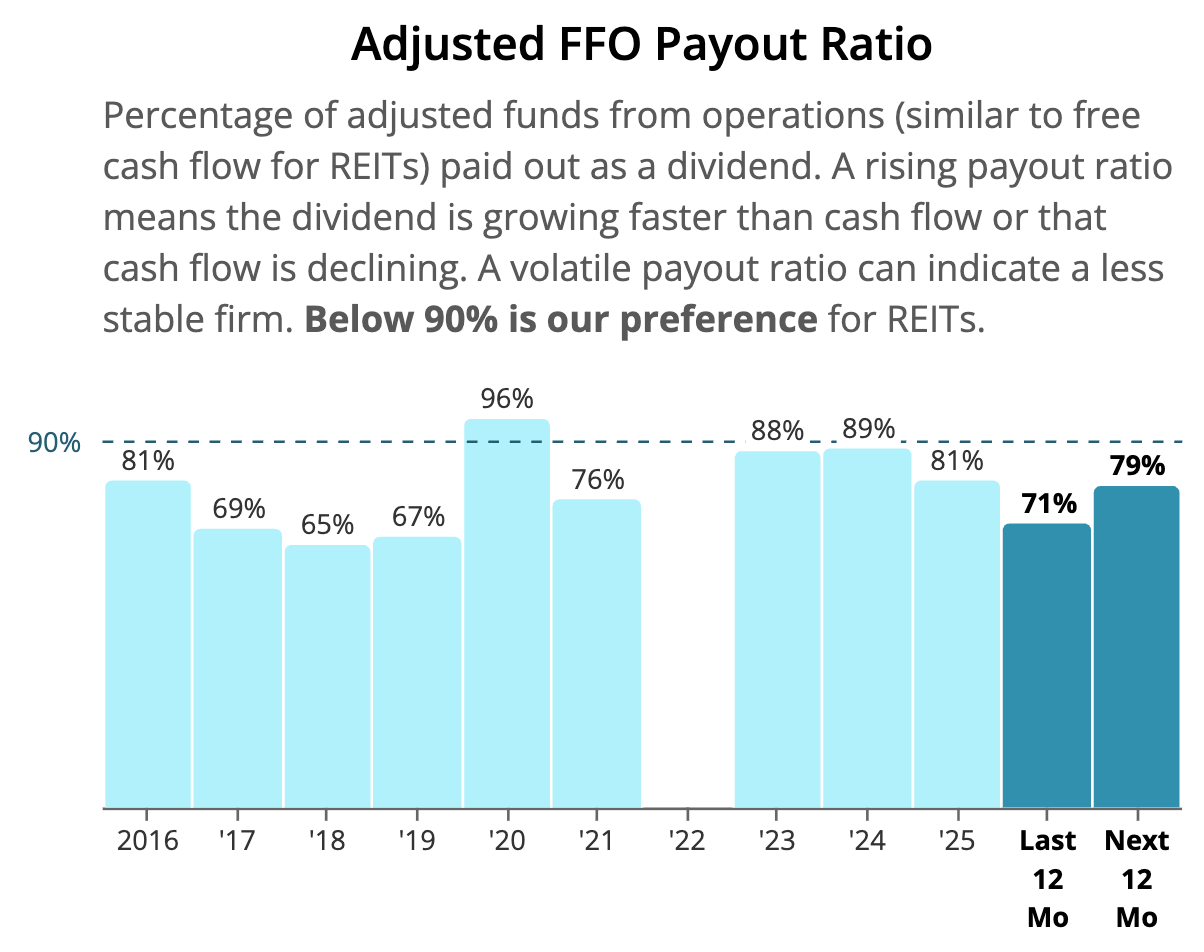
Federal Realty pays out 71% of its adjusted funds from operations, comfortably inside our 90% preference for REITs, and its leverage is low for a REIT.
Federal Realty pays out 71% of its adjusted funds from operations, expected to be 79% next year, within our 90% preference for REITs. Source: Simply Safe Dividends.
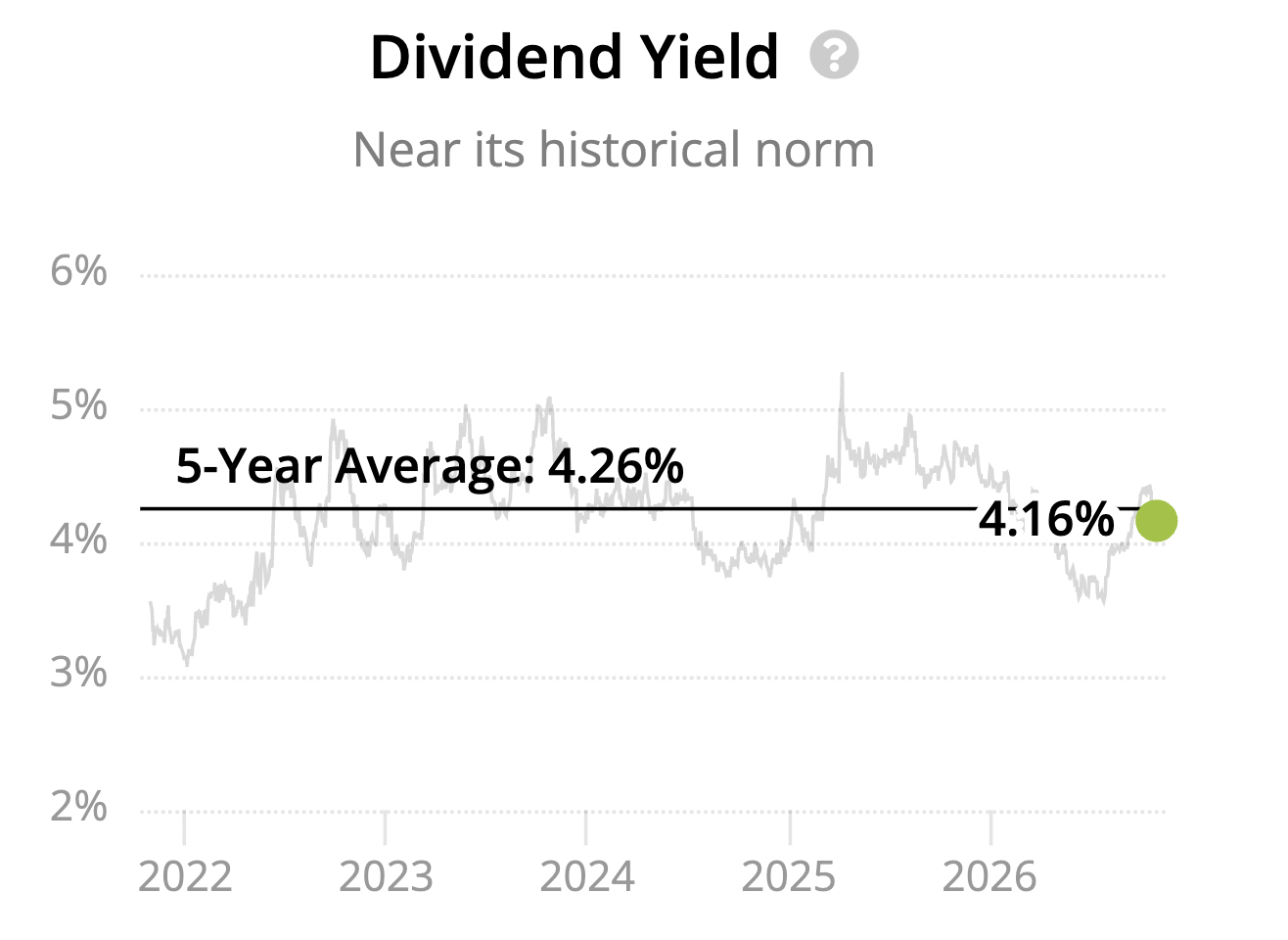
The 4.16% yield is near its five-year average of 4.26%.
Federal Realty yields 4.16%, near its five-year average of 4.26%. Source: Simply Safe Dividends.
ABM Industries (ABM)
Sector: Industrials – Waste and Facility Services Dividend Yield: 2.2% Dividend Safety Score: Safe (80) Dividend Growth Streak: 58 years Credit Rating: Not rated by S&P
ABM cleans, maintains, and staffs office buildings, airports, hospitals, and data centers under multi-year contracts. Hybrid work has softened demand in offices, but its focus on high-quality buildings has kept results stable.
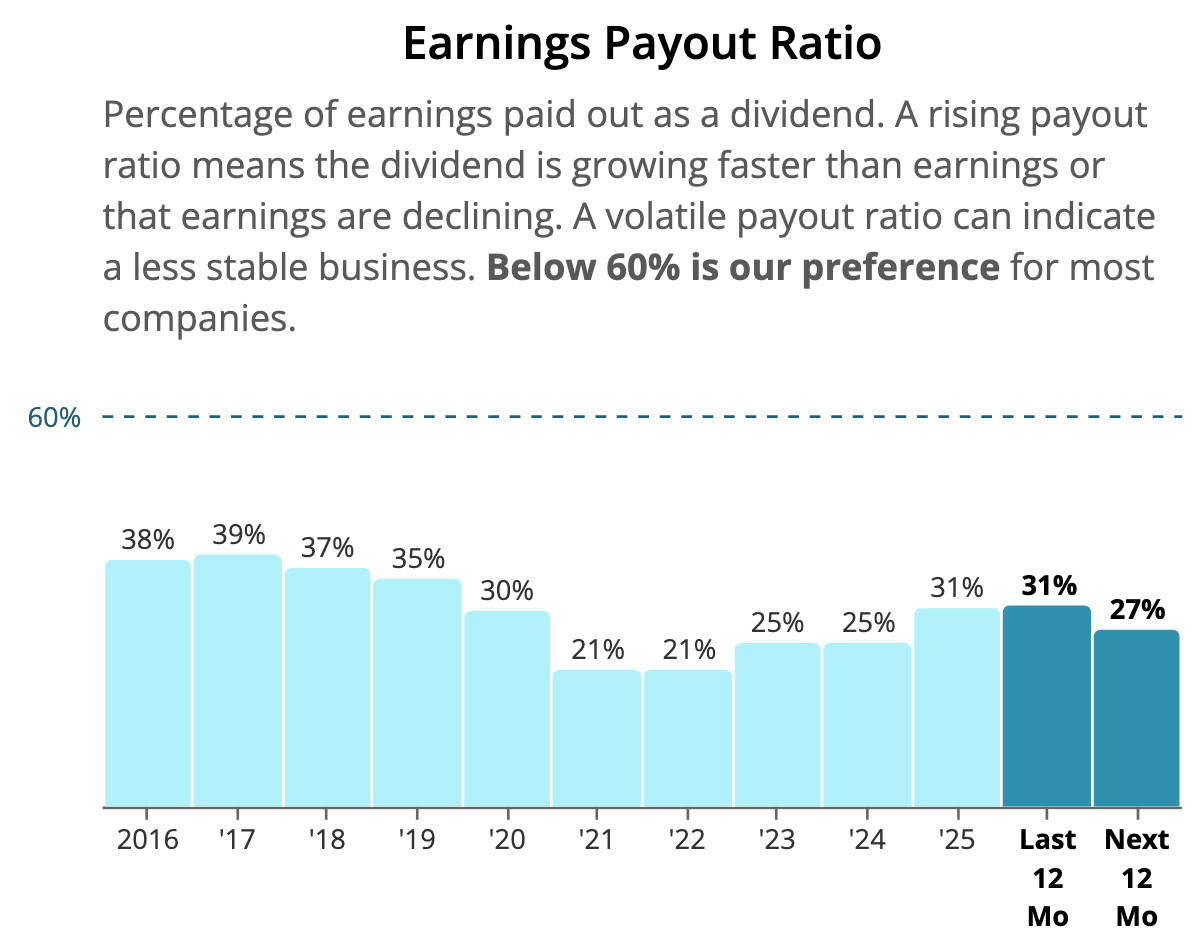
It pays out about 31% of its earnings, and it raised its dividend 9.4% in December 2025.
ABM pays out 31% of its earnings, expected to be 27% next year, within our 60% preference for most companies. Source: Simply Safe Dividends.
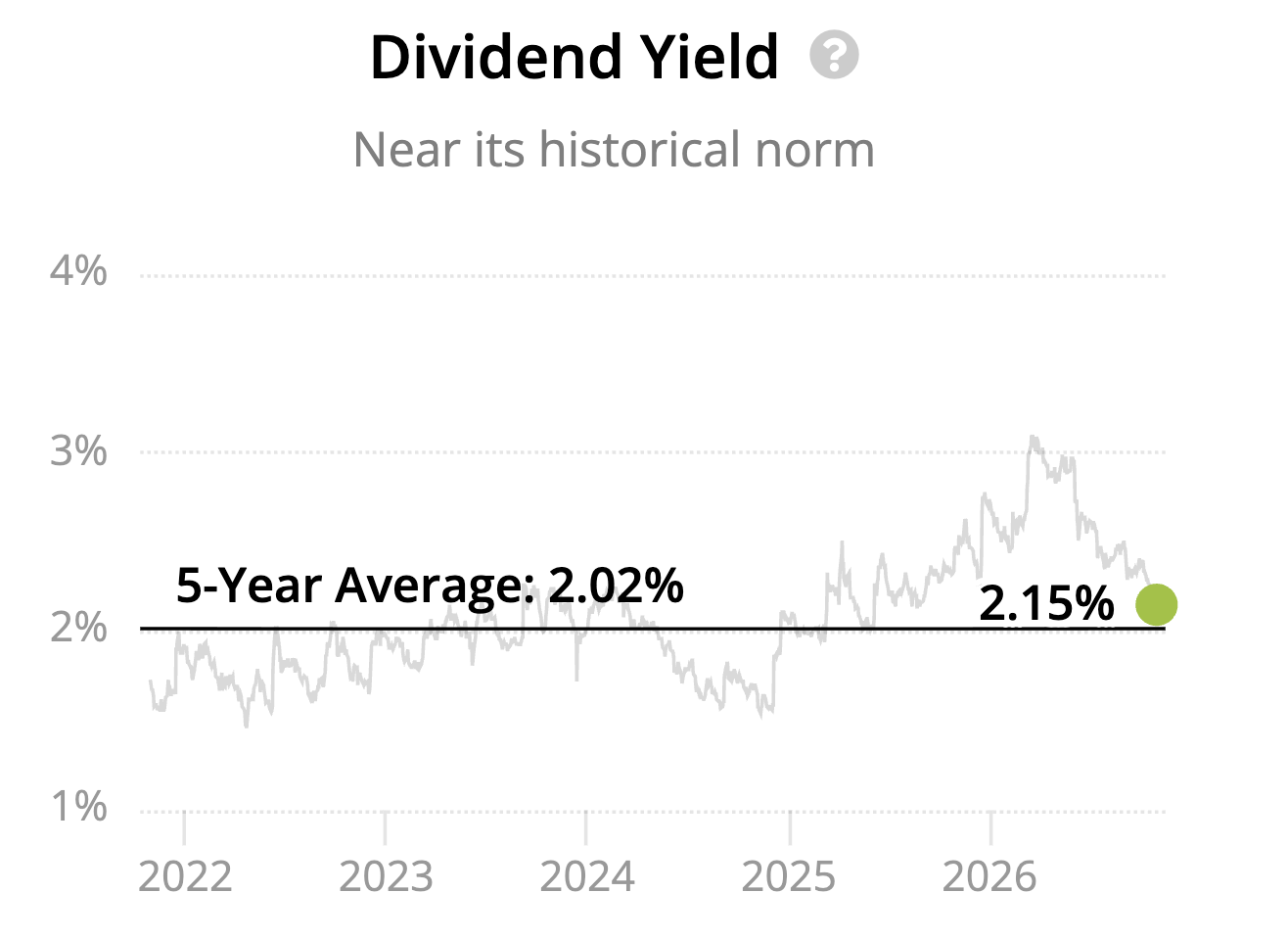
The yield of 2.15% is near its five-year average of 2.02%.
ABM yields 2.15%, near its five-year average of 2.02%. Source: Simply Safe Dividends.
PPG makes paints and coatings for aircraft, cars, beverage cans, and buildings. We lowered its Dividend Safety Score from Very Safe to Safe in September 2026 because demand across its industrial markets has been uneven.
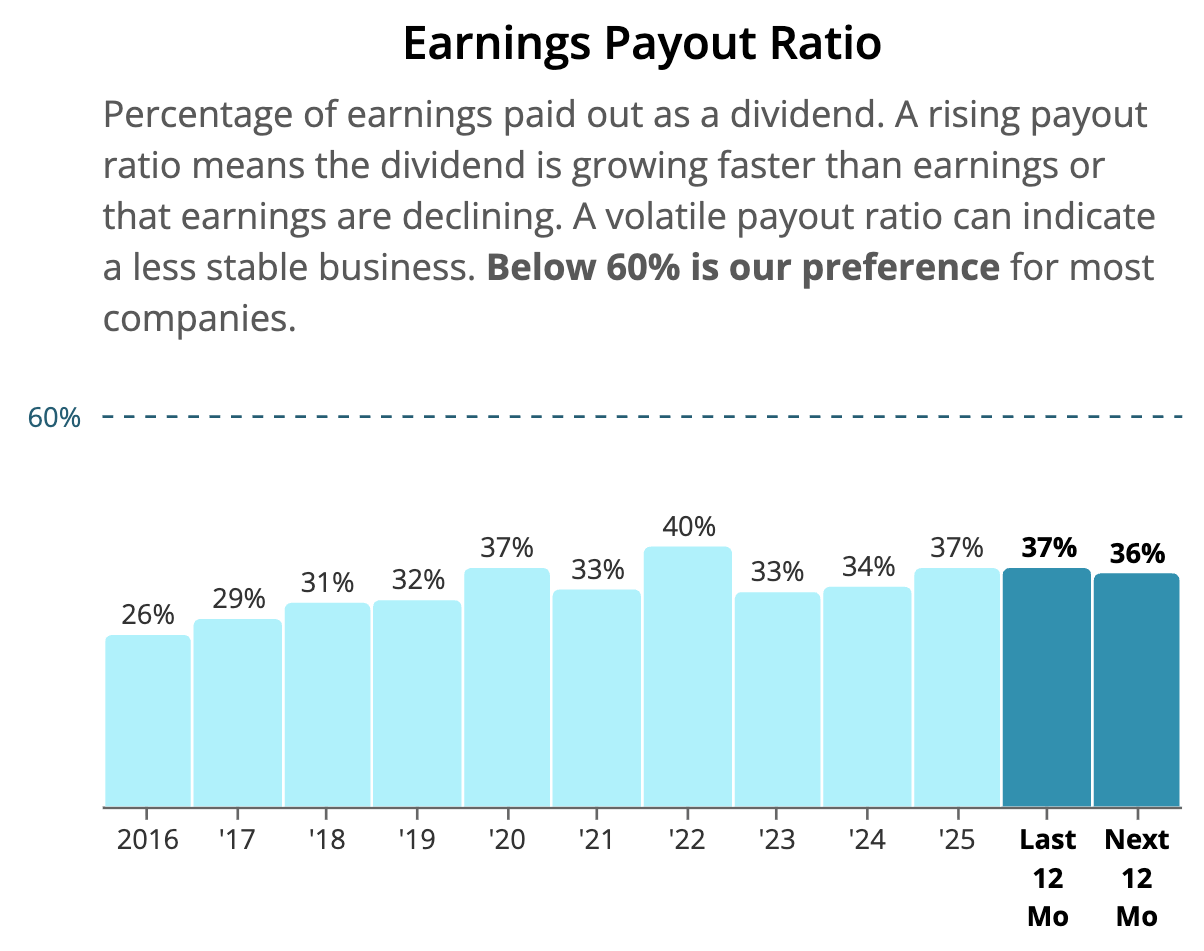
It still pays out only about 37% of its earnings, and its leverage is low.
PPG pays out 37% of its earnings, expected to be 36% next year, within our 60% preference for most companies. Source: Simply Safe Dividends.
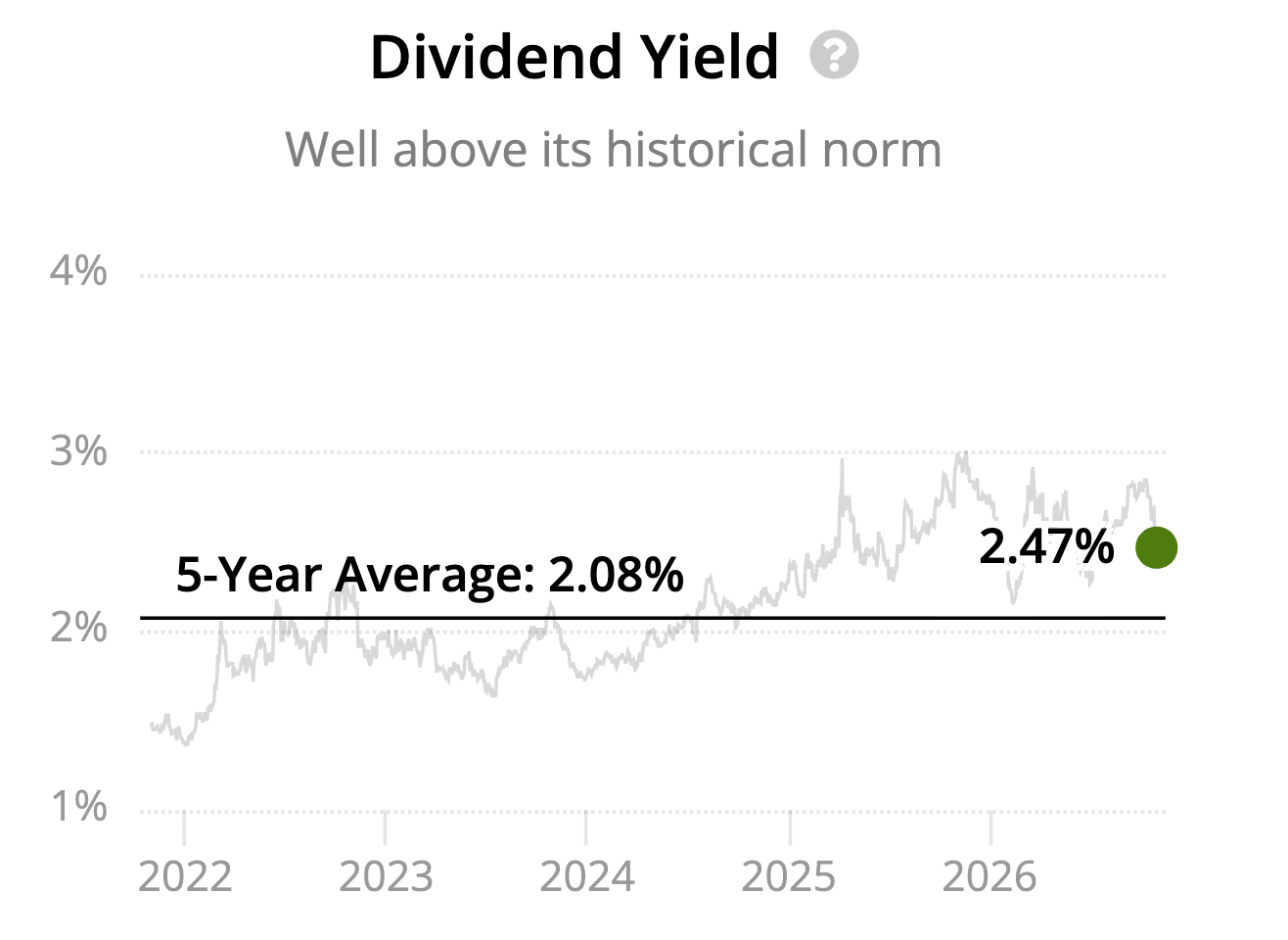
The 2.47% yield is well above its five-year average of 2.08%, and our valuation screen suggests the stock may be undervalued.
PPG yields 2.47%, well above its five-year average of 2.08%. Source: Simply Safe Dividends.
AbbVie sells the immunology drugs Skyrizi and Rinvoq, along with Botox and cancer treatments. It spun off from Abbott in 2013 and counts Abbott's dividend history toward its streak.
Humira once produced nearly two-thirds of its profits. As of early 2025, that share was roughly 15%.
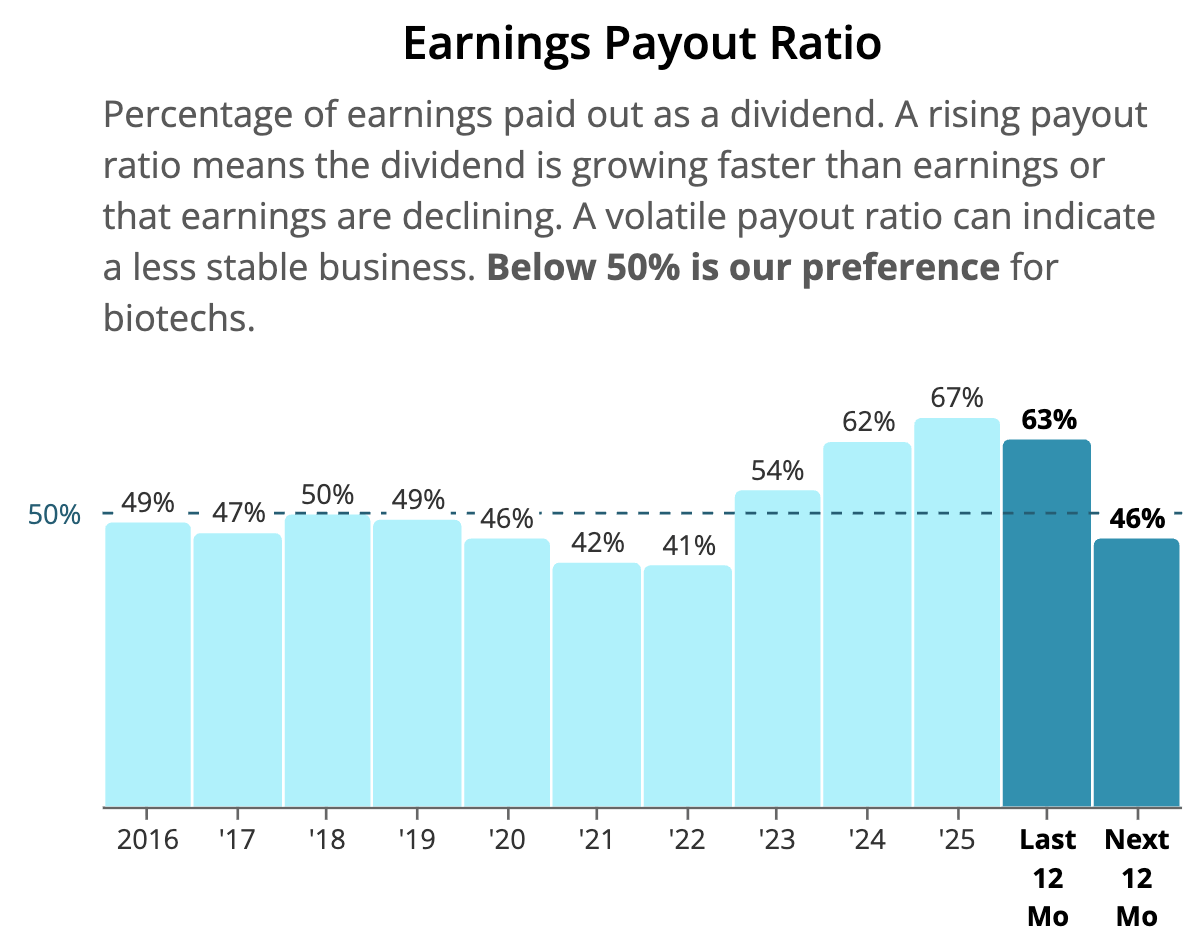
Its payout ratio rose to 67% in 2025 as Humira sales fell to cheaper biosimilar competition. It is expected to drop to 46%, back within our 50% preference for biotechs.
AbbVie pays out 63% of its earnings, expected to be 46% next year, moving back within our 50% preference for biotechs. Source: Simply Safe Dividends.
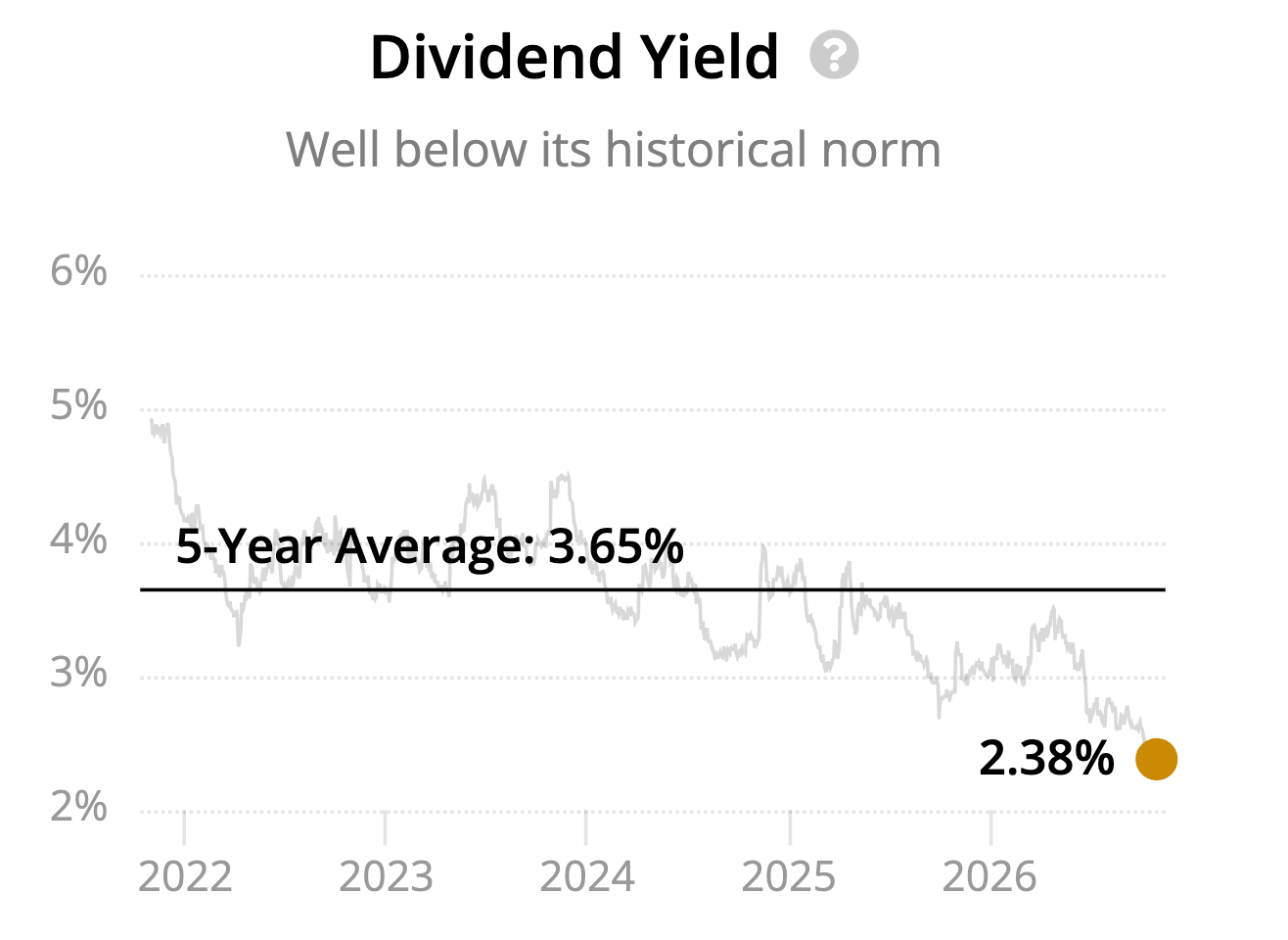
The yield of 2.38% is well below its five-year average of 3.65% after a strong run in the shares.
AbbVie yields 2.38%, well below its five-year average of 3.65%. Source: Simply Safe Dividends.
Gorman-Rupp (GRC)
Sector: Industrials – Industrial Machinery and Components Dividend Yield: 1.1% Dividend Safety Score: Safe (80) Dividend Growth Streak: 54 years Credit Rating: Not rated by S&P
Gorman-Rupp makes pumps for water and wastewater treatment, construction, agriculture, and fire suppression. Its 2022 purchase of Fill-Rite added debt to a balance sheet that had long been debt-free.
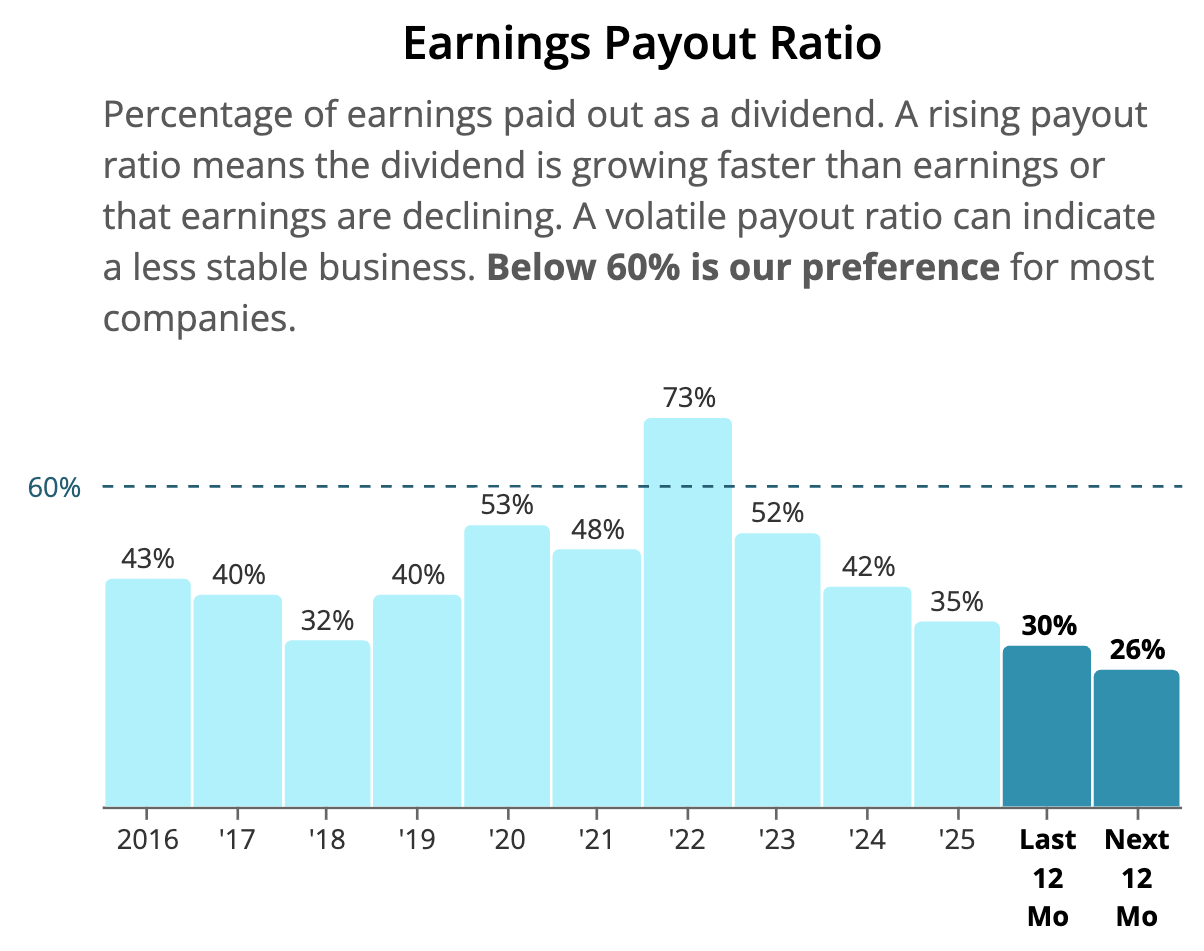
Its payout ratio has fallen from 73% in 2022 to about 30% as earnings recovered.
Gorman-Rupp pays out 30% of its earnings, expected to be 26% next year, within our 60% preference for most companies. Source: Simply Safe Dividends.
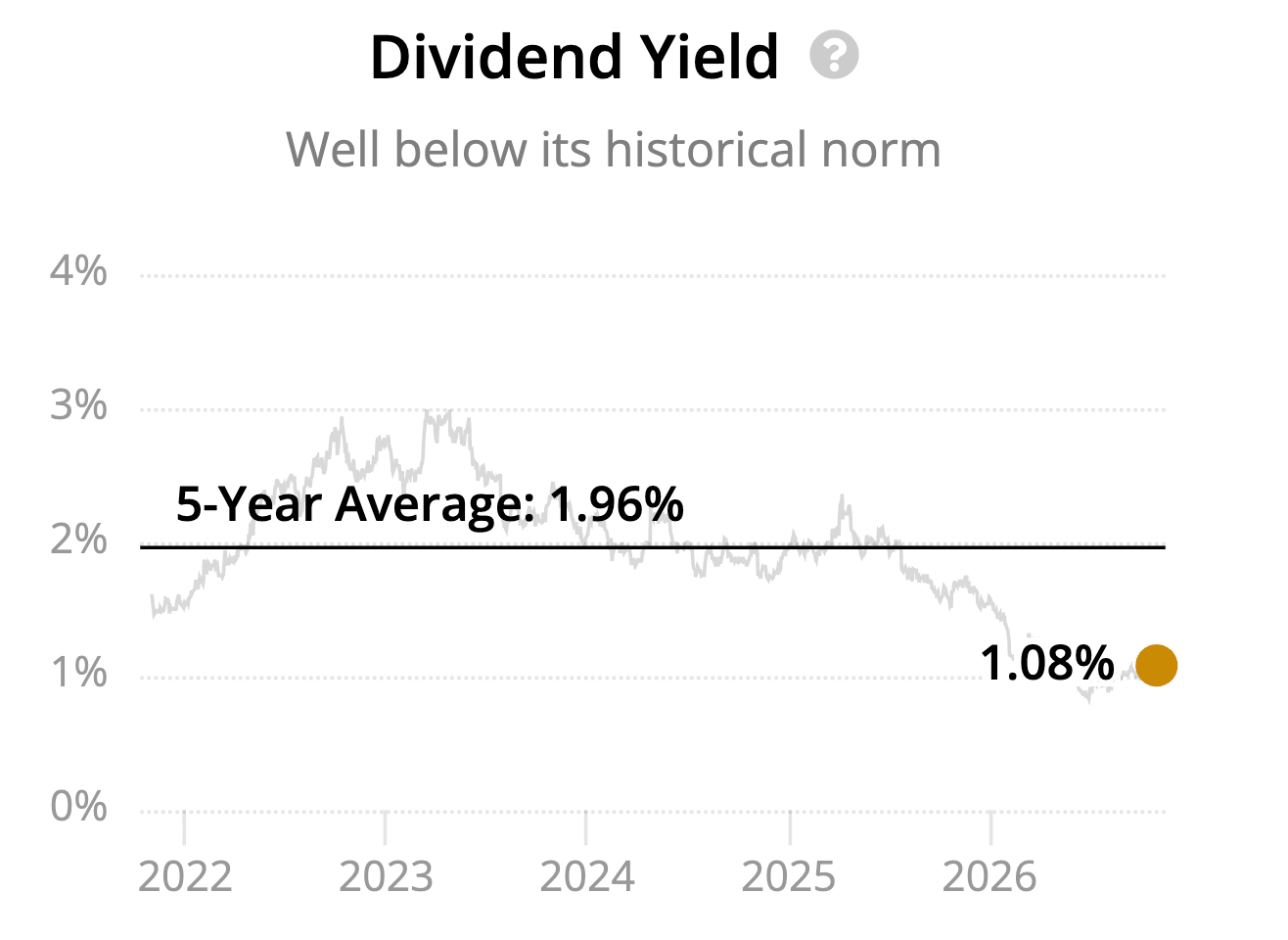
At 1.08%, the yield is about half its five-year average of 1.96%, and our valuation screen suggests the stock could be overvalued.
Gorman-Rupp yields 1.08%, well below its five-year average of 1.96%. Source: Simply Safe Dividends.
PepsiCo sells Lay's, Doritos, Gatorade, Quaker, and Pepsi. We lowered its Dividend Safety Score from Very Safe to Safe in April 2026 as price-conscious shoppers traded down and weight-loss drugs clouded the outlook for snacks and soda.
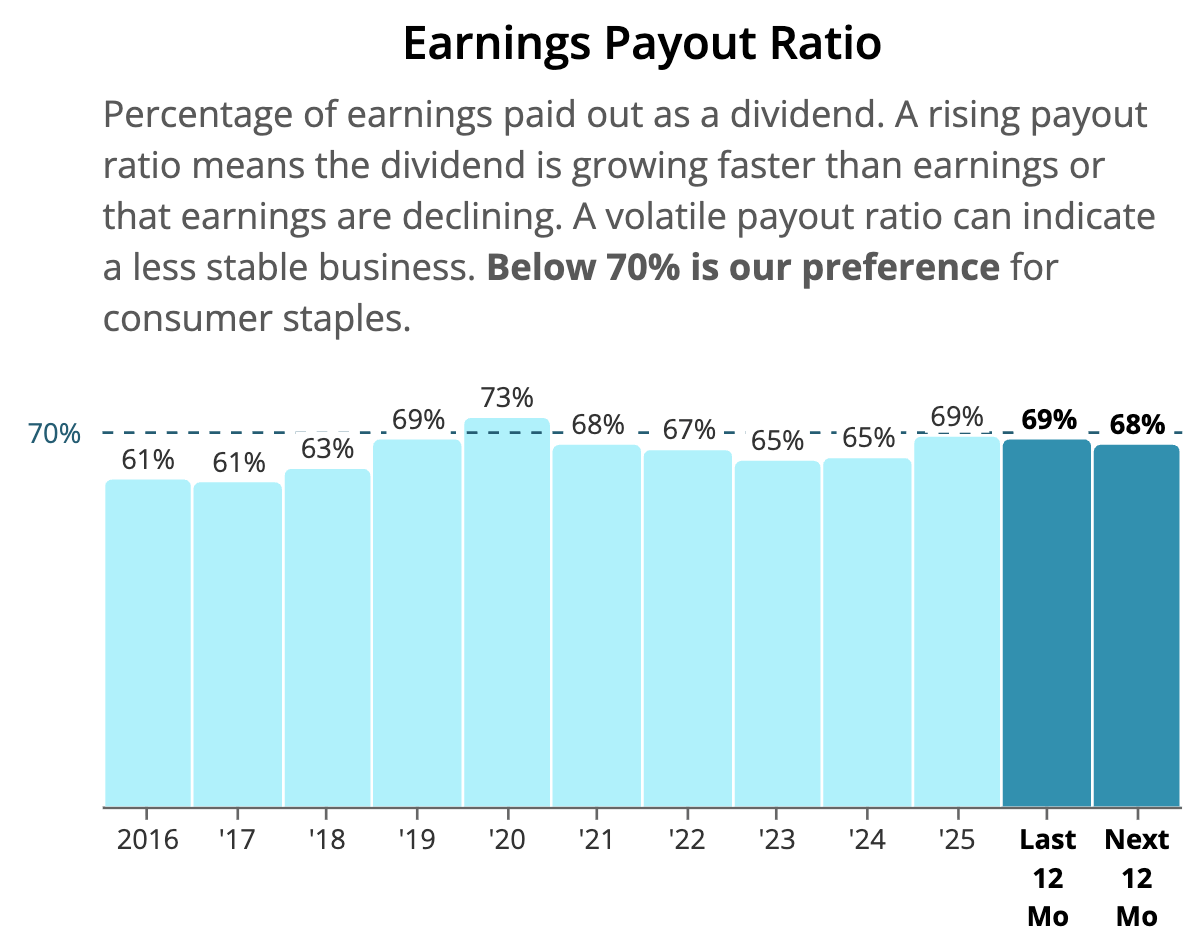
The payout ratio has crept up to 69%, just under our 70% preference for consumer staples, so future raises may track earnings more closely.
PepsiCo pays out 69% of its earnings, expected to be 68% next year, within our 70% preference for consumer staples. Source: Simply Safe Dividends.
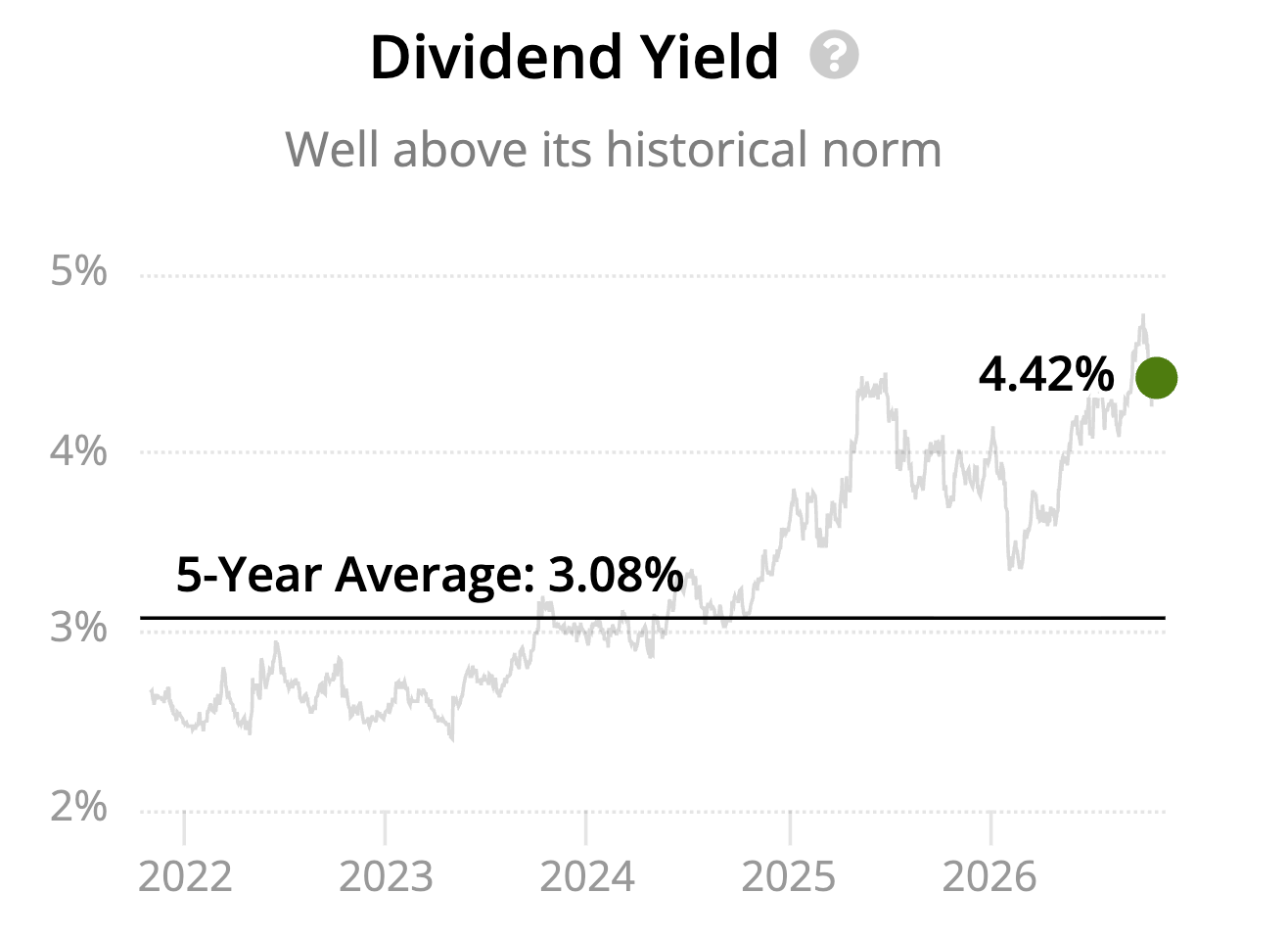
Its 4.42% yield is well above its five-year average of 3.08%, and our valuation screen suggests the stock may be undervalued.
PepsiCo yields 4.42%, well above its five-year average of 3.08%. Source: Simply Safe Dividends.
RPM makes Rust-Oleum paints, DAP caulks, Tremco roofing systems, and industrial coatings. Much of its growth has come from a long string of acquisitions.
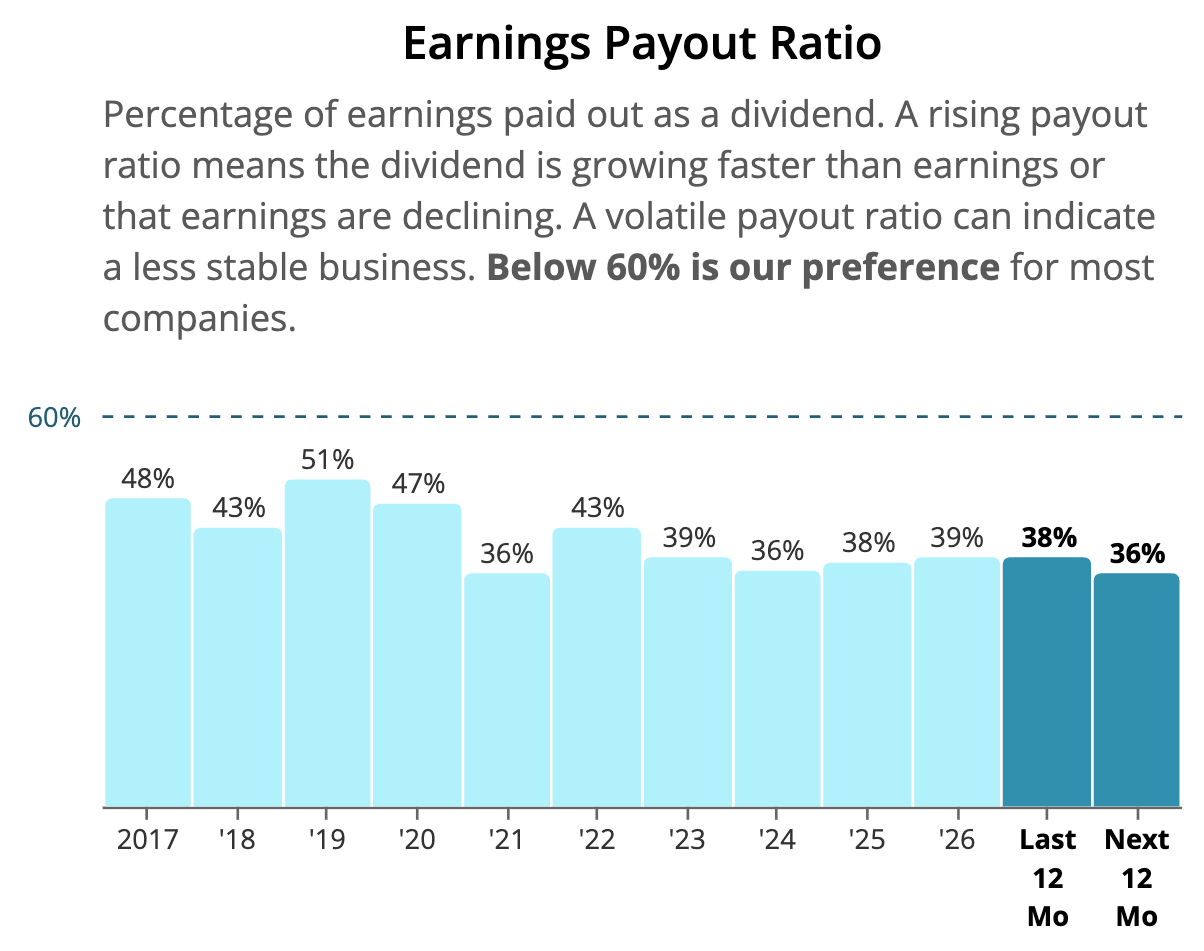
Its payout ratio has fallen from 48% in fiscal 2017 to about 38%.
RPM pays out 38% of its earnings, expected to be 36% next year, within our 60% preference for most companies. Source: Simply Safe Dividends.
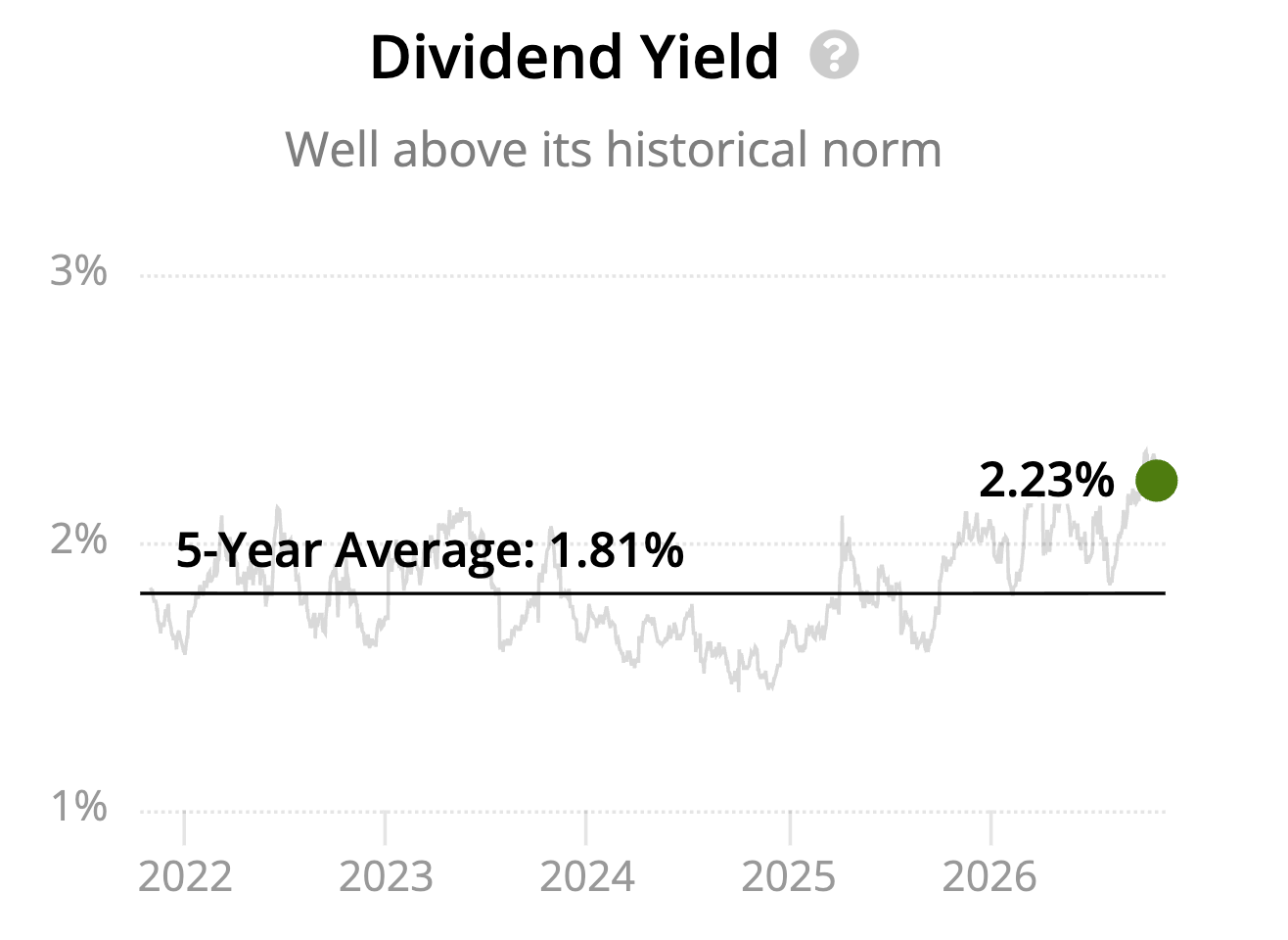
The 2.23% yield is well above its five-year average of 1.81%.
RPM yields 2.23%, well above its five-year average of 1.81%. Source: Simply Safe Dividends.
Pentair makes pumps, filters, water treatment systems, and pool equipment. Its 50th straight dividend increase made it one of this year's new Dividend Kings.
We lowered its Dividend Safety Score from Very Safe to Safe in September 2026 after pool distributors cut orders and Pentair agreed to buy a pump and heating equipment maker.
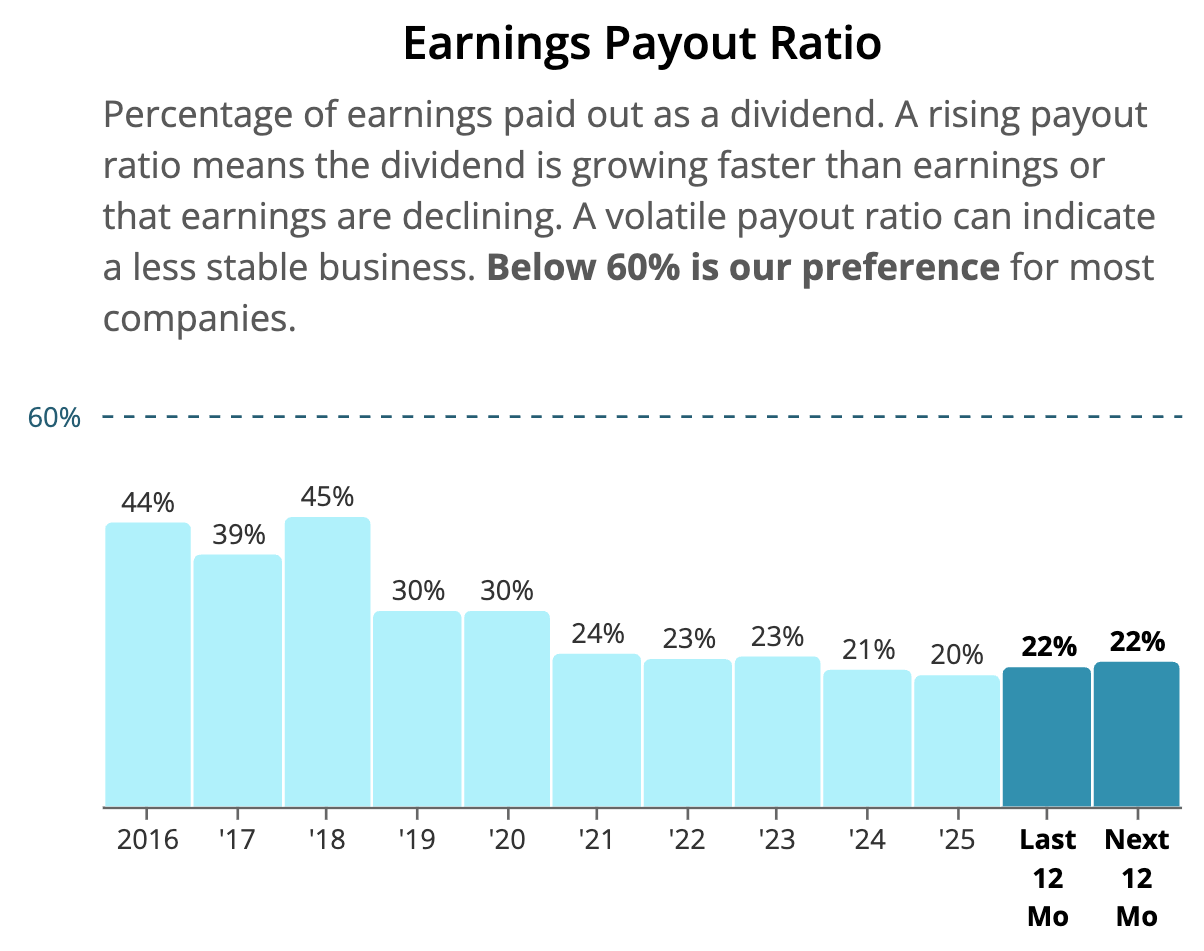
Even so, Pentair pays out only about 22% of its earnings.
Pentair pays out 22% of its earnings, expected to be 22% next year, within our 60% preference for most companies. Source: Simply Safe Dividends.
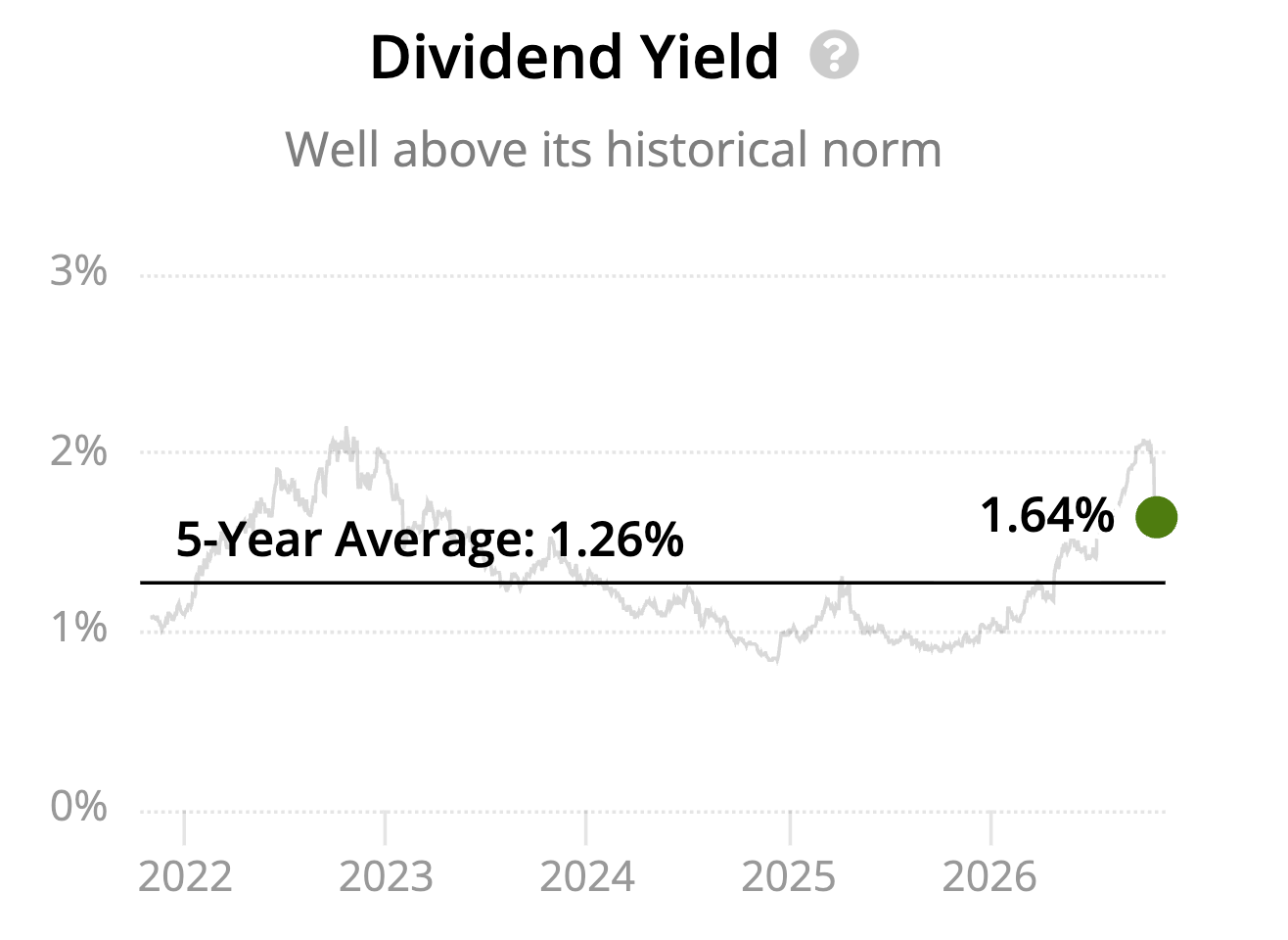
The yield of 1.64% is well above its five-year average of 1.26%, and our valuation screen suggests the stock may be undervalued.
Pentair yields 1.64%, well above its five-year average of 1.26%. Source: Simply Safe Dividends.
United Bankshares (UBSI)
Sector: Financials – Regional Banks Dividend Yield: 3.1% Dividend Safety Score: Safe (79) Dividend Growth Streak: 52 years Credit Rating: Not rated by S&P
United Bankshares is a regional bank serving the Washington, D.C. area, nearby states, and Atlanta.
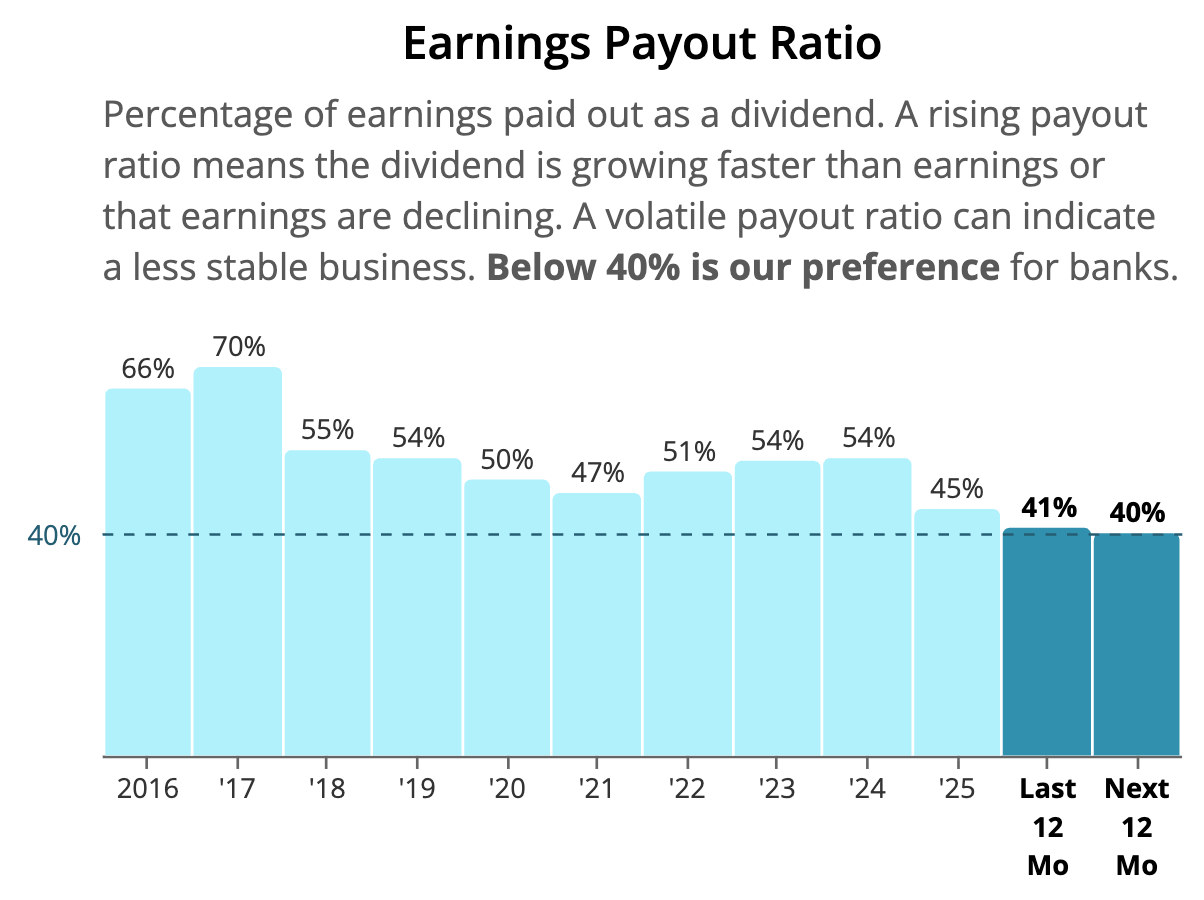
Its payout ratio has fallen from 70% in 2017 to about 41%, near our 40% preference for banks.
United Bankshares pays out 41% of its earnings, expected to be 40% next year, moving back within our 40% preference for banks. Source: Simply Safe Dividends.
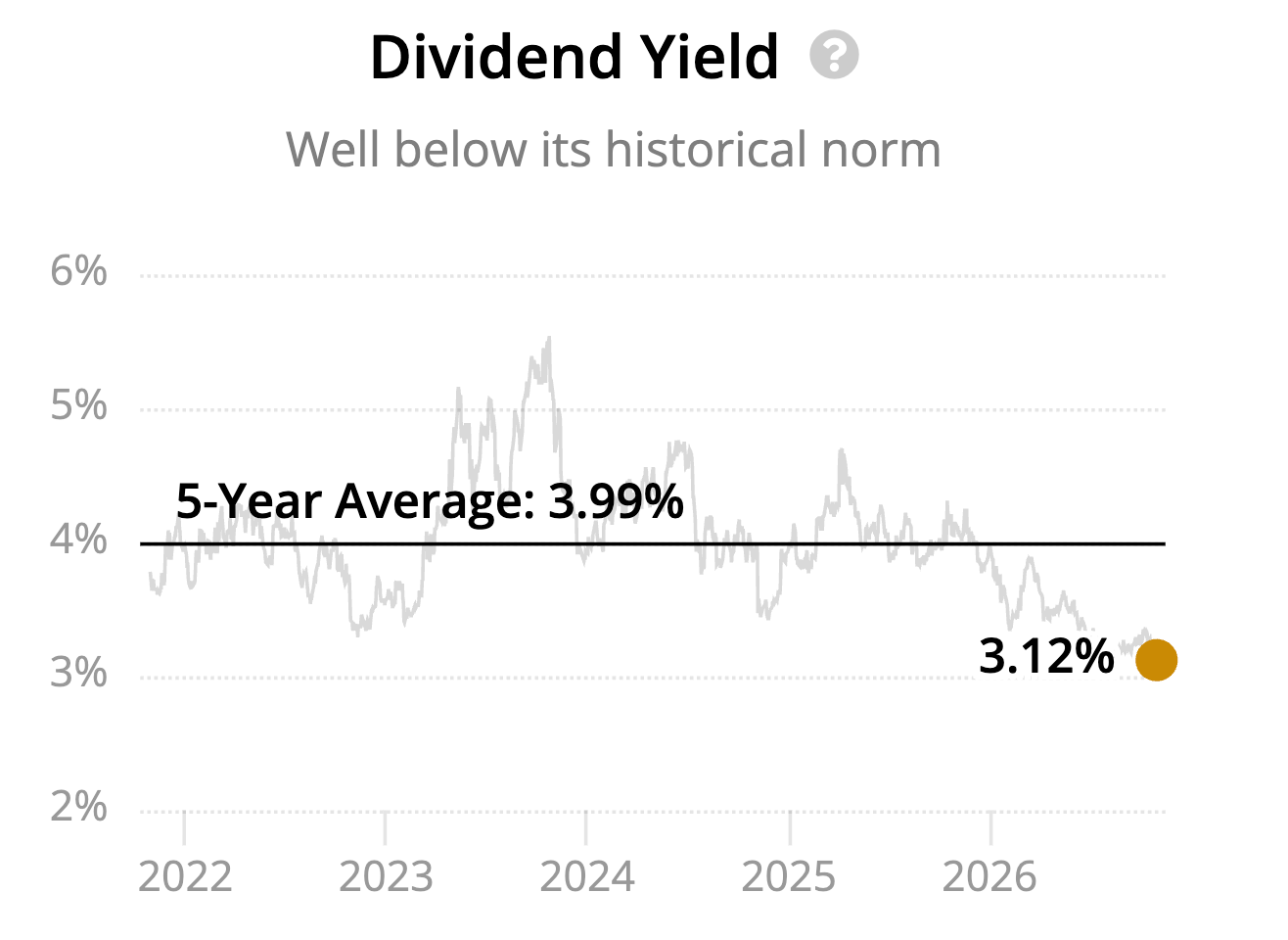
The 3.12% yield is well below its five-year average of 3.99%.
United Bankshares yields 3.12%, well below its five-year average of 3.99%. Source: Simply Safe Dividends.
Emerson Electric (EMR)
Sector: Industrials – Electrical Components and Equipment Dividend Yield: 1.3% Dividend Safety Score: Safe (78) Dividend Growth Streak: 69 years Credit Rating: A
Emerson sells industrial automation equipment and software, including valves, sensors, measurement instruments, and control systems. It has reshaped itself around automation in recent years by selling slower-growing businesses.
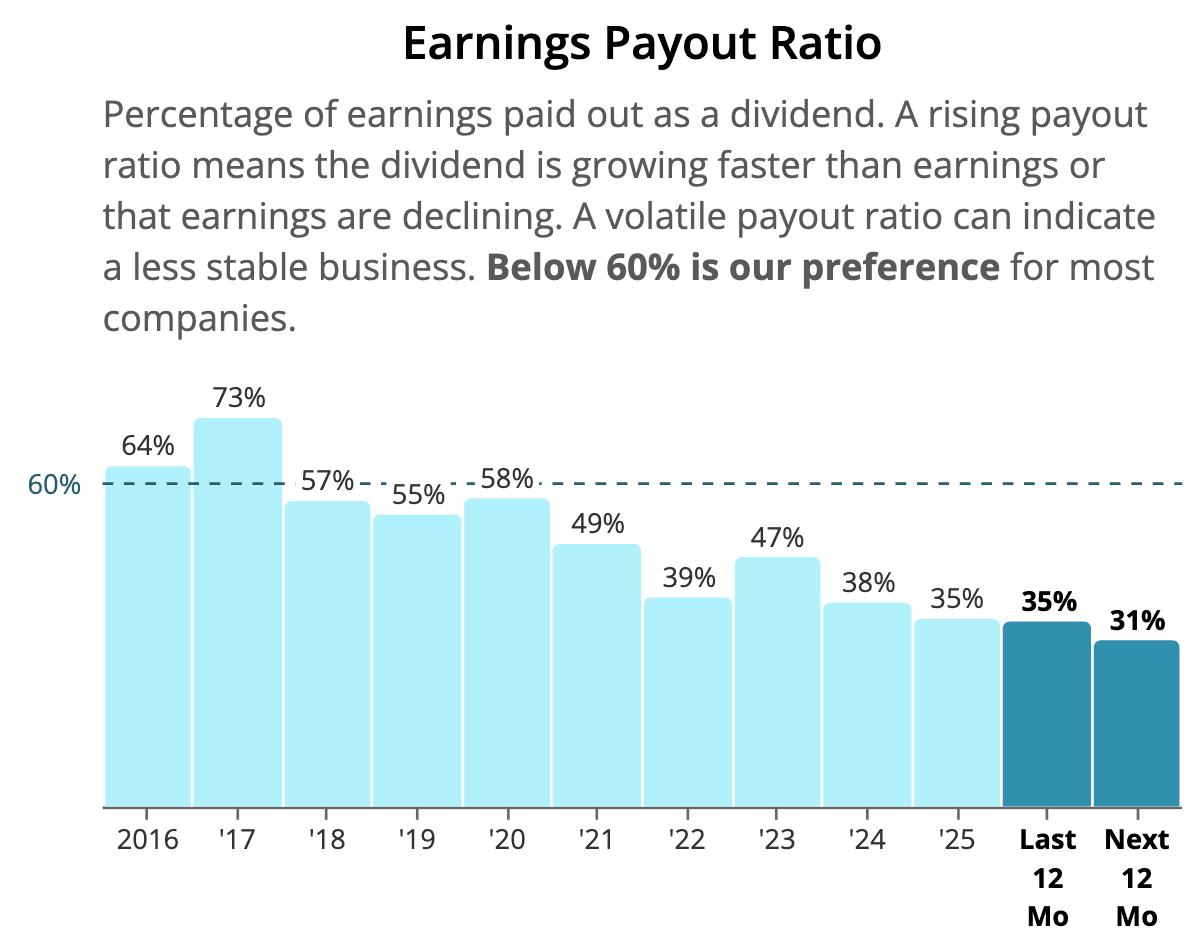
Its payout ratio has fallen from 73% in 2017 to about 35%, because its dividend grew only about 1% a year over the past five years. Its most recent raise was larger, at 5.2%.
Emerson pays out 35% of its earnings, expected to be 31% next year, within our 60% preference for most companies. Source: Simply Safe Dividends.
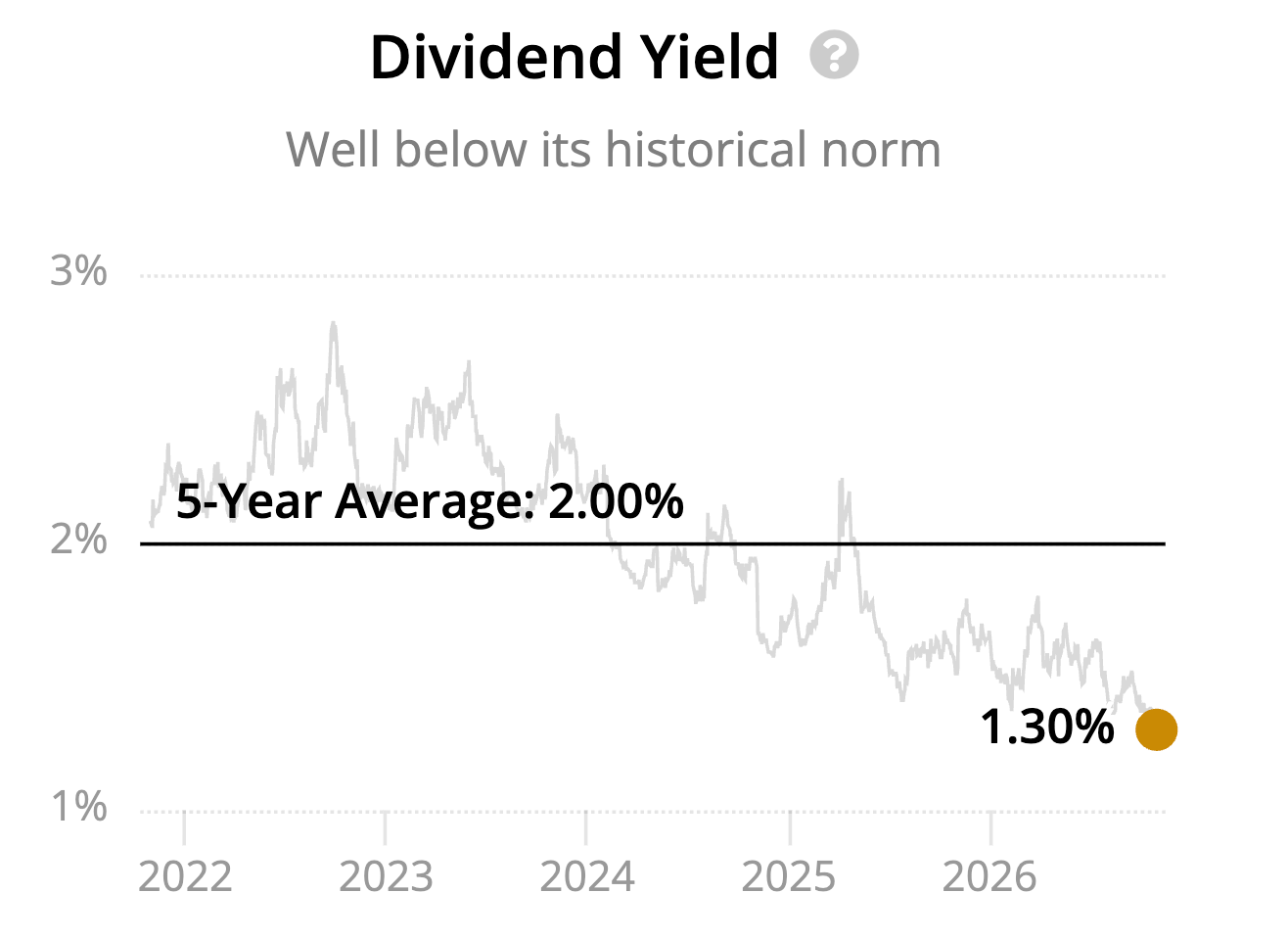
The 1.30% yield is well below its five-year average of 2.00%.
Emerson yields 1.30%, well below its five-year average of 2.00%. Source: Simply Safe Dividends.
Black Hills delivers electricity and natural gas across the Rocky Mountain and Midwest regions. It agreed in August 2025 to merge with NorthWestern Energy in an all-stock deal.
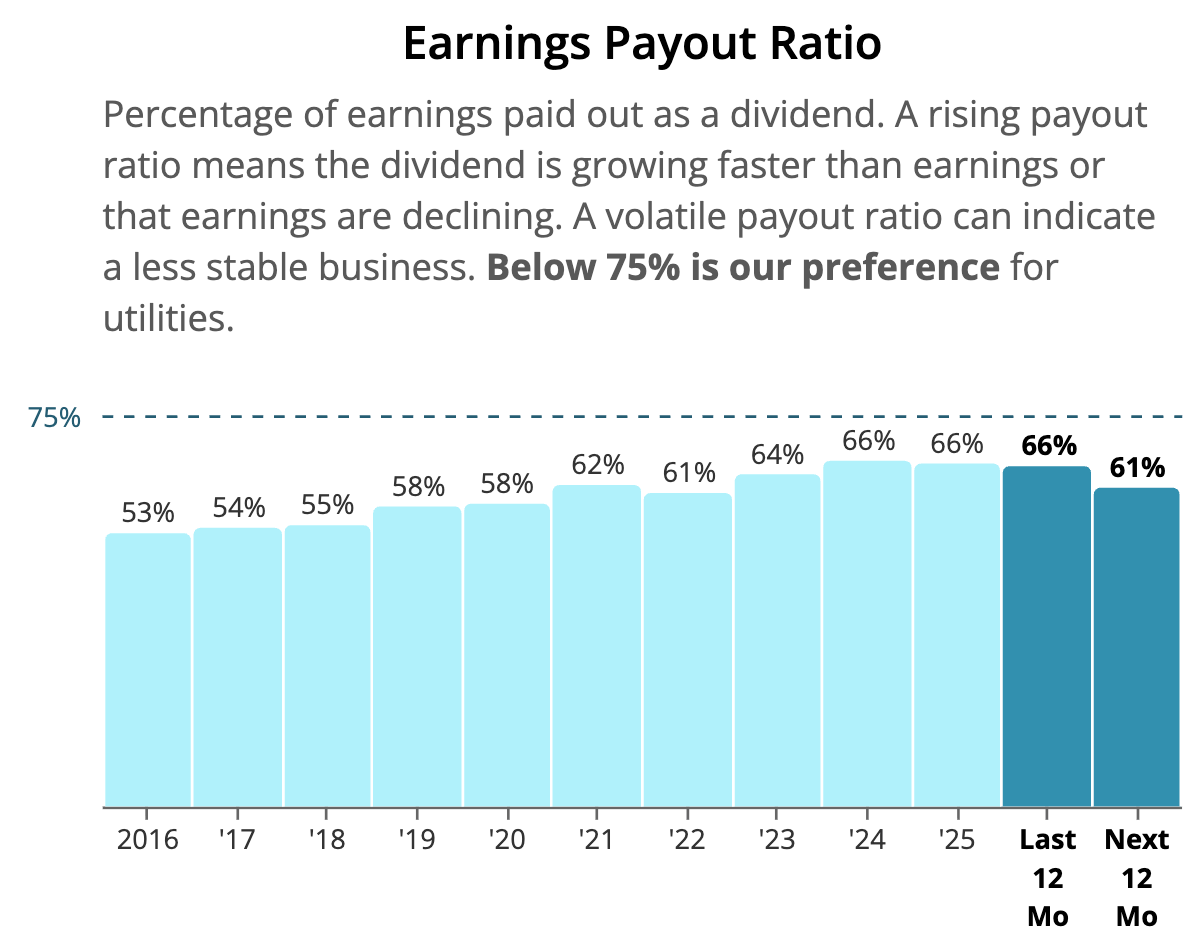
Its payout ratio has risen steadily from 53% in 2016 to about 66%, still inside our 75% preference for utilities, and its leverage is low for a utility.
Black Hills pays out 66% of its earnings, expected to be 61% next year, within our 75% preference for utilities. Source: Simply Safe Dividends.
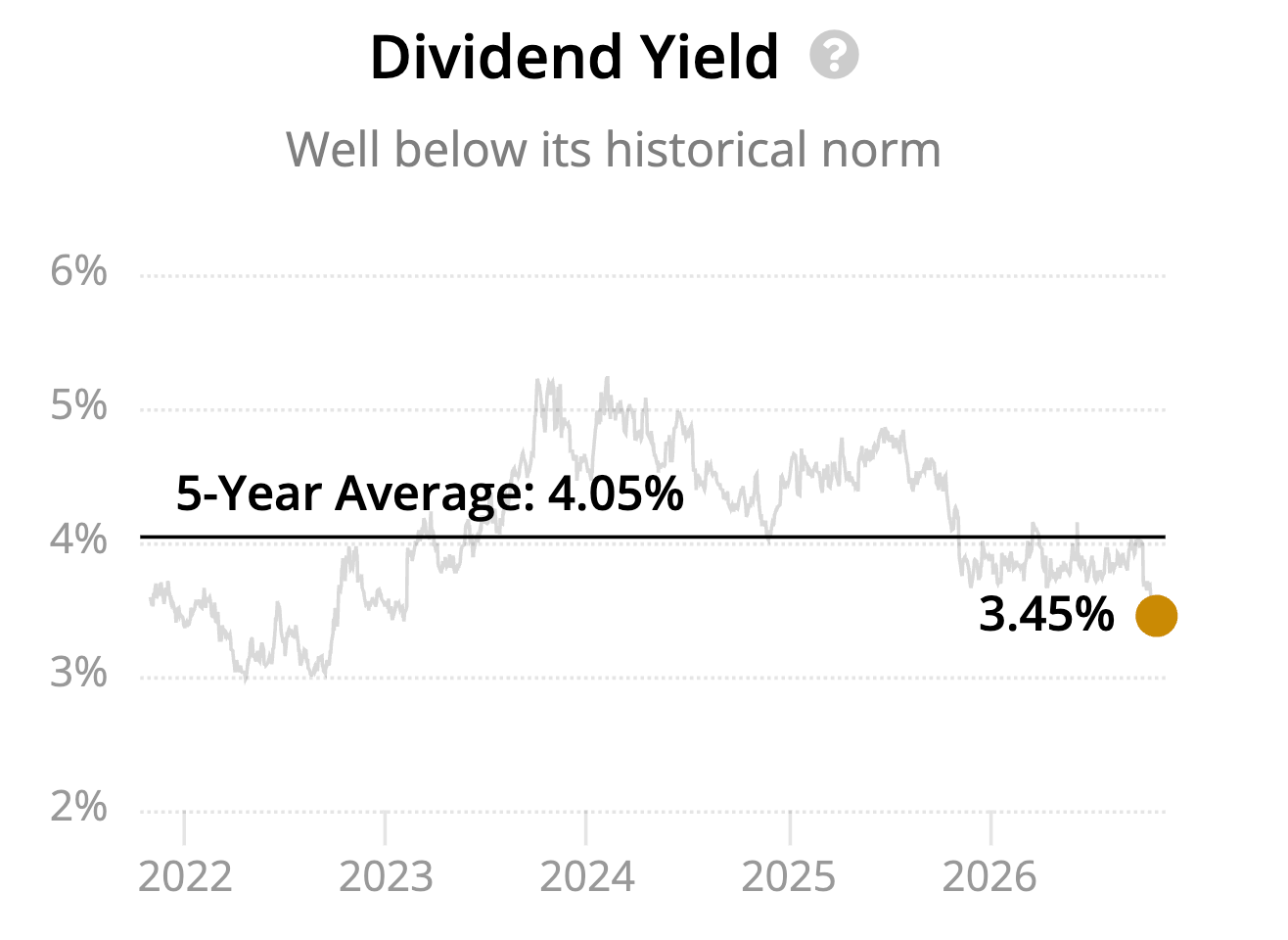
The 3.45% yield is well below its five-year average of 4.05%.
Black Hills yields 3.45%, well below its five-year average of 4.05%. Source: Simply Safe Dividends.
McDonald's franchises nearly all of its restaurants and collects royalties and rent from the operators, which insulates it from swings in restaurant-level profit. It raised its dividend for the 50th year in a row in September 2026, making it the newest Dividend King.
Traffic has softened as lower-income customers push back on higher menu prices.
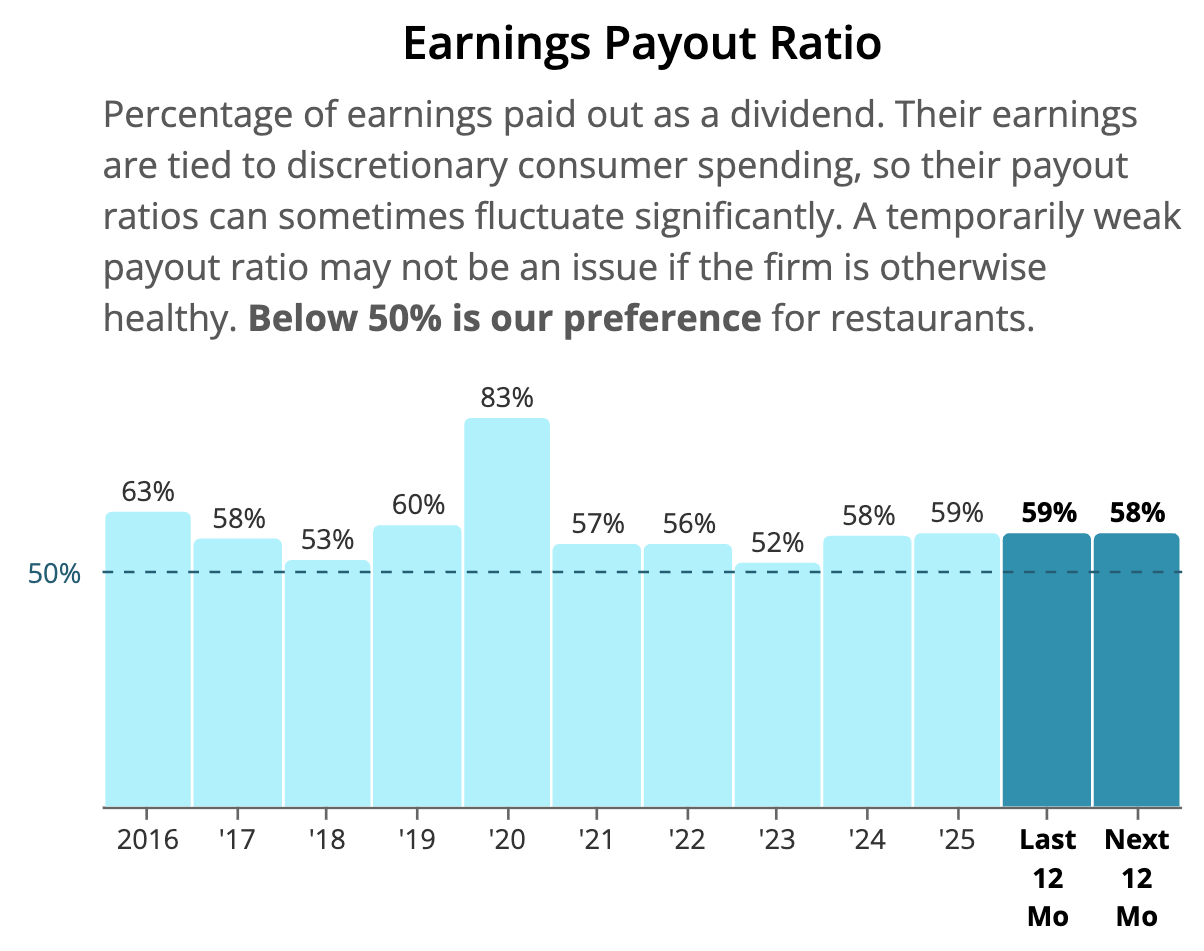
It pays out about 59% of its earnings, above our 50% preference for restaurants, and its leverage is low for a restaurant company.
McDonald's pays out 59% of its earnings, expected to be 58% next year, above our 50% preference for restaurants. Source: Simply Safe Dividends.
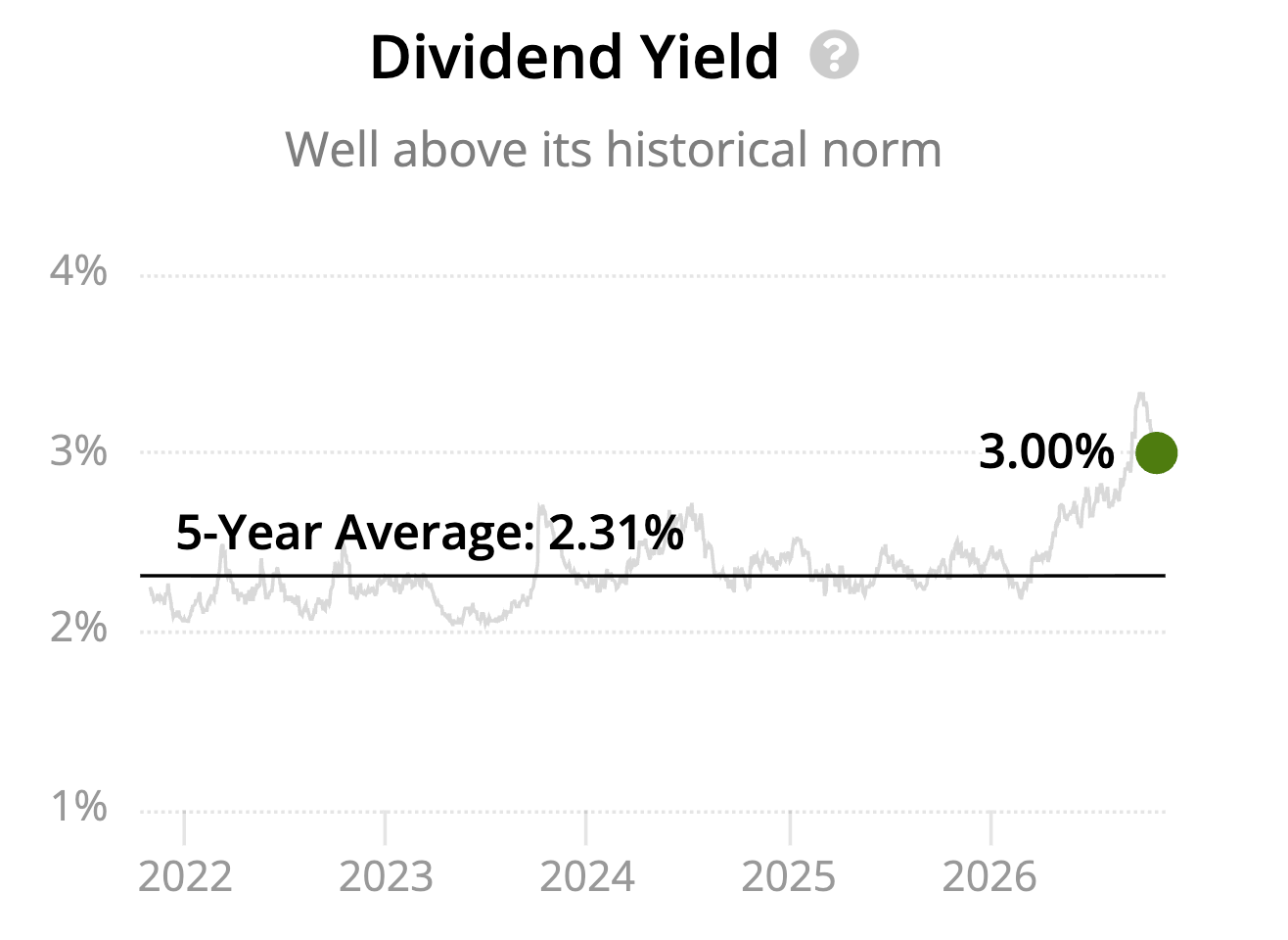
The 3.00% yield is well above its five-year average of 2.31%, and our valuation screen suggests the stock may be undervalued.
McDonald's yields 3.00%, well above its five-year average of 2.31%. Source: Simply Safe Dividends.
Cincinnati Financial sells property and casualty insurance through independent agents across most of the U.S.
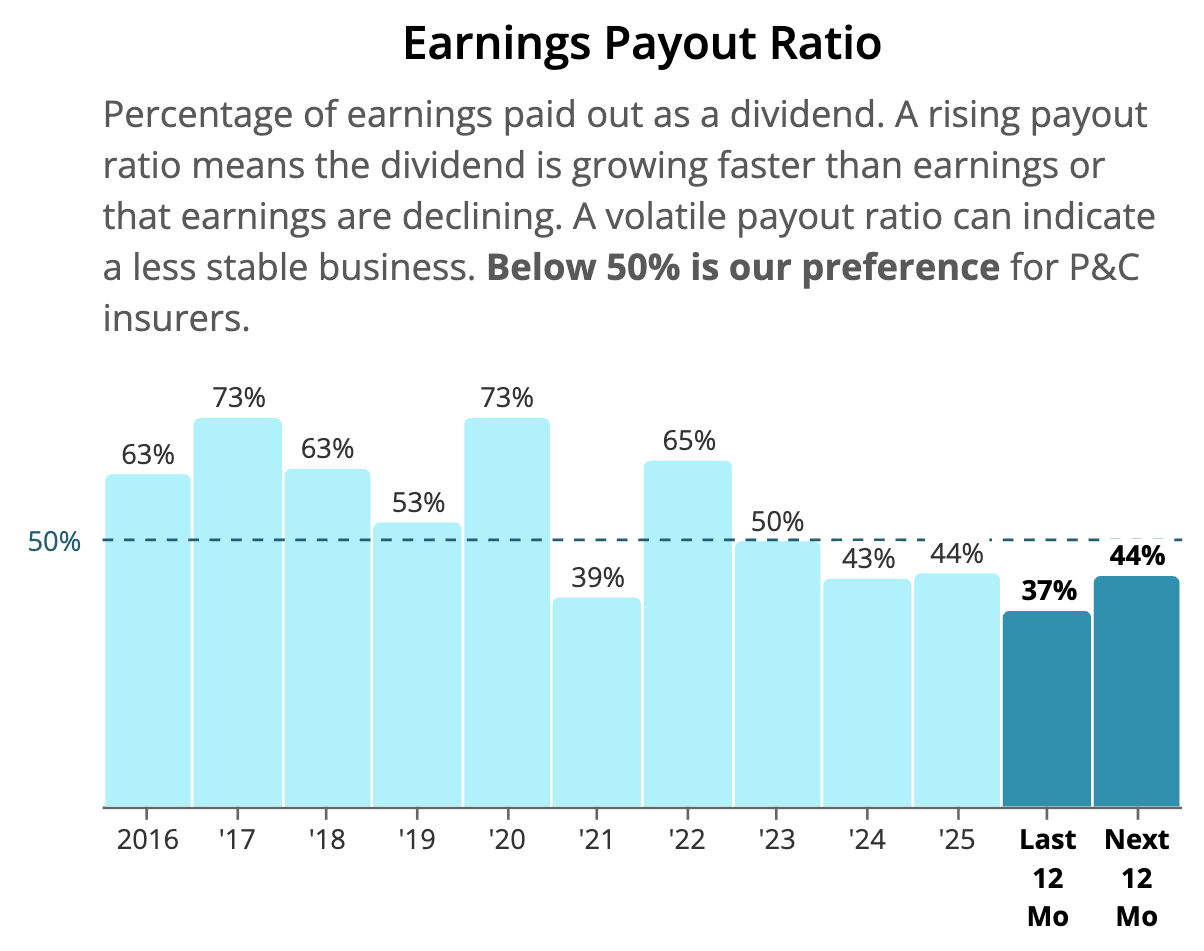
Its payout ratio swings with catastrophe losses and investment gains, but it has stayed below our 50% preference for P&C insurers since 2024.
Cincinnati Financial pays out 37% of its earnings, expected to be 44% next year, within our 50% preference for P&C insurers. Source: Simply Safe Dividends.
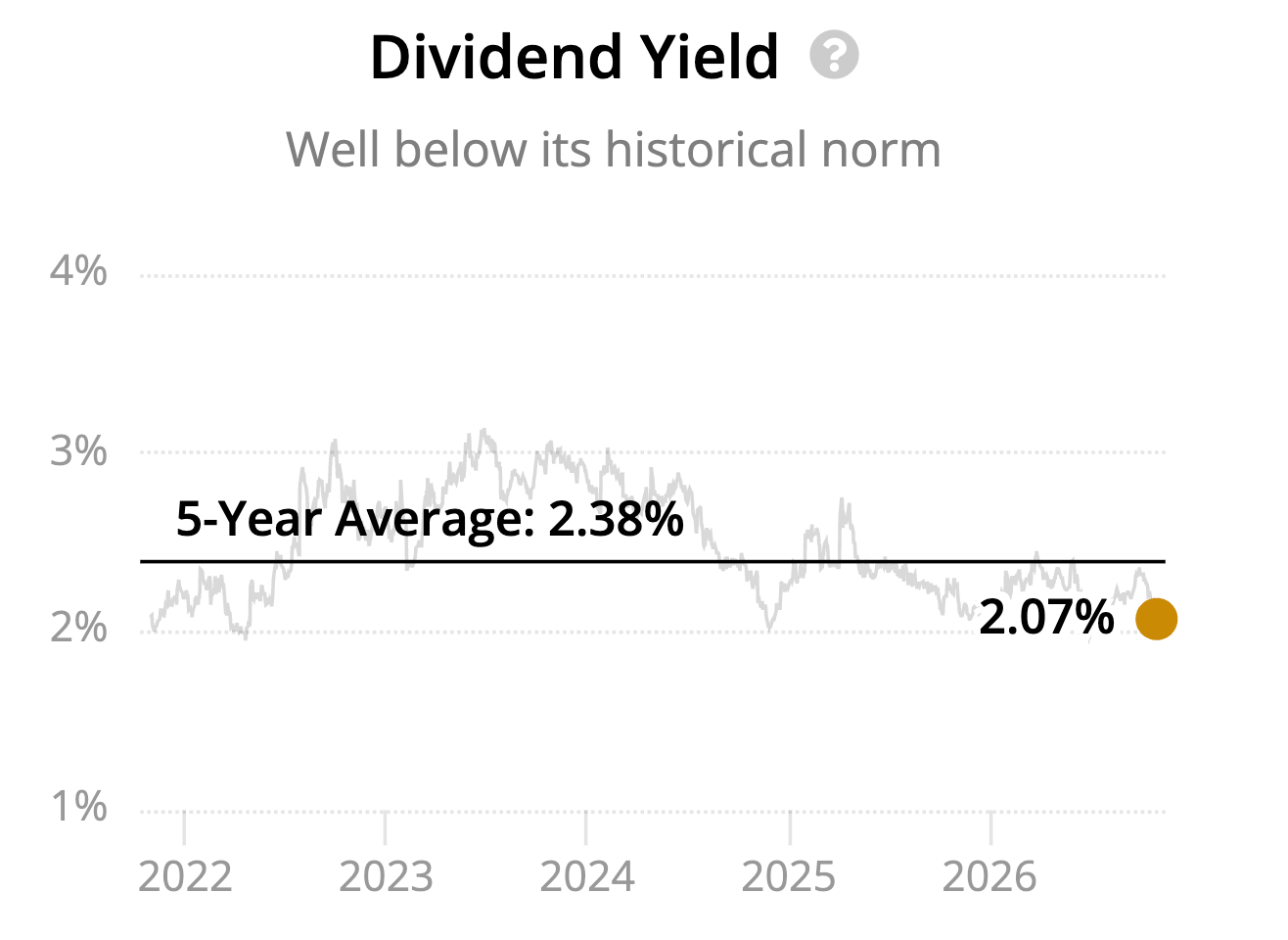
The 2.07% yield is well below its five-year average of 2.38%.
Cincinnati Financial yields 2.07%, well below its five-year average of 2.38%. Source: Simply Safe Dividends.
Tennant Company (TNC)
Sector: Industrials – Industrial Machinery and Components Dividend Yield: 1.9% Dividend Safety Score: Safe (71) Dividend Growth Streak: 54 years Credit Rating: Not rated by S&P
Tennant makes floor scrubbers, sweepers, and other cleaning machines, and it earns a steady stream of revenue from parts and service.
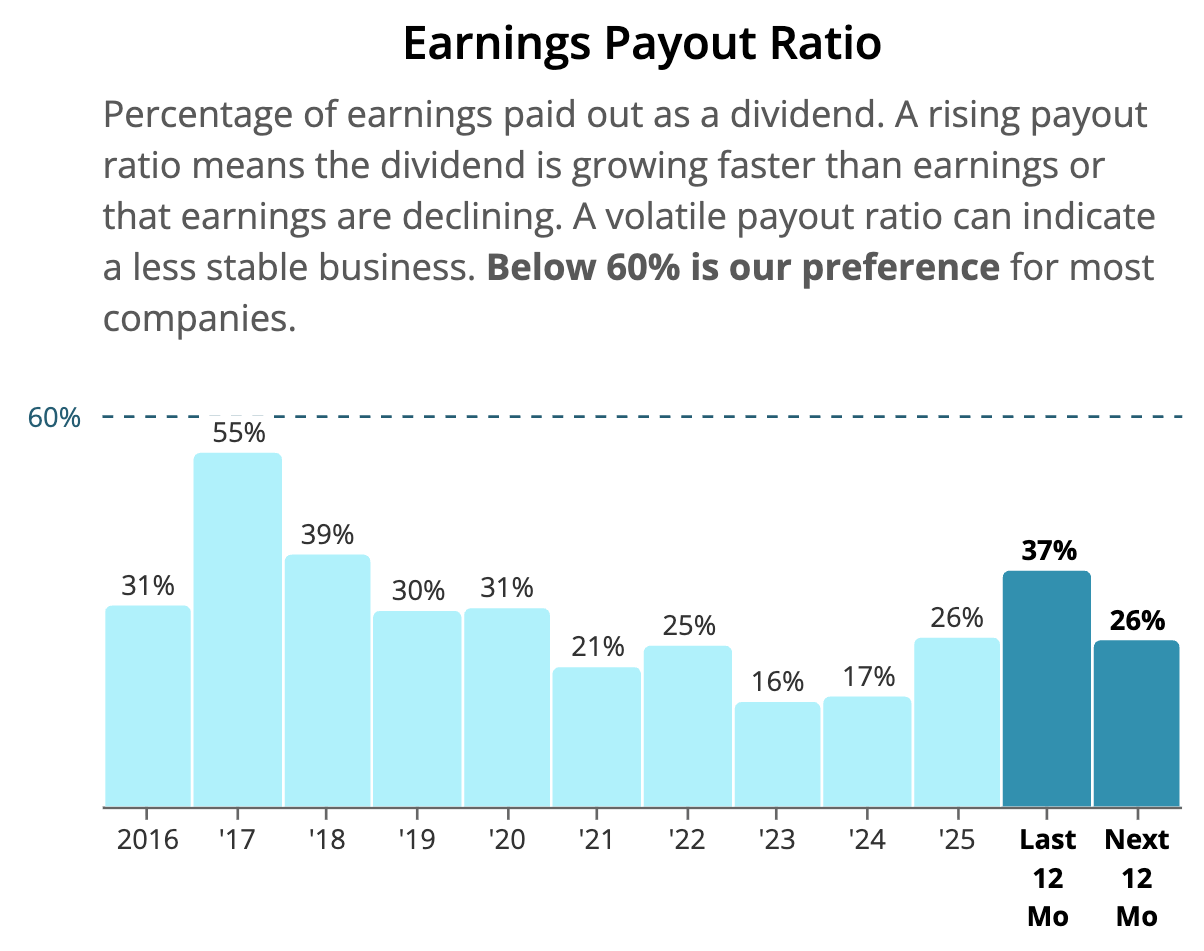
Its payout ratio has stayed below our 60% preference every year since 2016, and it is expected to fall to 26%.
Tennant pays out 37% of its earnings, expected to be 26% next year, within our 60% preference for most companies. Source: Simply Safe Dividends.
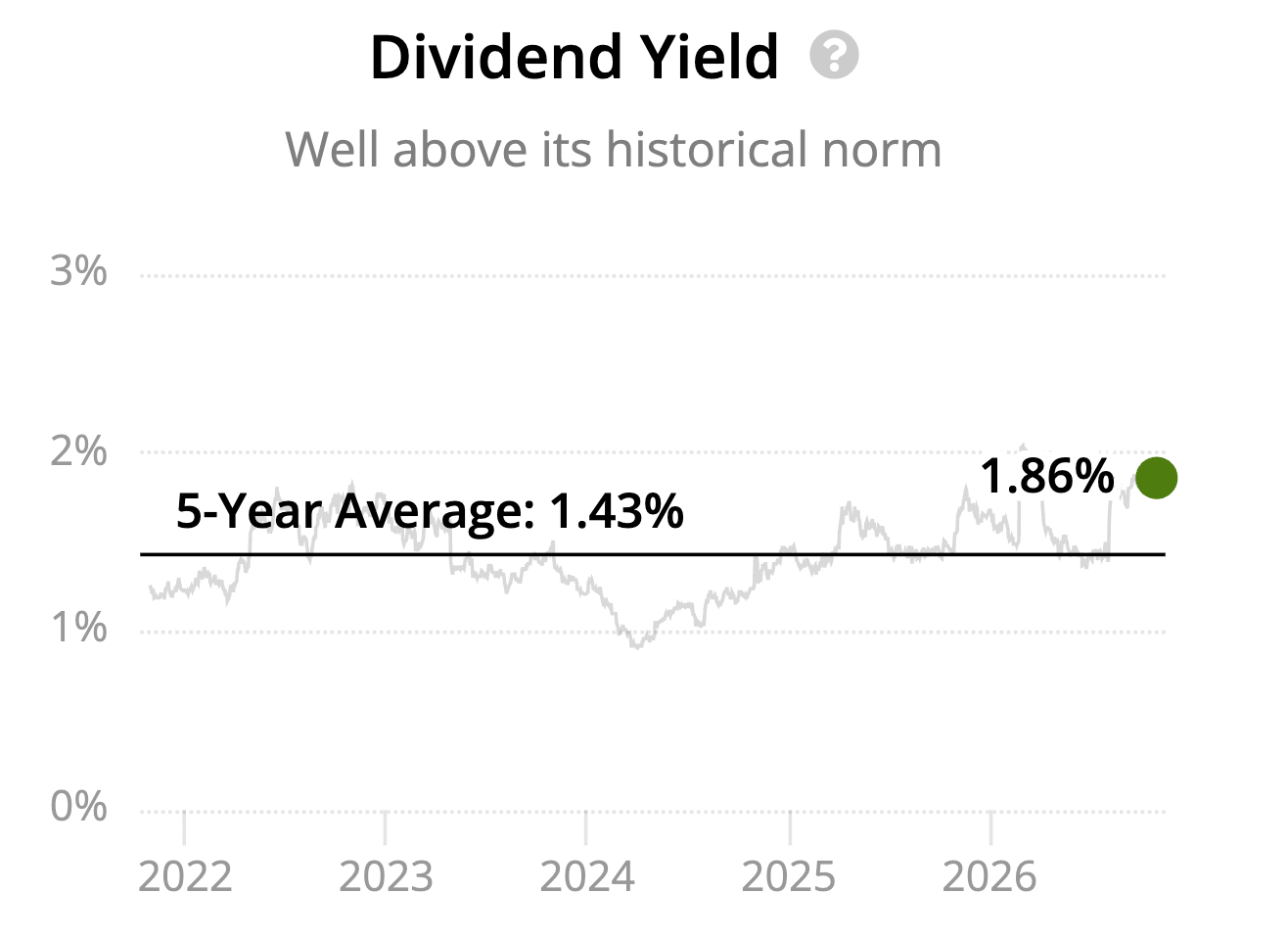
The 1.86% yield is well above its five-year average of 1.43%, and our valuation screen suggests the stock may be undervalued.
Tennant yields 1.86%, well above its five-year average of 1.43%. Source: Simply Safe Dividends.
Hormel sells Spam, Skippy, Planters, Jennie-O, and dozens of other food brands. Inflation in pork, turkey, and nuts squeezed its margins, and we lowered its Dividend Safety Score from 90 to 80 in September 2025. We lowered it again, from 80 to 70, in October 2026 after Hormel agreed to buy chicken processor Brakebush Brothers for about $1.1 billion while its turnaround was still slow.
It has not cut its dividend in 98 years.
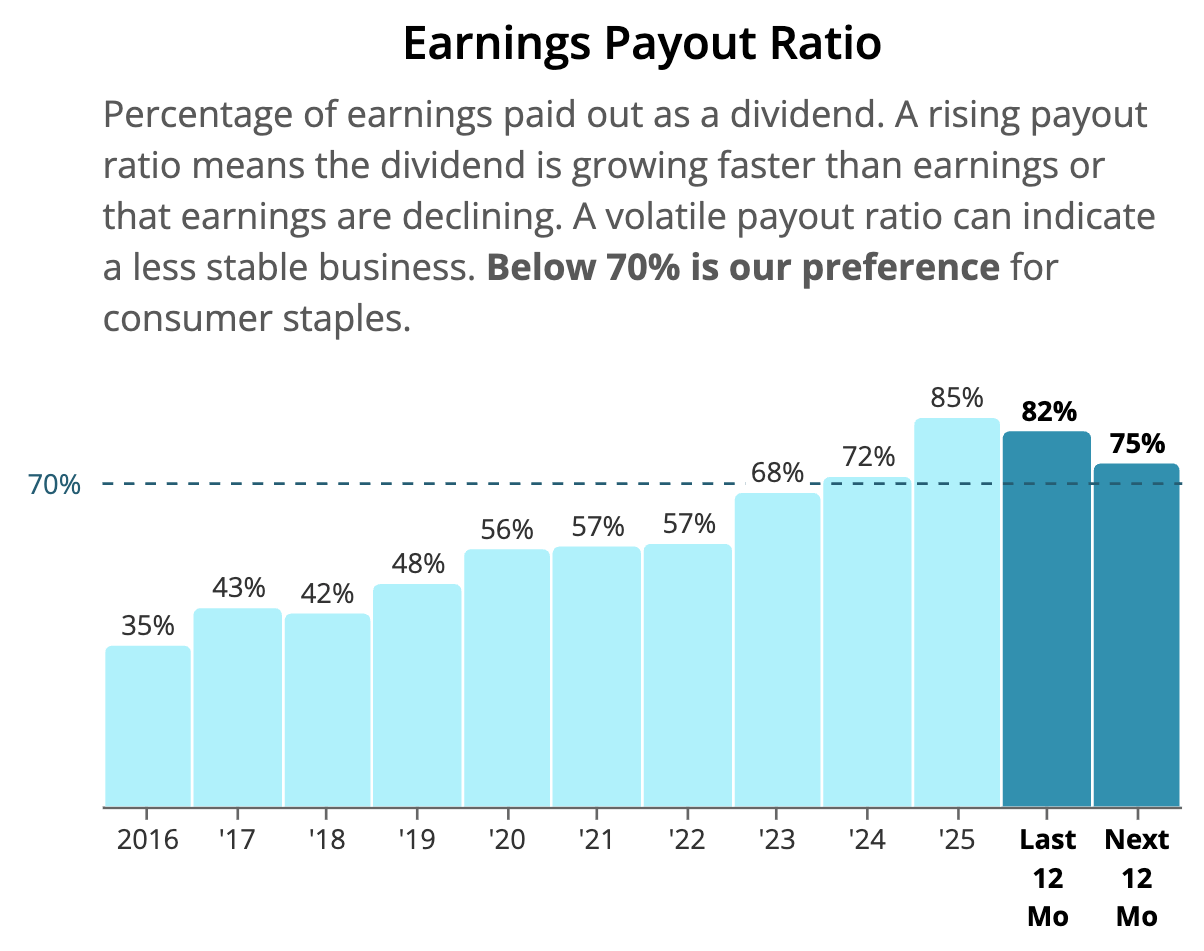
The payout ratio climbed from 35% in 2016 to 85% in 2025, easily its highest in decades, and it is expected to ease to 75%. The deal adds debt, and its credit rating now sits at BBB+, which leaves less room for error while earnings recover.
Hormel pays out 82% of its earnings, expected to be 75% next year, above our 70% preference for consumer staples. Source: Simply Safe Dividends.
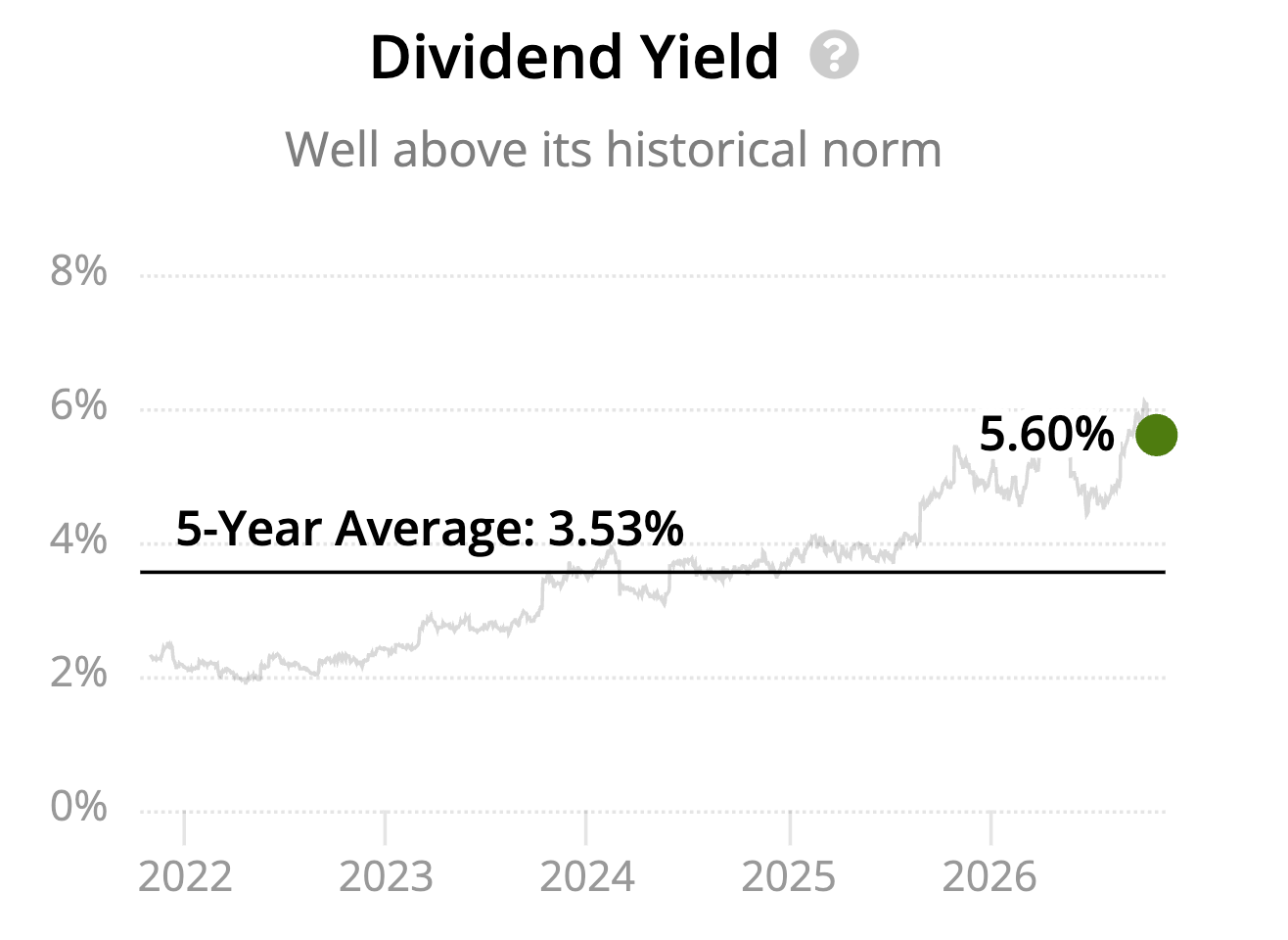
At 5.60%, Hormel still has the highest yield of any Dividend King with a Safe Dividend Safety Score or better, well above its five-year average of 3.53%, and our valuation screen suggests the stock may be undervalued.
Hormel yields 5.60%, well above its five-year average of 3.53%. Source: Simply Safe Dividends.
Stepan Company (SCL)
Sector: Materials – Specialty Chemicals Dividend Yield: 2.3% Dividend Safety Score: Safe (70) Dividend Growth Streak: 59 years Credit Rating: Not rated by S&P
Stepan makes surfactants, the cleaning agents in detergents and shampoos, along with polymers for insulation. We lowered its Dividend Safety Score from 80 to 70, still Safe, in February 2026 because its recovery is taking longer than expected.
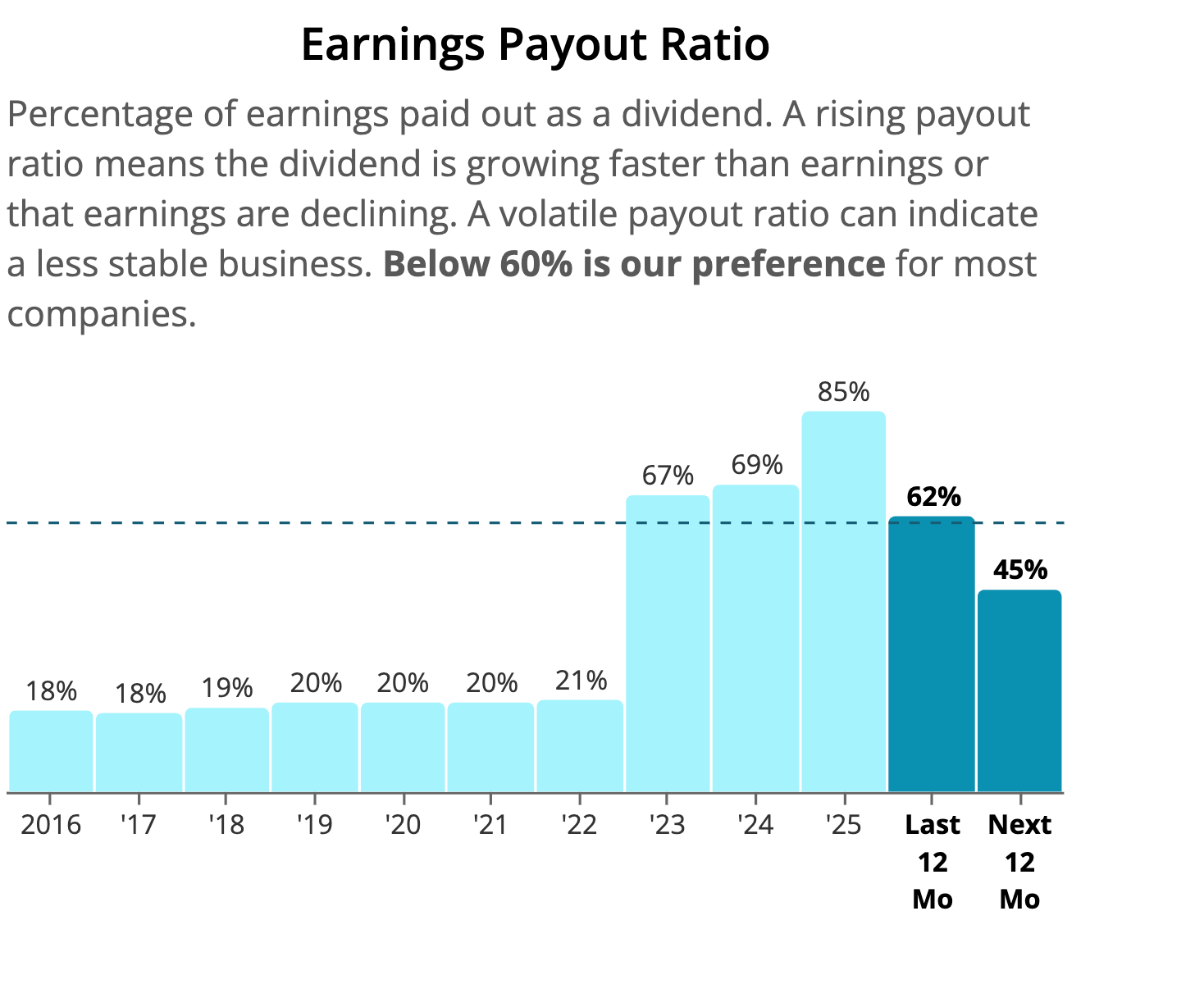
Its payout ratio jumped from about 20% to 85% as earnings fell, and it is expected to recover to 45%.
Stepan pays out 62% of its earnings, expected to be 45% next year, moving back within our 60% preference for most companies. Source: Simply Safe Dividends.
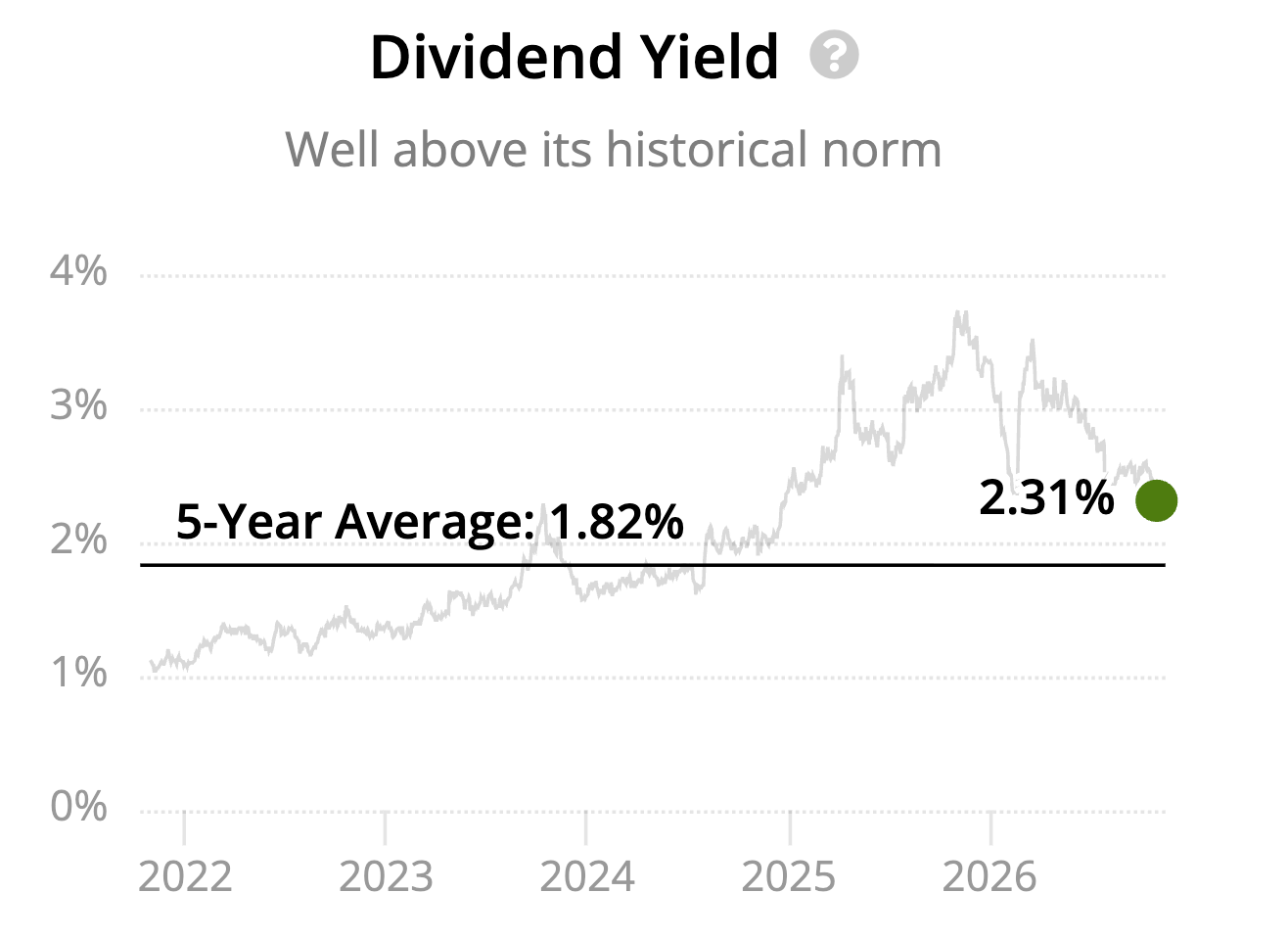
The yield of 2.31% is well above its five-year average of 1.82%.
Stepan yields 2.31%, well above its five-year average of 1.82%. Source: Simply Safe Dividends.
H.B. Fuller is the world's largest pure-play adhesives maker, supplying glues for packaging, hygiene products, electronics, and construction. Its BB credit rating is the lowest of any Dividend King, a legacy of acquisitions that pushed debt higher.
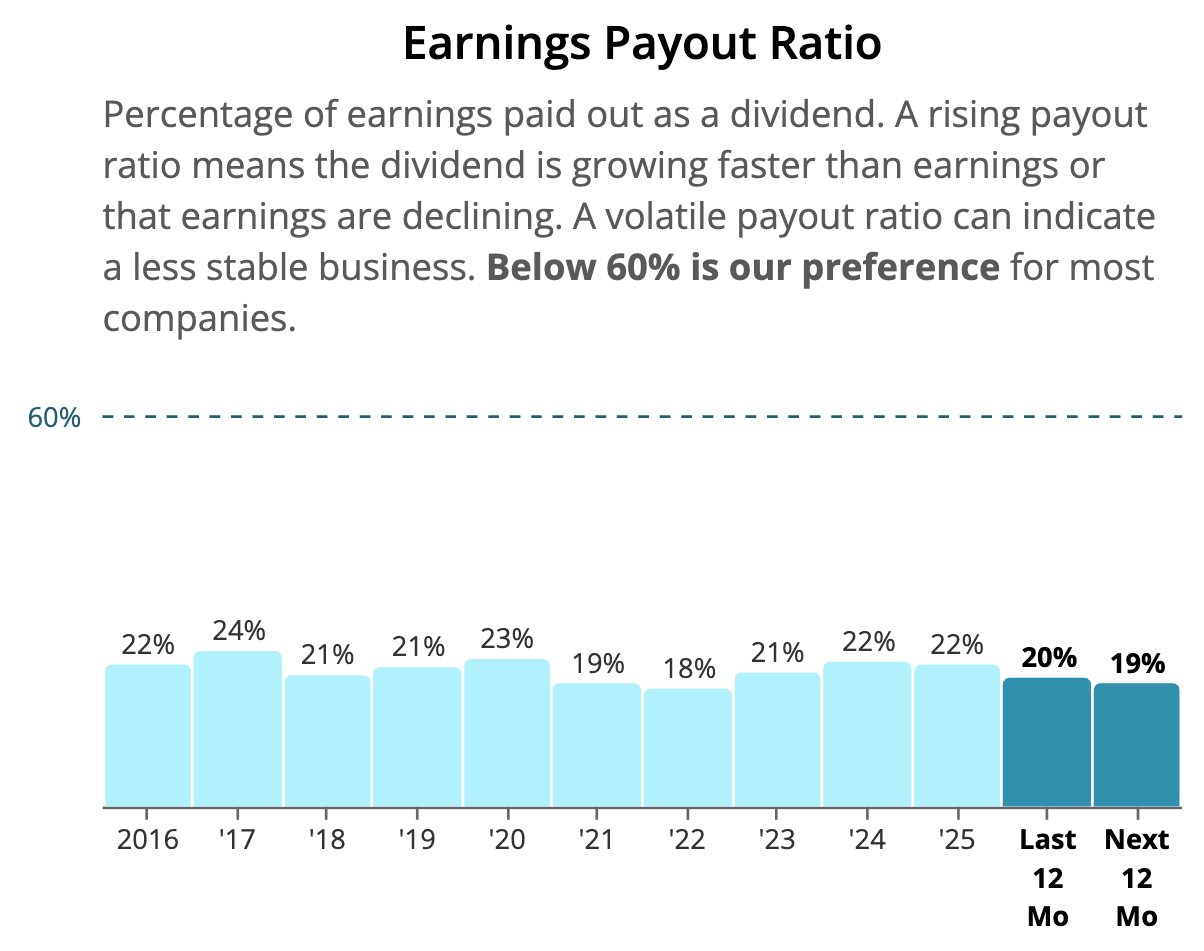
Still, it pays out only about 20% of its earnings.
H.B. Fuller pays out 20% of its earnings, expected to be 19% next year, within our 60% preference for most companies. Source: Simply Safe Dividends.
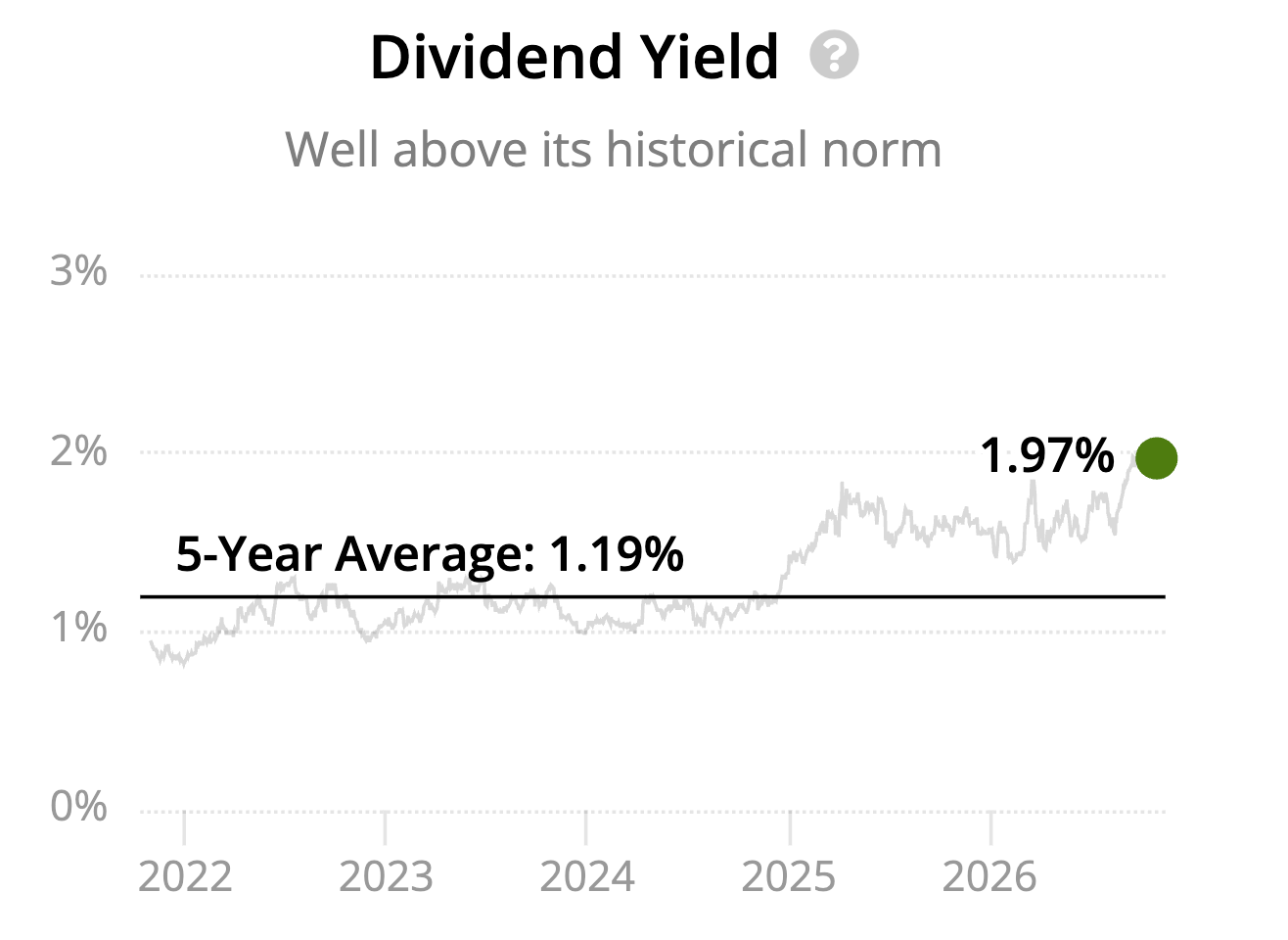
The 1.97% yield is well above its five-year average of 1.19%, and our valuation screen suggests the stock may be undervalued.
H.B. Fuller yields 1.97%, well above its five-year average of 1.19%. Source: Simply Safe Dividends.
Target (TGT)
Sector: Consumer Staples – General Merchandise Retail Dividend Yield: 3.1% Dividend Safety Score: Safe (70) Dividend Growth Streak: 54 years Credit Rating: A
Target sells apparel, home goods, groceries, and beauty products through its stores and online. About half of its sales come from discretionary categories, which have lagged as shoppers focus on essentials.
We lowered its Dividend Safety Score from 80 to 70, still Safe, in November 2025.
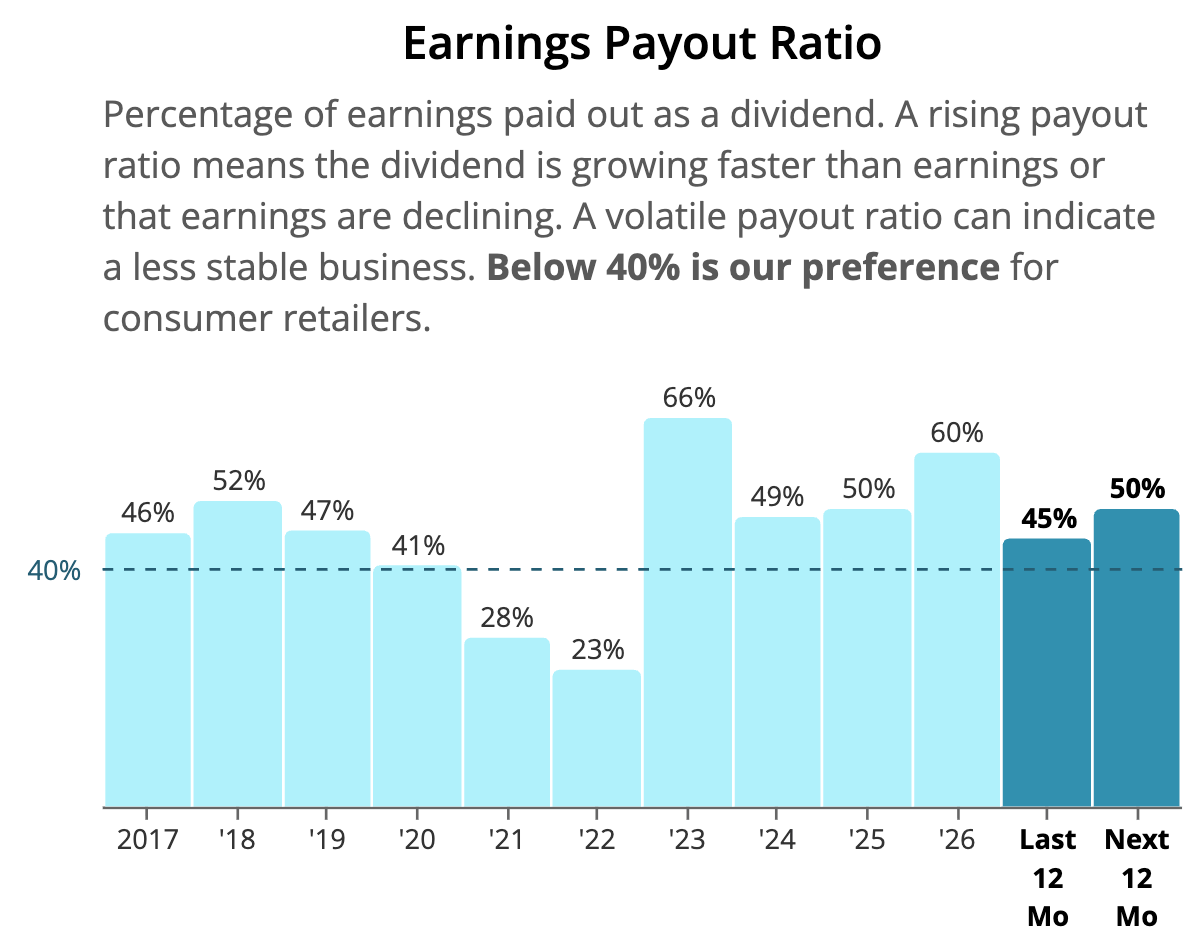
Its payout ratio jumped to 60% in fiscal 2026 and is expected to be about 50% next year, above our 40% preference for retailers.
Target pays out 45% of its earnings, expected to be 50% next year, above our 40% preference for retailers. Source: Simply Safe Dividends.
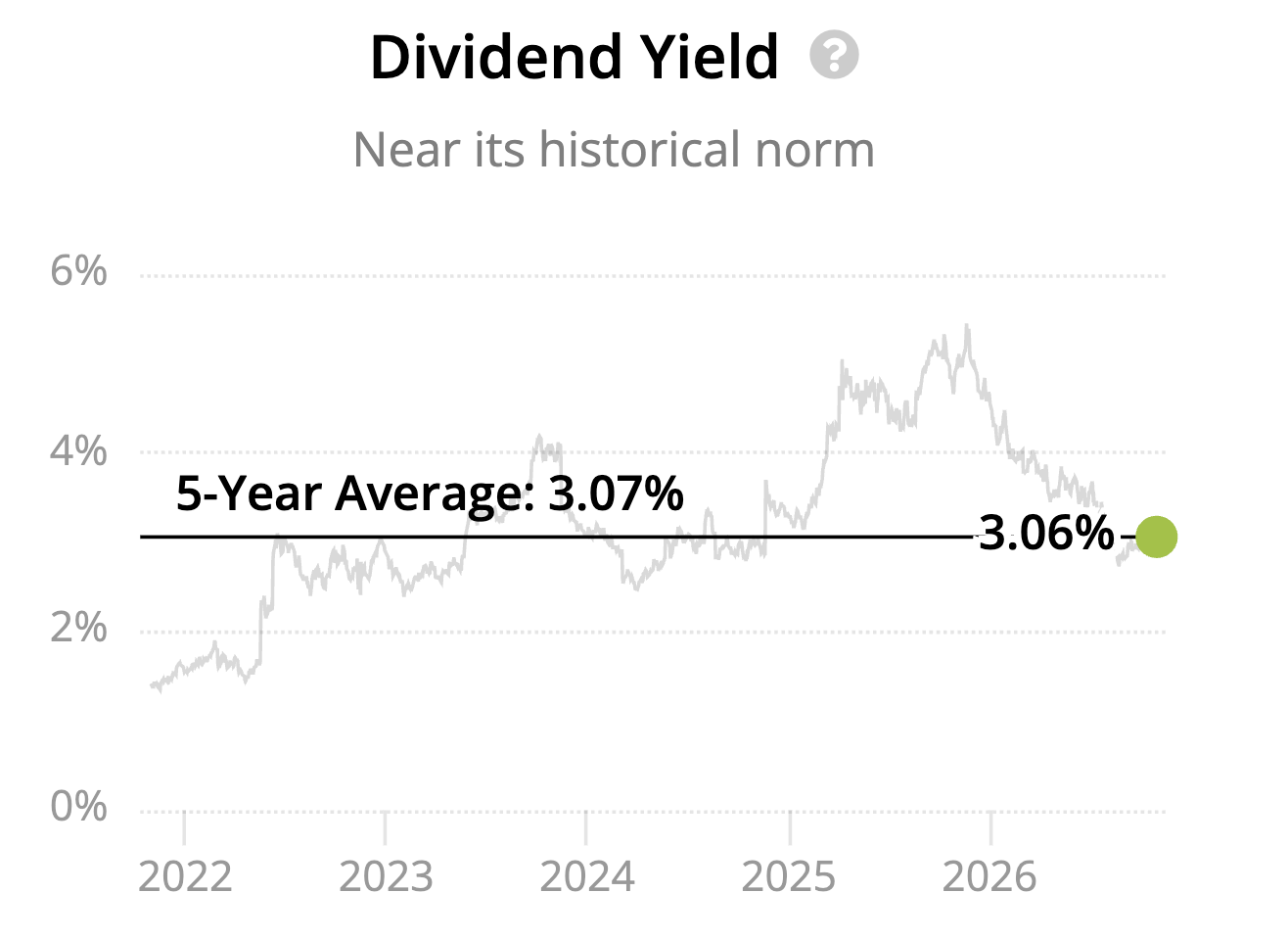
The 3.06% yield is right at its five-year average of 3.07%.
Target yields 3.06%, near its five-year average of 3.07%. Source: Simply Safe Dividends.
Kimberly-Clark sells Huggies, Kleenex, Cottonelle, and Depend. We lowered its Dividend Safety Score from Very Safe to Safe in November 2025 after it agreed to buy Kenvue for nearly $50 billion, a deal that adds debt and litigation risk.
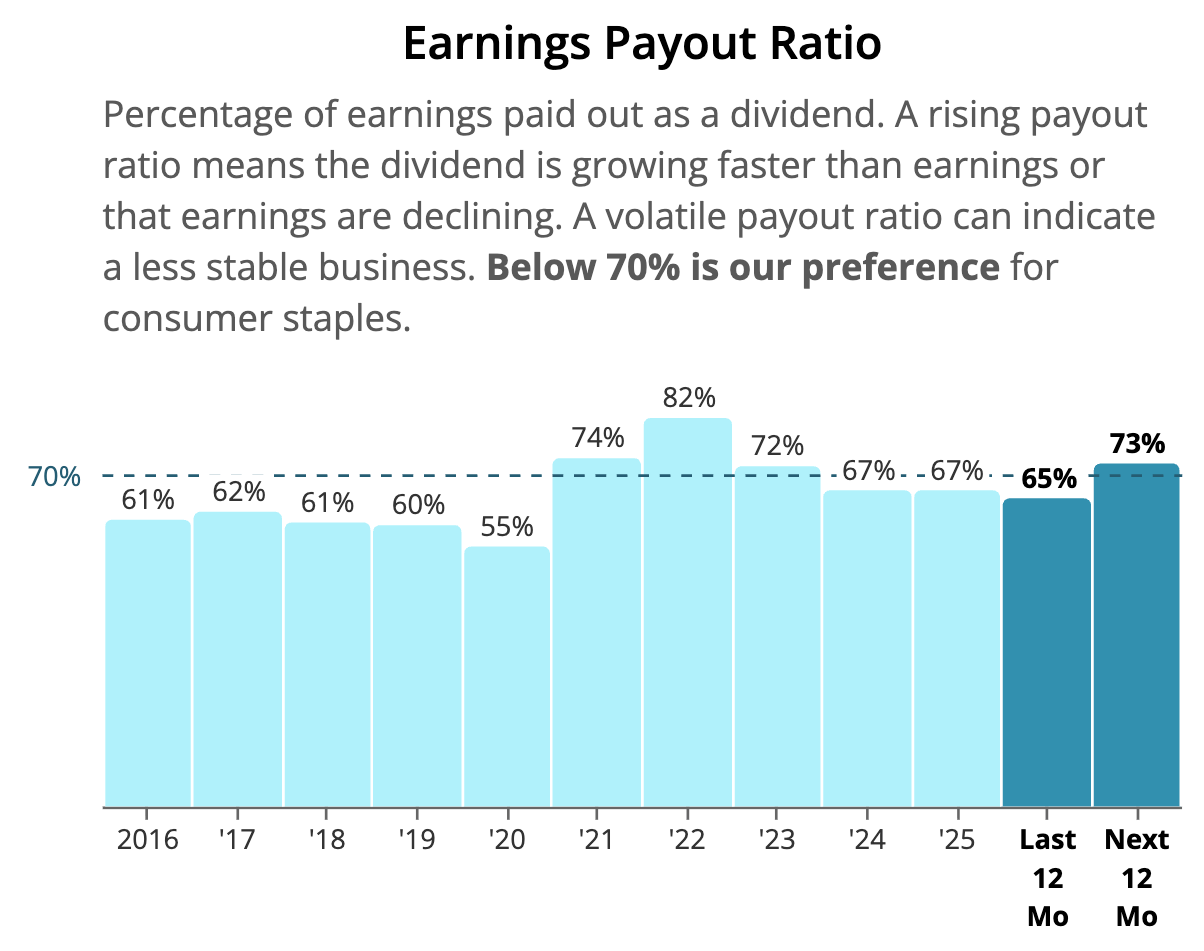
Its payout ratio is expected to rise to 73% over the next year, above our 70% preference for consumer staples.
Kimberly-Clark pays out 65% of its earnings, expected to be 73% next year, moving above our 70% preference for consumer staples. Source: Simply Safe Dividends.
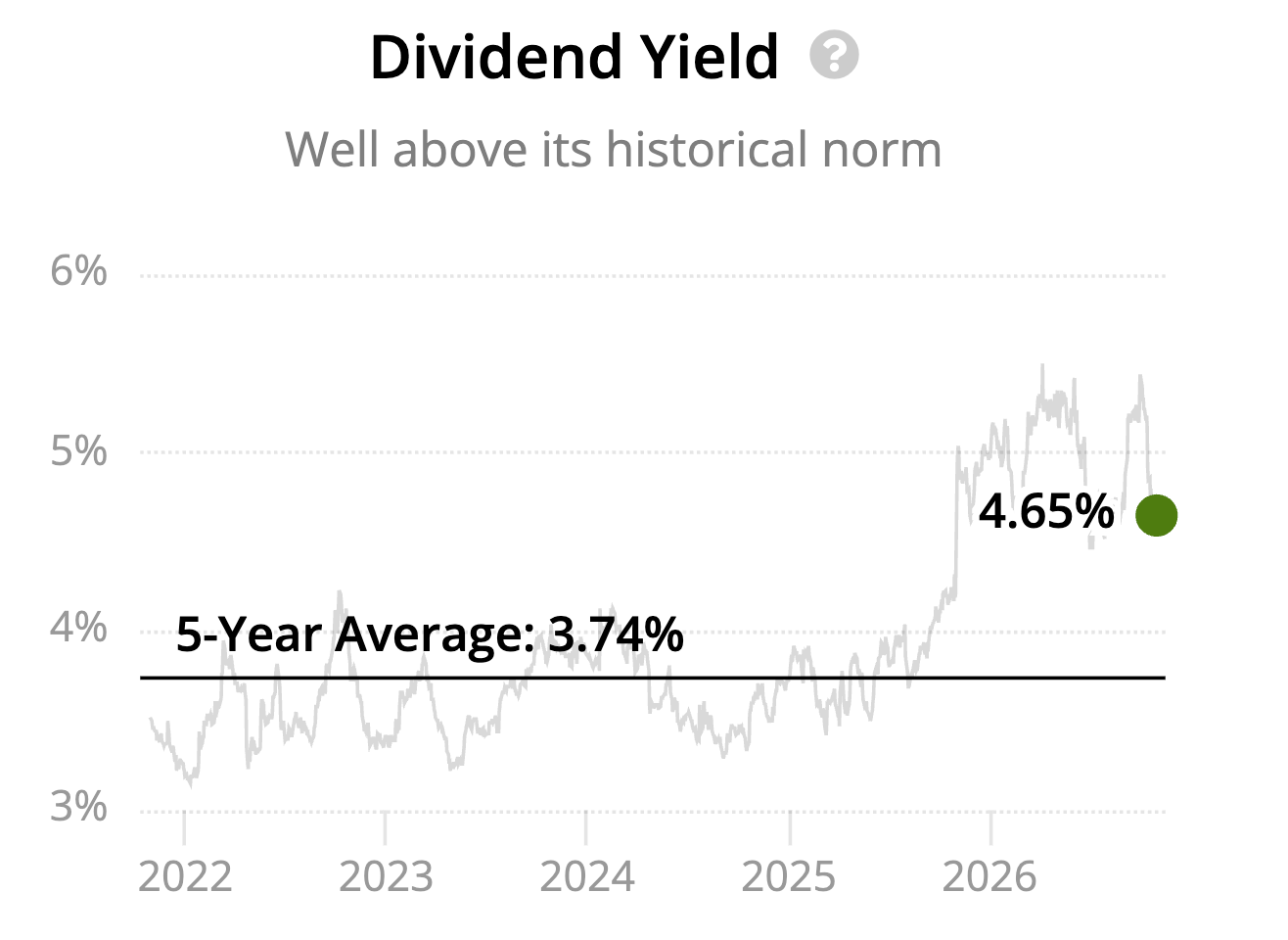
The 4.65% yield is well above its five-year average of 3.74%.
Kimberly-Clark yields 4.65%, well above its five-year average of 3.74%. Source: Simply Safe Dividends.
Canadian Utilities (CDUAF)
Sector: Utilities – Multi-Utilities Dividend Yield: 3.6% Dividend Safety Score: Safe (70) Dividend Growth Streak: 53 years Credit Rating: Not rated by S&P
Canadian Utilities, majority owned by ATCO, distributes electricity and natural gas in Alberta. Its 53-year streak is the longest of any Canadian company.
Canadian companies' dividends paid to U.S. investors are subject to a 15% withholding tax. Holding them in a retirement account generally avoids it, and in a taxable account you can usually claim a foreign tax credit.
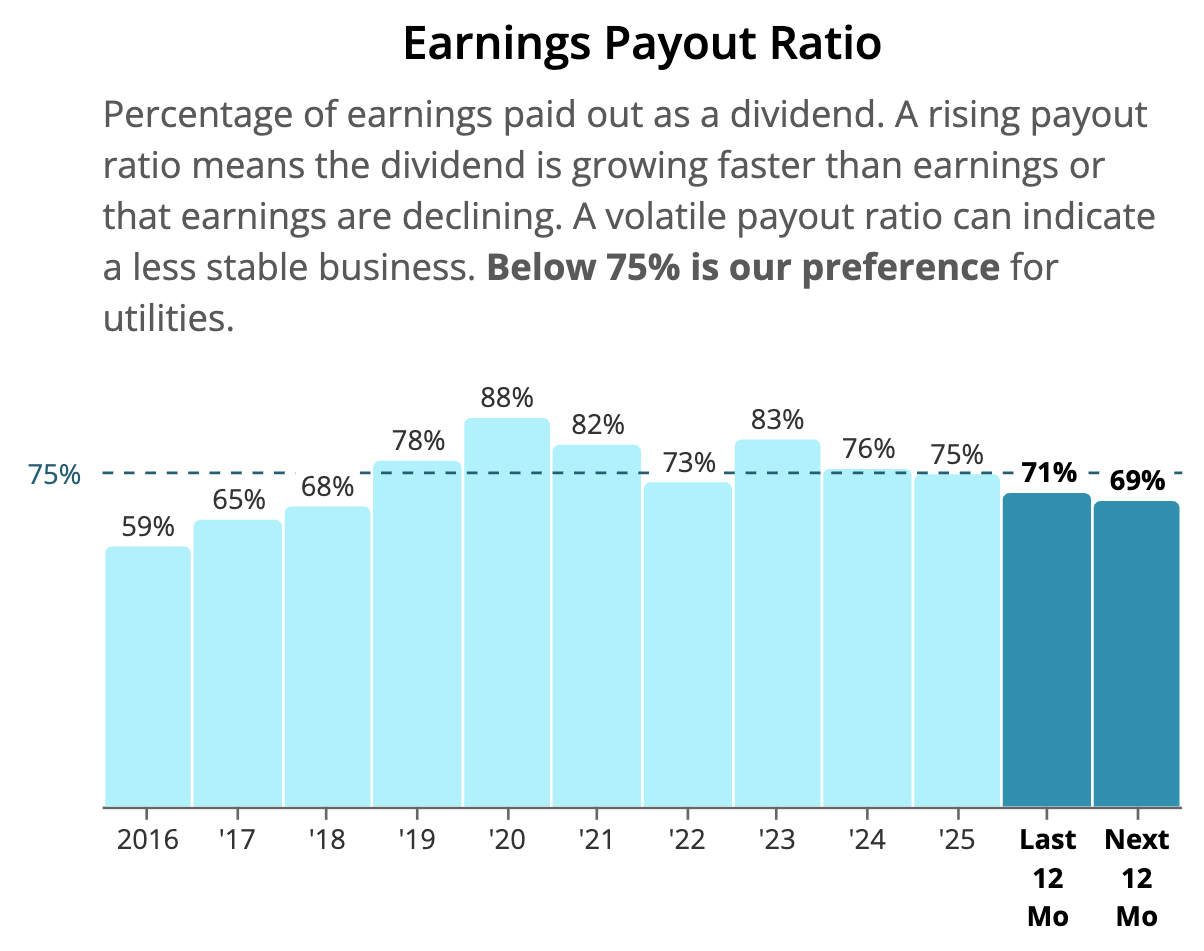
Its payout ratio has eased from 88% in 2020 to about 71%, inside our 75% preference for utilities, but its leverage is edging high for a utility.
Canadian Utilities pays out 71% of its earnings, expected to be 69% next year, within our 75% preference for utilities. Source: Simply Safe Dividends.
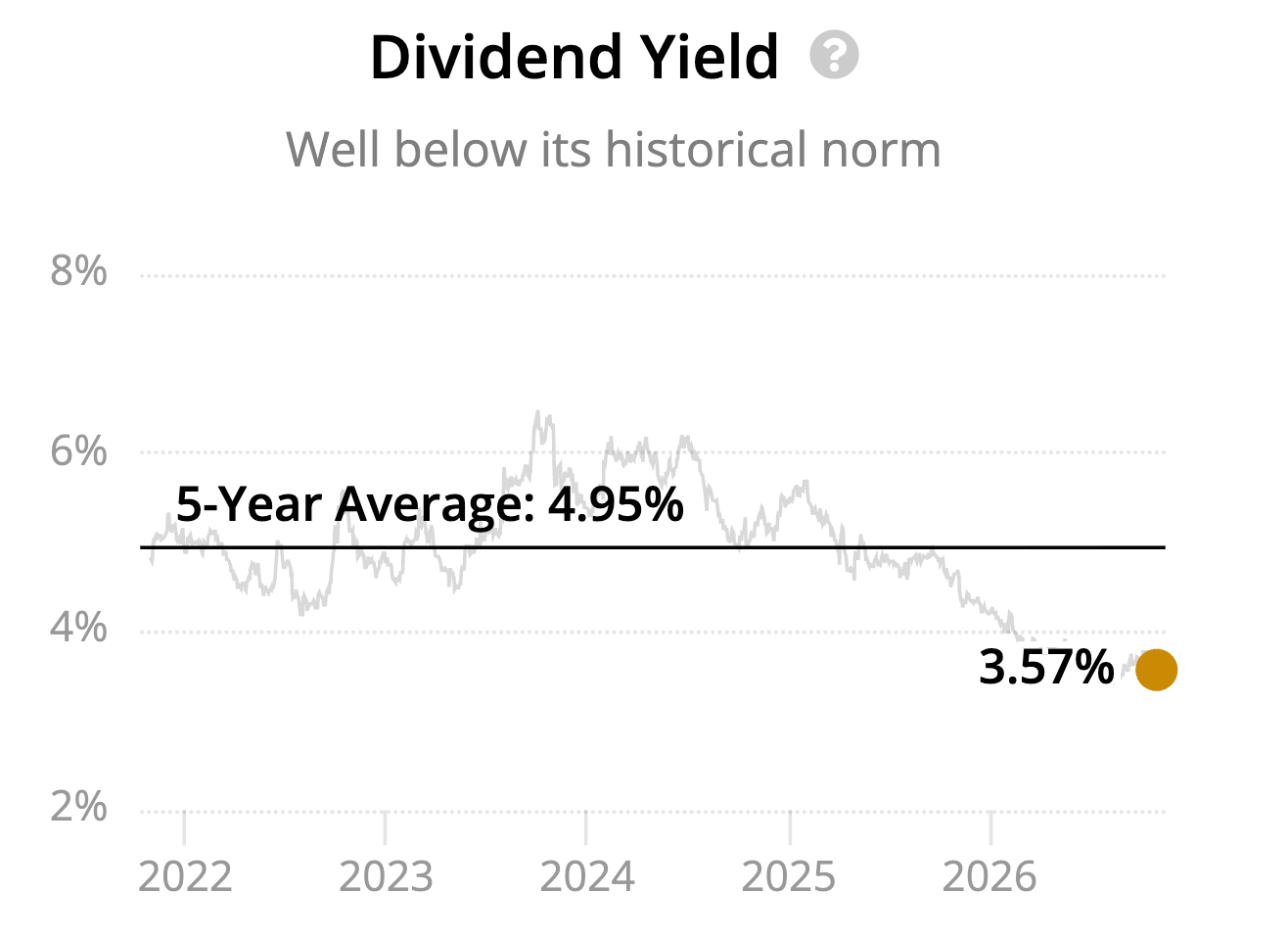
Its 3.57% yield is well below its five-year average of 4.95%.
Canadian Utilities yields 3.57%, well below its five-year average of 4.95%. Source: Simply Safe Dividends.
Archer-Daniels-Midland buys, stores, and processes corn, oilseeds, and wheat into food ingredients, animal feed, and biofuels. Its profits swing with crop supplies and trade policy.
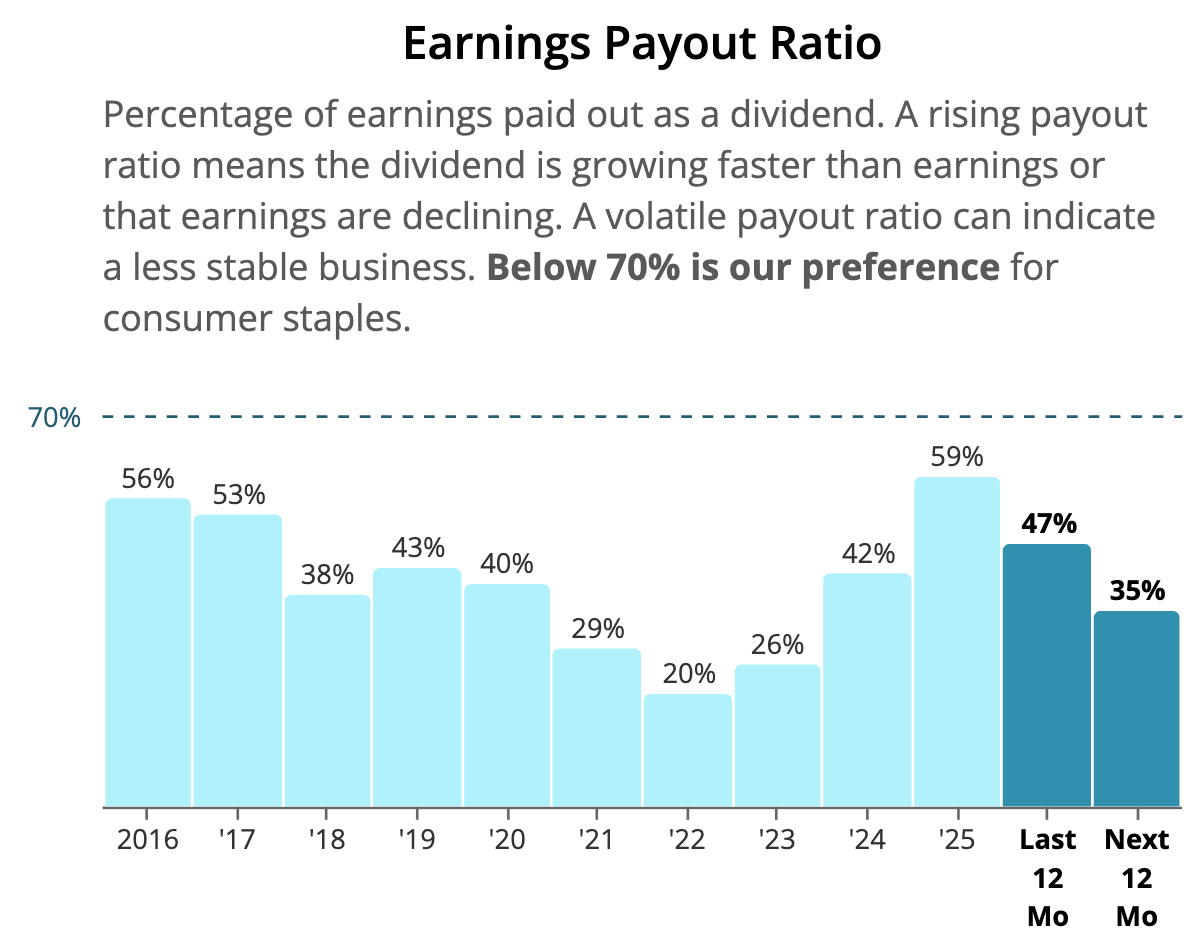
Its payout ratio has ranged from 20% to 59% over the past decade and is expected to fall back to 35%.
ADM pays out 47% of its earnings, expected to be 35% next year, within our 70% preference for consumer staples. Source: Simply Safe Dividends.
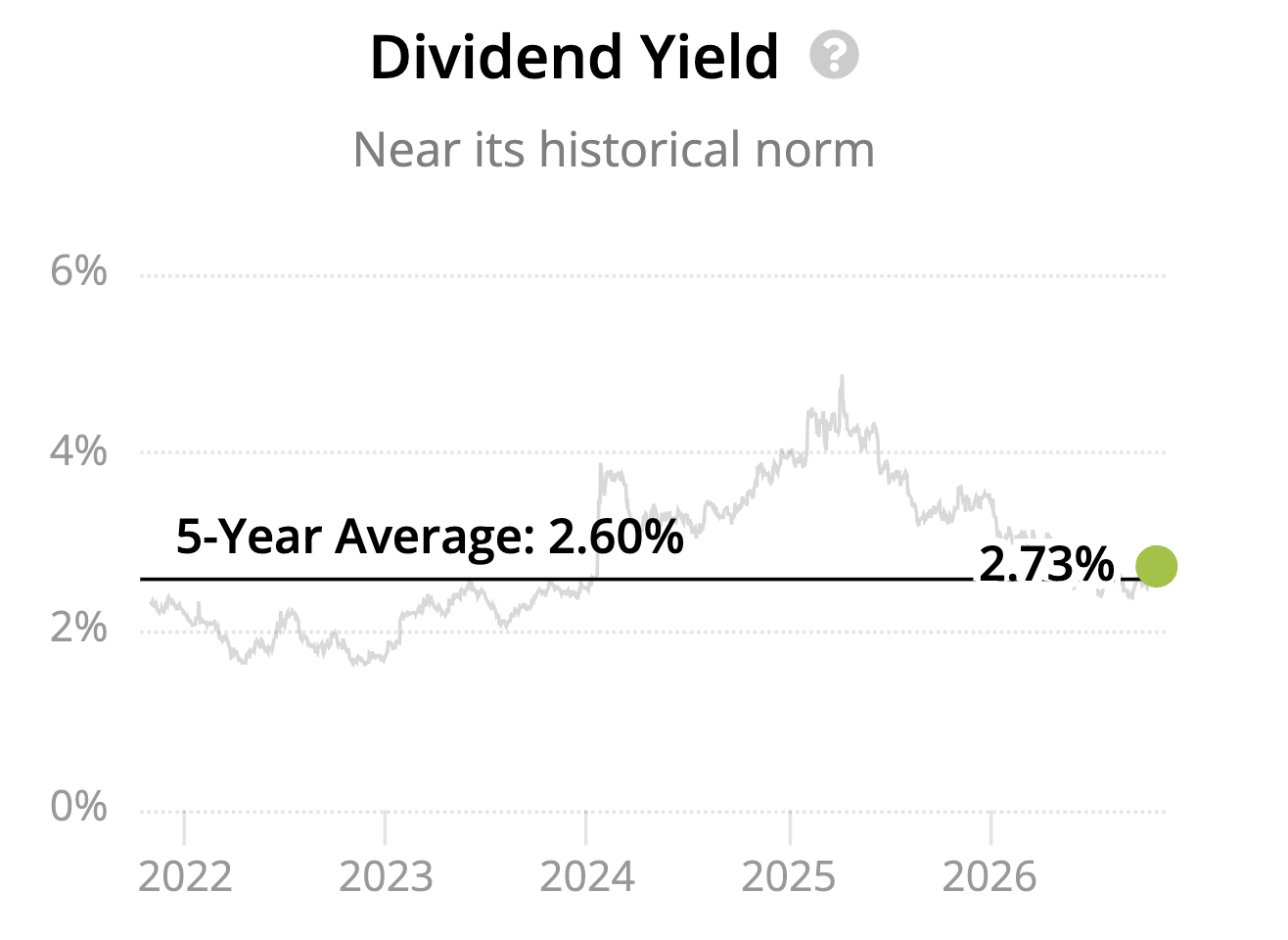
The 2.73% yield is near its five-year average of 2.60%.
ADM yields 2.73%, near its five-year average of 2.60%. Source: Simply Safe Dividends.
Fortis owns regulated electric and gas utilities in Canada, the U.S., and the Caribbean, including ITC's transmission lines in the Midwest.
Canadian companies' dividends paid to U.S. investors are subject to a 15% withholding tax. Holding them in a retirement account generally avoids it, and in a taxable account you can usually claim a foreign tax credit.
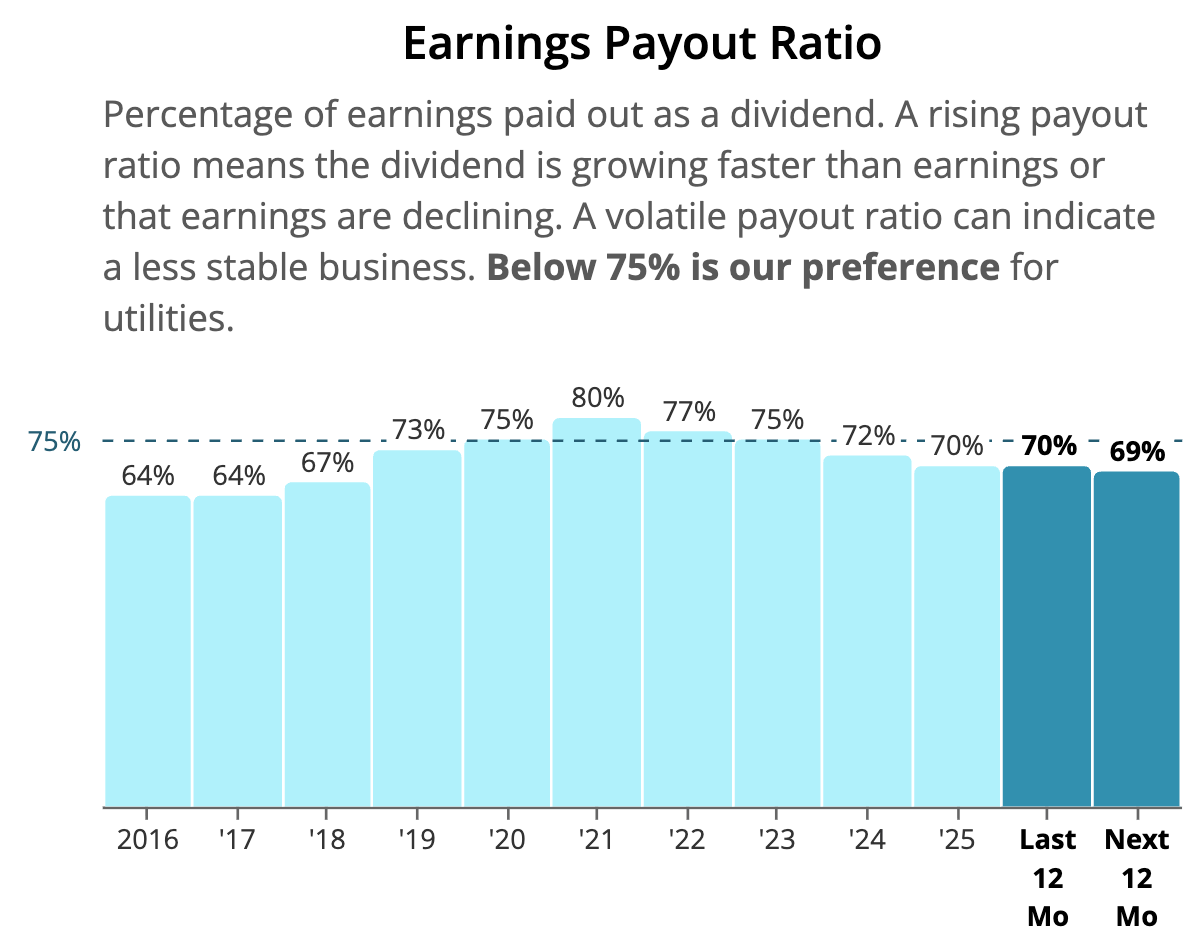
Its payout ratio has hovered around 70% to 80%, near our 75% preference for utilities, and its leverage is edging high.
Fortis pays out 70% of its earnings, expected to be 69% next year, within our 75% preference for utilities. Source: Simply Safe Dividends.
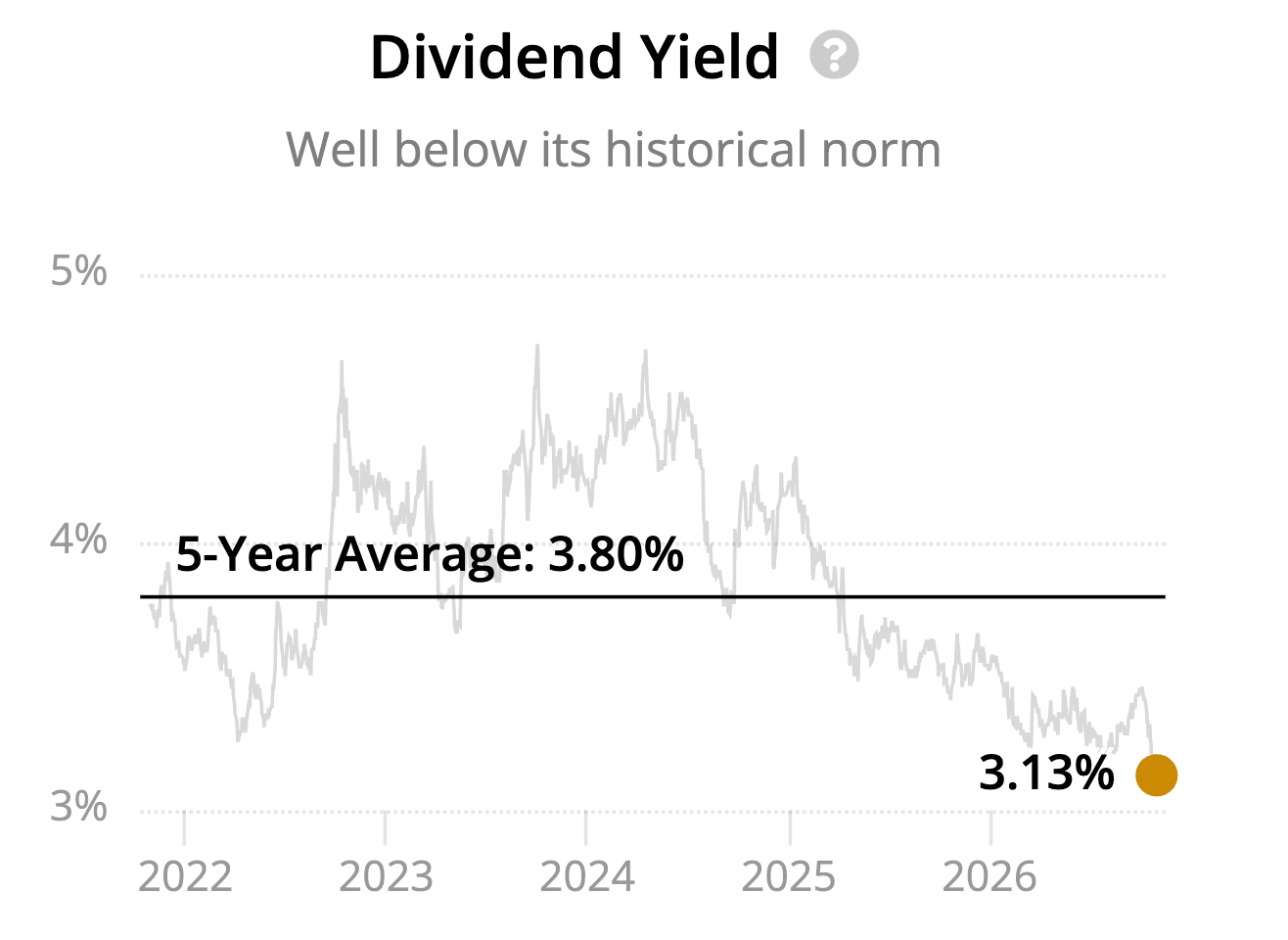
The 3.13% yield is well below its five-year average of 3.80%.
Fortis yields 3.13%, well below its five-year average of 3.80%. Source: Simply Safe Dividends.
Northwest Natural distributes natural gas in Oregon and southwest Washington and has expanded into gas in Texas and water utilities. It has raised its dividend for 70 straight years, but only by about 0.5% a year over the past decade.
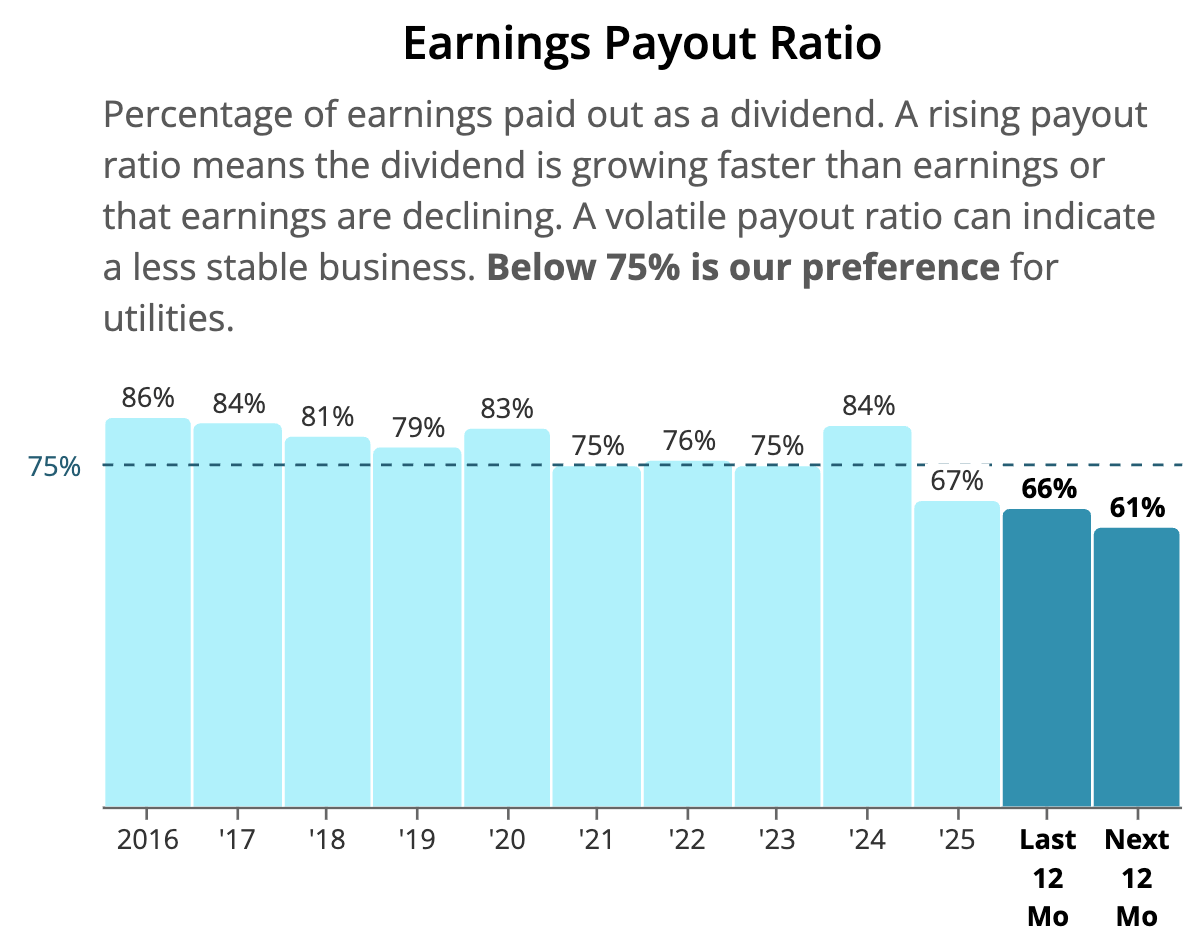
The payout ratio exceeded our 75% preference for utilities in most years from 2016 to 2024 before easing to about 66%, and its leverage is edging high for a utility.
Northwest Natural pays out 66% of its earnings, expected to be 61% next year, within our 75% preference for utilities. Source: Simply Safe Dividends.
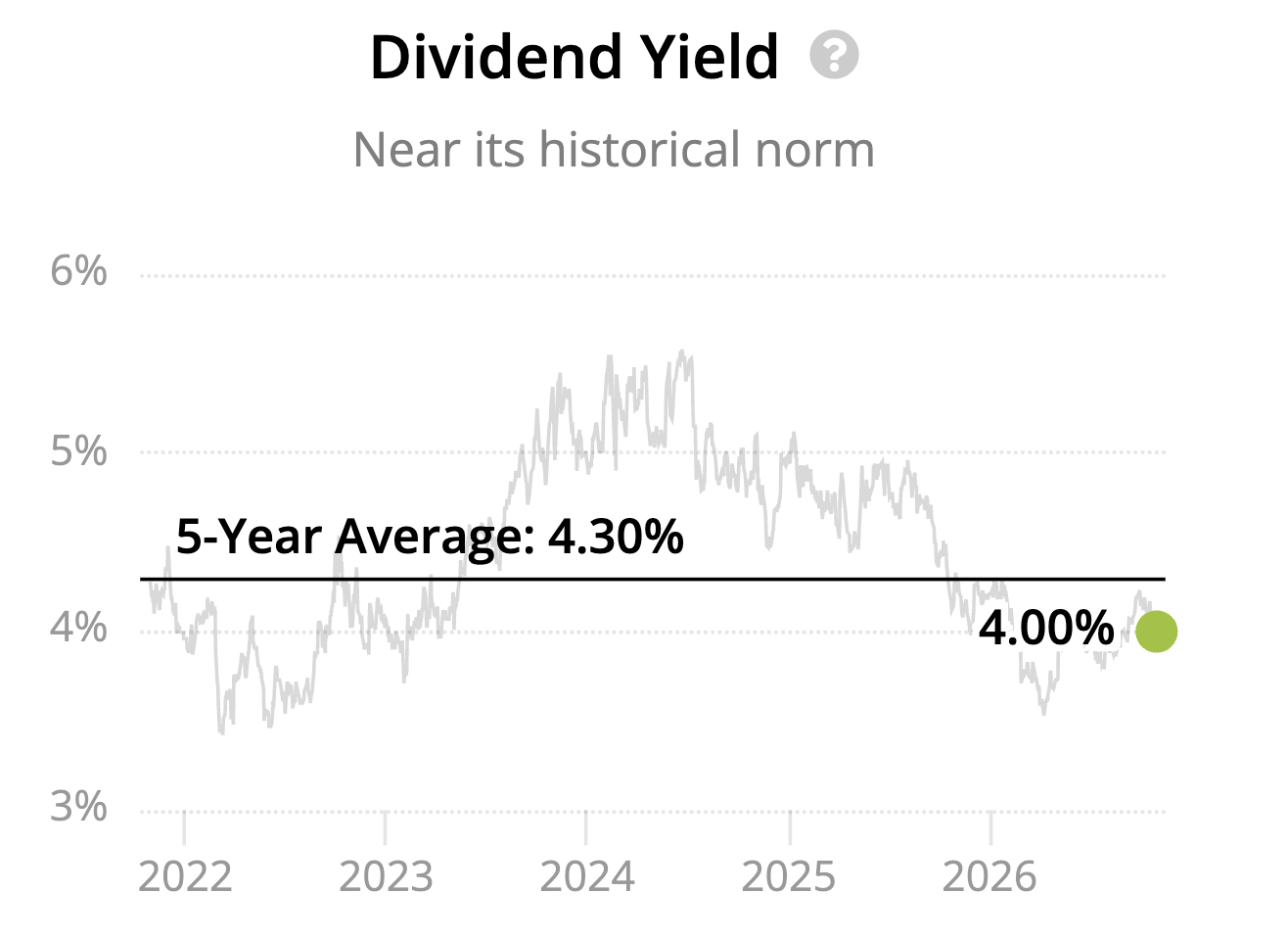
The 4.00% yield is near its five-year average of 4.30%.
Northwest Natural yields 4.00%, near its five-year average of 4.30%. Source: Simply Safe Dividends.
Stanley Black & Decker sells DEWALT, CRAFTSMAN, and BLACK+DECKER tools. We lowered its Dividend Safety Score from Safe to Borderline Safe in March 2026 as volumes kept falling.
It is selling its aerospace fasteners business to pay down debt.
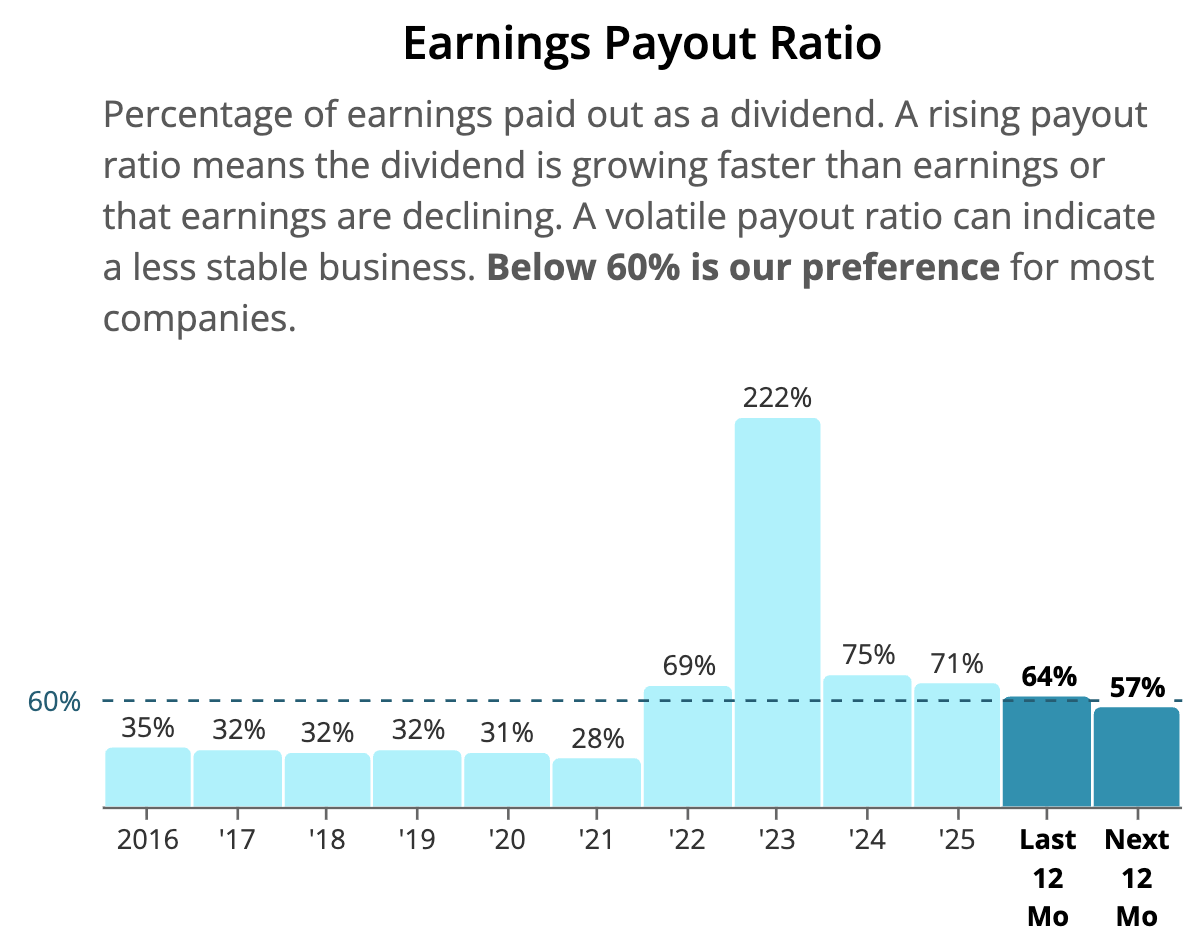
The payout ratio spiked to 222% in 2023 and has stayed above our 60% preference since 2022, though it is expected to dip to 57% next year.
Stanley Black & Decker pays out 64% of its earnings, expected to be 57% next year, moving back within our 60% preference for most companies. Source: Simply Safe Dividends.
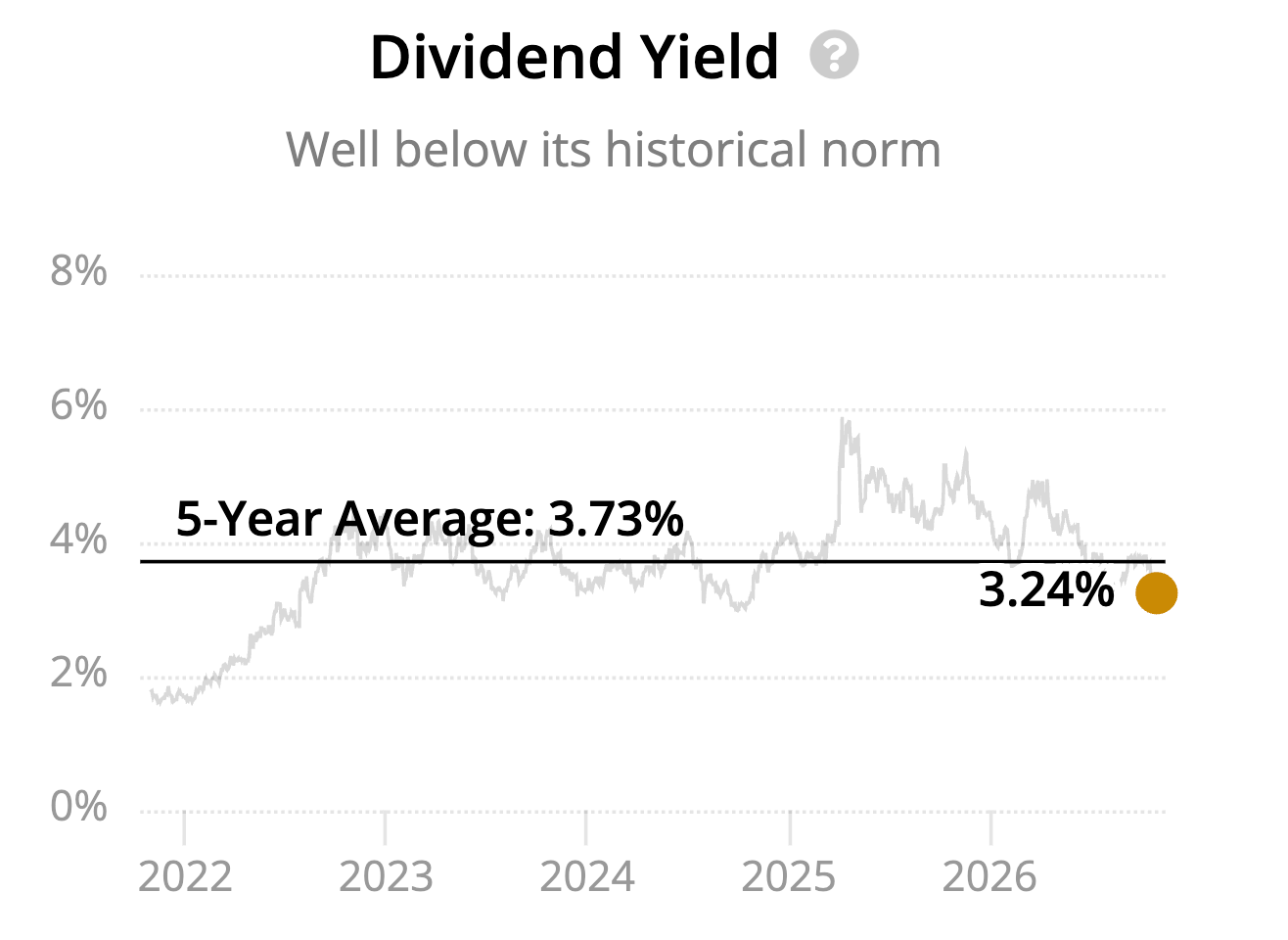
The 3.24% yield is well below its five-year average of 3.73%.
Stanley Black & Decker yields 3.24%, well below its five-year average of 3.73%. Source: Simply Safe Dividends.
Sysco is one of the world's largest foodservice distributors, delivering food and supplies to restaurants, schools, and hospitals. We lowered its Dividend Safety Score from Safe to Borderline Safe in March 2026 after it agreed to buy Restaurant Depot for $29 billion.
Its payout ratio sits around 47%, within our 70% preference for consumer staples, but the deal adds debt and is expected to slow dividend growth.
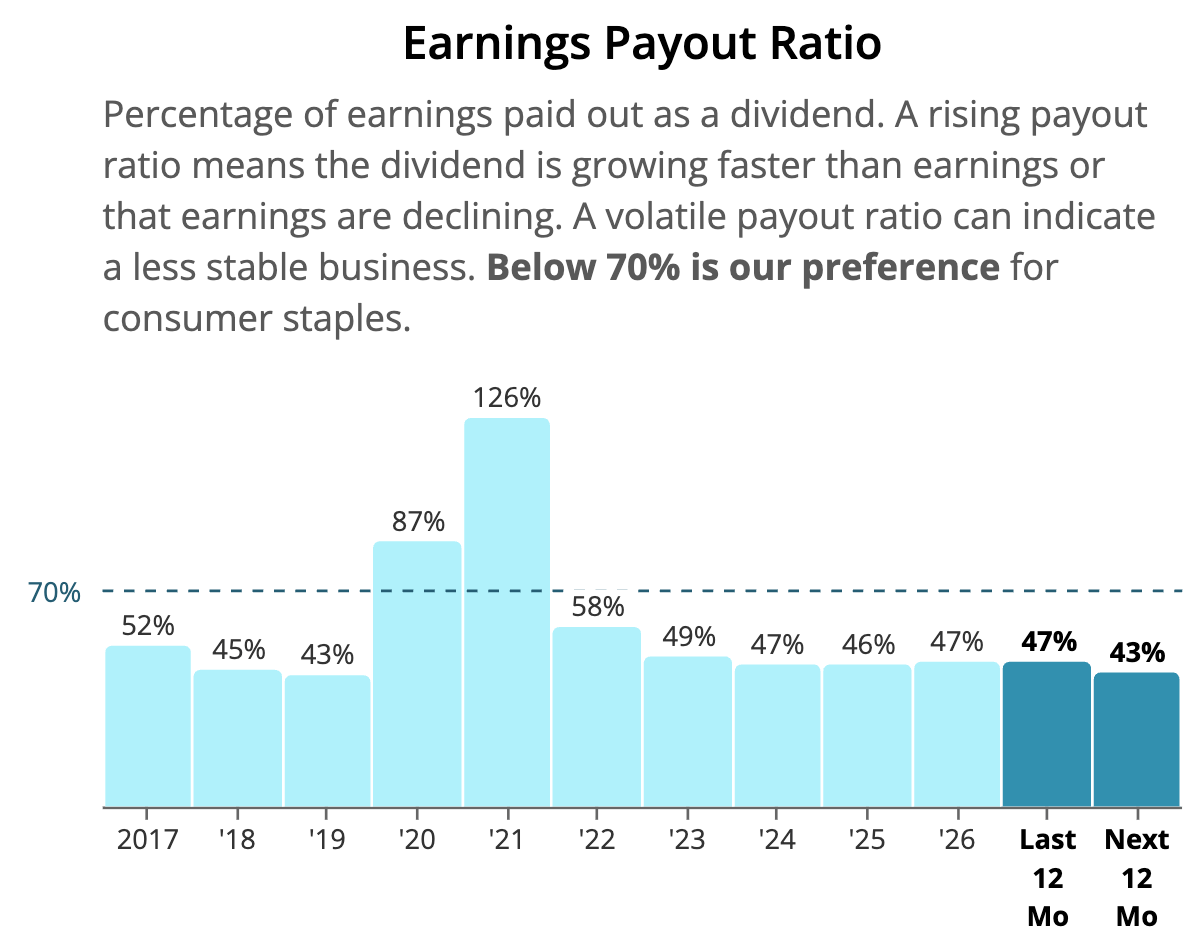
Sysco pays out 47% of its earnings, expected to be 43% next year, within our 70% preference for consumer staples. Source: Simply Safe Dividends.
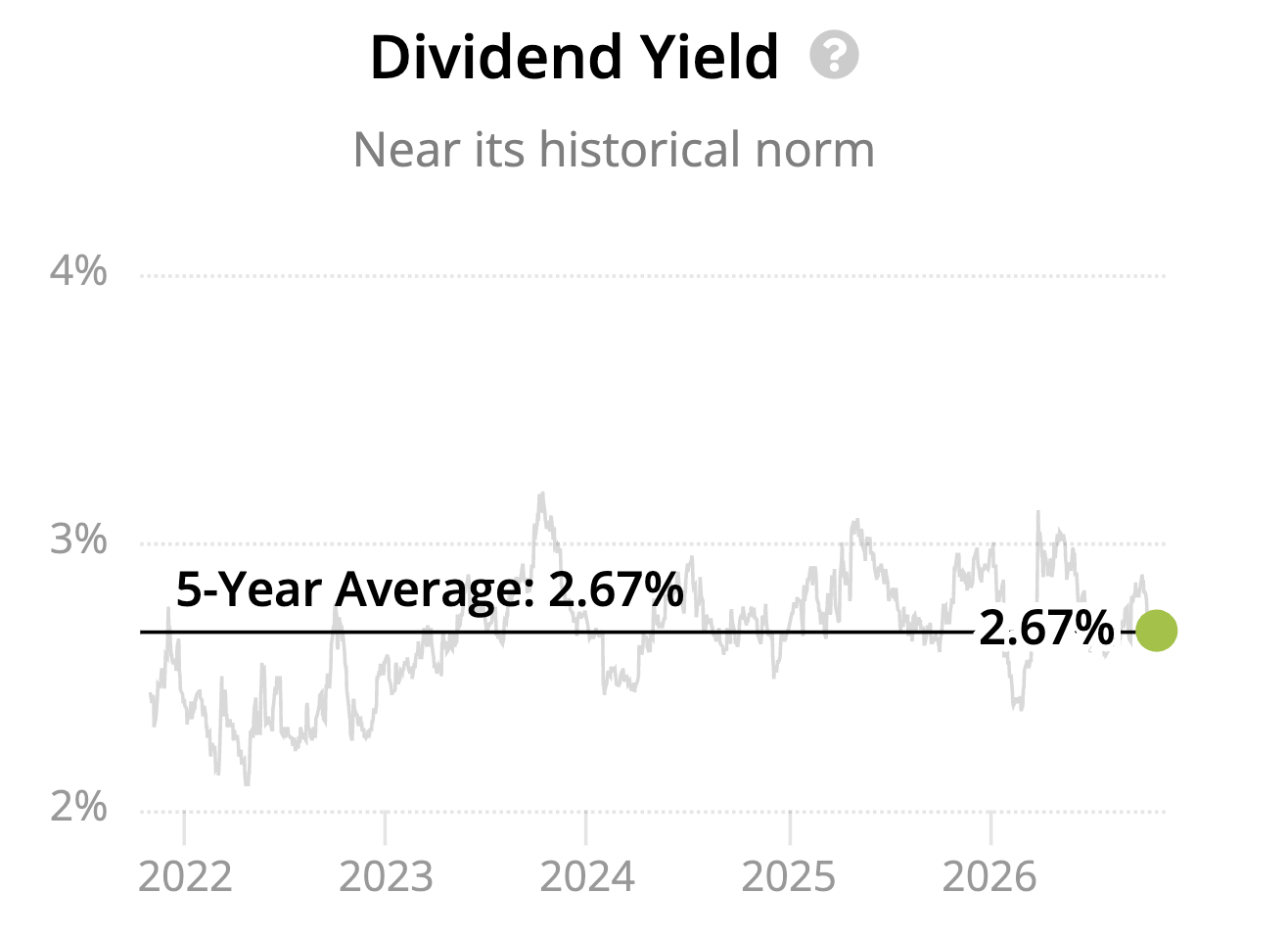
The 2.67% yield equals its five-year average.
Sysco yields 2.67%, near its five-year average of 2.67%. Source: Simply Safe Dividends.
Altria sells Marlboro cigarettes, Copenhagen chewing tobacco, and on! nicotine pouches in the U.S. We raised its Dividend Safety Score from 55 to 60, still Borderline Safe, in July 2026 as three regulatory threats faded, but cigarette volumes continue to decline.
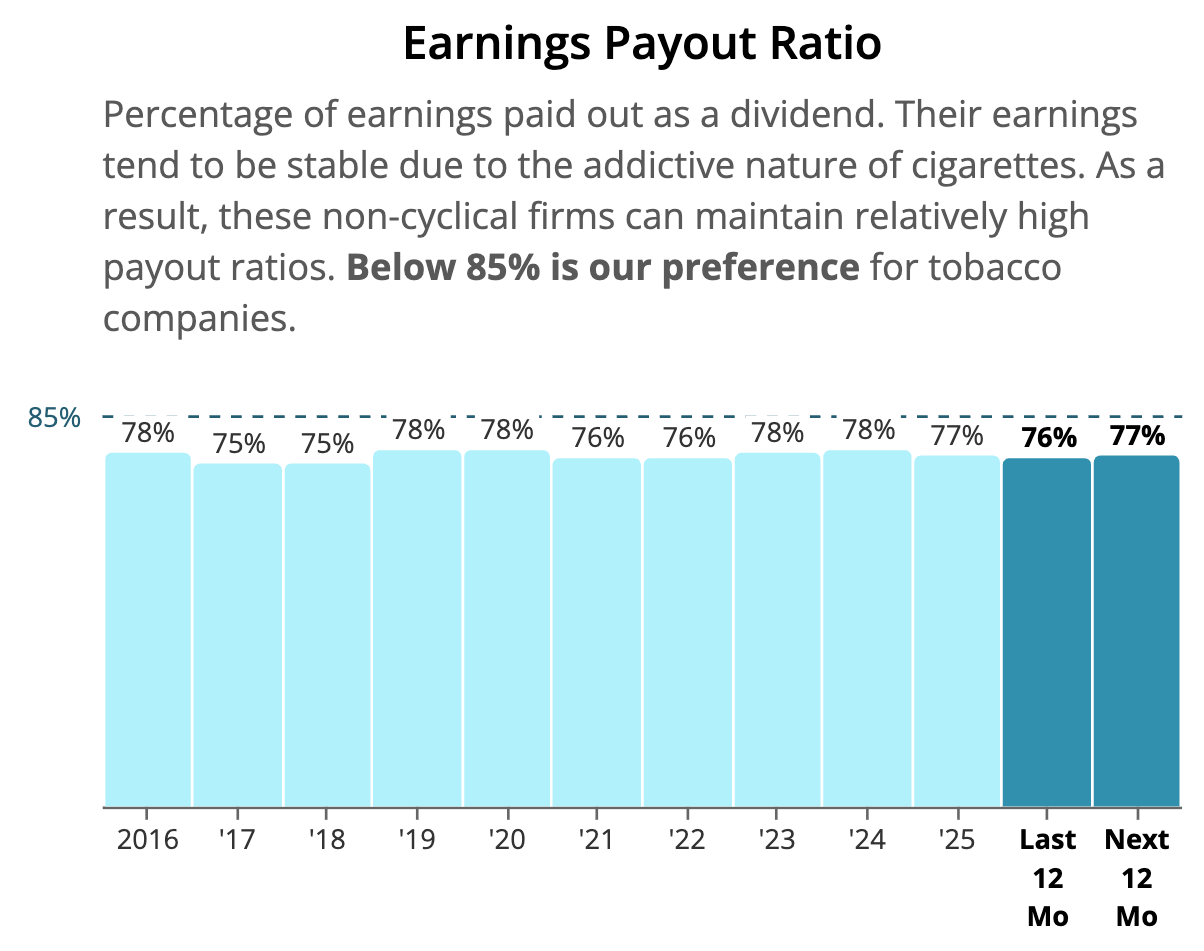
Altria pays out about 76% of its earnings, within our 85% preference for tobacco companies, and its leverage is very low for the industry.
Altria pays out 76% of its earnings, expected to be 77% next year, within our 85% preference for tobacco companies. Source: Simply Safe Dividends.
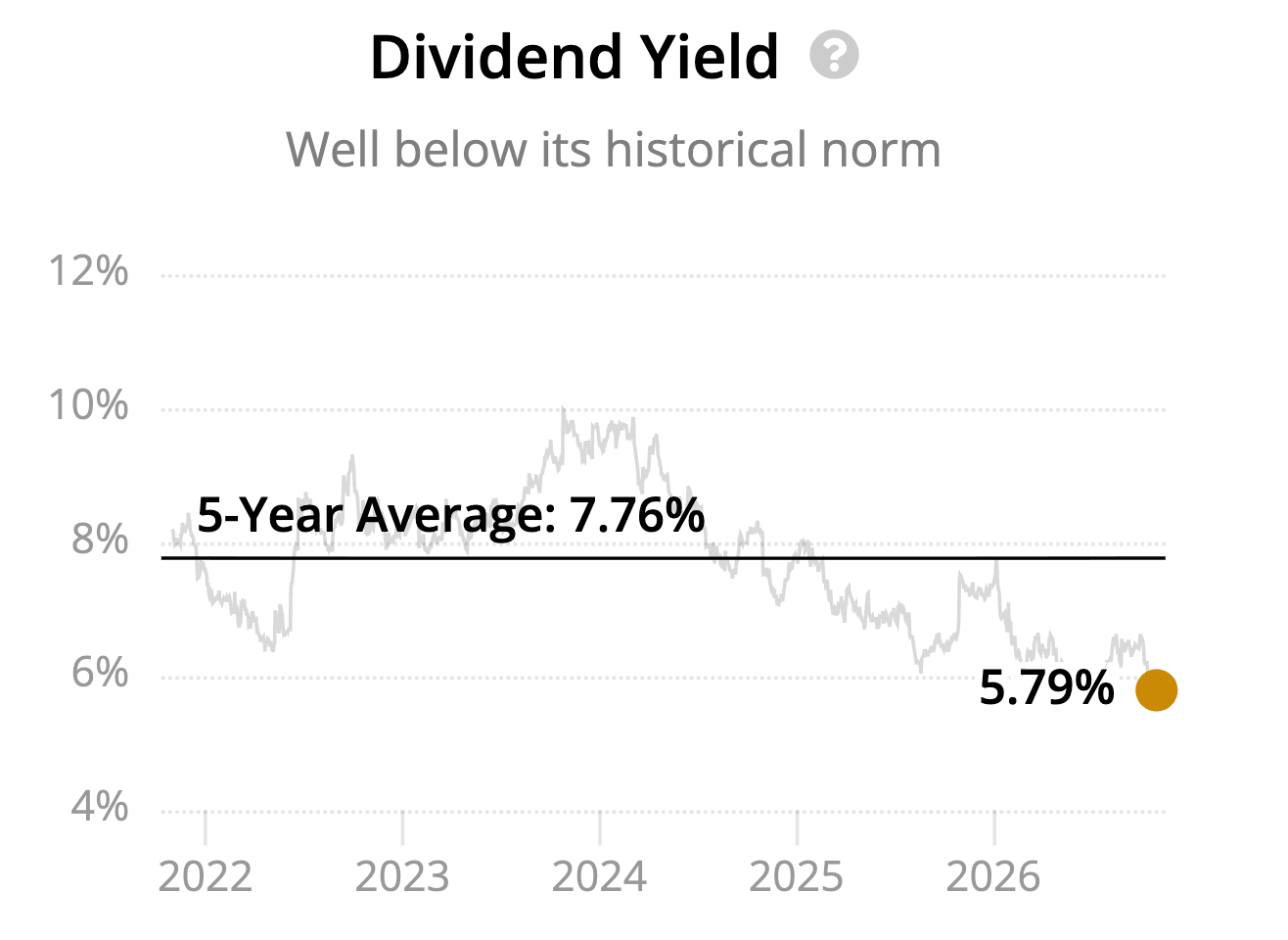
The 5.79% yield is well below its five-year average of 7.76%, because the shares have nearly doubled since early 2024.
Altria yields 5.79%, well below its five-year average of 7.76%. Source: Simply Safe Dividends.
Genuine Parts distributes NAPA auto parts and Motion industrial parts. We lowered its Dividend Safety Score three times in 2026, most recently to 50 in July after O'Reilly bid about $10 billion for its auto parts business.
A sale would likely leave a smaller, industrial-only company paying a lower dividend.
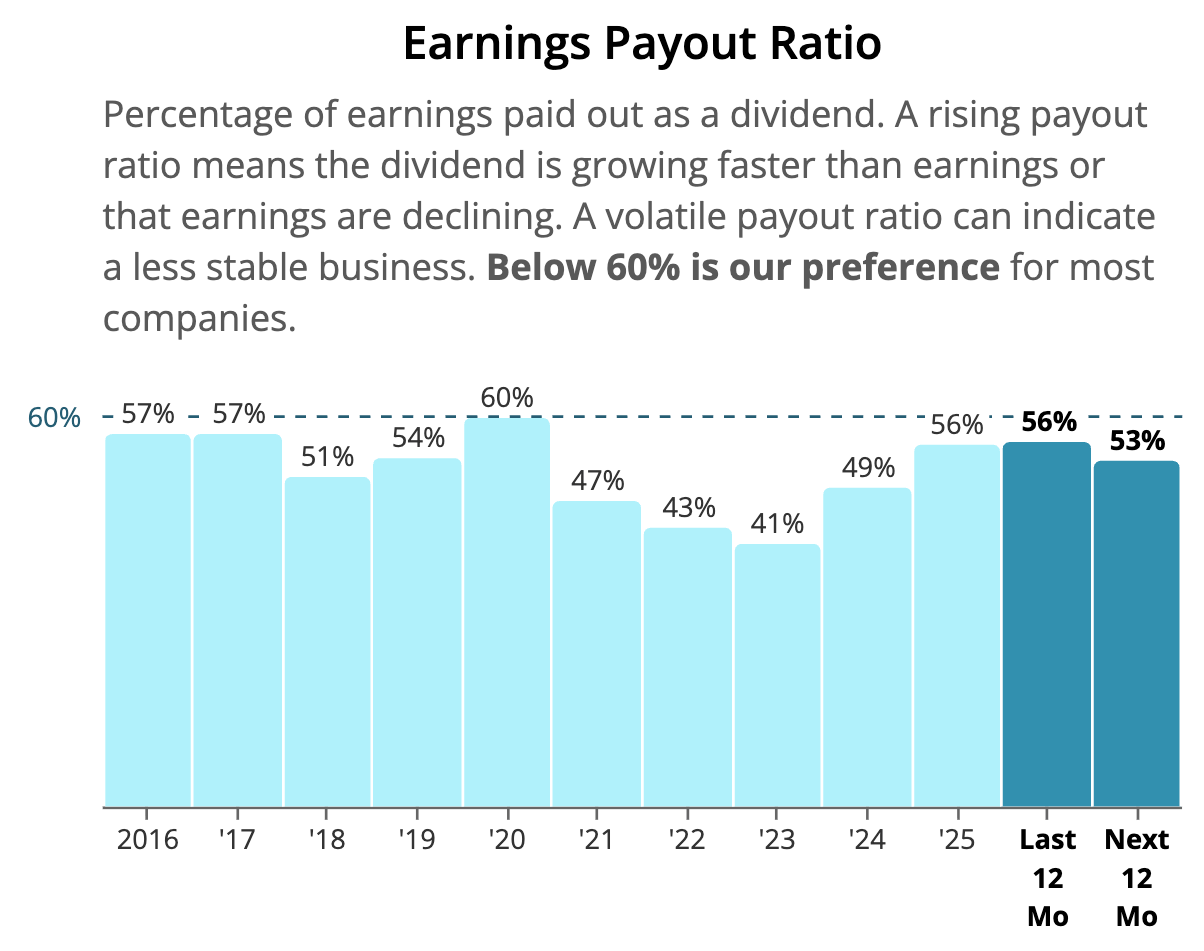
Its payout ratio sits around 56%, just under our 60% preference for most companies.
Genuine Parts pays out 56% of its earnings, expected to be 53% next year, within our 60% preference for most companies. Source: Simply Safe Dividends.
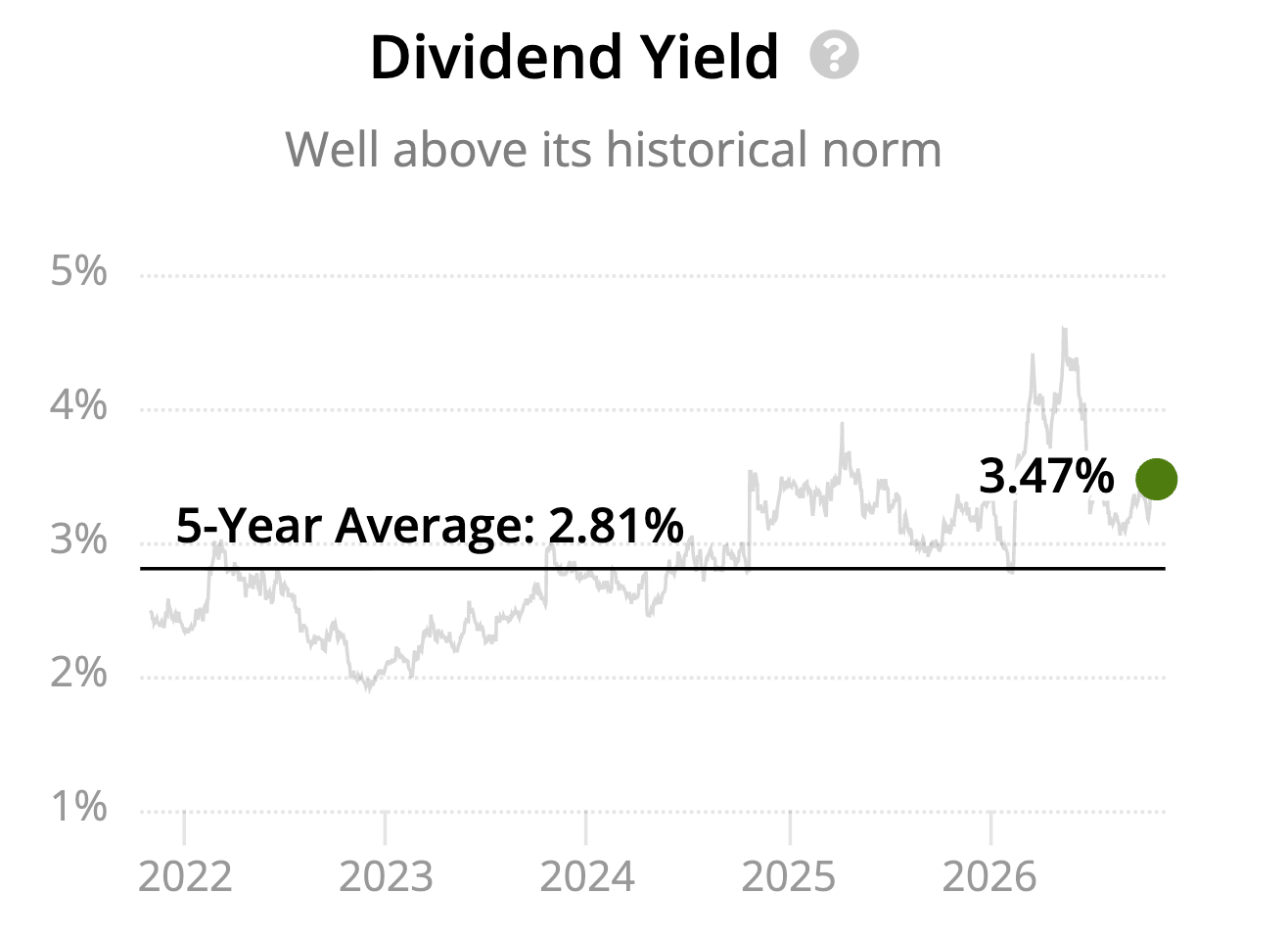
The 3.47% yield is well above its five-year average of 2.81%.
Genuine Parts yields 3.47%, well above its five-year average of 2.81%. Source: Simply Safe Dividends.
Kenvue (KVUE)
Sector: Consumer Staples – Personal Care Products Dividend Yield: 4.3% Dividend Safety Score: Borderline Safe (50) Dividend Growth Streak: 63 years Credit Rating: A
Kenvue owns Tylenol, Listerine, Neutrogena, and Band-Aid. It counts Johnson & Johnson's dividend history toward its streak.
Kimberly-Clark agreed in November 2025 to acquire it for cash and stock. If the deal closes as expected, Kenvue shareholders will own Kimberly-Clark shares and Kenvue will leave this list.
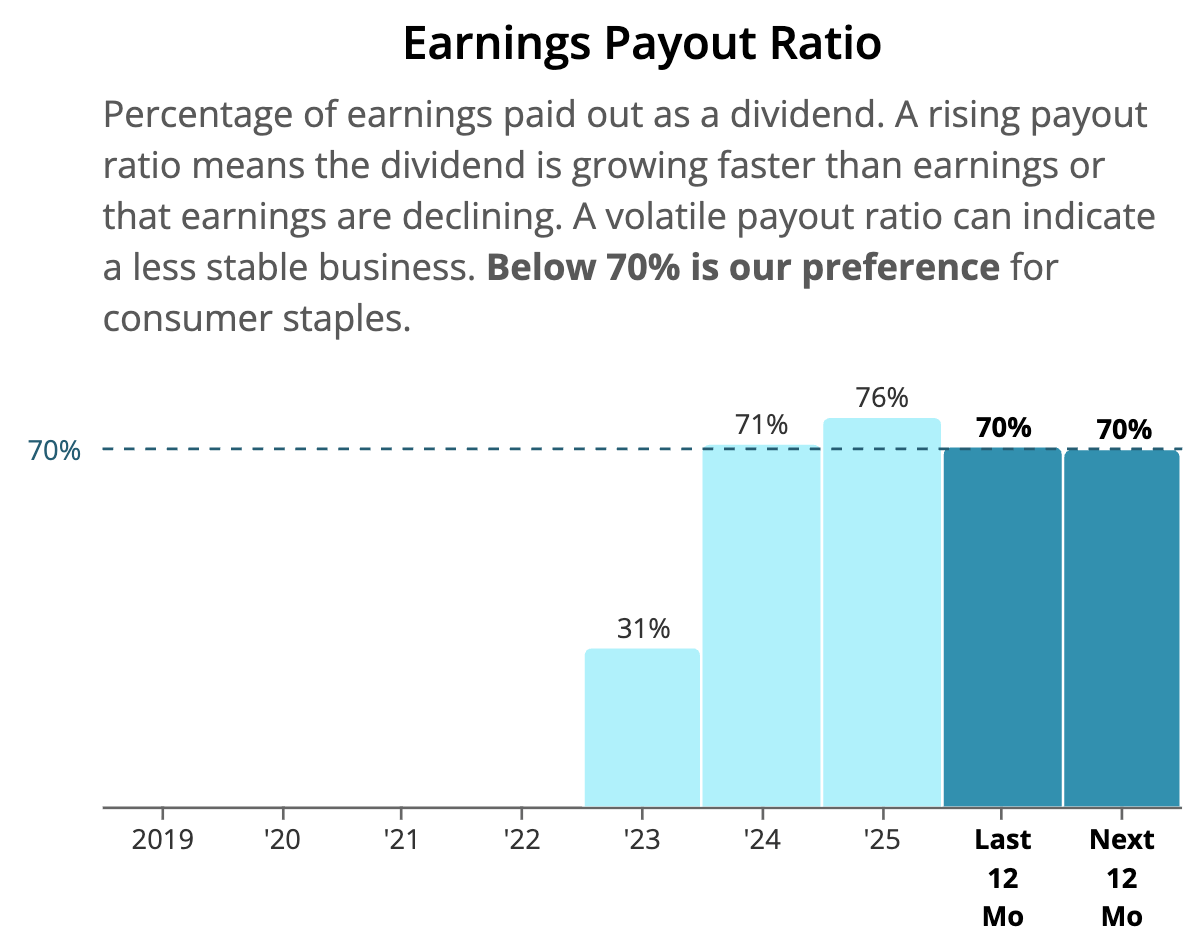
Its payout ratio has run at or above our 70% preference for consumer staples since 2024.
Kenvue pays out 70% of its earnings, expected to be 70% next year, within our 70% preference for consumer staples. Source: Simply Safe Dividends.
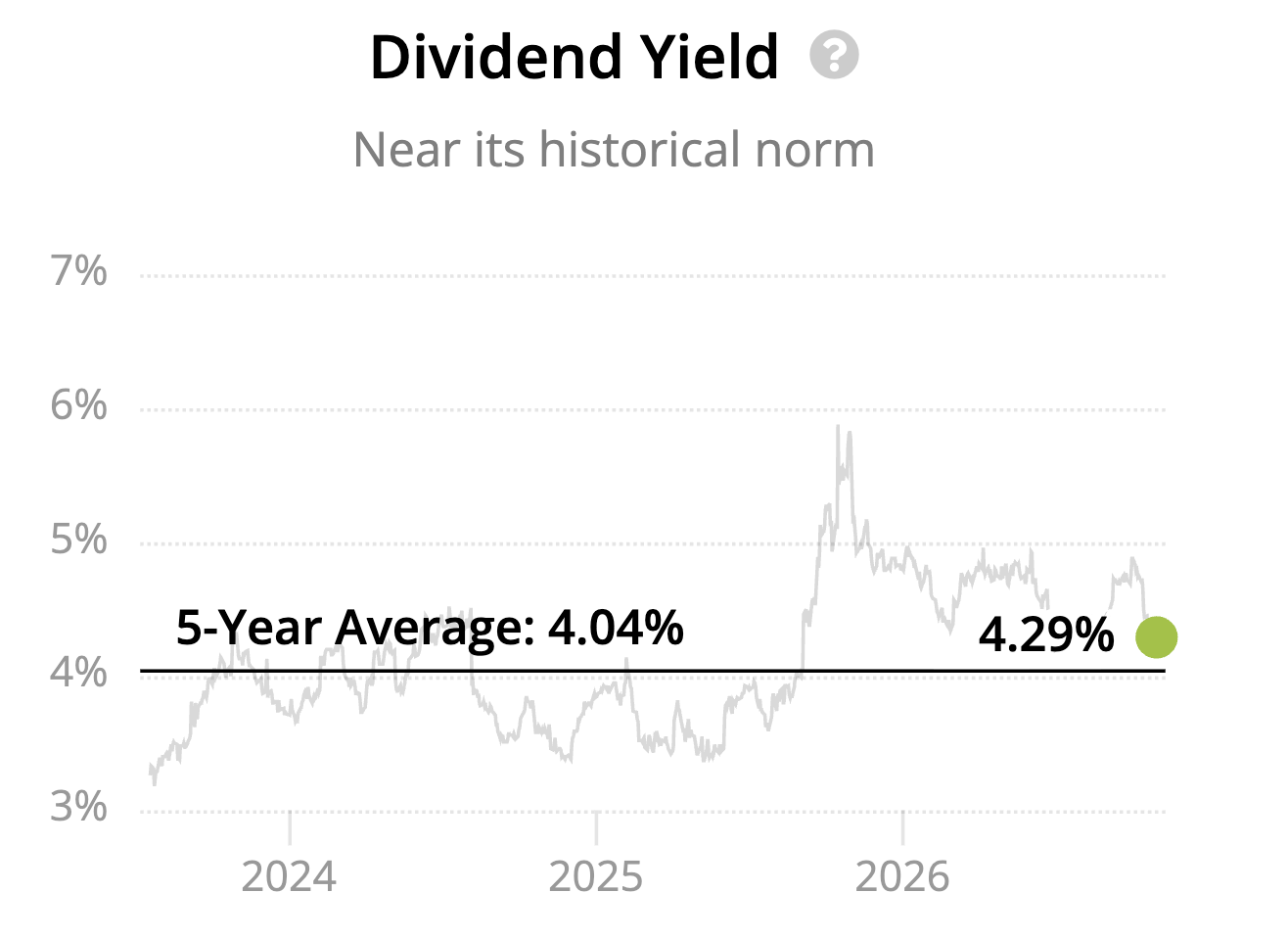
The 4.29% yield is near its five-year average of 4.04%.
Kenvue yields 4.29%, near its five-year average of 4.04%. Source: Simply Safe Dividends.
Universal buys, processes, and sells leaf tobacco to cigarette makers around the world. We lowered its Dividend Safety Score from Borderline Safe to Unsafe in August 2026 as oversupplied leaf markets and the long decline in smoking squeezed profits.
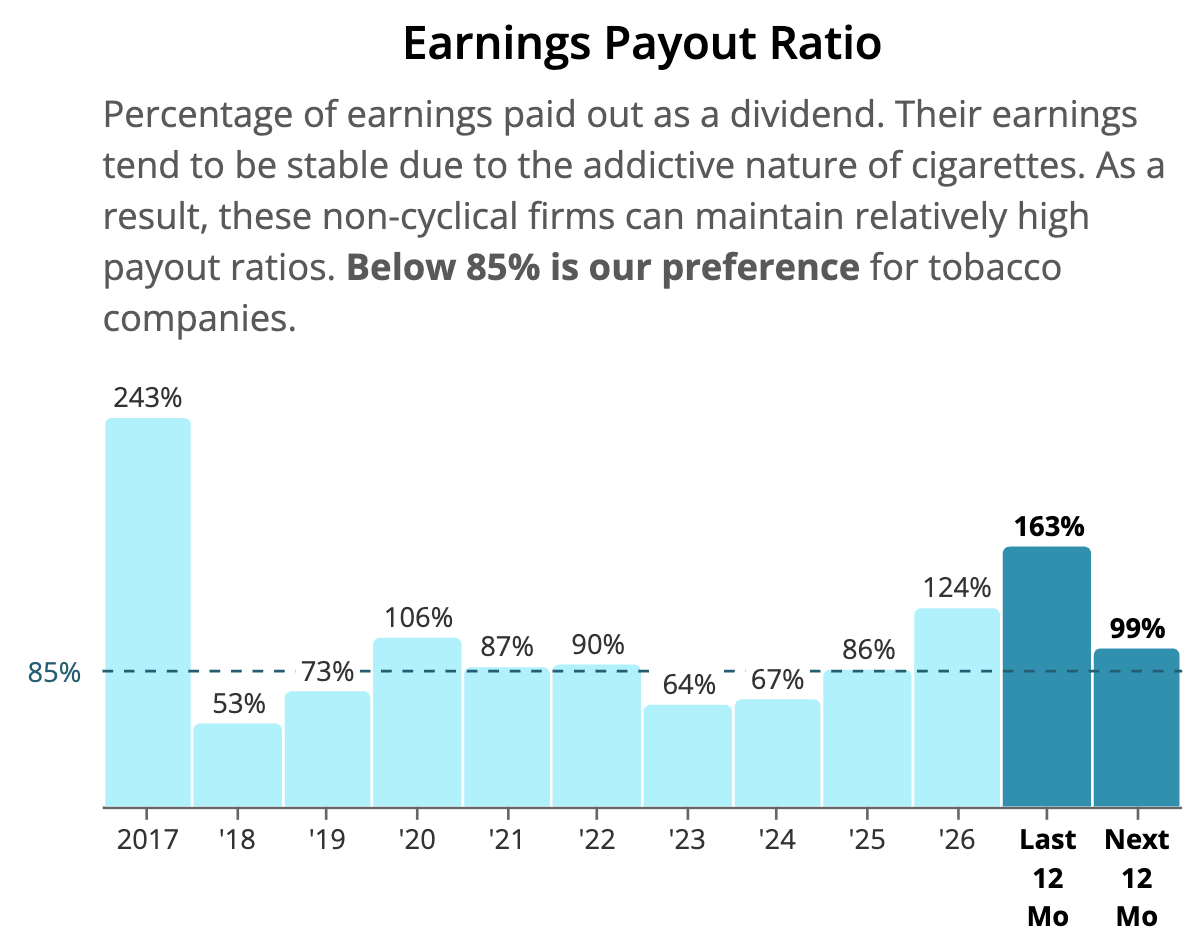
It paid out 163% of its earnings over the past year, far above our 85% preference for tobacco companies.
Universal pays out 163% of its earnings, expected to be 99% next year, above our 85% preference for tobacco companies. Source: Simply Safe Dividends.
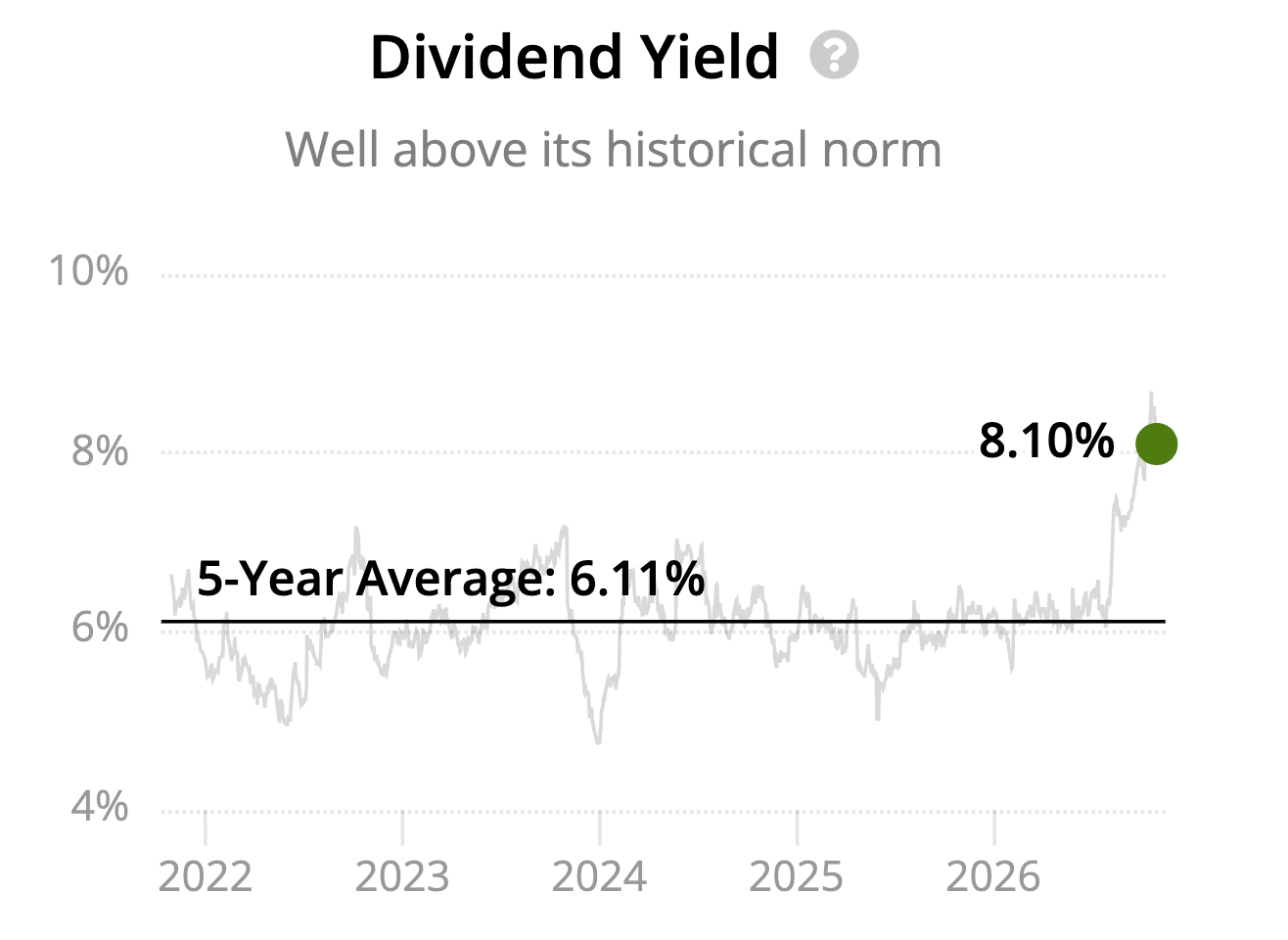
At 8.10%, Universal has the highest yield of any Dividend King, well above its five-year average of 6.11%. That yield reflects risk, not value.
Universal yields 8.10%, well above its five-year average of 6.11%. Source: Simply Safe Dividends.
Frequently Asked Questions
What is a Dividend King?
A Dividend King is a company that has raised its dividend for at least 50 consecutive years. Unlike Dividend Aristocrats, Kings do not need to belong to the S&P 500, so the list includes small companies such as Tootsie Roll and Middlesex Water.
How many Dividend Kings are there?
There are 59 Dividend Kings in 2026 by our count. Pentair, Carlisle, and McDonald's reached 50 consecutive years of dividend increases in the past year.
Who are the Dividend Kings with the longest streaks?
American States Water has raised its dividend for 71 consecutive years, the longest streak of any Dividend King. Dover, Northwest Natural, Parker-Hannifin, and Procter & Gamble follow at 70 years each.
Which Dividend King has the highest yield?
Universal yields 8.1%, the most of any Dividend King, but it earns an Unsafe Dividend Safety Score. Among Kings rated Safe or better, Hormel yields the most at 5.6%, followed by Kimberly-Clark at 4.7% and PepsiCo at 4.4%.
Is Clorox a Dividend King?
Not yet. Clorox raised its dividend for the 49th consecutive year in July 2026, so it would become a Dividend King with another increase in 2027. It earns a Borderline Safe Dividend Safety Score.
Is PepsiCo a Dividend King?
Yes. PepsiCo has raised its dividend for 53 consecutive years and yields 4.4%. We lowered its Dividend Safety Score from Very Safe to Safe in April 2026 as shoppers traded down to cheaper snacks and drinks.
Is General Mills a Dividend King?
No. General Mills has paid dividends without a reduction for 128 years, but it has not raised its dividend every year, so its current growth streak is six years.
Is Kimberly-Clark a Dividend King?
Yes. Kimberly-Clark has raised its dividend for 53 consecutive years and yields 4.7%. It earns a Safe Dividend Safety Score, which we lowered from Very Safe after it agreed to buy Kenvue.
Is Hormel a Dividend King?
Yes. Hormel has raised its dividend for 60 consecutive years and yields 5.6%, the highest of any King with a Safe Dividend Safety Score or better.
Is Universal a Dividend King?
Yes. Universal has raised its dividend for 56 consecutive years, but it paid out 163% of its earnings over the past year and earns an Unsafe Dividend Safety Score.
Closing Thoughts on Dividend Kings
Fifty years of dividend increases says a lot about a business, but not everything. Of the 59 Dividend Kings, 53 earn Safe or Very Safe Dividend Safety Scores, and most of this year's downgrades came from acquisitions and shifting consumer habits rather than any threat to the payouts.
To see how the Kings you own stack up, try our online portfolio tools. They track your dividend income, show the Dividend Safety Score of each stock you own, and alert you when a score changes.